

Section: Module 2: Child Development | Mental Health Literacy | NextGenU.org
-
Upon completion of this module, learners should be able to: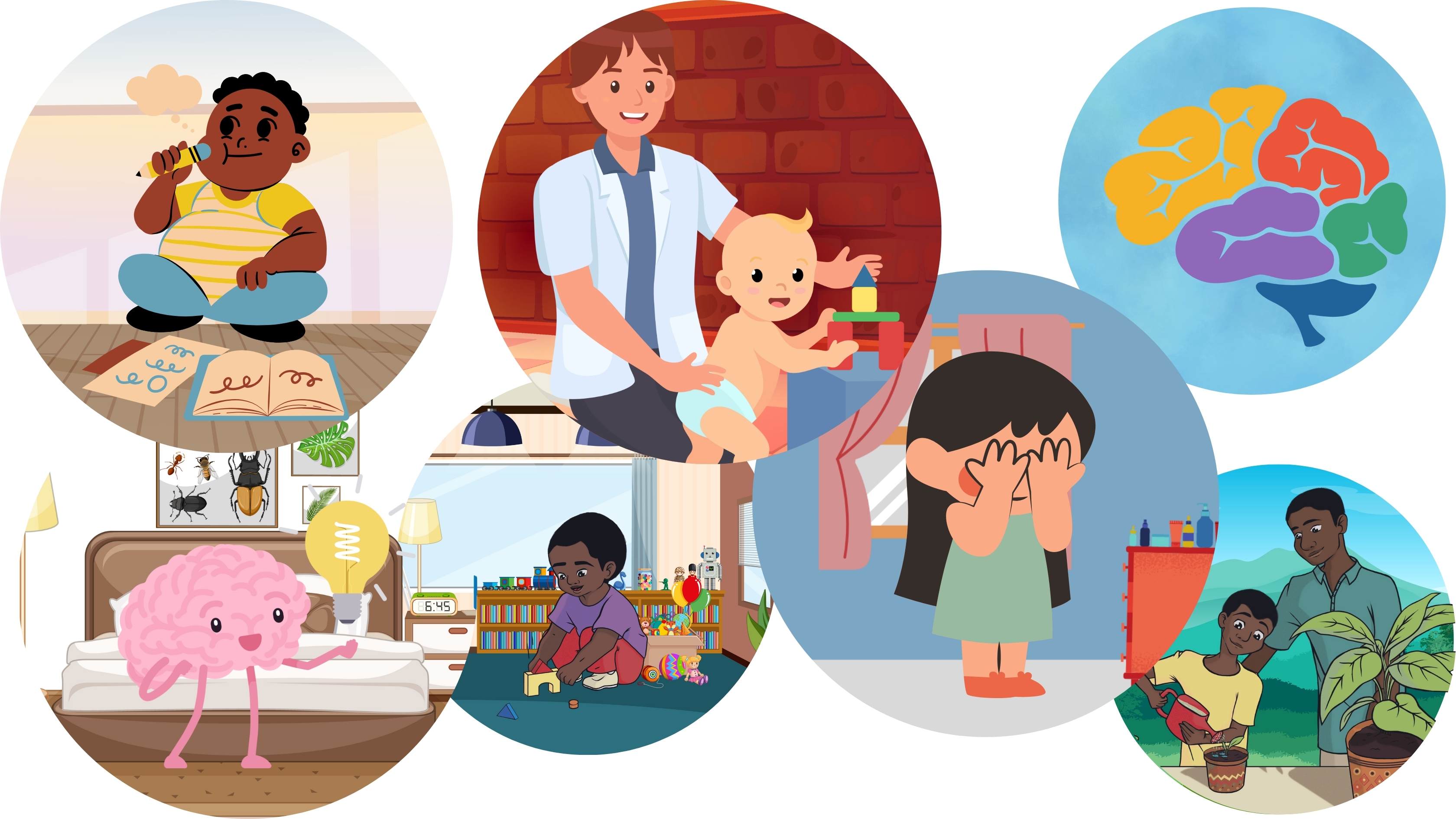 Student Learning Outcomes:
- Identify key factors influencing child development.
- Differentiate a child's development process based on sex/gender.
- Explain the differences in a child's development process based on culture.
- Explain why understanding the developmental processes of a child is important to facilitate interventions.
- Describe the difference between linear and non-linear development.
- Summarize the prenatal development of a child.
- Identify the factors that impact prenatal development.
- Summarize the brain development of a child.
- Identify the brain development problem that may affect a child in the school performance.
- Explain the motor development of a child.
- Identify the main motor development milestones from pre-primary (birth) up to secondary school age (12+).
- Explain the cognitive development of a child.
- Outline the cognitive milestones of the child at different stages of life(birth to 12 years).
- Explain the social development of a child.
- Identify factors that play a role in the social development of a child.
- Outline the social development milestones of the child at different stages of life([birth to 18 years).
- Explain the language development of a child.
- Identify the main language development milestones from birth to primary school age.
- Explain the moral development of a child.
- Identify the main moral development milestones at different stages of life (from pre-primary to secondary).
-
The module slides provide a concise and engaging overview of the course material, making it easier for you to grasp key concepts. The slides are a perfect companion to the handbook, ensuring you have a comprehensive learning experience.
-
To access the microlesson:
Step 1: Click on "Microlesson 2"
Step 2: Select "Enter"; the microlesson will open in a new window
Step 3: Click on "Start Course" to begin the microlesson.
If you need to exit the microlesson before it is completed, either click on "Exit Course" on the top right of the screen, or simply close the window. Your progress should be saved automatically.
There are activities and questions within the microlesson. These are not graded, but are intended to help you actively learn and practice the content. -
Students mustMark as done
To access the activity:
Step 1: Click on "Branching Logic Activity 2"
Step 2: Select "Enter"; the microlesson will open in a new window
Step 3: Click on the arrow at the bottom of the screen to begin the activity.This activity is not graded. It provides scenario-based practice to help you apply what you have just learned.
If you need to exit the microlesson before it is completed, either click on "Exit Course" on the top right of the screen, or simply close the window. Your progress should be saved automatically. -
General Instructions:
In this learning activity, you will analyze a selected case study and explain the typical developmental processes/stages of a child at that age, as well as the factors influencing their development at the selected stage.
Step 1: Review [30 minutes]
Review the two case presentations below. Select the one that is the most appropriate to your current field of practice.
Case Study 1 (7-year-old boy)
Benjamin started first grade at his neighborhood public school and has a classroom assistant to assist him in most regular classes. He displayed pronounced delays in both fine and gross motor skills, as well as overall uncoordinated and weak muscles. He took a very long time to acquire both receptive and expressive language, and even now, he speaks in short, rudimentary words. He frequently repeats words, phrases, and noises in his speech, which can distract from the topic at hand. When compared to other kids at his developmental level, the results of cognitive testing at the start of the first grade revealed relative deficiencies in tasks measuring linguistic abilities, abstract reasoning, and attention.Benjamin’s social demeanor worried his teachers the most. Benjamin often showed enthusiasm in his new class but struggled with transitions between activities, felt uncomfortable and overstimulated during boisterous games or assemblies, and shunned the majority of group activities. Benjamin avoided looking at his classmates or teachers in the eye. Although he was incredibly shy with people, he seemed to desire to make friends and join groups. Benjamin’s instructor once attempted to soothe him by gently chatting with him while holding him in place by the shoulders. However, her actions increased Benjamin’s agitation and led to a violent outburst.
OR
Case Study 2 (12-year-old girl)
Melda is a girl of 12 years, enrolled in the seventh grade of the most famous private school for girls in the locality. During the first three months, systematic observations from the teachers found the following behaviors:
- She is shy.
- She does not easily adapt to the school program.
- She isolates herself from the other students.
- She likes to play in her corner.
- She is indifferent, careless and has difficulties in establishing emotional relations with her classmates.
- As it relates to her reading skills, teacher records indicate that Melda reads at a seventh-grade level with fluency but struggles with oral reading comprehension and written expression. Her reading and writing performance require accommodations for testing and participation in the general curriculum, including extended time, read-aloud, and computer software resources to support listening comprehension and writing.
Step 2: Respond [150 minutes]
For your selected case study, prepare a 400-600 word written response addressing the following:
- If you have selected Case Study 1 (7-year-old boy), discuss the following:
- What are common social developmental milestones typically achieved at this development stage (primary school)?
- What signs of delayed social development are exhibited in the case presentation?
- How would you approach this once you notice it?
- Do you have any comment about differences you may have seen in a male student experiencing a similar difficulty?
- Have you experienced something similar in your own classroom? What, if anything, did you do about it (strategies/approaches, if any)?
OR
- If you have selected Case Study 2 (12-year-old girl), discuss the following:
- What are common developmental milestones typically achieved at the cognitive development stage at the primary school age?
- What signs of delayed cognitive development are exhibited in the case presentation?
- How would you approach this once you notice it?
- What trends have you observed in terms of sex differences during this stage of development?
- Have you experienced something similar in your own classroom? What, if anything, did you do about it (strategies/approaches, if any)?
Step 3: Share [10 minutes]
To share your work, click on the “Add a new discussion topic” button under this post and paste your work in the “Message” box. Make sure to reference others’ intellectual property when necessary. All references should follow 7th Edition APA formatting. For further instructions, see the resource on the Himmelfarb Health Sciences Library: APA citation resource (N.B. references are excluded from word counts).
Step 4: Optional Peer Interaction
We highly encourage you to engage with your peers' posts in a respectful and professional manner. However, this interaction is not mandatory. If you choose to participate, consider reflecting on your peers' comments, sharing additional insights, or asking thought-provoking questions. This exchange of ideas can broaden your perspective and deepen your understanding of the topic. If you decide to respond, simply click "Reply" on a discussion, write your feedback, and then click "Post to forum." Remember, the goal is to foster a collaborative learning environment, so feel free to join the conversation if you're comfortable doing so.
OPTIONAL Step 5: Interact (10 minutes)
If you would like to, you can reply to your peers' posts in a respectful and professional manner. Ensure that your post engages your peers' ideas by including a reflection on their comments, sharing ideas of other potential difficulties and parties involved, or asking thought-provoking questions. If a peer comments on your posting, please reply. To post a reply, click “Reply” on a particular discussion, write your feedback and then click on “Post to forum.”
-
Quiz: Module 2
To access the quiz, click on the name of the quiz provided above. On the following screen, click the "Preview quiz now" button to respond to the questions.
TO PASS THIS QUIZ, YOU MUST OBTAIN A SCORE OF 80%
- Identify key factors influencing child development.