

Section: Module 3: Spheres of Influence on Child Development and Mental Health | Mental Health Literacy | NextGenU.org
-
Upon completion of this module, learners should be able to: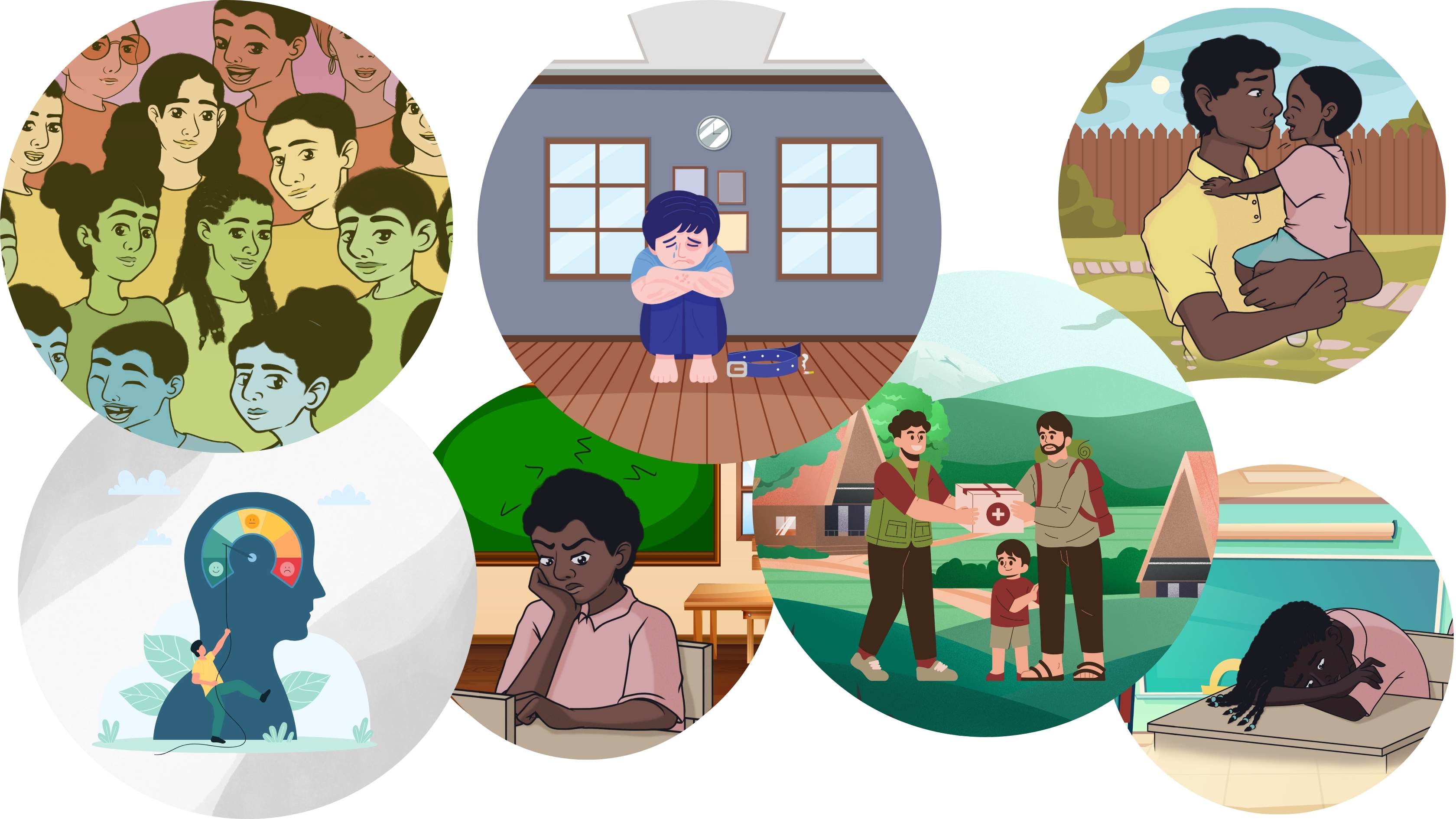 Student Learning Outcomes:
- Describe the influences that affect the likelihood of children developing mental health conditions.
- Examine the influence of family interactions on child development and mental health.
- Examine the influence of parenting and attachment on child development and mental health.
- Explain the influence of parental mental health on child development and mental health.
- Examine the influence of family separation and conflicts on child development and mental health.
- Explain the role of the school in supporting the distressed student due to family conflicts.
- Explain the influence of family resources and functions on child development and mental health.
- Describe the role of educators in child development and mental health.
- Examine the role of school ethos in child development and mental health.
- Describe the characteristics of a mental health-promoting school.
- Discuss the effects of Bullying and Peer Victimization on child development and mental health.
- Recognize the signs and indicators of suspected cases of bullying.
- Explain the importance of collaborating with parents on matters of child development and mental health.
- Examine the Social Cultural Influences [macrosystem] on child development and mental health (low socioeconomic status and poverty, violent crime, discrimination, humanitarian crisis, climate change).
- Examine the impact of the Internet and Social Media Use on child development and mental health.
- Discuss strategies to minimize the potential harms of internet use within the classroom.
- Detail how school corporal punishment has been used in your country or region.
- Discuss the effect of corporal punishment on a child’s development and mental health.
- Recommend alternative measures to modify classroom behavior without using corporal punishment.
- Analyze the impact of adverse childhood experiences on child development and mental health, such as bereavement, loss of a loved one, and child maltreatment.
-
Students mustMark as done
Required Learning Resources and Activities
-
The module slides provide a concise and engaging overview of the course material, making it easier for you to grasp key concepts. The slides are a perfect companion to the handbook, ensuring you have a comprehensive learning experience.
-
To access the microlesson:
Step 1: Click on "Microlesson 3"
Step 2: Select "Enter"; the microlesson will open in a new window
Step 3: Click on "Start Course" to begin the microlesson.
If you need to exit the microlesson before it is completed, either click on "Exit Course" on the top right of the screen, or simply close the window. Your progress should be saved automatically.
There are activities and questions within the microlesson. These are not graded, but are intended to help you actively learn and practice the content. -
Students mustMark as done
To access the activity:
Step 1: Click on "Branching Logic Activity 3"
Step 2: Select "Enter"; the microlesson will open in a new window
Step 3: Click on the arrow at the bottom of the screen to begin the activity.This activity is not graded. It provides scenario-based practice to help you apply what you have just learned.
If you need to exit the microlesson before it is completed, either click on "Exit Course" on the top right of the screen, or simply close the window. Your progress should be saved automatically. -
General Instructions:
In this learning activity, you will select a topic (corporal punishment, internet and social media use or parent-teacher collaboration) and reflect on its relevance to your practice.
Step 1: Review [15 minutes]
Review the three topics below. Select ONE that is the most appropriate to your current field of practice.
- Reintroduction of corporal punishment policies in schools as a tool for oppression or for mending
- The impact of the internet and social media use on a child’s learning and behavior in schools
- Parents and teachers collaborating to enhance student success in the classroom
Step 2: Respond [105 minutes]
Prepare a brief 200-400 word reflection based on the topic/issue you would have selected in the step above, discussing the following:
- How relevant is the selected topic to your current field of practice? Support your answer with examples.
- How crucial is the connection between your selected topic and mental health?
- How has it evolved over the last 10 years?
- Are there significant changes or developments regarding the topic that made an impact on your field of practice?
- If there have not been any significant changes, what strategies can be used to help bring about meaningful change to improve mental health in the classroom?
- How would an improved outlook and approach to the selected topic benefit mental health literacy?
Step 3: Share [10 minutes]
To share your work, click on the “Add a new discussion topic” button under this post and paste your work into the “Message” box. Make sure to reference others’ intellectual property when necessary. All references should follow 7th Edition APA formatting. For further instructions, see the resource on the Himmelfarb Health Sciences Library: APA citation resource (N.B. references are excluded from word counts).
Step 4: Optional Peer Interaction
We highly encourage you to engage with your peers' posts in a respectful and professional manner. However, this interaction is not mandatory. If you choose to participate, consider reflecting on your peers' comments, sharing additional insights, or asking thought-provoking questions. This exchange of ideas can broaden your perspective and deepen your understanding of the topic. If you decide to respond, simply click "Reply" on a discussion, write your feedback, and then click "Post to forum." Remember, the goal is to foster a collaborative learning environment, so feel free to join the conversation if you're comfortable doing so.
OPTIONAL Step 5: Interact (10 minutes)
If you would like to, you can reply to your peers' posts in a respectful and professional manner. Ensure that your post engages your peers' ideas by including a reflection on their comments, sharing ideas of other potential difficulties and parties involved, or asking thought-provoking questions. If a peer comments on your posting, please reply. To post a reply, click “Reply” on a particular discussion, write your feedback and then click on “Post to forum.”
-
Quiz: Module 3
To access the quiz, click on the name of the quiz provided above. On the following screen, click the "Preview quiz now" button to respond to the questions.
TO PASS THIS QUIZ, YOU MUST OBTAIN A SCORE OF 80%