Prevention and Treatment of Alcohol Use Disorders
-
Professional Development CoursesPrevention and Treatment of Alcohol Use DisordersResume0% complete0% complete
-
Students mustStudent must submit this questionnaire to complete it
-
Students mustViewReceive a gradeThis Pre-Test will h ...Show More
-

 Introduction
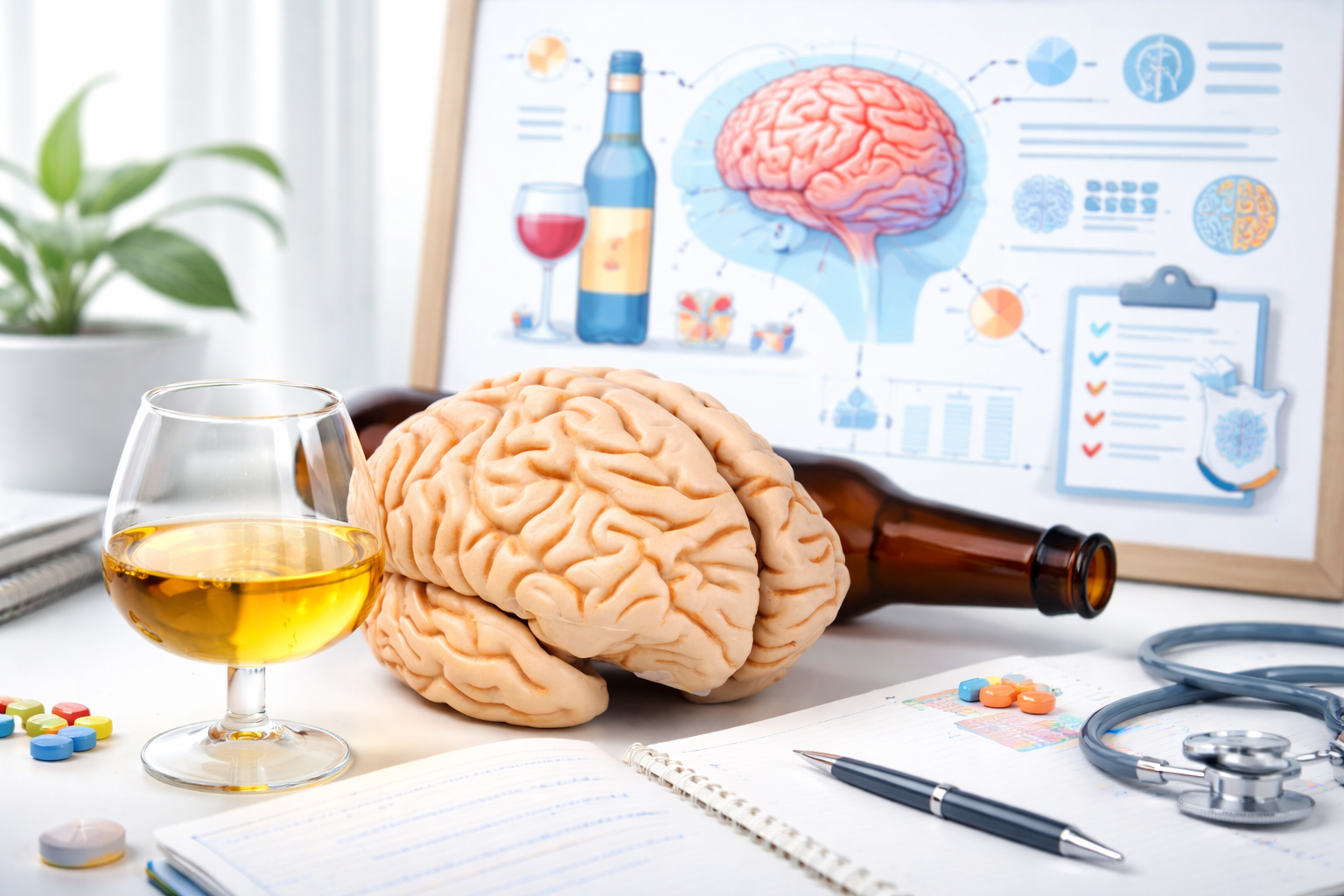
This course on the Prevention and Treatment of Alcohol Use Disorders teaches medical and public health trainees and practitioners about the health risks of excessive alcohol use as well as the approaches used to prevent and treat alcohol misuse. In addition, it provides practical insight into screening and assessment techniques for alcohol use disorders.
The course is designed to help you gain:
- A basic introduction to alcohol use disorders and their causes.
- An overview of screening and interventions for alcohol use disorders.
- A brief overview of urgent situations and common comorbidities associated with alcohol use disorders.
- A brief overview of the direct physical effects and the indirect social effects of alcohol use disorders.
- Insights about the strategies used to communicate with people seeking care, their families, and caregivers.
There are four (4) modules to complete, which include:
Module 1: Introduction to Alcohol Use Disorder
Module 2: Medical Consequences and Treatment
Module 3: Psychosocial Aspects and Special Populations
Module 4: Training, and Professional DevelopmentApproximate time for completion of this course is 46 hours at an average reading rate of 144 words/minute.
Engaging with this course
- To register for this course, complete the registration form. Begin the course with Module 1. For each lesson, read the description.
- There is a final quiz to assess your understanding of some important concepts. Click on the hyperlinks to take you to these items in each topic.
Requirements to obtain the certificate
You may browse this course for free to learn for your personal enrichment. There are no requirements.
To obtain a certificate, a learner must successfully complete:
- All reading requirements
- The final exam with a minimum of 80% and a maximum of 3 attempts and
- The self and course evaluation forms
This course meets nationally approved standards of education developed for the addiction/substance use disorders counseling profession. This course's participants are assured that the continuing education (CE) credits provided will be accepted toward national credentialing by the NAADAC Certification Commission for Addiction Professionals (NCC AP), as well as by many of the individual state licensing/certification bodies in the addiction and other helping professions.
Subscribe to our newsletter to be notified of future updates, new courses, and to be part of our community.
-
 Competency covered in this module:
 - Demonstrate knowledge of the various terminologies related to alcohol use, and understand the chronic nature of alcohol use disorder and the importance of treating them as medical conditions, incorporating pharmacology, psychiatry, general medicine, and psychology related to alcohol addiction.
- Identify and diagnose Alcohol Use Disorder, Alcohol Dependence and the different types of Alcohol Use, and recognize the need for improved alcohol abuse education for medical students, residents, and practicing physicians.
- Identify barriers to implementing alcohol abuse curricula in medical education and understand the importance of physician role models with expertise in alcohol abuse in implementing curricula changes and providing supervised experiences.
Approximate time required for the readings for this lesson (at 144 words/minute): 8 hours and 50 minutes.
-
Students mustMark as done
Required Learning Resources
-
Students mustMark as done
Please review the learning resource summarizing the key concepts and information for Module 1. This resource provides a comprehensive overview, highlighting the most important points and insights to help you grasp the foundational elements of the module.
If you would like more detailed information, please refer to the supplementary links provided below.
306.5 KB -
Students mustMark as done
Supplementary Learning Resources (Not Required)
-
Students mustMark as done
In this document, we summarized key topics of the module to help you study. Please note that these notes do not cover all of the material in its entirety; you are still encouraged to read and study all of the required learning resources.
293.5 KB -
Students mustView
Here are specialized flashcards designed to reinforce and test your knowledge throughout this course.
-
Students mustMark as done
-
Student Learning Outcomes:
Upon completion of this lesson, you will be able to:- Integrate knowledge from various disciplines to understand alcohol addiction.
- Correctly use and apply terminology related to alcohol use in clinical and educational settings.
- Explain the chronic nature and multidisciplinary approach to alcohol use disorder.
-
Students mustMark as done
Required Learning Resources
-
Students mustView
Read the entire webpage. (10 mins)
NIAAA - 2024
-
Students mustView
Read the entire webpage. (10 mins)
NCBI - 2023
-
Students mustView
Read the entire webpage. (15 mins)
NIDA - 2021
-
Students mustView
Read 'Abstract', 'Introduction', 'Definition & Terminology', 'Social Impact, Psychological Approach', and 'Multidisciplinary Approach'. (25 mins)
Biomolecules - 2016
-
Student Learning Outcomes:
Upon completion of this lesson, you will be able to:- Recognize and describe signs and symptoms of Alcohol Use Disorder, Alcohol Dependence and the types of Alcohol Use.
- Justify the need for improved education on alcohol use disorders, including alcohol abuse and harmful use, for medical professionals.
-
Students mustMark as done
Required Learning Resources
-
Students mustView
Read 'Signs and Symptoms of an Alcohol Use Disorder', 'Physical Signs and Symptoms of Alcohol Misuse', and 'Behavioral Signs and Symptoms of Alcohol Misuse'. (15 mins)
American Addiction Centers - 2024
-
Students mustView
Read 'Background', ''Learning Goals', 'When is alcohol use a health problem?', 'Diagnostic Classification' and 'Diagnostic testing, laboratory findings, psychometric evaluation instruments, and self-assessment scales' (including Table of biomarkers and Box 4 with AUDIT-C screening tool). (15 mins)
Deutsches Ärzteblatt International - 2016
-
Student Learning Outcomes:
Upon completion of this lesson, you will be able to:- Identify and discuss barriers to implementing alcohol abuse curricula.
- Explain the importance of physician role models in implementing curricula changes.
-
Students mustMark as done
Required Learning Resources and Activities
-
Students mustView
Read the entire webpage. (10 mins)
Recovery Research Institute - 2015
-
Students mustView
Read the section with the heading 'Barrier'. (5 mins)
Substance Abuse: Research and Treatment - 2022
-
Students mustView
Read the entire webpage. (30 mins)
The Recovery Village Columbus - 2023
-
Students mustViewStart discussions: 1
Step 1: Review (Estimated Time: 15 minutes)
Read the following case study:
Abby is a 38-year-old woman who arrives at the emergency room with the following symptoms: trembling hands, cold sweats, rapid breathing, and an obvious state of anxiety. Upon evaluation, Abby states that she has been an alcoholic for several years and that, due to a highly stressful situation, she relapsed three days ago. Since then, she has stopped drinking abruptly.Her medical history reveals two previous alcohol withdrawal episodes requiring hospitalization, with the last occurring 18 months ago when she completed a 30-day inpatient rehabilitation program. She has been attending weekly support group meetings until six weeks ago when work pressures increased. Abby lives alone.
She reports experiencing increasingly severe morning tremors over the past year that temporarily improved with alcohol consumption, suggesting progression of her physical dependence despite periods of sobriety. She expresses motivation to resume treatment but fears losing her recently promoted position as a marketing executive if she requires extended absence for rehabilitation.
Step 2: Respond (Estimated Time: 90 minutes)
Complete the following activities:
- Discuss the definition of AUD and its impact on individuals, families, and society.
- Share an example of how AUD HAS affected someone you know or a case study, your response should be structured in the following way:1.- Analyze the case through the lens of at least two evidence-based research findings on AUD, citing appropriate scholarly sources. 2.- Reflect on how this case illustrates specific impacts of AUD on the individual, their family system, and broader social connections. 3.- Conclude with your personal perspective on what this case teaches us about AUD prevention, intervention, or treatment approaches.
OPTIONAL Step 3: Interact (Estimated Time: 10 minutes)
If you would like to, you can reply to your peers' posts in a respectful and professional manner. Ensure that your post engages your peers' ideas by including a reflection on their comments, sharing ideas of other potential difficulties and parties involved, or asking thought-provoking questions. If a peer comments on your posting, please reply. To post a reply, click “Reply” on a particular discussion, write your feedback and then click on “Post to forum.”
-
Quiz: Module 1
To access the quiz, click on the name of the quiz provided above. On the following screen, click the attempt quiz button to view the case studies and respond to the questions.
TO PASS THIS QUIZ YOU MUST OBTAIN A SCORE OF 80%.
Not available unless: The activity Course Registration is marked complete ...Not available unless:- The activity Course Registration is marked complete
- The activity Pre-Test is marked complete
-
 Competency covered in this module:
 - Diagnose and manage alcohol withdrawal syndrome and its associated complications, including Wernicke's encephalopathy, withdrawal seizures, delirium, and alcohol hallucinosis.
- Diagnose and manage alcohol overdose, complications associated with alcohol use disorder, and the medical sequelae of alcohol addiction, including hepatic, CNS, infectious, and nutritional deficiencies.
- Recommend appropriate pharmacological treatment for patients with Alcohol Use Disorder by applying knowledge of the pharmacology of alcohol and its effects on the body in clinical practice.
- Understand current prescribing regulations for medications treating alcohol dependence and identify barriers to the adoption of pharmacological treatments for alcohol use disorder.
- Implement various treatment modalities (detoxification, medical complications, rehabilitation models, counseling, and psychotherapy) in patient care for alcohol use disorder.
Approximate time required for the readings for this lesson (at 144 words/minute): 11 hours and 46 minutes.
-
Students mustMark as done
Required Learning Resources
-
Students mustMark as done
Please review the learning resource summarizing the key concepts and information for Module 1. This resource provides a comprehensive overview, highlighting the most important points and insights to help you grasp the foundational elements of the module.
If you would like more detailed information, please refer to the supplementary links provided below.
368.0 KB -
Students mustMark as done
Supplementary Learning Resources (Not Required)
-
Students mustMark as done
In this document, we summarized key topics of the module to help you study. Please note that these notes do not cover all of the material in its entirety; you are still encouraged to read and study all of the required learning resources.
321.8 KB -
Students mustView
Here are specialized flashcards designed to reinforce and test your knowledge throughout this course.
-
Students mustMark as done
-
Student Learning Outcomes:
Upon completion of this lesson, you will be able to:- Recognize the various presentations of alcohol withdrawal syndrome and its complications
- Diagnose and treat alcohol withdrawal syndrome and its complications.
-
Students mustMark as done
Required Learning Resources
-
Students mustView
Read 'Introduction', 'History and Physical', and 'Complications'. (10 mins)
NCBI - 2024
-
Students mustView
Read from 'Diagnostic Criteria' to the end of 'Monitor and Follow-up'. (15 mins)
American Academy of Family Physicians - 2021
-
Student Learning Outcomes:
Upon completion of this lesson, you will be able to:- Diagnose alcohol overdose based on clinical presentation and diagnostic criteria.
- Develop management plans for alcohol overdose, including immediate care and long-term follow-up.
- Manage complications of alcohol use disorder and its medical sequelae.
-
Students mustMark as done
Required Learning Resources
-
Students mustView
Read the entire webpage. (5 mins)
NIAAA - 2024
-
Students mustView
Read from 'ASSESSMENT & TREATMENT PLANNING to 'INTENSIVE TREATMENT INTERVENTIONS'. (15 mins)
Commonwealth of Australia - 2009
-
Students mustView
Read the entire article. (50 mins)
NIAAA - 2025
-
Student Learning Outcomes:
Upon completion of this lesson, you will be able to:- Apply pharmacological knowledge to evaluate and treat alcohol use disorder.
- Describe current prescribing regulations for medications used in treating alcohol dependence.
- Identify barriers to adopting pharmacological treatments for alcohol use disorder.
-
Students mustMark as done
Required Learning Resources
-
Students mustView
Read 'CHOOSING INITIAL AGENT', 'Dose, efficacy, adverse effects of initial pharmacotherapies', MONITORING AND DEFINING RESPONSE', and 'SUBSEQUENT TREATMENT'. (25 mins)
Wolters Kluwer - 2025
-
Students mustView
Read the entire article. (16 mins)
American Board of Family Medicine - 2023
-
Students mustView
Read the entire article. (16 mins)
Read 'Abstract', 'System-level Barriers and Ways to Overcome Them', 'Provider-level Barriers and Ways to Overcome Them', and 'Patient-level Barriers and Ways to Overcome Them'
-
Student Learning Outcomes:
Upon completion of this lesson, you will be able to:- Select and implement appropriate treatment modalities for alcohol use disorder.
-
Required Learning Resources and Activities
-
Students mustView
Read from "Developing A Treatment Plan And Selecting A Medication" to the end of "Medication-Assisted Treatment". (30 mins)
Substance Abuse and Mental Health Services Administration - 2015
-
Students mustViewStart discussions: 1
Step 1: Review (Estimated Time: 20 minutes)
Read the following case study:
Daniel, a 48-year-old male, arrives at the emergency department with tremors in his extremities, profuse sweating, and marked anxiety. He appears disoriented, muttering incoherent phrases about being pursued. His medical history reveals chronic alcohol consumption for 15 years, with an abrupt attempt to quit 24 hours ago.
Daniel denies any history of epilepsy or significant comorbidities. His medical record shows three alcohol-related hospitalizations in the past five years: acute alcoholic pancreatitis (3 years ago), a fracture from falling while intoxicated (2 years ago), and treatment for severe dehydration and malnutrition (8 months ago). Previous liver tests indicate mild to moderate elevation of liver enzymes, suggesting developing liver damage without formal cirrhosis diagnosis.
He firmly denies using any other substances, including benzodiazepines, opioids, stimulants, or any recreational drugs or unprescribed medications, ruling out benzodiazepine withdrawal which presents similarly but requires different management.
Daniel has lived alone since his divorce seven years ago. He has two adult children (23 and 25) with whom he maintains sporadic contact. He works as a freelance accountant, though his job performance has steadily declined. His younger sister Maria serves as his emergency contact and reports that Daniel has attempted to quit drinking independently at least three times in the past two years without seeking professional addiction treatment.
Step 2: Respond (Estimated Time: 120 minutes)
Complete the following activities:
Discussion Forum 1: Diagnosing and Managing Alcohol Overdose
- Discuss the signs, symptoms, and diagnostic criteria for alcohol overdose.
- Share your thoughts on the immediate and long-term management of alcohol overdose.
- Analyze the role of public health interventions in preventing and addressing alcohol overdose: 1.- Evaluate at least three evidence-based harm reduction strategies (such as supervised consumption sites, antidote distribution programs adapted for alcohol settings, or designated driver campaigns) and their potential impact on reducing alcohol overdose mortality 2.- Critically assess current alcohol control policies (including pricing strategies, availability restrictions, and marketing regulations) in your region and their effectiveness in preventing high-risk consumption patterns
- Provide an example of how you would develop a management plan for a patient with alcohol overdose.
- Respond to at least two peers' posts, offering insights on the diagnosis and management of alcohol overdose.
Step 3: Submit (Estimated Time: 10 minutes)
To share your work, click on the “"Add a new discussion topic” button and paste your work in the “message” box. Make sure to reference others’ intellectual property when necessary. All references should follow 7th Edition APA formatting. For further instructions, see the resource on the Himmelfarb Health Sciences Library: APA citation resource (N.B. references are excluded from word counts).
OPTIONAL Step 4: Interact (10 minutes)
If you would like to, you can reply to your peers' posts in a respectful and professional manner. Ensure that your post engages your peers' ideas by including a reflection on their comments, sharing ideas of other potential difficulties and parties involved, or asking thought-provoking questions. If a peer comments on your posting, please reply. To post a reply, click “Reply” on a particular discussion, write your feedback and then click on “Post to forum.”
-
Quiz: Module 2
To access the quiz, click on the name of the quiz provided above. On the following screen, click the attempt quiz button to view the case studies and respond to the questions.
TO PASS THIS QUIZ YOU MUST OBTAIN A SCORE OF 80%.
Not available unless: The activity Quiz: Module 1 is marked complete
-
 Competency covered in this module:
 - Identify and manage psychological, social, and spiritual problems related to chronic alcohol use, abuse, and dependence, including special problems related to pregnancy, babies born to affected mothers, and target populations (children, adolescents, women, and seniors).
- Identify, educate, and treat patients with behavioral addictions (gambling, sex, internet, work, shopping, etc.) and adjustment disorders that may co-occur with alcohol use disorder, as well as provide support to their family members.
- Gain clinical experience in managing patients with alcohol-related disorders, alcohol-induced disorders, and concurrent alcohol use disorder, utilizing laboratory assessments and questionnaire assessments related to alcohol addiction.
Approximate time required for the readings for this lesson (at 144 words/minute): 8 hours and 30 minutes.
-
Students mustMark as done
Required Learning Resources
-
Students mustMark as done
Please review the learning resource summarizing the key concepts and information for Module 1. This resource provides a comprehensive overview, highlighting the most important points and insights to help you grasp the foundational elements of the module.
If you would like more detailed information, please refer to the supplementary links provided below.
342.2 KB -
Students mustMark as done
Supplementary Learning Resources (Not Required)
-
Students mustMark as done
In this document, we summarized key topics of the module to help you study. Please note that these notes do not cover all of the material in its entirety; you are still encouraged to read and study all of the required learning resources.
294.1 KB -
Students mustView
Here are specialized flashcards designed to reinforce and test your knowledge throughout this course.
-
Students mustMark as done
-
Student Learning Outcomes:
Upon completion of this lesson, you will be able to:- Identify and manage psychological, social, and spiritual problems related to alcohol use disorder.
- Develop strategies for special problems related to pregnancy and target populations.
-
Students mustMark as done
Required Learning Resources
-
Students mustView
Read 'Abstract', 'Results', 'Discussion', and 'Conclusion'. (20 mins)
BMC Public Health - 2020
-
Students mustView
Read 'Women and Families', 'Healthcare Professionals', and 'Health Systems, Hospitals, and Birthing Facilities'. (25 mins)
NCBI - 2020
-
Student Learning Outcomes:
Upon completion of this lesson, you will be able to:- Identify, educate, and treat patients with co-occurring behavioral addictions and adjustment disorders.
- Provide support to family members of patients with co-occurring disorders.
-
Students mustMark as done
Required Learning Resources
-
Students mustView
Read 'Guidelines for a Successful Therapeutic Relationship', 'Use Supportive and Empathie Counseling' and 'Guidance for Working With Clients Who Have Specific Co-Occurring Mental Disorders'. (30 mins)
NCBI - 2020
-
Students mustView
Read the entire webpage. (10 mins)
Partnership to end Addiction - 2024
-
Student Learning Outcomes:
Upon completion of this lesson, you will be able to:- Utilize laboratory and questionnaire assessments related to alcohol addiction in clinical practice.
-
Required Learning Resources and Activities
-
Students mustView
Read the entire webpage. (20 mins)
American Addiction Centers - 2025
-
-
Students mustViewStart discussions: 1
Step 1: Review (Estimated Time: 10 minutes)
Read the following scenario:
You are a healthcare provider working in a community health center that serves a diverse population. Your goal is to develop targeted interventions and strategies to address the unique needs of special populations affected by alcohol use disorder. In developing your approach, demonstrate cultural competence by understanding how cultural, linguistic, and social factors influence alcohol use patterns, treatment-seeking behaviors, and recovery processes among different groups. Consider how cultural beliefs, historical trauma, community norms, and structural barriers impact both the presentation of AUD and treatment effectiveness within the diverse communities you serve.
Step 2: Respond (Estimated Time: 105 minutes)
Complete the following activities:
Discussion Forum 1: Strategies for Addressing Special Populations
- Discuss the unique needs and challenges of special populations with alcohol use disorder.
- Share your ideas for developing targeted strategies to address the specific concerns of each population.
Step 3: Submit (Estimated Time: 10 minutes)
To share your work, click on the “"Add a new discussion topic” button and paste your work in the “message” box. Make sure to reference others’ intellectual property when necessary. All references should follow 7th Edition APA formatting. For further instructions, see the resource on the Himmelfarb Health Sciences Library: APA citation resource (N.B. references are excluded from word counts).
OPTIONAL Step 4: Interact (10 minutes)
If you would like to, you can reply to your peers' posts in a respectful and professional manner. Ensure that your post engages your peers' ideas by including a reflection on their comments, sharing ideas of other potential difficulties and parties involved, or asking thought-provoking questions. If a peer comments on your posting, please reply. To post a reply, click “Reply” on a particular discussion, write your feedback and then click on “Post to forum.”
-
Quiz: Module 3
To access the quiz, click on the name of the quiz provided above. On the following screen, click the attempt quiz button to view the case studies and respond to the questions.
TO PASS THIS QUIZ YOU MUST OBTAIN A SCORE OF 80%.
Not available unless: The activity Quiz: Module 2 is marked complete
- Utilize laboratory and questionnaire assessments related to alcohol addiction in clinical practice.
-
 Competency covered in this module:
 - Develop and implement comprehensive alcohol abuse training programs that incorporate interactive teaching methods, experiential components, and didactic elements, assessing changes in knowledge, attitudes, and practices of medical students and residents following participation.
- Demonstrate knowledge of guidelines, core competencies, and specialized training programs for physicians in managing alcohol use disorders, emphasizing interdisciplinary collaboration and institutional integration.
- Recognize the importance of continuing medical education (CME) programs, particularly interactive and longitudinal interventions, and recognize the need for multidisciplinary teaching in improving physician performance related to alcohol use disorder.
- Appreciate the potential for expanding alcohol abuse training through online medical education programs and the need for a supportive administrative environment to improve the prevention and treatment of patients with alcohol use disorder.
- Identify harm reduction strategies to promote abstinence or reduce alcohol intake to enhance personal and community health and well-being.
Approximate time required for the readings for this lesson (at 144 words/minute): 17 hours and 13 minutes.
-
Students mustMark as done
Required Learning Resources
-
Students mustMark as done
Please review the learning resource summarizing the key concepts and information for Module 1. This resource provides a comprehensive overview, highlighting the most important points and insights to help you grasp the foundational elements of the module.
If you would like more detailed information, please refer to the supplementary links provided below.
581.4 KB -
Students mustMark as done
Supplementary Learning Resources (Not Required)
-
Students mustMark as done
In this document, we summarized key topics of the module to help you study. Please note that these notes do not cover all of the material in its entirety; you are still encouraged to read and study all of the required learning resources.
297.6 KB -
Students mustView
Here are specialized flashcards designed to reinforce and test your knowledge throughout this course.
-
Students mustMark as done
-
Student Learning Outcomes:
Upon completion of this lesson, you will be able to:- Design and implement comprehensive alcohol abuse training programs.
- Assess changes in knowledge, attitudes, and practices following training programs.
-
Students mustMark as done
Required Learning Resources
-
-
Students mustView
Read the entire article. (20 mins)
American Psychiatric Association - 2020
- Design and implement comprehensive alcohol abuse training programs.
-
Student Learning Outcomes:
Upon completion of this lesson, you will be able to:- Describe guidelines and core competencies for training physicians in managing alcohol use disorder.
- Explain the role of specialized training programs in providing comprehensive education.
- Discuss the importance of physician competencies, interdisciplinary collaboration, and institutional integration in managing alcohol use disorder.
-
Students mustMark as done
Required Learning Resources
-
Students mustView
Read the entire document. (20 mins)
The American Board of Addiction Medicine Foundation - 2012
-
Students mustView
Read the entire webpage. (20 mins)
SAMHSA - 2023
-
Students mustView
Read the 'Abstract', 'Background', 'Results', 'Discussion', and 'Conclusions'. (30 mins)
Substance, Abuse, Treatment, and Prevention Policy - 2022
- Describe guidelines and core competencies for training physicians in managing alcohol use disorder.
-
Student Learning Outcomes:
Upon completion of this lesson, you will be able to:- Recognize the importance of CME programs and online resources in enhancing physician performance and training.
- Evaluate the role of multidisciplinary, case-based, and simulation-based learning in ongoing education.
- Discuss the potential for expanding alcohol abuse training through online education.
- Identify characteristics of a supportive environment for preventing and treating alcohol use disorder.
- Identify barriers to continuing education on alcohol use disorder and develop strategies to overcome them.
-
Students mustMark as done
Required Learning Resources
-
Students mustView
Read 'Abstract', 'Results', and 'Discussion'. (25 mins)
Cureus - 2024
-
Students mustView
Read 'Abstract', 'Introduction', 'What Types of Simulation Have Been Used for Team Training?', What are the Proposed Benefits of Multidisciplinary Simulation', and 'Conclusion'. (25 mins)
International Journal of Academic Medicine - 2017
-
Students mustView
Read 'Abstract', 'Results', 'Discussion', and 'Conclusions'. (20 mins)
Drug and Alcohol Dependence - 2024
-
Students mustView
Read the entire article. (20 mins)
Injury - 2015
-
Students mustView
Read 'Abstract', 'Introduction', 'Pharmacological Approaches to the Treatment of Alcohol Use Disorder', and 'Behavioral/Psychological Treatments for Alcohol Use Disorder'. (30 mins)
Science Advances - 2019
-
Students mustView
Read 'Abstract', 'Results', and 'Discussion'. (20 mins)
Journal of Internal General Medicine - 2017
- Recognize the importance of CME programs and online resources in enhancing physician performance and training.
-
Student Learning Outcomes:
Upon completion of this lesson, you will be able to:- Identify and recommend educational, policy change, and individual-level behavioral change strategies to reduce alcohol intake for personal and community well-being.
-
Required Learning Resources and Activities
-
Students mustView
Read the entire document. (25 mins)
Commissioner for Children and Young People - 2018
-
Students mustViewStart discussions: 1
Step 1: Review
Read the following scenario:
You are a medical educator tasked with developing a comprehensive alcohol abuse training program for medical students and residents. Your goal is to create a program that incorporates interactive teaching methods, experiential components, and didactic elements to effectively train future physicians in managing alcohol use disorder.
Step 2: Respond
Complete the following activities:
Discussion Forum 1: Designing an Alcohol Abuse Training Program
- Develop a comprehensive alcohol abuse training program for medical students and residents that includes:
- Learning objectives aligned with the module's student learning outcomes
- A detailed outline of the program's content and structure
- Specific interactive teaching methods, experiential components, and didactic elements to be used
- A plan for assessing changes in knowledge, attitudes, and practices of participants following the training, incorporating measurable outcomes such as pre/post-training surveys, skill demonstrations, and follow-up evaluations.
Step 3: Submit
To share your work, click on the “"Add a new discussion topic” button and paste your work in the “message” box. Make sure to reference others’ intellectual property when necessary. All references should follow 7th Edition APA formatting. For further instructions, see the resource on the Himmelfarb Health Sciences Library: APA citation resource (N.B. references are excluded from word counts).
OPTIONAL Step 4: Interact (10 minutes)
If you would like to, you can reply to your peers' posts in a respectful and professional manner. Ensure that your post engages your peers' ideas by including a reflection on their comments, sharing ideas of other potential difficulties and parties involved, or asking thought-provoking questions. If a peer comments on your posting, please reply. To post a reply, click “Reply” on a particular discussion, write your feedback and then click on “Post to forum.”
-
Quiz: Module 4
To access the quiz, click on the name of the quiz provided above. On the following screen, click the attempt quiz button to view the case studies and respond to the questions.
TO PASS THIS QUIZ YOU MUST OBTAIN A SCORE OF 80%.
Not available unless: The activity Quiz: Module 3 is marked complete
- Identify and recommend educational, policy change, and individual-level behavioral change strategies to reduce alcohol intake for personal and community well-being.
-
-
Final Exam Quiz
To take the final exam, you must complete all quizzes and complete all the required activities. The final exam consists of 20 questions, and you will have 20 minutes to complete it. When the time is over, you will have two minutes to submit your attempt before it expires, and your progress is discarded. You will not be able to answer additional questions in the grace period.
To access the exam, click on the name of the exam provided above. On the following screen, click the attempt quiz button to respond to the questions.
Not available unless any of: All of: ...Not available unless any of:-
All of:
- The activity Course Registration is marked complete
- The activity Pre-Test is marked complete
- The activity Discussion Forum: Introduction to Alcohol Use Disorder (115 minutes) is marked complete
- The activity Discussion Forum: Medical Consequences and Treatment is marked complete
- The activity Discussion Forum: Psychosocial Aspects and Special Populations is marked complete
- The activity Discussion Forum: Training, and Professional Development is marked complete
- The activity Quiz: Module 1 is marked complete
- The activity Quiz: Module 2 is marked complete
- The activity Quiz: Module 3 is marked complete
- The activity Quiz: Module 4 is marked complete
- You belong to Miami Med
-
All of:
-
-

In this section, you can provide feedback about this course to help us make NextGenU.org better. Once evaluations are completed, you will be able to download your certificate of completion.
Click here give your feedback
-
Course Evaluation QuestionnairePlease help us make NextGenU.org courses even better by submitting this evaluation. Your evaluation is confidential and used only for improving our trainings.Not available unless: The activity Final Exam is marked complete
-
Self Evaluation QuestionnaireNot available unless: The activity Final Exam is marked complete
-
-