
-
-
Students mustStudent must submit this questionnaire to complete it
-
Students mustMark as done
Show More-

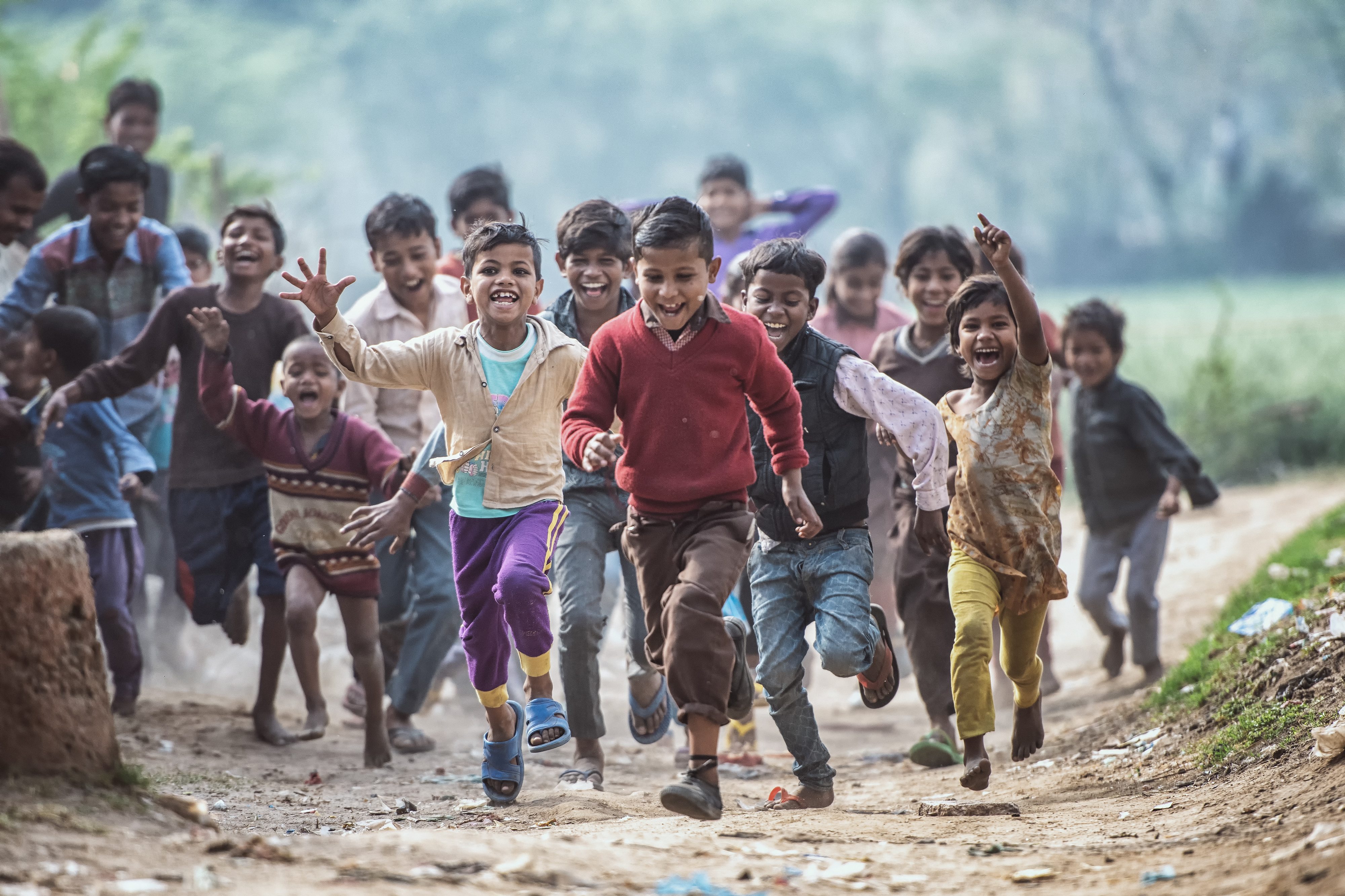
IntroductionThis course provides a context and set of resources to enable readers to understand the importance of Human Rights to Public Health. It presents a general introduction to the subject and examples of areas where the relationship is particularly important or vulnerable such as in humanitarian crises, reproductive health, universal health care, and the provision of health services, as well as introduces some of the legal aspects of Human Rights. The course is relevant to all, but in particular, to those with interests in global health.
The course is designed to help you:
- Define the concept of Human Rights in the context of Public Health.
- Understand the threats to Human Rights during and following humanitarian emergencies and the importance of mitigating these threats.
- Discuss the importance of human rights to women's reproductive health.
- Discuss the movement towards Universal Health Coverage in relation to human rights.
- Discuss a human rights perspective to the provision of health services.
- Understand the concept of the role legal frameworks might have in upholding human rights in relation to health.
This course is an Open Online Course (OOC) that was developed by Professor Richard Heller, with advice from Dr. Claudio Schuftan, Ms. Annabel Raw, and Mr. Carol Ngang. It has been adopted from Peoples-uni and was further developed by NextGenU.org (NGU).

There are six (6) modules to complete, which include:
Module 1: An Introduction to Human Rights and Public Health
Approximate time for completion of this course is 9 hours at an average reading rate of 144 words/minute.
Module 2: Humanitarian Emergencies
Module 3: Reproductive Health
Module 4: Universal Health Coverage
Module 5: Human Rights and Health Services
Module 6: Legal IssuesEngaging with this course
- To register for this course, complete the registration form. Begin the course with Module 1. For each lesson, read the description.
- Each lesson comprises introductory remarks. You can click on the collections of resources in each module.
- There is a forum on each module for reflection, and you will be able to add a new topic or respond to a previous one. You may want to share your learning from this and other readings, comment on the topics from your own experience, comment on others' posts, or provide feedback on how we can improve the content and/or presentation.
- There is a final quiz to assess your understanding of some important concepts. Click on the hyperlinks to take you to these items in each topic.
Requirements to obtain the certificate
You may browse this course for free to learn for your personal enrichment. There are no requirements.
To PASS and Obtain a Certificate
- All reading requirements
- Complete all quizzes and pass with a 80% with unlimited attempts. (consider that some courses do not have quizzes)
- All discussion forums
- The final exam with a minimum of 80% and a maximum of 3 attempts.
- The self and course evaluation forms
Subscribe to our newsletter to be notified of future updates, new courses, and to be part of our community.
-
The learning outcome of this introduction is: To be able to define the concept of Human Rights in the context of Public Health.
Read through the resources in the Resources link below and reflect upon the question posed.
-
The learning outcomes of this Module are: To understand the threats to Human Rights during and following humanitarian emergencies and the importance of mitigating these threats.
The UNHCR states: "In humanitarian emergencies, human rights considerations are often neglected and their relevance questioned as an immediate priority in the planning and implementation of relief operations. Nevertheless, with an increased recognition of the crucial role of human rights in ensuring long-term and durable solutions, measures to ensure the protection of the human rights of people affected by humanitarian emergencies are increasingly integrated in preparedness, relief, recovery and reconstruction efforts."
-
The learning outcome for this Module is: To be able to discuss the importance of human rights to women's reproductive health.
The United Nations Human Rights Office of the High Commissioner, in Women’s Human Rights and Gender Equality, reminds us that "Gender equality is at the very heart of human rights and United Nations values. A fundamental principle of the United Nations Charter adopted by world leaders in 1945 is "equal rights of men and women", and protecting and promoting women's human rights is the responsibility of all States." In its section on Sexual and reproductive health and rights, the Office states: "Women’s sexual and reproductive health is related to multiple human rights, including the right to life, the right to be free from torture, the right to health, the right to privacy, the right to education, and the prohibition of discrimination. The Committee on Economic, Social and Cultural Rights and the Committee on the Elimination of Discrimination against Women (CEDAW) have both clearly indicated that women’s right to health includes their sexual and reproductive health. This means that States have obligations to respect, protect and fulfill rights related to women’s sexual and reproductive health....Despite these obligations, violations of women’s sexual and reproductive health rights are frequent. These take many forms including denial of access to services that only women require, or poor quality services, subjecting women’s access to services to third party authorization, and performance of procedures related to women’s reproductive and sexual health without the woman’s consent"
Setting this in the context of inequality, the Office also states in a pamphlet on Maternal Mortality and Morbidity accessed from the page Sexual and reproductive health and rights: "According to the World Health Organization, 'The maternal mortality ratio in developing countries in 2013 is 230 per 100,000 live births versus 16 per 100,000 live births in developed countries. There are also large disparities within countries, between women with high and low income and between women living in rural and urban areas.' Often seen as a public health concern, the issue of maternal mortality and morbidity must also be understood as a matter of human rights."
The resources section below provides more in-depth information on the relation between human rights and reproductive health.
-
The learning outcome of this Module is: To be able to discuss the movement towards Universal Health Coverage in relation to human rights.
A pathway to achieving Universal Health Coverage was identified in the WHO’s 2010 World Health Report Health Systems Financing: the Path to Universal Coverage which "provides an action agenda for countries at all stages of development and proposes ways that the international community can better support efforts in low income countries to achieve universal coverage and improve health outcomes."
UHC is now one of the UN's identified Sustainable Development Goals, 3.8: "Achieve universal health coverage, including financial risk protection, access to quality essential health-care services and access to safe, effective, quality and affordable essential medicines and vaccines for all."
The World Health Organisation reports a "global coalition of more than 500 leading health and development organizations worldwide is urging governments to accelerate reforms that ensure everyone, everywhere, can access quality health services without being forced into poverty. The coalition emphasises the importance of universal access to health services for saving lives, ending extreme poverty, building resilience against the health effects of climate change and ending deadly epidemics such as Ebola." A bold and ambitious goal.
In the resources below, we start to unpack some of the ways in which Universal Health Coverage, and the health system reform that will be required, can be made relevant to human rights.
-
The learning outcome of this Module is: To be able to discuss a human rights perspective to the provision of health services.
As identified by the World Health Organisation in Health and Human Rights, “The right to the highest attainable standard of health requires a set of social criteria that is conducive to the health of all people, including the availability of health services, safe working conditions, adequate housing and nutritious foods. Achieving the right to health is closely related to that of other human rights, including the right to food, housing, work, education, non-discrimination, access to information, and participation.
The right to health includes both freedoms and entitlements.
-
Freedoms include the right to control one’s health and body (e.g. sexual and reproductive rights) and to be free from interference (e.g. free from torture and from non-consensual medical treatment and experimentation).
-
Entitlements include the right to a system of health protection that gives everyone an equal opportunity to enjoy the highest attainable level of health.
Health policies and programmes have the ability to either promote or violate human rights, including the right to health, depending on the way they are designed or implemented. Taking steps to respect and protect human rights upholds the health sector’s responsibility to address everyone’s health.
-
Yet, more than one billion people cannot obtain the health services they need, because those services are either inaccessible, unavailable, unaffordable or of poor quality. Widening inequities across the world mean that an estimated 100 million people are pushed into poverty every year when they pay out-of-pocket for health services."
Paul Farmer's video "I believe in health care as a human right" is short and is a good introduction to the topic.
The resources below provide more information about the issues raised above.
-
-
The learning outcome of this Module is: To understand the concept of the role legal frameworks might have in upholding human rights in relation to health.
Meir and colleagues, in a paper in Health and Human Rights, state that "National legal frameworks that uphold health-related human rights encourage a rights-based public policy that gives meaning to international treaty obligations and provides for individual causes of action, ensuring human rights accountability for global health advancement. Accordingly, such national law has laid the groundwork for a rapidly expanding accountability movement at the intersection of health and human rights, empowering individuals and groups to raise human rights claims and providing rights-based enforcement for health. Supporting the implementation of human rights, these cases have been shown to provide essential medicines to the sick, to alleviate state infringements on individual liberties, and to restrict harmful determinants of the public’s health......
The O’Neill Institute for National and Global Health Law at Georgetown University, the World Health Organization, and the Lawyers Collective have come together to develop a searchable Global Health and Human Rights Database that maps the intersection of health and human rights in judgments, international and regional instruments, and national constitutions."
The database is an excellent resource and easy to use. Searching through it will provide an excellent introduction to this topic.
A Lancet Commission on Global Health and the Law has been formed, and states: "Law at the international, national, and subnational levels has been an effective, although often underappreciated, way to safeguard and promote global health. By law we mean the statutes and regulations that express public policy as well as public institutions, including courts, legislatures, and agencies responsible for creating, implementing, and interpreting the law. Law has a fundamental, yet underused and underdeveloped, role in providing solutions to global health challenges. We are, therefore, launching a Lancet–O'Neill Institute, Georgetown University Commission on Global Health and the Law to examine the vital role of law in responding to major global health challenges." You can keep up to date on the activities of the Commission on their website and you might also like to read the comment by Richard Horton in the Lancet: The rule of law—an invisible determinant of health.
In the resources section below, you will be able to explore case studies relating to prisoners' rights, criminalization as a Public Health approach, informed consent, reproductive and migrant health, and the legal instruments that underpin international human rights.
-
 In this section, you can provide feedback about this course to help us make NextGenU.org better. Once evaluations are completed, you will be able to download your Certificate of Completion.
Click here to give your feedback. -
Course Feedback and How to Gain a Certificate
Not availableWe hope that you have enjoyed the course.
You can gain a Certificate of Completion if you have examined the resource pages in each of the Modules above, and have passed the quiz.
-

 Click here to start the Final Examination.