loader image
Skip to main content
  • Anatomy and Physiology
    0%

Focus Mode is ON. Click on the ‘collapse icon’ to close it.

  • Previous
  • Course data
    Introduction
    Course Registration
    Peer Corner
    Pre-Test
    Module 1: Lesson 1: An Introduction to the Human Body
    Introduction
    Overview of Anatomy and Physiology
    Structural Organization of the Human Body
    Functions of Human Life
    Requirements of Human Life
    Homeostasis
    Anatomical Terminology
    Medical Imaging
    Learning Activity 1 - Scenario Activity (90 minutes)
    Module 1: Lesson 2: The Chemical Level of Organization
    Introduction
    Elements and Atoms: The Building Blocks of Matter
    Chemical Bonds
    Chemical Reactions
    Inorganic Compounds Essential to Human Functioning
    Organic Compounds Essential to Human Functioning
    Module 1: Lesson 3: The Cellular Level of Organization
    Introduction
    The Cell Membrane
    The Cytoplasm and Cellular Organelles
    The Nucleus and DNA Replication
    Protein Synthesis
    Cell Growth and Division
    Cellular Differentiation
    Module 1: Lesson 4: The Tissue Level of Organization
    Introduction
    Types of Tissues
    Epithelial Tissue
    Connective Tissue Supports and Protects
    Muscle Tissue and Motion
    Nervous Tissue Mediates Perception and Response
    Tissue Injury and Aging
    Learning Activity 2 - Case scenario (60 minutes)
    Quiz: Module 1
    Module 2: Lesson 1: The Integumentary System
    Introduction
    Layers of the Skin
    Accessory Structures of the Skin
    Functions of the Integumentary System
    Diseases, Disorders, and Injuries of the Integumentary System
    Module 2: Lesson 2: Bone Tissue and the Skeletal System
    Introduction
    The Functions of the Skeletal System
    Bone Classification
    Bone Structure
    Bone Formation and Development
    Fractures: Bone Repair
    Exercise, Nutrition, Hormones, and Bone Tissue
    Calcium Homeostasis: Interactions of the Skeletal System and Other Organ Systems
    Module 2: Lesson 3: Axial Skeleton
    Introduction
    Divisions of the Skeletal System
    The Skull
    The Vertebral Column
    The Thoracic Cage
    Embryonic Development of the Axial Skeleton
    Module 2: Lesson 4: The Appendicular Skeleton
    Introduction
    The Pectoral Girdle
    Bones of the Upper Limb
    The Pelvic Girdle and Pelvis
    Bones of the Lower Limb
    Development of the Appendicular Skeleton
    Module 2: Lesson 5: Joints
    Introduction
    Classification of Joints
    Fibrous Joints
    Cartilaginous Joints
    Synovial Joints
    Types of Body Movements
    Anatomy of Selected Synovial Joints
    Development of Joints
    Module 2: Lesson 6: Muscle Tissue
    Introduction
    Overview of Muscle Tissues
    Skeletal Muscle
    Muscle Fiber Contraction and Relaxation
    Nervous System Control of Muscle Tension
    Types of Muscle Fibers
    Exercise and Muscle Performance
    Cardiac Muscle Tissue
    Smooth Muscle
    Development and Regeneration of Muscle Tissue
    Module 2: Lesson 7: The Muscular System
    Introduction
    Interactions of Skeletal Muscles, Their Fascicle Arrangement, and Their Lever Systems
    Naming Skeletal Muscles
    Axial Muscles of the Head, Neck, and Back
    Axial Muscles of the Abdominal Wall, and Thorax
    Muscles of the Pectoral Girdle and Upper Limbs
    Appendicular Muscles of the Pelvic Girdle and Lower Limbs
    Learning Activity 3 - Activity (45 minutes)
    Learning Activity 4 - Case Scenario (60 minutes)
    Quiz: Module 2
    Module 3: Lesson 1:The Nervous System and Nervous Tissue
    Introduction
    Basic Structure and Function of the Nervous System
    Nervous Tissue
    The Function of Nervous Tissue
    The Action Potential
    Communication Between Neurons
    Module 3 : Lesson 2: Anatomy of the Nervous System
    Introduction
    The Embryologic Perspective
    The Central Nervous System
    Circulation and the Central Nervous System
    The Peripheral Nervous System
    Module 3: Lesson 3: The Somatic Nervous System
    Introduction
    Sensory Perception
    Central Processing
    Motor Responses
    Module 3: Lesson 4: The Autonomic Nervous System
    Introduction
    Divisions of the Autonomic Nervous System
    Autonomic Reflexes and Homeostasis
    Central Control
    Drugs that Affect the Autonomic System
    Learning Activity 5 - Case Scenario (90 minutes)
    Module 3: Lesson 5: The Neurological Exam
    Introduction
    Overview of the Neurological Exam
    The Mental Status Exam
    The Cranial Nerve Exam
    The Sensory and Motor Exams
    The Coordination and Gait Exams
    Learning Activity 6 - Scenario Activity (90 minutes)
    Module 3: Lesson 6: The Endocrine System
    Introduction
    An Overview of the Endocrine System
    Hormones
    The Pituitary Gland and Hypothalamus
    The Thyroid Gland
    The Parathyroid Glands
    The Adrenal Glands
    The Pineal Gland
    Gonadal and Placental Hormones
    The Endocrine Pancreas
    Organs with Secondary Endocrine Functions
    Development and Aging of the Endocrine System
    Learning Activity 7 - Discussion Forum (60 minutes)
    Quiz: Module 3
    Module 4: Lesson 1:The Cardiovascular System: Blood
    Introduction
    An Overview of Blood
    Production of the Formed Elements
    Erythrocytes
    Leukocytes and Platelets
    Hemostasis
    Blood Typing
    Module 4: Lesson 2: The Cardiovascular System: The Heart
    Introduction
    Heart Anatomy
    Cardiac Muscle and Electrical Activity
    Cardiac Cycle
    Cardiac Physiology
    Development of the Heart
    Module 4: Lesson 3: The Cardiovascular System: Blood Vessels and Circulation
    Introduction
    Structure and Function of Blood Vessels
    Blood Flow, Blood Pressure, and Resistance
    Capillary Exchange
    Homeostatic Regulation of the Vascular System
    Circulatory Pathways
    Development of Blood Vessels and Fetal Circulation
    Learning Activity 8 - Case Scenario Activity (90 minutes)
    Module 4: Lesson 4: The Lymphatic and Immune System
    Introduction
    Anatomy of the Lymphatic and Immune Systems
    Barrier Defenses and the Innate Immune Response
    The Adaptive Immune Response: T lymphocytes and Their Functional Types
    The Adaptive Immune Response: B-lymphocytes and Antibodies
    The Immune Response against Pathogens
    Diseases Associated with Depressed or Overactive Immune Responses
    Transplantation and Cancer Immunology
    Learning Activity 9 - Case Scenario (60 minutes)
    Quiz: Module 4
    Module 5: Lesson 1: The Respiratory System
    Introduction
    Organs and Structures of the Respiratory System
    The Lungs
    The Process of Breathing
    Gas Exchange
    Transport of Gases
    Modifications in Respiratory Functions
    Embryonic Development of the Respiratory System
    Learning Activity 10 - Discussion Forum (90 minutes)
    Module 5: Lesson 2: The Digestive System
    Introduction
    Overview of the Digestive System
    Digestive System Processes and Regulation
    The Mouth, Pharynx, and Esophagus
    The Stomach
    The Small and Large Intestines
    Accessory Organs in Digestion: The Liver, Pancreas, and Gallbladder
    Chemical Digestion and Absorption: A Closer Look
    Module 5: Lesson 3: Metabolism and Nutrition
    Introduction
    Overview of Metabolic Reactions
    Carbohydrate Metabolism
    Lipid Metabolism
    Protein Metabolism
    Metabolic States of the Body
    Energy and Heat Balance
    Nutrition and Diet
    Learning Activity 11 - Discussion Forum (60 minutes)
    Module 5: Lesson 4: The Urinary System
    Introduction
    Physical Characteristics of Urine
    Gross Anatomy of Urine Transport
    Gross Anatomy of the Kidney
    Microscopic Anatomy of the Kidney
    Physiology of Urine Formation
    Tubular Reabsorption
    Regulation of Renal Blood Flow
    Endocrine Regulation of Kidney Function
    Regulation of Fluid Volume and Composition
    The Urinary System and Homeostasis
    Module 5: Lesson 5: Fluid, Electrolyte, and Acid-Base Balance
    Introduction
    Body Fluids and Fluid Compartments
    Water Balance
    Electrolyte Balance
    Acid-Base Balance
    Disorders of Acid-Base Balance
    Learning Activity 12 - Scenario Activity (60 minutes)
    Quiz: Module 5
    Module 6: Lesson 1: The Reproductive System
    Introduction
    Anatomy and Physiology of the Testicular Reproductive System
    Anatomy and Physiology of the Ovarian Reproductive System
    Development of the Male and Female Reproductive Systems
    Module 6: Lesson 2: Development and Inheritance
    Introduction
    Fertilization
    Embryonic Development
    Fetal Development
    Changes During Pregnancy, Labor, and Birth
    Adjustments of the Infant at Birth and Postnatal Stages
    Lactation
    Patterns of Inheritance
    Learning Activity 13 - Scenario Activity (90 minutes)
    Quiz: Module 6
    Final Exam
    Course and Self Evaluation & Certificate
    Course Activities
    Learning Activities.
  • Next
  • Categories
    • All categories
    • Public Health
    • Medicine Courses
    • Nursing
    • Professional Development Courses
    • Community Health Workers
    • Humanitarian Response
    • Health Sciences
    • Sciences
    • For our institutional partners: Full Programs/Graduate Medical Education
    • NIED Courses
  • Home
  • Calendar
  • About Us
    About Us FAQs The Frank Foundation Board Members Publications Quality Assurance
  • Guests
    Learners Mentors Universities
  • Courses
    All Courses Medicine Courses Public Health Courses Community Health Courses Professional Development Courses Nursing Courses Health Sciences Sciences
  • Programs
    Addiction Training for Health Professionals Public Health U - MPH Primary Education STEPS Humanitarian U
  • Connect
    Contact Us Volunteer Careers Join Our Network sign up for our newsletter
  • Donate
  • Blog
  • Recent
    Environmental Health SC
    Climate Change and Health - old
You are currently using guest access
Log in
Categories Collapse Expand
  • All categories
  • Public Health
  • Medicine Courses
  • Nursing
  • Professional Development Courses
  • Community Health Workers
  • Humanitarian Response
  • Health Sciences
  • Sciences
  • For our institutional partners: Full Programs/Graduate Medical Education
  • NIED Courses
Home Calendar About Us Collapse Expand
About Us FAQs The Frank Foundation Board Members Publications Quality Assurance
Guests Collapse Expand
Learners Mentors Universities
Courses Collapse Expand
All Courses Medicine Courses Public Health Courses Community Health Courses Professional Development Courses Nursing Courses Health Sciences Sciences
Programs Collapse Expand
Addiction Training for Health Professionals Public Health U - MPH Primary Education STEPS Humanitarian U
Connect Collapse Expand
Contact Us Volunteer Careers Join Our Network sign up for our newsletter
Donate Blog Recent Collapse Expand
Environmental Health SC
Climate Change and Health - old
Anatomy and Physiology
Expand all Collapse all
Skip Course Activities and Resources

Course Activities and Resources

  • Syllabus
  • Resources
  • All Discussion Forums
  • Quizzes

      Health Sciences

      Anatomy and Physiology

      • Course
      • Competencies
      You do not have permission to view discussions in this forum.
      • Health Sciences

        Anatomy and Physiology

        0% complete
        0% complete
        Resume

        Introduction


        Show More Show Less
        • questionnaire icon
          Course Registration Questionnaire
          Students must
          Student must submit this questionnaire to complete it
        • forum icon
          Peer Corner Forum
        • quiz icon
          Pre-Test Quiz
          Students must
          View
          Receive a grade
        Show More
      • How to create an account and enroll in the course?


      • OpenStax Anatomy and Physiology Homepage


        Welcome to the Anatomy and Physiology course. This course will reinforce your fundamental, theoretical, and practical knowledge of anatomy and physiology. In addition, you will learn about health promotion and prevention of the most common diseases, as well as approaching possible scenarios where they will demonstrate their problem-solving skills. It provides you with the basic skills needed. You will have the necessary foundations to be able to carry out more complex studies in the field of medicine and its different specialties.s.

        This Anatomy and Physiology course is sponsored in part by the International Development Research Centre and the University of the Incarnate Word School of Osteopathic Medicine. This Anatomy and Physiology course uses learning resources from the OpenStax Library, a nonprofit organization based at Rice University whose mission is to improve student access to education; learning activities for evaluations were developed Carolina Bustillos, MD, DiplEd; Pablo Baldiviezo, MD, MSc; Tristan Aaron Wild, BMSc (Hons); and Jinyuru (Donna) Yang, Bkin High, MSc Medical Science (Hons).

        For publications on NextGenU.org’s courses’ efficacy, see NextGenU.org’s publication page. Subscribe to our newsletter to be notified of future updates and new courses and to be part of our community. 

        There are six modules to complete, which provide an introduction to: 

        Module 1: Levels of Organization
        Module 2: Support and Movement
        Module 3: Regulation, Integration, and Control
        Module 4: Fluids and Transport
        Module 5: Energy, Maintenance, and Environmental Exchange
        Module 6: Human Development and the Continuity of Life

        The completion time for this course is estimated at 277 hours, comprising 86 hours of learning resources, 172 hours to study content and assimilation, and 18  hours of participating in learning activities and quizzes, to assist the learners in the synthesis of learning materials. This course is equivalent to 6 credit hours.

        This course requires the completion of all activities. At the end of each module, there is a practice quiz of 10 multiple-choice questions. After you’ve completed each lesson, quiz, and learning activity, at the end of the course, you’ll have access to a final exam consisting of 40 multiple-choice questions and a chance to evaluate this course. Participants have up to three opportunities to take the final exam and achieve the required score of >=70%. Once you’ve passed that last test, you will be able to download a certificate of completion from NextGenU.org and our course’s co-sponsoring organizations. We keep your personal information confidential, never sell any of your information, and only use anonymized data for research purposes. Also, we are happy to report your testing information and share your work with anyone (your school, employer, etc.) at your request. 

        Engaging with this Course:

        You may browse this course for free to learn for your personal enrichment; there are no requirements. To register in this course, it is required that learners have obtained a college-level/bachelor's degree. 

        • all the reading requirements;
        • all quizzes and pass with a 80% with unlimited attempts;
        • all learning activities;
        • the final exam with a minimum of 80% and a maximum of 3 attempts;
        • the self and course evaluation forms.

        To obtain credit:

        • Complete all requirements listed above for the certificate, and
        • Your learning institution or workplace should approve the partner-university-sponsored NextGenU.org course for educational credit, as they would for their learner taking a course anywhere.  

        NextGenU.org is happy to provide your institution with:

        • A link to and description of the course training so they can see all its components, including the co-sponsoring universities and other professional organization co-sponsors; 
        • Your grade on the final exam;
        • Your work products (e.g., case study activities) and any other required or optional shared materials that you produce and authorize to share with them;  
        • Your evaluations -- course and self-assessments;
        • A copy of your certificate of completion, with the co-sponsoring universities and other organizations listed.

        To obtain a degree, NextGenU.org co-sponsors degree programs with institutional partners. To obtain a full degree co-sponsored with NextGenU.org, registrants must be enrolled in a degree program as a student of a NextGenU.org institutional partner. If you think your institution might be interested in offering a degree with NextGenU.org, contact us.

        We hope you will find this a rewarding learning experience, and we count on your assessment and feedback to help us improve this training for future students.

        Here are the next steps to take the course and earn a certificate.

        • Complete the registration form.
        • Take the pre-test.
        • Begin the course with Module 1:Levels of Organization. In each lesson, read the description, complete all required readings and any required activity, as well as take the corresponding quizzes.

      • Module 1: Levels of Organization

        In this module, you will understand the basic human anatomy and physiology, including its language, the levels of organization, and the basics of chemistry and cell biology. These chapters will provide you with a foundation for further study of the body. They also will focus particularly on how the body’s regions, important chemicals, and cells maintain homeostasis.
      • Module 1: Lesson 1: An Introduction to the Human Body

        Student Learning Outcomes:
        Upon completion of this lesson, you will be able to:
        • Distinguish between anatomy and physiology, and identify several branches of each.
        • Describe the structure of the body, from simplest to most complex, in terms of the six levels of organization.
        • Identify the functional characteristics of human life.
        • Identify the four requirements for human survival.
        • Define homeostasis and explain its importance to normal human functioning.
        • Use appropriate anatomical terminology to identify key body structures, body regions, and directions in the body.
        • Compare and contrast at least four medical imaging techniques in terms of their function and use in medicine.
        Approximate time required for the readings for this lesson (at 144 words/minute): 6 hours and 6 minutes.

        Click here to start this lesson

        • Required Learning Resources and Activities
        • url icon
          Introduction URL

          Read the entire page. (2 minutes)

          Rice University - 2022

        • url icon
          Overview of Anatomy and Physiology URL

          Read the entire page. (11 minutes)

          Rice University - 2022

        • url icon
          Structural Organization of the Human Body URL

          Read the entire page. (15 minutes)

          Rice University - 2022

        • url icon
          Functions of Human Life URL

          Read the entire page. (12 minutes)

          Rice University - 2022

        • url icon
          Requirements of Human Life URL

          Read the entire page. (23 minutes)

          Rice University - 2022

        • url icon
          Homeostasis URL

          Read the entire page. (17 minutes)

          Rice University - 2022

        • url icon
          Anatomical Terminology URL

          Read the entire page. (38 minutes)

          Rice University - 2022

        • url icon
          Medical Imaging URL

          Read the entire page. (20 minutes)

          Rice University - 2022

        • forum icon
          Learning Activity 1 - Scenario Activity (90 minutes) Forum
          Students must
          View
          Start discussions: 1

          General Instructions

          In this activity, you will be given a series of questions and instructions where you will choose and explain imaging techniques and conduct research on each technique. In the second part of this activity, you will compare and contrast options between these techniques and indicate them in two different case studies. 

          Step 1 - Review

          Gather information about the following medical imaging techniques, their function and their use in medicine. Be sure to include information on the technology used, the procedure involved, the type of information obtained, and the advantages and disadvantages of each technique.

          1. X-rays
          2. CT scan
          3. PET scan
          4. MRI
          5. Ultrasound
          6. Endoscopy

          Review the following two case studies:

          Case Study 1:

          A 45-year-old woman presents to the emergency room with severe abdominal pain. She reports a history of gallstones and a gastric ulcer on another occasion and is concerned that she may have another episode. The doctor suspects cholecystitis but cannot rule out the already-treated gastric ulcer and wants a medical image to confirm the diagnosis.

          Case Study 2:

          A 65-year-old man presents to the primary care clinic with a persistent cough and shortness of breath. The physician suspects lung cancer and wants to obtain a medical image to evaluate the extent of the disease.

          Step 2 - Respond

          1st Part: 

          Analyze each medical imaging technique and write a description of 70 words for each one. Your analysis should include the following sections: 

          A. Introduction: provide a brief overview of the importance and correct technique of each medical imaging technique.

          B. Compare and contrast with other imaging techniques: mention in which cases it is the preferred imaging study according to its function. Mention the specificity of this study.

          2nd Part: 

          Describe in 100 words the patient's imaging technique recommended by the physician for each case study (200 words for both case studies). You should also compare and contrast the imaging techniques based on their strengths and limitations in diagnosing each patient's condition.

          Provide your opinion on which medical imaging technique is the most effective for each clinical case. Be sure to support your conclusion with evidence from your research and the content learned throughout the module.

          Step 3: Share 

          To share your work, click the “Add a new discussion topic” button under this post and paste your work into the “Message” box. Make sure to reference others’ intellectual property when necessary. All references should follow 7th Edition APA formatting. For further instructions, see the resource on the Himmelfarb Health Sciences Library: APA citation resource (N.B. references are excluded from word counts).

          Step 4: Interact 

          To complete the activity, you will need to reply to at least two posts made by your peers in a respectful and professional manner. Be sure your post engages your peers' ideas by including a reflection on their comments, sharing ideas on other potential difficulties and parties involved, or asking thought-provoking questions. If a peer comments on your posting, please reply. To post a reply, click “Reply” on a particular discussion, write your feedback and then click “Post to forum.

          OPTIONAL Step 5: Interact (10 minutes)

          If you would like to, you can reply to your peers' posts in a respectful and professional manner. Ensure that your post engages your peers' ideas by including a reflection on their comments, sharing ideas of other potential difficulties and parties involved, or asking thought-provoking questions. If a peer comments on your posting, please reply. To post a reply, click “Reply” on a particular discussion, write your feedback and then click on “Post to forum.”

      • Module 1: Lesson 2: The Chemical Level of Organization

        Student Learning Outcomes:
        Upon completion of this module, students you will be able to:
        • Describe the fundamental composition of matter.
        • Identify the three subatomic particles.
        • Identify the four most abundant elements in the body.
        • Explain the relationship between an atom’s number of electrons and its relative stability.
        • Define homeostasis and explain its importance to normal human functioning.
        • Distinguish between ionic bonds, covalent bonds, and hydrogen bonds.
        • Explain how energy is invested, stored, and released via chemical reactions, particularly those reactions that are critical to life.
        • Explain the importance of the inorganic compounds that contribute to life, such as water, salts, acids, and bases.
        • Compare and contrast the four important classes of organic (carbon-based) compounds—proteins, carbohydrates, lipids, and nucleic acids—according to their composition and functional importance to human life.
        Approximate time required for the readings for this lesson (at 144 words/minute): 5 hours and 54 minutes.

        Click here to start this lesson

        • Required Learning Resources and Activities
        • url icon
          Introduction URL

          Read the entire page. (3 minutes)

          Rice University - 2022

        • url icon
          Elements and Atoms: The Building Blocks of Matter URL

          Read the entire page. (34 minutes)

          Rice University - 2022

        • url icon
          Chemical Bonds URL

          Read the entire page. (24 minutes)

          Rice University - 2022

        • url icon
          Chemical Reactions URL

          Read the entire page. (23 minutes)

          Rice University - 2022

        • url icon
          Inorganic Compounds Essential to Human Functioning URL

          Read the entire page. (34 minutes)

          Rice University - 2022

        • url icon
          Organic Compounds Essential to Human Functioning URL

          Read the entire page. (59 minutes)

          Rice University - 2022

      • Module 1: Lesson 3: The Cellular Level of Organization

        Student Learning Outcomes:
        Upon completion of this module, students you will be able to:
        • Describe the structure and function of the cell membrane, including its regulation of materials into and out of the cell.
        • Describe the functions of the various cytoplasmic organelles.
        • Explain the structure and contents of the nucleus, as well as the process of DNA replication.
        • Explain the process by which a cell builds proteins using the DNA code.
        • List the stages of the cell cycle in order, including the steps of cell division in somatic cells.
        • Discuss how a cell differentiates and becomes more specialized.
        • List the morphological and physiological characteristics of some representative cell types in the human body.
        Approximate time required for the readings for this lesson (at 144 words/minute): 6 hours and 16 minutes.

        Click here to start this lesson

        • Students must
          Mark as done
          Required Learning Resources and Activities
        • url icon
          Introduction URL

          Read the entire page. (7 minutes)

          Rice University - 2022

        • url icon
          The Cell Membrane URL

          Read the entire page. (55 minutes)

          Rice University - 2022

        • url icon
          The Cytoplasm and Cellular Organelles URL

          Read the entire page. (36 minutes)

          Rice University - 2022

        • url icon
          The Nucleus and DNA Replication URL

          Read the entire page. (20 minutes)

          Rice University - 2022

        • url icon
          Protein Synthesis URL

          Read the entire page. (24 minutes)

          Rice University - 2022

        • url icon
          Cell Growth and Division URL

          Read the entire page. (31 minutes)

          Rice University - 2022

        • url icon
          Cellular Differentiation URL

          Read the entire page. (15 minutes)

          Rice University - 2022

      • Module 1: Lesson 4: The Tissue Level of Organization

        Student Learning Outcomes:
        Upon completion of this module, students you will be able to:
        • Identify the main tissue types and discuss their roles in the human body.
        • Identify the four types of tissue membranes and the characteristics of each that make them functional.
        • Explain the functions of various epithelial tissues and how their forms enable their functions.
        • Explain the functions of various connective tissues and how their forms enable their functions.
        • Describe the characteristics of muscle tissue and how these enable function.
        • Discuss how a cell differentiates and becomes more specialized.
        • Discuss the characteristics of nervous tissue and how these enable information processing and control of muscular and glandular activities.
        Approximate time required for the readings for this lesson (at 144 words/minute): 6 hours and 44 minutes.

        Click here to start this lesson

        • Required Learning Resources and Activities
        • url icon
          Introduction URL

          Read the entire page. (3 minutes)

          Rice University - 2022

        • url icon
          Types of Tissues URL

          Read the entire page. (22 minutes)

          Rice University - 2022

        • url icon
          Epithelial Tissue URL

          Read the entire page. (55 minutes)

          Rice University - 2022

        • url icon
          Connective Tissue Supports and Protects URL

          Read the entire page. (46 minutes)

          Rice University - 2022

        • url icon
          Muscle Tissue and Motion URL

          Read the entire page. (8 minutes)

          Rice University - 2022

        • url icon
          Nervous Tissue Mediates Perception and Response URL

          Read the entire page. (11 minutes)

          Rice University - 2022

        • url icon
          Tissue Injury and Aging URL

          Read the entire page. (22 minutes)

          Rice University - 2022

        • forum icon
          Learning Activity 2 - Case scenario (60 minutes) Forum
          Students must
          View
          Start discussions: 1

          General Instructions

          In this activity, you will be given a series of questions where you will explain and analyze the biological and chemical reactions in the human body during and after exercising. The activity ends when you write a paragraph explaining to a patient the pathology of Rhabdomyolysis, what happens to the body, and how to take care of oneself and prevent this condition in the human body.

          Step 1 - Review

          Karl is a 38-year-old man who comes to the health center for cramps, pain, and weakness in both lower limbs that have lasted for 48 hours. He is a professional firefighter and practices sports regularly (athletics and cycling). The days before the clinical, he had been training for a long-term cycling race. Karl does not consume drugs or anabolic substances. 

          Karl remembers feeling cramps and dehydration. He sweated a lot, felt cold many times and could not drink water. On a steep slope, he felt dizzy and lost control. He was injured and had an open wound in which he could see his bone. He had no fractures but did feel a lot of pain, and the doctors did have to suture the wound.

          Step 2 - Respond

          Answer the first 6 questions accurately, and then, for question 7, read the paragraph carefully and explain the situation in no more than 300 words.


          1. What is the main component of skeletal muscles, and how does it aid in muscle contraction?
          2. Describe the role of calcium in muscle contraction.
          3. What is the process that activated Karl’s body at the moment of perspiring during the exercise?
          4. What tissues were injured? How were they recovering?
          5. How do treatments for muscle cramps differ depending on the cause of the cramps?
          6. How can an understanding of the chemical, cellular, and tissue levels of an organization help in preventing and treating muscle cramps in athletes?
          7. Karl refers to having been diagnosed with Rhabdomyolysis 2 years ago. He was treated and has recovered since then. He asks for an explanation about what is happening with his body to understand better and avoid a serious condition. Karl is in his second year at a biochemistry university and can understand technical language. 
          How would you explain to Karl his condition and the way to prevention? 

          Write a paragraph of a maximum of 300 words explaining the situation of this disease, what happens to his body when he exercises, and how he can avoid a severe relapse, taking into account his background.

          Step 3: Share 

          To share your work, click the “Add a new discussion topic” button under this post and paste your work into the “Message” box. Make sure to reference others’ intellectual property when necessary. All references should follow 7th Edition APA formatting. For further instructions, see the resource on the Himmelfarb Health Sciences Library: APA citation resource (N.B. references are excluded from word counts).

          Step 4: Interact

          To complete the activity, you need to post a reply. Click “Reply” on the main discussion, and then click “Post to forum.”

          OPTIONAL Step 5: Interact (10 minutes)

          If you would like to, you can reply to your peers' posts in a respectful and professional manner. Ensure that your post engages your peers' ideas by including a reflection on their comments, sharing ideas of other potential difficulties and parties involved, or asking thought-provoking questions. If a peer comments on your posting, please reply. To post a reply, click “Reply” on a particular discussion, write your feedback and then click on “Post to forum.”

        • quiz icon
          Quiz: Module 1
          Students must
          View
          Receive a grade
          Receive a passing grade

          To access the quiz, click on the name of the quiz provided above. On the following screen, click the "Preview quiz now" button to respond to the questions.

      • Module 2: Support and Movement

        In this module, you will explore the skin, the largest organ of the body, and will examine the body’s skeletal and muscular systems, following a traditional sequence of topics. You will through specific systems of the body, and as it does so, you will maintain a focus on homeostasis as well as those diseases and conditions that can disrupt it.
      • Module 2: Lesson 1: The Integumentary System

        Student Learning Outcomes:
        Upon completion of this module, students you will be able to:
        • Describe the integumentary system and the role it plays in homeostasis.
        • Describe the layers of the skin and the functions of each layer.
        • Describe the accessory structures of the skin and the functions of each.
        • Describe the changes that occur in the integumentary system during the aging process.
        • Discuss several common diseases, disorders, and injuries that affect the integumentary system.
        • Explain treatments for some common diseases, disorders, and injuries of the integumentary system.
        Approximate time required for the readings for this lesson (at 144 words/minute): 4 hours and 24 minutes.

        Click here to start this lesson

        • Required Learning Resources and Activities

        • url icon
          Introduction URL

          Read the entire page. (3 minutes)

          Rice University - 2022

        • url icon
          Layers of the Skin URL

          Read the entire page. (47 minutes)

          Rice University - 2022

        • url icon
          Accessory Structures of the Skin URL

          Read the entire page. (27 minutes)

          Rice University - 2022

        • url icon
          Functions of the Integumentary System URL

          Read the entire page. (21 minutes)

          Rice University - 2022

        • url icon
          Diseases, Disorders, and Injuries of the Integumentary System URL

          Read the entire page. (34 minutes)

          Rice University - 2022

      • Module 2: Lesson 2: Bone Tissue and the Skeletal System

        Student Learning Outcomes:
        Upon completion of this module, students you will be able to:
        • List and describe the functions of bones.
        • Describe the classes of bones.
        • Discuss the process of bone formation and development.
        • Explain how bone repairs itself after a fracture.
        • Discuss the effect of exercise, nutrition, and hormones on bone tissue.
        • Describe how an imbalance of calcium can affect bone tissue.
        Approximate time required for the readings for this lesson (at 144 words/minute): 4 hours and 54 minutes.

        Click here to start this lesson

        • Students must
          Mark as done
          Required Learning Resources and Activities
        • url icon
          Introduction URL

          Read the entire page. (2 minutes)

          Rice University - 2022

        • url icon
          The Functions of the Skeletal System URL

          Read the entire page. (12 minutes)

          Rice University - 2022

        • url icon
          Bone Classification URL

          Read the entire page. (8 minutes)

          Rice University - 2022

        • url icon
          Bone Structure URL

          Read the entire page. (50 minutes)

          Rice University - 2022

        • url icon
          Bone Formation and Development URL

          Read the entire page. (31 minutes)

          Rice University - 2022

        • url icon
          Fractures: Bone Repair URL

          Read the entire page. (13 minutes)

          Rice University - 2022

        • url icon
          Exercise, Nutrition, Hormones, and Bone Tissue URL

          Read the entire page. (23 minutes)

          Rice University - 2022

        • url icon
          Calcium Homeostasis: Interactions of the Skeletal System and Other Organ Systems URL

          Read the entire page. (8 minutes)

          Rice University - 2022

      • Module 2: Lesson 3: Axial Skeleton

        Student Learning Outcomes:
        Upon completion of this lesson, you will be able to:
        • Describe the functions of the skeletal system and define its two major subdivisions.
        • Identify the bones and bony structures of the skull, the cranial suture lines, the cranial fossae, and the openings in the skull.
        • Discuss the vertebral column and regional variations in its bony components and curvatures.
        • Describe the components of the thoracic cage.
        • Discuss the embryonic development of the axial skeleton.
        Approximate time required for the readings for this lesson (at 144 words/minute): 6 hours and 4 minutes.

        Click here to start this lesson

        • Required Learning Resources and Activities
        • url icon
          Introduction URL

          Read the entire page. (6 minutes)

          Rice University - 2022

        • url icon
          Divisions of the Skeletal System URL

          Read the entire page. (7 minutes)

          Rice University - 2022

        • url icon
          The Skull URL

          Read the entire page. (90 minutes)

          Rice University - 2022

        • url icon
          The Vertebral Column URL

          Read the entire page. (54 minutes)

          Rice University - 2022

        • url icon
          The Thoracic Cage URL

          Read the entire page. (10 minutes)

          Rice University - 2022

        • url icon
          Embryonic Development of the Axial Skeleton URL

          Read the entire page. (15 minutes)

          Rice University - 2022

      • Module 2: Lesson 4: The Appendicular Skeleton

        Student Learning Outcomes:
        Upon completion of this lesson, you will be able to:
        • Discuss the bones of the pectoral and pelvic girdles, and describe how these unite the limbs with the axial skeleton.
        • Describe the bones of the upper limb, including the bones of the arm, forearm, wrist, and hand.
        • Identify the features of the pelvis and explain how these differ between the adult male and female pelvis.
        • Describe the bones of the lower limb, including the bones of the thigh, leg, ankle, and foot.
        • Describe the embryonic formation and growth of the limb bones.
        Approximate time required for the readings for this lesson (at 144 words/minute): 4 hours and 48 minutes.

        Click here to start this lesson

        • Required Learning Resources and Activities

        • url icon
          Introduction URL

          Read the entire page. (3 minutes)

          Rice University - 2022

        • url icon
          The Pectoral Girdle URL

          Read the entire page. (19 minutes)

          Rice University - 2022

        • url icon
          Bones of the Upper Limb URL

          Read the entire page. (36 minutes)

          Rice University - 2022

        • url icon
          The Pelvic Girdle and Pelvis URL

          Read the entire page. (29 minutes)

          Rice University - 2022

        • url icon
          Bones of the Lower Limb URL

          Read the entire page. (38 minutes)

          Rice University - 2022

        • url icon
          Development of the Appendicular Skeleton URL

          Read the entire page. (19 minutes)

          Rice University - 2022

      • Module 2: Lesson 5: Joints

        Student Learning Outcomes:
        Upon completion of this lesson, you will be able to:
        • Discuss both functional and structural classifications for body joints.
        • Describe the characteristic features for fibrous, cartilaginous, and synovial joints and give examples of each.
        • Define and identify the different body movements.
        • Discuss the structure of specific body joints and the movements allowed by each.
        • Explain the development of body joints.
        Approximate time required for the readings for this lesson (at 144 words/minute): 5 hours and 54 minutes.

        Click here to start this lesson

        • Required Learning Resources and Activities

        • url icon
          Introduction URL

          Read the entire page. (6 minutes)

          Rice University - 2022

        • url icon
          Classification of Joints URL

          Read the entire page. (13 minutes)

          Rice University - 2022

        • url icon
          Fibrous Joints URL

          Read the entire page. (13 minutes)

          Rice University - 2022

        • url icon
          Cartilaginous Joints URL

          Read the entire page. (11 minutes)

          Rice University - 2022

        • url icon
          Synovial Joints URL

          Read the entire page. (39 minutes)

          Rice University - 2022

        • url icon
          Types of Body Movements URL

          Read the entire page. (29 minutes)

          Rice University - 2022

        • url icon
          Anatomy of Selected Synovial Joints URL

          Read the entire page. (61 minutes)

          Rice University - 2022

        • url icon
          Development of Joints URL

          Read the entire page. (5 minutes)

          Rice University - 2022

      • Module 2: Lesson 6: Muscle Tissue

        Student Learning Outcomes:
        Upon completion of this lesson, you will be able to:
        • Explain the organization of muscle tissue.
        • Describe the function and structure of skeletal, cardiac muscle, and smooth muscle.
        • Explain how muscles work with tendons to move the body.
        • Describe how muscles contract and relax.
        • Define the process of muscle metabolism.
        • Explain how the nervous system controls muscle tension.
        • Relate the connections between exercise and muscle performance.
        • Explain the development and regeneration of muscle tissue.
        Approximate time required for the readings for this lesson (at 144 words/minute): 5 hours and 18 minutes.

        Click here to start this lesson

        • Required Learning Resources and Activities

        • url icon
          Introduction URL

          Read the entire page. (2 minutes)

          Rice University - 2022

        • url icon
          Overview of Muscle Tissues URL

          Read the entire page. (6 minutes)

          Rice University - 2022

        • url icon
          Skeletal Muscle URL

          Read the entire page. (28 minutes)

          Rice University - 2022

        • url icon
          Muscle Fiber Contraction and Relaxation URL

          Read the entire page. (35 minutes)

          Rice University - 2022

        • url icon
          Nervous System Control of Muscle Tension URL

          Read the entire page. (28 minutes)

          Rice University - 2022

        • url icon
          Types of Muscle Fibers URL

          Read the entire page. (8 minutes)

          Rice University - 2022

        • url icon
          Exercise and Muscle Performance URL

          Read the entire page. (18 minutes)

          Rice University - 2022

        • url icon
          Cardiac Muscle Tissue URL

          Read the entire page. (8 minutes)

          Rice University - 2022

        • url icon
          Smooth Muscle URL

          Read the entire page. (16 minutes)

          Rice University - 2022

        • url icon
          Development and Regeneration of Muscle Tissue URL

          Read the entire page. (10 minutes)

          Rice University - 2022

      • Module 2: Lesson 7: The Muscular System

        Student Learning Outcomes:
        Upon completion of this lesson, you will be able to:
        • Describe the actions and roles of agonists and antagonists.
        • Explain the structure and organization of muscle fascicles and their role in generating force.
        • Explain the criteria used to name skeletal muscles.
        • Identify the skeletal muscles and their actions on the skeleton and soft tissues of the body.
        • Identify the origins and insertions of skeletal muscles and the prime movements.
        Approximate time required for the readings for this lesson (at 144 words/minute): 7 hours and 39 minutes

        Click here to start this lesson

        • Required Learning Resources and Activities

        • url icon
          Introduction URL

          Read the entire page. (3 minutes)

          Rice University - 2022

        • url icon
          Interactions of Skeletal Muscles, Their Fascicle Arrangement, and Their Lever Systems URL

          Read the entire page. (23 minutes)

          Rice University - 2022

        • url icon
          Naming Skeletal Muscles URL

          Read the entire page. (12 minutes)

          Rice University - 2022

        • url icon
          Axial Muscles of the Head, Neck, and Back URL

          Read the entire page. (39 minutes)

          Rice University - 2022

        • url icon
          Axial Muscles of the Abdominal Wall, and Thorax URL

          Read the entire page. (23 minutes)

          Rice University - 2022

        • url icon
          Muscles of the Pectoral Girdle and Upper Limbs URL

          Read the entire page. (35 minutes)

          Rice University - 2022

        • url icon
          Appendicular Muscles of the Pelvic Girdle and Lower Limbs URL

          Read the entire page. (37 minutes)

          Rice University - 2022

        • forum icon
          Learning Activity 3 - Activity (45 minutes) Forum
          Students must
          View
          Start discussions: 1

          General Instructions

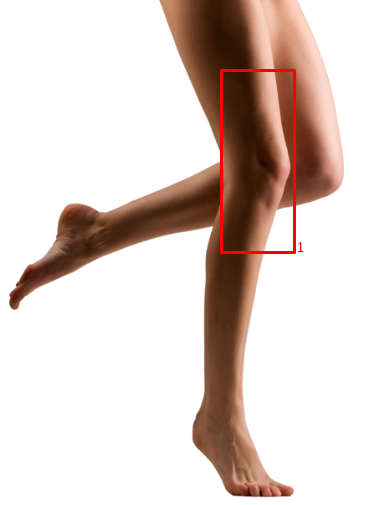
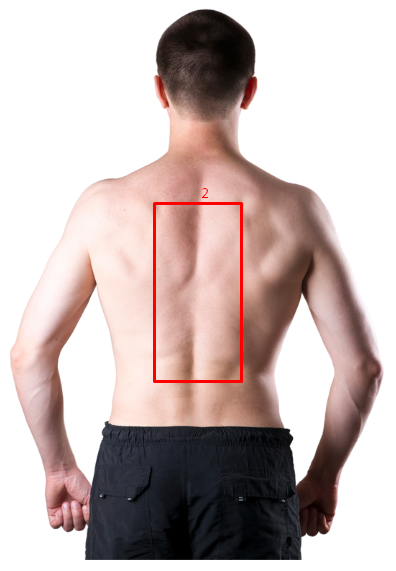
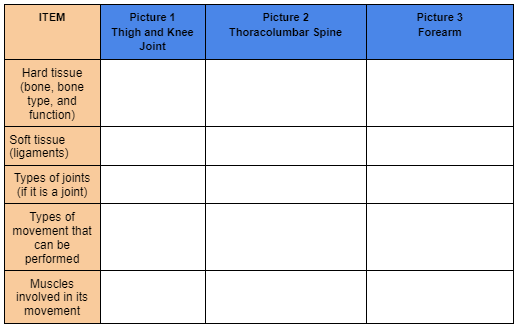
          In this activity, you will have to analyze some images and fill in the characteristics of each one in the descriptive table. Pay attention to the items and describe them in detail with everything you have learned in the module.

          Step 1 - Review

          Look carefully at the images of the human body inside the red-edged squares:

          588386

          Step 2 - Respond

          Complete the table below.

          86

          Step 3: Share 

          To share your work, click the “Add a new discussion topic” button under this post and paste your work into the “Message” box. Make sure to reference others’ intellectual property when necessary. All references should follow 7th Edition APA formatting. For further instructions, see the resource on the Himmelfarb Health Sciences Library: APA citation resource (N.B. references are excluded from word counts).

          Step 4: Interact 

          To complete the activity, you need to post a reply. Click “Reply” on the main discussion, and then click “Post to forum.”

          OPTIONAL Step 5: Interact (10 minutes)

          If you would like to, you can reply to your peers' posts in a respectful and professional manner. Ensure that your post engages your peers' ideas by including a reflection on their comments, sharing ideas of other potential difficulties and parties involved, or asking thought-provoking questions. If a peer comments on your posting, please reply. To post a reply, click “Reply” on a particular discussion, write your feedback and then click on “Post to forum.”

        • forum icon
          Learning Activity 4 - Case Scenario (60 minutes) Forum
          Students must
          View
          Start discussions: 1

          General Instructions

          In this activity, you will examine some images, read the case scenario presented below, and follow the instructions. Use appropriate terminology to write the explanation you will develop after your analysis.

          Step 1 - Examine

          Examine the images and read the scenario about Alan.


          Alan is a 19-year-old young man who started training at the gym. He wants to build his triceps but does not know how. He recovered from a fractured humerus three months ago and wants to start building his pectorals and then move on to the triceps and biceps. His cousin, who is not an instructor, decided to help him by giving him the following instructions:

          “Dear Alan, 

          I recommend the exercise in the image. It is called the French Press. Someone told me it is ideal for adequate muscle hypertrophy in the pectorals. Repeating the exercise several times (you can start with four series of 35 repetitions) would be best until you feel pain and fatigue in the arms and chest (the reason is that your muscle is working). 

          I do not recommend you hydrate because your muscle does not need water to develop. Muscle mass needs protein and steroids to build correctly. Perform this exercise with the most significant weight you can lift. If your arms shake, continue exercising, and do not stop! And do not worry, your head cannot suffer any damage from exercising like this. Consume a lot of protein, eggs, and flan for collagen. Do not forget to run often when leaving the gym and stretch the muscle only one hour after exercise, so you will get quick results for the summer.”

          Step 2 - Respond

          Evaluate the instructions given to Alan by his cousin and then write new instructions for him using 500 words and the knowledge gained thus far. 

          Consider the following points:

          • What precautions should Alan take being a patient who suffered a humeral fracture?
          • Which joints are related to the humerus, and which muscles and muscle attachments?
          • What is the function of bones when lifting weights?
          • Explain the movement in this exercise, i.e., which muscles contract and extend in the first image and which in the second image? Why do you feel muscle pain when you exercise? What happens to muscle fibers when they tear? What is muscle hypertrophy? How are muscle fibers reconstructed?
          • Explain what would happen if the weight you are working with is too much. What would happen to your muscle? What damage could it suffer if it is overextended?
          • Which elements and nutrients are important for muscle metabolism?
          • Explain why hydration is important.

          Step 3: Share 

          To share your work, click the “Add a new discussion topic” button under this post and paste your work into the “Message” box. Make sure to reference others’ intellectual property when necessary. All references should follow 7th Edition APA formatting. For further instructions, see the resource on the Himmelfarb Health Sciences Library: APA citation resource (N.B. references are excluded from word counts).

          Step 4: Interact 

          To complete the activity, you need to post a reply. Click “Reply” on the main discussion, and then click “Post to forum.”

          OPTIONAL Step 5: Interact (10 minutes)

          If you would like to, you can reply to your peers' posts in a respectful and professional manner. Ensure that your post engages your peers' ideas by including a reflection on their comments, sharing ideas of other potential difficulties and parties involved, or asking thought-provoking questions. If a peer comments on your posting, please reply. To post a reply, click “Reply” on a particular discussion, write your feedback and then click on “Post to forum.”

        • quiz icon
          Quiz: Module 2
          Students must
          View
          Receive a grade
          Receive a passing grade

          To access the quiz, click on the name of the quiz provided above. On the following screen, click the "Preview quiz now" button to respond to the questions.

      • Module 3: Regulation, Integration, and Control

        This module helps you to answer questions about nervous and endocrine system control and regulation. In a break with the traditional sequence of topics, the special senses are integrated into the chapter on the somatic nervous system. The chapter on the neurological examination will offer you a unique approach to understanding nervous system function using five simple but powerful diagnostic tests.
      • Module 3: Lesson 1:The Nervous System and Nervous Tissue

        Student Learning Outcomes:
        Upon completion of this lesson, you will be able to:
        • Name the major divisions of the nervous system, both anatomical and functional.
        • Describe the functional and structural differences between gray matter and white matter structures.
        • Name the parts of the multipolar neuron in order of polarity.
        • List the types of glial cells and assign each to the proper division of the nervous system, along with their function(s).
        • Distinguish the major functions of the nervous system: sensation, integration, and response.
        • Describe the components of the membrane that establish the resting membrane potential.
        • Describe the changes that occur to the membrane that result in the action potential.
        • Explain the differences between types of graded potentials.
        • Categorize the major neurotransmitters by chemical type and effect.
        Approximate time required for the readings for this lesson (at 144 words/minute): 7 hours and 16 minutes.

        Click here to start this lesson

        • Required Learning Resources and Activities

        • url icon
          Introduction URL

          Read the entire page. (4 minutes)

          Rice University - 2022

        • url icon
          Basic Structure and Function of the Nervous System URL

          Read the entire page. (47 minutes)

          Rice University - 2022

        • url icon
          Nervous Tissue URL

          Read the entire page. (47 minutes)

          Rice University - 2022

        • url icon
          The Function of Nervous Tissue URL

          Read the entire page. (20 minutes)

          Rice University - 2022

        • url icon
          The Action Potential URL

          Read the entire page. (56 minutes)

          Rice University - 2022

        • url icon
          Communication Between Neurons URL

          Read the entire page. (44 minutes)

          Rice University - 2022

      • Module 3 : Lesson 2: Anatomy of the Nervous System

        Student Learning Outcomes:
        Upon completion of this lesson, you will be able to:
        • Relate the developmental processes of the embryonic nervous system to the adult structures.
        • Name the major regions of the adult nervous system.
        • Locate regions of the cerebral cortex on the basis of anatomical landmarks common to all human brains.
        • Describe the regions of the spinal cord in cross-section.
        • List the cranial nerves in order of anatomical location and provide the central and peripheral connections.
        • List the spinal nerves by vertebral region and by which nerve plexus each supplies.
        Approximate time required for the readings for this lesson (at 144 words/minute): 6 hours.

        Click here to start this lesson

        • Required Learning Resources and Activities

        • url icon
          Introduction URL

          Read the entire page. (3 minutes)

          Rice University - 2022

        • url icon
          The Embryologic Perspective URL

          Read the entire page. (33 minutes)

          Rice University - 2022

        • url icon
          The Central Nervous System URL

          Read the entire page. (64 minutes)

          Rice University - 2022

        • url icon
          Circulation and the Central Nervous System URL

          Read the entire page. (39 minutes)

          Rice University - 2022

        • url icon
          The Peripheral Nervous System URL

          Read the entire page. (41 minutes)

          Rice University - 2022

      • Module 3: Lesson 3: The Somatic Nervous System

        Student Learning Outcomes:
        Upon completion of this lesson, you will be able to:
        • Describe the components of the somatic nervous system.
        • Name the modalities and submodalities of the sensory systems.
        • Distinguish between general and special senses.
        • Describe regions of the central nervous system that contribute to somatic functions.
        • Explain the stimulus-response motor pathway.
        Approximate time required for the readings for this lesson (at 144 words/minute): 7 hours and 6 minutes.

        Click here to start this lesson

        • Required Learning Resources and Activities

        • url icon
          Introduction URL

          Read the entire page. (7 minutes)

          Rice University - 2022

        • url icon
          Sensory Perception URL

          Read the entire page. (106 minutes)

          Rice University - 2022

        • url icon
          Central Processing URL

          Read the entire page. (56 minutes)

          Rice University - 2022

        • url icon
          Motor Responses URL

          Read the entire page. (44 minutes)

          Rice University - 2022

      • Module 3: Lesson 4: The Autonomic Nervous System

        Student Learning Outcomes:
        Upon completion of this lesson, you will be able to:
        • Describe the components of the autonomic nervous system.
        • Differentiate between the structures of the sympathetic and parasympathetic divisions in the autonomic nervous system.
        • Name the components of a visceral reflex specific to the autonomic division to which it belongs.
        • Predict the response of a target effector to autonomic input on the basis of the released signaling molecule.
        • Describe how the central nervous system coordinates and contributes to autonomic functions.
        Approximate time required for the readings for this lesson (at 144 words/minute): 6 hours.

        Click here to start this lesson

        • Required Learning Resources and Activities

        • url icon
          Introduction URL

          Read the entire page. (6 minutes)

          Rice University - 2022

        • url icon
          Divisions of the Autonomic Nervous System URL

          Read the entire page. (42 minutes)

          Rice University - 2022

        • url icon
          Autonomic Reflexes and Homeostasis URL

          Read the entire page. (42 minutes)

          Rice University - 2022

        • url icon
          Central Control URL

          Read the entire page. (17 minutes)

          Rice University - 2022

        • url icon
          Drugs that Affect the Autonomic System URL

          Read the entire page. (28 minutes)

          Rice University - 2022

        • forum icon
          Learning Activity 5 - Case Scenario (90 minutes) Forum
          Students must
          View
          Start discussions: 1

          General Instructions

          In the following activity, we will present you with four actions carried out by the human body. You must explain what each one consists of by following the corresponding instructions and items provided.

          Step 1 - Review

          1st Scenario:

          A woman is on her way to work. She walks, begins to accelerate her step, and realizes that, suddenly, she starts running to reach on time. At this time, her nervous system begins to generate an answer.

          2nd Scenario:

          Damage to specific regions of the cerebral cortex, such as through a stroke, can result in specific losses of function. A 65-year-old man suffers from high blood pressure. He stopped taking his medication, and the blood vessels in his brain collapsed, and he suffered a stroke. In the MRI, the doctor noticed two damaged regions in his brain, the Temporal and the Occipital. 

          3rd Scenario:

          Following a motorcycle accident, the victim loses the ability to move the right leg but has normal control over the left one, suggesting a hemisection somewhere in the thoracic region of the spinal cord. 

          4th Scenario:

          The cardiovascular center is responsible for regulating the heart and blood vessels through homeostatic mechanisms. 

          Step 2 - Respond

          1st Scenario:

          • 5 keywords that you will use in your explanation paragraph.
          • List the organs generally involved to perform the actions described. 
          • Explain what answer was generated by the nervous system when the woman began running. Include an example of each type of tissue that is under the control of the nervous system. (maximum 100 words for the explanation)

          2nd Scenario:

          • 5 keywords that you will use in your explanation paragraph.
          • List of the organs involved in the loss of functions action.
          • Explain which functions would probably be lost by a stroke in the temporal lobe and which in the occipital lobe. (maximum 100 words for the explanation)

          3rth Scenario:

          • 3 keywords that you will use in your explanation paragraph.
          • List of the organs involved in the loss of functions action.
          • Explain what sensory deficits would be expected regarding touch versus pain. Explain your answer. (maximum 100 words for the explanation)

          4th Scenario:

          • 3 keywords that you will use in your explanation paragraph.
          • List of the organs involved in the loss of functions.
          • Explain what tone each component of the cardiovascular system is.
          • What connections does the cardiovascular center invoke to keep these two systems in their resting tone? (maximum 100 words for the explanation)

          Step 3: Share 

          To share your work, click the “Add a new discussion topic” button under this post and paste your work into the “Message” box. Make sure to reference others’ intellectual property when necessary. All references should follow 7th Edition APA formatting. For further instructions, see the resource on the Himmelfarb Health Sciences Library: APA citation resource (N.B. references are excluded from word counts).

          Step 4: Interact

          To complete the activity, you need to post a reply. Click “Reply” on the main discussion, and then click “Post to forum.”

          OPTIONAL Step 5: Interact (10 minutes)

          If you would like to, you can reply to your peers' posts in a respectful and professional manner. Ensure that your post engages your peers' ideas by including a reflection on their comments, sharing ideas of other potential difficulties and parties involved, or asking thought-provoking questions. If a peer comments on your posting, please reply. To post a reply, click “Reply” on a particular discussion, write your feedback and then click on “Post to forum.”


      • Module 3: Lesson 5: The Neurological Exam

        Student Learning Outcomes:
        Upon completion of this lesson, you will be able to:
        • Describe the major sections of the neurological exam.
        • Outline the benefits of rapidly assessing neurological function.
        • Relate anatomical structures of the nervous system to specific functions.
        • Diagram the connections of the nervous system to the musculature and integument involved in primary sensorimotor responses.
        • Compare and contrast the somatic and visceral reflexes with respect to how they are assessed through the neurological exam.
        Approximate time required for the readings for this lesson (at 144 words/minute): 8 hours and 2 minutes.

        Click here to start this lesson

        • Required Learning Resources and Activities

        • url icon
          Introduction URL

          Read the entire page. (7 minutes)

          Rice University - 2022

        • url icon
          Overview of the Neurological Exam URL

          Read the entire page. (23 minutes)

          Rice University - 2022

        • url icon
          The Mental Status Exam URL

          Read the entire page. (48 minutes)

          Rice University - 2022

        • url icon
          The Cranial Nerve Exam URL

          Read the entire page. (56 minutes)

          Rice University - 2022

        • url icon
          The Sensory and Motor Exams URL

          Read the entire page. (35 minutes)

          Rice University - 2022

        • url icon
          The Coordination and Gait Exams URL

          Read the entire page. (27 minutes)

          Rice University - 2022

        • forum icon
          Learning Activity 6 - Scenario Activity (90 minutes) Forum
          Students must
          View
          Start discussions: 1

          General Instructions

          In the following activity, you will exemplify the complete neurological examination of a patient with certain characteristics. Take into account the areas to be evaluated so that you can create accurate instructions or questions for the person being evaluated.

          Step 1 - Review

          Ann is a 25-year-old woman who enters the office for a routine check-up. She was diagnosed with Wernicke's Aphasia, whose etiology was glioblastoma multiforme. A couple of years ago, after identifying the intra-axial tumor lesion in the left temporoinsular region using structural magnetic resonance imaging, the patient underwent a biopsy and tumor resection. 

          Structural magnetic resonance imaging study. A) T1 sequence with gasoline in coronal section showing intra-axial tumor lesion affecting the left temporoinsular region. B) Simple T1 sequence in sagittal section showing a tumor lesion in the left superior temporal gyrus with peritumoral hypointense images suggestive of edema affecting the left angular and supramarginal gyrus, as well as the temporal pole. C) and D) T2 sequence in axial slices showing a tumor lesion affecting the anterior temporal lobe and left insula, in addition to significant cortical and subcortical perilesional edema towards the posterosuperior region of the left temporal and parietal lobe.

          Step 2 - Respond

          Fulfill the following sections; ask questions or instructions with which you would evaluate the patient and in which you would find alterations.

          A. The Mental Status Exam
            • …
            • …
            • …
            • …
            • …
          B. The Cranial Nerve Exam
            • …
            • …
            • …
            • …
            • …
          C. The Sensory and Motor Exams
            • …
            • …
            • …
            • …
            • …
          D. The Coordination and Gait Exams
            • …
            • …
            • …
            • …
            • …

          Step 3: Share 

          To share your work, click the “Add a new discussion topic” button under this post and paste your work into the “Message” box. Make sure to reference others’ intellectual property when necessary. All references should follow 7th Edition APA formatting. For further instructions, see the resource on the Himmelfarb Health Sciences Library: APA citation resource (N.B. references are excluded from word counts).

          Step 4: Interact 

          To complete the activity, you need to post a reply. Click “Reply” on the main discussion, and then click “Post to forum.”

          OPTIONAL Step 5: Interact (10 minutes)

          If you would like to, you can reply to your peers' posts in a respectful and professional manner. Ensure that your post engages your peers' ideas by including a reflection on their comments, sharing ideas of other potential difficulties and parties involved, or asking thought-provoking questions. If a peer comments on your posting, please reply. To post a reply, click “Reply” on a particular discussion, write your feedback and then click on “Post to forum.”

      • Module 3: Lesson 6: The Endocrine System

        Student Learning Outcomes:
        Upon completion of this lesson, you will be able to:
        • Identify the contributions of the endocrine system to homeostasis.
        • Discuss the chemical composition of hormones and the mechanisms of hormone action.
        • Summarize the site of production, regulation, and effects of the hormones of the pituitary, thyroid, parathyroid, adrenal, and pineal glands.
        • Discuss the hormonal regulation of the reproductive system.
        • Explain the role of the pancreatic endocrine cells in the regulation of blood glucose.
        • Identify the hormones released by the heart, kidneys, and other organs with secondary endocrine functions.
        • Discuss several common diseases associated with endocrine system dysfunction.
        • Discuss the embryonic development of, and the effects of aging on, the endocrine system.
        Approximate time required for the readings for this lesson (at 144 words/minute): 8 hours and 18 minutes.

        Click here to start this lesson

        • Required Learning Resources and Activities

        • url icon
          Introduction URL

          Read the entire page. (2 minutes)

          Rice University - 2022

        • url icon
          An Overview of the Endocrine System URL

          Read the entire page. (17 minutes)

          Rice University - 2022

        • url icon
          Hormones URL

          Read the entire page. (44 minutes)

          Rice University - 2022

        • url icon
          The Pituitary Gland and Hypothalamus URL

          Read the entire page. (39 minutes)

          Rice University - 2022

        • url icon
          The Thyroid Gland URL

          Read the entire page. (23 minutes)

          Rice University - 2022

        • url icon
          The Parathyroid Glands URL

          Read the entire page. (11 minutes)

          Rice University - 2022

        • url icon
          The Adrenal Glands URL

          Read the entire page. (23 minutes)

          Rice University - 2022

        • url icon
          The Pineal Gland URL

          Read the entire page. (4 minutes)

          Rice University - 2022

        • url icon
          Gonadal and Placental Hormones URL

          Read the entire page. (7 minutes)

          Rice University - 2022

        • url icon
          The Endocrine Pancreas URL

          Read the entire page. (25 minutes)

          Rice University - 2022

        • url icon
          Organs with Secondary Endocrine Functions URL

          Read the entire page. (13 minutes)

          Rice University - 2022

        • url icon
          Development and Aging of the Endocrine System URL

          Read the entire page. (6 minutes)

          Rice University - 2022

        • forum icon
          Learning Activity 7 - Discussion Forum (60 minutes)
          Students must
          View
          Start discussions: 1

          General Instructions

          In the following activity, you must analyze and explain the different types of diseases related to the endocrine system.

          Step 1 - Review

          Pay attention to the following list and choose 4 glands to continue with the activity.

          • The Pituitary Gland
          • The Thyroid Gland
          • The Parathyroid Glands
          • The Adrenal Glands
          • Gonadal and Placental Hormones
          • The Endocrine Pancreas

          Step 2 - Respond

          Complete the following details of each of the 4 glands you have chosen. 

          1.

          A. Gland name:
          B. Location and structure:
          C. Most important hormones produced/synthesized (write the functions of each one of them):
          D. List of pathologies caused by the alteration of these hormones:

          2.

          A. Gland name:
          B. Location and structure:
          C. Most important hormones produced/synthesized (write the functions of each one of them):
          D. List of pathologies caused by the alteration of these hormones:

          3.

          A. Gland name:
          B. Location and structure:
          C. Most important hormones produced/synthesized (write the functions of each one of them):
          D. List of pathologies caused by the alteration of these hormones:

          4. 

          A. Gland name:
          B. Location and structure:
          C. Most important hormones produced/synthesized (write the functions of each one of them):
          D. List of pathologies caused by the alteration of these hormones:

          Step 3: Share 

          To share your work, click the “Add a new discussion topic” button under this post and paste your work into the “Message” box. Make sure to reference others’ intellectual property when necessary. All references should follow 7th Edition APA formatting. For further instructions, see the resource on the Himmelfarb Health Sciences Library: APA citation resource (N.B. references are excluded from word counts).

          Step 4: Interact 

          To complete the activity, you need to post a reply. Click “Reply” on the main discussion, and then click “Post to forum.”

          OPTIONAL Step 5: Interact (10 minutes)

          If you would like to, you can reply to your peers' posts in a respectful and professional manner. Ensure that your post engages your peers' ideas by including a reflection on their comments, sharing ideas of other potential difficulties and parties involved, or asking thought-provoking questions. If a peer comments on your posting, please reply. To post a reply, click “Reply” on a particular discussion, write your feedback and then click on “Post to forum.”

        • quiz icon
          Quiz: Module 3
          Students must
          View
          Receive a grade
          Receive a passing grade

          To access the quiz, click on the name of the quiz provided above. On the following screen, click the "Preview quiz now" button to respond to the questions.

      • Module 4: Fluids and Transport

        You will examine the principal means of transport for materials needed to support the human body, regulate its internal environment, and provide protection.
      • Module 4: Lesson 1:The Cardiovascular System: Blood

        Student Learning Outcomes:
        Upon completion of this lesson, you will be able to:
        • Identify the primary functions of blood, its fluid and cellular components, and its physical characteristics.
        • Identify the most important proteins and other solutes present in blood plasma.
        • Describe the formation of the formed element components of blood.
        • Discuss the structure and function of red blood cells and hemoglobin.
        • Classify and characterize white blood cells.
        • Describe the structure of platelets and explain the process of hemostasis.
        • Explain the significance of AB and Rh blood groups in blood transfusions.
        • Discuss a variety of blood disorders.
        Approximate time required for the readings for this lesson (at 144 words/minute): 5 hours and 42 minutes.

        Click here to start this lesson

        • Required Learning Resources and Activities

        • url icon
          Introduction URL

          Read the entire page. (2 minutes)

          Rice University - 2022

        • url icon
          An Overview of Blood URL

          Read the entire page. (25 minutes)

          Rice University - 2022

        • url icon
          Production of the Formed Elements URL

          Read the entire page. (20 minutes)

          Rice University - 2022

        • url icon
          Erythrocytes URL

          Read the entire page. (38 minutes)

          Rice University - 2022

        • url icon
          Leukocytes and Platelets URL

          Read the entire page. (31 minutes)

          Rice University - 2022

        • url icon
          Hemostasis URL

          Read the entire page. (30 minutes)

          Rice University - 2022

        • url icon
          Blood Typing URL

          Read the entire page. (25 minutes)

          Rice University - 2022

      • Module 4: Lesson 2: The Cardiovascular System: The Heart

        Student Learning Outcomes:
        Upon completion of this lesson, you will be able to:
        • Identify and describe the interior and exterior parts of the human heart.
        • Describe the path of blood through the cardiac circuits.
        • Describe the size, shape, and location of the heart.
        • Compare cardiac muscle to skeletal and smooth muscle.
        • Explain the cardiac conduction system.
        • Describe the process and purpose of an electrocardiogram.
        • Explain the cardiac cycle.
        • Calculate cardiac output.
        • Describe the effects of exercise on cardiac output and heart rate.
        • Name the centers of the brain that control heart rate and describe their function.
        • Identify other factors affecting heart rate.
        • Describe fetal heart development.
        Approximate time required for the readings for this lesson (at 144 words/minute): 8 hours and 26 minutes.

        Click here to start this lesson

        • Required Learning Resources and Activities

        • url icon
          Introduction URL

          Read the entire page. (3 minutes)

          Rice University - 2022

        • url icon
          Heart Anatomy URL

          Read the entire page. (105 minutes)

          Rice University - 2022

        • url icon
          Cardiac Muscle and Electrical Activity URL

          Read the entire page. (57 minutes)

          Rice University - 2022

        • url icon
          Cardiac Cycle URL

          Read the entire page. (21 minutes)

          Rice University - 2022

        • url icon
          Cardiac Physiology URL

          Read the entire page. (61 minutes)

          Rice University - 2022

        • url icon
          Development of the Heart URL

          Read the entire page. (6 minutes)

          Rice University - 2022

      • Module 4: Lesson 3: The Cardiovascular System: Blood Vessels and Circulation

        Student Learning Outcomes:
        Upon completion of this lesson, you will be able to:
        • Compare and contrast the anatomical structure of arteries, arterioles, capillaries, venules, and veins.
        • Accurately describe the forces that account for capillary exchange.
        • List the major factors affecting blood flow, blood pressure, and resistance.
        • Describe how blood flow, blood pressure, and resistance interrelate.
        • Discuss how the neural and endocrine mechanisms maintain homeostasis within the blood vessels
        • Describe the interaction of the cardiovascular system with other body systems.
        • Label the major blood vessels of the pulmonary and systemic circulations.
        • Identify and describe the hepatic p.ortal system.
        • Describe the development of blood vessels and fetal circulation.
        • Compare fetal circulation to that of an individual after birth.
        Approximate time required for the readings for this lesson (at 144 words/minute): 11 hours and 52 minutes.

        Click here to start this lesson

        • Required Learning Resources and Activities

        • url icon
          Introduction URL

          Read the entire page. (2 minutes)

          Rice University - 2022

        • url icon
          Structure and Function of Blood Vessels URL

          Read the entire page. (57 minutes)

          Rice University - 2022

        • url icon
          Blood Flow, Blood Pressure, and Resistance URL

          Read the entire page. (56 minutes)

          Rice University - 2022

        • url icon
          Capillary Exchange URL

          Read the entire page. (15 minutes)

          Rice University - 2022

        • url icon
          Homeostatic Regulation of the Vascular System URL

          Read the entire page. (49 minutes)

          Rice University - 2022

        • url icon
          Circulatory Pathways URL

          Read the entire page. (122 minutes)

          Rice University - 2022

        • url icon
          Development of Blood Vessels and Fetal Circulation URL

          Read the entire page. (10 minutes)

          Rice University - 2022

        • forum icon
          Learning Activity 8 - Case Scenario Activity (90 minutes) Forum
          Students must
          View
          Start discussions: 1

          General Instructions

          In the following activity, you will review two case studies and answer questions about blood, its composition, the physiology of the cardiovascular system, and other key points to understand the lesson. Read carefully.

          Step 1 - Review

          Read the two case studies below of two different people and answer the questions. Use the terminology learned so far and explain in a detailed and orderly manner the processes developed in the human body and how you would reverse the problem.

          Case Study 1:

          Following a motor vehicle accident, a patient is rushed to the emergency department with multiple traumatic injuries, causing severe bleeding. The patient’s condition is critical, and there is no time for determining their blood type. The patient has a blood pressure of 70/45mmHG, is confused, and complaining of thirst.

          Case Study 2:

          A female patient with obesity comes to the clinic complaining of swollen feet and ankles, fatigue, shortness of breath, and often a feeling of “rest.” She sometimes feels tingling and numbness in her arms. She is a cashier at a grocery store, requiring her to be on her feet all day. Outside of work, she does not engage in any physical activities. She confesses that she finds it uncomfortable to walk due to her weight. A couple of months ago, she was diagnosed with Arteriosclerosis, and the doctors explained that her cholesterol is high, but she has not followed any treatment.

          Step 2 - Respond

          Case Study 1

          • What blood type is transfused, and why?
          • Would the following vital signs: heart rate, respiratory rate, and temperature be normal or abnormal? Explain why. 
          • Explain the relation between blood flow, blood pressure, and resistance interrelate when the human body has lost a considerable amount of blood as in this case. 

          Case Study 2

          • Identify the ventricle of the heart that pumps oxygen-depleted blood and the arteries of the body that carry oxygen-depleted blood.
          • Explain how the skeletal muscle pump might affect this patient's signs and symptoms.
          • Explain the Arteriosclerosis and what could happen to her body if she did not get treated for this disease.

          Step 3: Share 

          To share your work, click the “Add a new discussion topic” button under this post and paste your work into the “Message” box. Make sure to reference others’ intellectual property when necessary. All references should follow 7th Edition APA formatting. For further instructions, see the resource on the Himmelfarb Health Sciences Library: APA citation resource (N.B. references are excluded from word counts).

          Step 4: Interact 

          To complete the activity, you need to post a reply. Click “Reply” on the main discussion, and then click “Post to forum.”

          OPTIONAL Step 5: Interact (10 minutes)

          If you would like to, you can reply to your peers' posts in a respectful and professional manner. Ensure that your post engages your peers' ideas by including a reflection on their comments, sharing ideas of other potential difficulties and parties involved, or asking thought-provoking questions. If a peer comments on your posting, please reply. To post a reply, click “Reply” on a particular discussion, write your feedback and then click on “Post to forum.”

      • Module 4: Lesson 4: The Lymphatic and Immune System

        Student Learning Outcomes:
        Upon completion of this lesson, you will be able to:
        • Identify the components and anatomy of the lymphatic system.
        • Discuss the role of the innate immune response against pathogens.
        • Describe the power of the adaptive immune response to cure disease.
        • Explain immunological deficiencies and over-reactions of the immune system.
        • Discuss the role of the immune response in transplantation and cancer.
        • Describe the interaction of the immune and lymphatic systems with other body systems.
        Approximate time required for the readings for this lesson (at 144 words/minute): 8 hours and 36 minutes.

        Click here to start this lesson

        • Required Learning Resources and Activities

        • url icon
          Introduction URL

          Read the entire page. (5 minutes)

          Rice University - 2022

        • url icon
          Anatomy of the Lymphatic and Immune Systems URL

          Read the entire page. (50 minutes)

          Rice University - 2022

        • url icon
          Barrier Defenses and the Innate Immune Response URL

          Read the entire page. (33 minutes)

          Rice University - 2022

        • url icon
          The Adaptive Immune Response: T lymphocytes and Their Functional Types URL

          Read the entire page. (40 minutes)

          Rice University - 2022

        • url icon
          The Adaptive Immune Response: B-lymphocytes and Antibodies URL

          Read the entire page. (29 minutes)

          Rice University - 2022

        • url icon
          The Immune Response against Pathogens URL

          Read the entire page. (20 minutes)

          Rice University - 2022

        • url icon
          Diseases Associated with Depressed or Overactive Immune Responses URL

          Read the entire page. (26 minutes)

          Rice University - 2022

        • url icon
          Transplantation and Cancer Immunology URL

          Read the entire page. (25 minutes)

          Rice University - 2022

        • forum icon
          Learning Activity 9 - Case Scenario (60 minutes) Forum
          Students must
          View
          Start discussions: 1

          General Instructions

          In the following activity, pay attention to the following 3 scenarios and explain the immune response of the human body in each case.

          Step 1 - Review

          Evaluate the following scenarios.

          Scenario A: 

          Ayrton is a teenager who has a peanut allergy. Unfortunately, he has just ingested it at a restaurant without realizing it. He starts to feel unwell. 

          Scenario B:

          A couple enters to doctor's office. They indicate that they want to have a second child. In the first pregnancy, there was an accident when she was 7 months pregnant. The mother refers she is RH negative, and her partner is RH positive.

          Scenario C:

          Thom is a boy playing on his tricycle. He suddenly falls on the pavement. Fortunately, it was a slight fall. However, his ankle and left cheekbone are swollen. His mother applied an ointment, and in a few days, the condition subsided.

          Step 2 - Respond

          Explain in 100 words the immune reaction of each scenario. Follow the guideline questions.

          Scenario A:

          What is the process that his body goes through called?
          What signs does his body begin to show?
          What symptoms start?
          What is going on physiologically and anatomically within his body?

          Scenario B:

          In a second child, could there be a hemolytic disease in the newborn? Why? 
          Is there any danger considering that the first baby was not born?
          What would happen in the mother's body if she became pregnant?
          Is there a way to prevent the consequences of the Rh factor?

          Scenario C:

          What are the characteristic signs of inflammation?
          Was the inflammation in Thom's body an innate or acquired response?
          Explain what the inflammatory response is.

          Step 3: Share 

          To share your work, click the “Add a new discussion topic” button under this post and paste your work into the “Message” box. Make sure to reference others’ intellectual property when necessary. All references should follow 7th Edition APA formatting. For further instructions, see the resource on the Himmelfarb Health Sciences Library: APA citation resource (N.B. references are excluded from word counts).

          Step 4: Interact

          To complete the activity, you need to post a reply. Click “Reply” on the main discussion, and then click “Post to forum.”

          OPTIONAL Step 5: Interact (10 minutes)

          If you would like to, you can reply to your peers' posts in a respectful and professional manner. Ensure that your post engages your peers' ideas by including a reflection on their comments, sharing ideas of other potential difficulties and parties involved, or asking thought-provoking questions. If a peer comments on your posting, please reply. To post a reply, click “Reply” on a particular discussion, write your feedback and then click on “Post to forum.”

        • quiz icon
          Quiz: Module 4
          Students must
          View
          Receive a grade
          Receive a passing grade

          To access the quiz, click on the name of the quiz provided above. On the following screen, click the "Preview quiz now" button to respond to the questions.

      • Module 5: Energy, Maintenance, and Environmental Exchange

        In this module, you will discover the interaction between body systems and the outside environment for the exchange of materials, the capture of energy, the release of waste, and the overall maintenance of the internal systems that regulate the exchange. The explanations and illustrations are particularly focused on how structure relates to function.
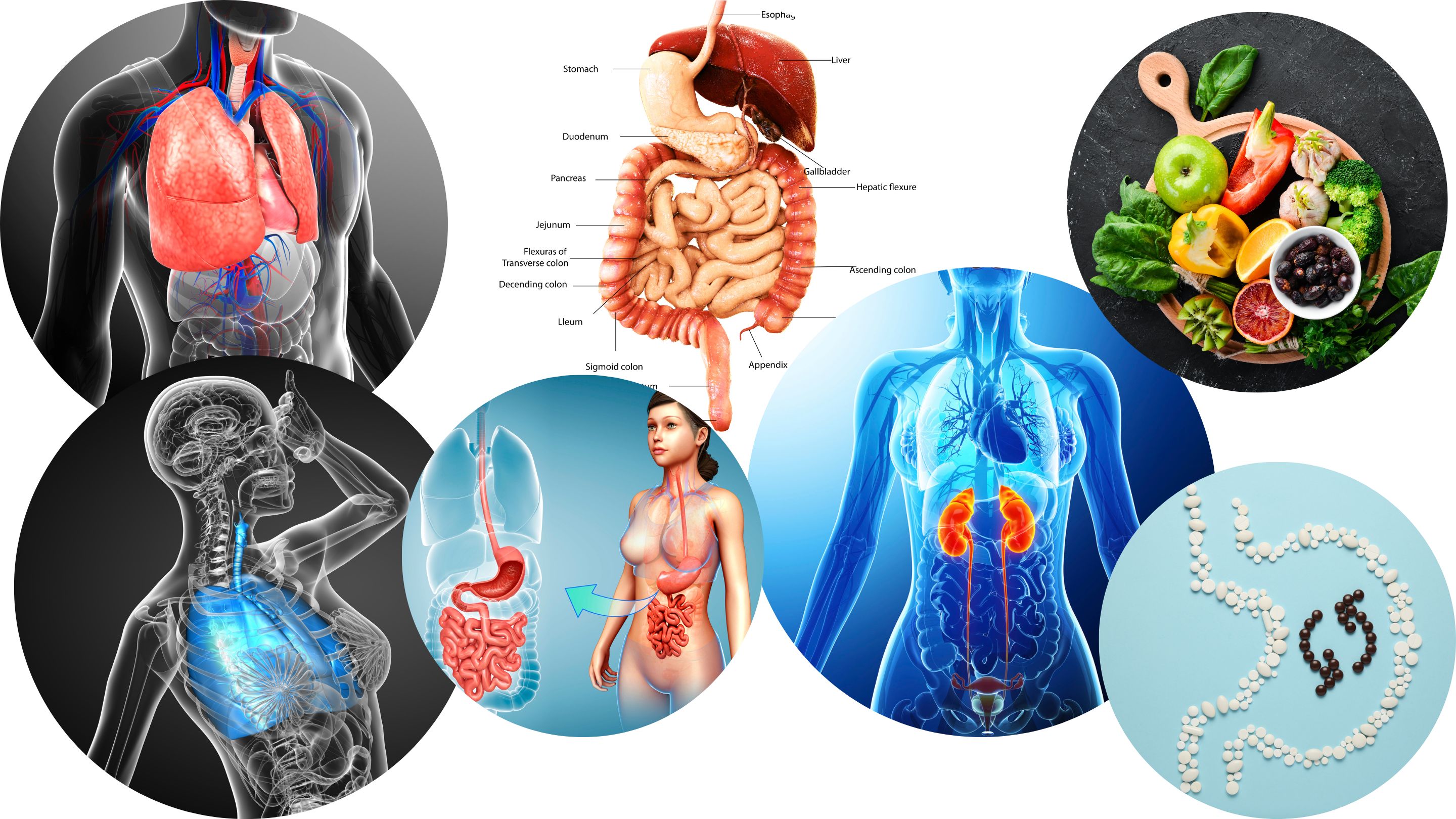
      • Module 5: Lesson 1: The Respiratory System

        Student Learning Outcomes:
        Upon completion of this lesson, you will be able to:
        • List the structures of the respiratory system.
        • List the major functions of the respiratory system.
        • Outline the forces that allow for air movement into and out of the lungs.
        • Outline the process of gas exchange.
        • Summarize the process of oxygen and carbon dioxide transport within the respiratory system.
        • Create a flow chart illustrating how respiration is controlled.
        • Discuss how the respiratory system responds to exercise.
        • Describe the development of the respiratory system in the embryo.
        Approximate time required for the readings for this lesson (at 144 words/minute): 7 hours and 50 minutes.

        Click here to start this lesson

        • Required Learning Resources and Activities

        • url icon
          Introduction URL

          Read the entire page. (4 minutes)

          Rice University - 2022

        • url icon
          Organs and Structures of the Respiratory System URL

          Read the entire page. (38 minutes)

          Rice University - 2022

        • url icon
          The Lungs URL

          Read the entire page. (15 minutes)

          Rice University - 2022

        • url icon
          The Process of Breathing URL

          Read the entire page. (50 minutes)

          Rice University - 2022

        • url icon
          Gas Exchange URL

          Read the entire page. (29 minutes)

          Rice University - 2022

        • url icon
          Transport of Gases URL

          Read the entire page. (27 minutes)

          Rice University - 2022

        • url icon
          Modifications in Respiratory Functions URL

          Read the entire page. (14 minutes)

          Rice University - 2022

        • url icon
          Embryonic Development of the Respiratory System URL

          Read the entire page. (13 minutes)

          Rice University - 2022

        • forum icon
          Learning Activity 10 - Discussion Forum (90 minutes)
          Students must
          View
          Start discussions: 1

          General Instructions

          In the following activity, you must describe and explain the signs and symptoms of someone traveling to another country. 

          Step 1 - Review

          Imagine a scenario in which a person who traveled from New York to Alaska had breathing difficulties in the first week. He has since been living in Alaska for a year without any breathing problems. 

          Step 2 - Respond

          In 400 words, describe the process of the adaptation of the respiratory system at the cellular level. Take into account and use the following keywords in your description: 

          • Hyperpnea
          • Ventilation Control Centers
          • Acute mountain sickness (AMS)
          • Acclimatization
          • Ventilation and Perfusion
          • External and Internal Respiration
          • Henry’s law 

          Step 3: Share 

          To share your work, click the “Add a new discussion topic” button under this post and paste your work into the “Message” box. Make sure to reference others’ intellectual property when necessary. All references should follow 7th Edition APA formatting. For further instructions, see the resource on the Himmelfarb Health Sciences Library: APA citation resource (N.B. references are excluded from word counts).

          Step 4: Interact 

          To complete the activity, you need to post a reply. Click “Reply” on the main discussion, and then click “Post to forum.”

          OPTIONAL Step 5: Interact (10 minutes)

          If you would like to, you can reply to your peers' posts in a respectful and professional manner. Ensure that your post engages your peers' ideas by including a reflection on their comments, sharing ideas of other potential difficulties and parties involved, or asking thought-provoking questions. If a peer comments on your posting, please reply. To post a reply, click “Reply” on a particular discussion, write your feedback and then click on “Post to forum.”

      • Module 5: Lesson 2: The Digestive System

        Student Learning Outcomes:
        Upon completion of this lesson, you will be able to:
        • List and describe the functional anatomy of the organs and accessory organs of the digestive system.
        • Discuss the processes and control of ingestion, propulsion, mechanical digestion, chemical digestion, absorption, and defecation.
        • Discuss the roles of the liver, pancreas, and gallbladder in digestion.
        • Compare and contrast the digestion of the three macronutrients.
        Approximate time required for the readings for this lesson (at 144 words/minute): 8 hours and 20 minutes.

        Click here to start this lesson

        • Required Learning Resources and Activities

        • url icon
          Introduction URL

          Read the entire page. (3 minutes)

          Rice University - 2022

        • url icon
          Overview of the Digestive System URL

          Read the entire page. (29 minutes)

          Rice University - 2022

        • url icon
          Digestive System Processes and Regulation URL

          Read the entire page. (20 minutes)

          Rice University - 2022

        • url icon
          The Mouth, Pharynx, and Esophagus URL

          Read the entire page. (49 minutes)

          Rice University - 2022

        • url icon
          The Stomach URL

          Read the entire page. (32 minutes)

          Rice University - 2022

        • url icon
          The Small and Large Intestines URL

          Read the entire page. (57 minutes)

          Rice University - 2022

        • url icon
          Accessory Organs in Digestion: The Liver, Pancreas, and Gallbladder URL

          Read the entire page. (25 minutes)

          Rice University - 2022

        • url icon
          Chemical Digestion and Absorption: A Closer Look URL

          Read the entire page. (35 minutes)

          Rice University - 2022

      • Module 5: Lesson 3: Metabolism and Nutrition

        Student Learning Outcomes:
        Upon completion of this lesson, you will be able to:
        • Describe the processes involved in anabolic and catabolic reactions.
        • List and describe the steps necessary for carbohydrate, lipid, and protein metabolism.
        • Explain the processes that regulate glucose levels during the absorptive and postabsorptive states.
        • Explain how metabolism is essential to maintaining body temperature (thermoregulation).
        • Summarize the importance of vitamins and minerals in the diet.
        Approximate time required for the readings for this lesson (at 144 words/minute): 5 hours and 58 minutes.

        Click here to start this lesson

        • Required Learning Resources and Activities

        • url icon
          Introduction URL

          Read the entire page. (4 minutes)

          Rice University - 2022

        • url icon
          Overview of Metabolic Reactions URL

          Read the entire page. (23 minutes)

          Rice University - 2022

        • url icon
          Carbohydrate Metabolism URL

          Read the entire page. (41 minutes)

          Rice University - 2022

        • url icon
          Lipid Metabolism URL

          Read the entire page. (17 minutes)

          Rice University - 2022

        • url icon
          Protein Metabolism URL

          Read the entire page. (15 minutes)

          Rice University - 2022

        • url icon
          Metabolic States of the Body URL

          Read the entire page. (13 minutes)

          Rice University - 2022

        • url icon
          Energy and Heat Balance URL

          Read the entire page. (10 minutes)

          Rice University - 2022

        • url icon
          Nutrition and Diet URL

          Read the entire page. (26 minutes)

          Rice University - 2022

        • forum icon
          Learning Activity 11 - Discussion Forum (60 minutes)
          Students must
          View
          Start discussions: 1

          General Instructions

          In the following activity, pay attention to the diagram and the elements named, and follow the instructions given. 

          Step 1 - Review

          Pay close attention to the following image.

          Step 2 - Respond

          1. Describe in detail and in order the passage of the food bolus from its entry to the exit of the human body. Stop at the organs named in the image and describe the synthesis, the substances in charge and the hormones involved during the process.

          2. Detail the differences between carbohydrate/lipid and protein metabolism.

          3. Make a simple diagram of the ATP Cycle.

          4. Analyze and exemplify what foods should be consumed to prevent the following diseases or disorders: Anemia / Beriberi, Wernicke-Korsakoff Syndrome / Muscle Cramps / Hypothyroidism.

          Step 3: Share 

          To share your work, click the “Add a new discussion topic” button under this post and paste your work into the “Message” box. Make sure to reference others’ intellectual property when necessary. All references should follow 7th Edition APA formatting. For further instructions, see the resource on the Himmelfarb Health Sciences Library: APA citation resource (N.B. references are excluded from word counts).

          Step 4: Interact 

          To complete the activity, you need to post a reply. Click “Reply” on the main discussion, and then click “Post to forum.”

          OPTIONAL Step 5: Interact (10 minutes)

          If you would like to, you can reply to your peers' posts in a respectful and professional manner. Ensure that your post engages your peers' ideas by including a reflection on their comments, sharing ideas of other potential difficulties and parties involved, or asking thought-provoking questions. If a peer comments on your posting, please reply. To post a reply, click “Reply” on a particular discussion, write your feedback and then click on “Post to forum.”

      • Module 5: Lesson 4: The Urinary System

        Student Learning Outcomes:
        Upon completion of this lesson, you will be able to:
        • Describe the composition of urine.
        • Label structures of the urinary system.
        • Characterize the roles of each of the parts of the urinary system.
        • Illustrate the macroscopic and microscopic structures of the kidney.
        • Trace the flow of blood through the kidney.
        • Outline how blood is filtered in the kidney nephron.
        • Provide symptoms of kidney failure.
        • List some of the solutes filtered, secreted, and reabsorbed in different parts of the nephron.
        • Describe the role of a portal system in the kidney.
        • Explain how urine osmolarity is hormonally regulated.
        • Describe the regulation of major ions by the kidney.
        • Summarize the role of the kidneys in maintaining acid–base balance.
        Approximate time required for the readings for this lesson (at 144 words/minute): 6 hours and 30 minutes.

        Click here to start this lesson

        • Required Learning Resources and Activities

        • url icon
          Introduction URL

          Read the entire page. (5 minutes)

          Rice University - 2022

        • url icon
          Physical Characteristics of Urine URL

          Read the entire page. (15 minutes)

          Rice University - 2022

        • url icon
          Gross Anatomy of Urine Transport URL

          Read the entire page. (18 minutes)

          Rice University - 2022

        • url icon
          Gross Anatomy of the Kidney URL

          Read the entire page. (13 minutes)

          Rice University - 2022

        • url icon
          Microscopic Anatomy of the Kidney URL

          Read the entire page. (21 minutes)

          Rice University - 2022

        • url icon
          Physiology of Urine Formation URL

          Read the entire page. (18 minutes)

          Rice University - 2022

        • url icon
          Tubular Reabsorption URL

          Read the entire page. (50 minutes)

          Rice University - 2022

        • url icon
          Regulation of Renal Blood Flow URL

          Read the entire page. (9 minutes)

          Rice University - 2022

        • url icon
          Endocrine Regulation of Kidney Function URL

          Read the entire page. (14 minutes)

          Rice University - 2022

        • url icon
          Regulation of Fluid Volume and Composition URL

          Read the entire page. (18 minutes)

          Rice University - 2022

        • url icon
          The Urinary System and Homeostasis URL

          Read the entire page. (14 minutes)

          Rice University - 2022

      • Module 5: Lesson 5: Fluid, Electrolyte, and Acid-Base Balance

        Student Learning Outcomes:
        Upon completion of this lesson, you will be able to:
        • Identify the body’s main fluid compartments.
        • Define plasma osmolality and identify two ways in which plasma osmolality is maintained.
        • Identify the six ions most important to the function of the body.
        • Define buffer and discuss the role of buffers in the body.
        • Explain why bicarbonate must be conserved rather than reabsorbed in the kidney.
        • Identify the normal range of blood pH and name the conditions where one has a blood pH that is either too high or too low.
        Approximate time required for the readings for this lesson (at 144 words/minute): 5 hours and 44 minutes.

        Click here to start this lesson

        • Required Learning Resources and Activities

        • url icon
          Introduction URL

          Read the entire page. (2 minutes)

          Rice University - 2022

        • url icon
          Body Fluids and Fluid Compartments URL

          Read the entire page. (37 minutes)

          Rice University - 2022

        • url icon
          Water Balance URL

          Read the entire page. (18 minutes)

          Rice University - 2022

        • url icon
          Electrolyte Balance URL

          Read the entire page. (30 minutes)

          Rice University - 2022

        • url icon
          Acid-Base Balance URL

          Read the entire page. (30 minutes)

          Rice University - 2022

        • url icon
          Disorders of Acid-Base Balance URL

          Read the entire page. (20 minutes)

          Rice University - 2022

        • forum icon
          Learning Activity 12 - Scenario Activity (60 minutes) Forum
          Students must
          View
          Start discussions: 1

          General Instructions

          In the following activity, you will have to recapitulate, remember and explain the physiological facts that the order indicates.

          Step 1 - Review

          Analyze the following scenario:

          A 70-year-old lady admitted to the emergency service presents fatigue, shortness of breath, confusion, nausea, weakness, and irregular heartbeat. She has fluid retention, causing swelling in her ankles, and has not presented urine for two days. The relative who accompanies her says that the patient is diabetic, but it is not controlled and does not follow adequate treatment.

          Step 2 - Respond

          • Does the patient have acute or chronic renal failure?
          • What signs lead you to the conclusion of renal failure?
          • Explains the role of the Renin-Angiotensin system and how it is affected in the patient, taking into account the pathological history of diabetes.
          • If the patient does not present bladder retention, is there something mechanical that is obstructing the urine? Why does she not present diuresis?
          • Why is the patient breathing like this? Is she trying to regulate her body? What acid-base alterations are present in this case?

          Step 3: Share 

          To share your work, click the “Add a new discussion topic” button under this post and paste your work into the “Message” box. Make sure to reference others’ intellectual property when necessary. All references should follow 7th Edition APA formatting. For further instructions, see the resource on the Himmelfarb Health Sciences Library: APA citation resource (N.B. references are excluded from word counts).

          Step 4: Interact 

          To complete the activity, you need to post a reply. Click “Reply” on the main discussion, and then click “Post to forum.”

          OPTIONAL Step 5: Interact (10 minutes)

          If you would like to, you can reply to your peers' posts in a respectful and professional manner. Ensure that your post engages your peers' ideas by including a reflection on their comments, sharing ideas of other potential difficulties and parties involved, or asking thought-provoking questions. If a peer comments on your posting, please reply. To post a reply, click “Reply” on a particular discussion, write your feedback and then click on “Post to forum.”

        • quiz icon
          Quiz: Module 5
          Students must
          View
          Receive a grade
          Receive a passing grade

          To access the quiz, click on the name of the quiz provided above. On the following screen, click the "Preview quiz now" button to respond to the questions.

      • Module 6: Human Development and the Continuity of Life

        This closing module examines the male and female reproductive systems, describe the process of human development and the different stages of pregnancy, and ends with a review of the mechanisms of inheritance.
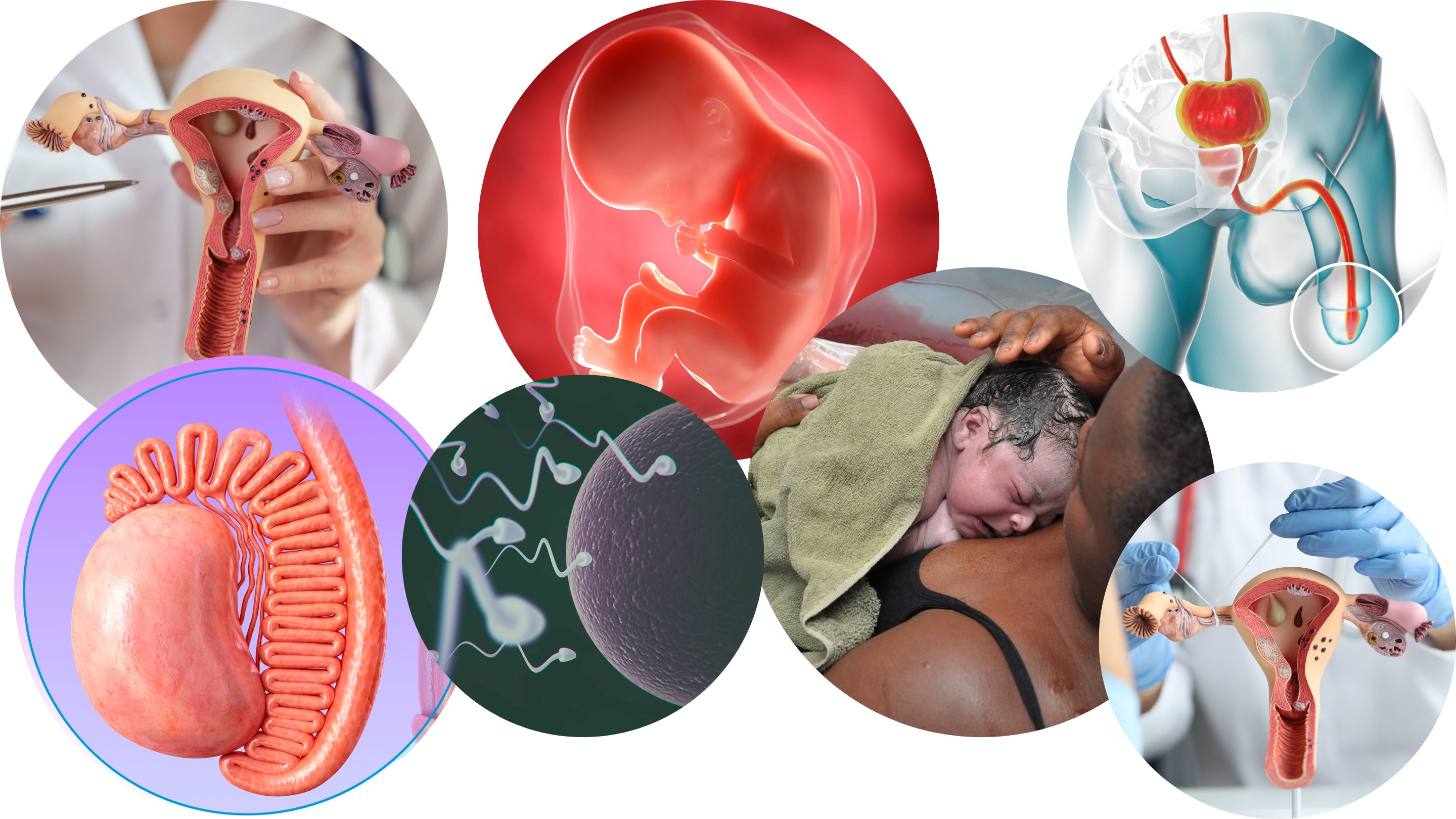
      • Module 6: Lesson 1: The Reproductive System

        Student Learning Outcomes:
        Upon completion of this lesson, you will be able to:
        • Describe the anatomy of the reproductive systems, including their accessory structures.
        • Explain the role of hypothalamic and pituitary hormones in reproductive function.
        • Trace the path of a sperm cell from its initial production through fertilization of an oocyte.
        • Explain the events in the ovary prior to ovulation.
        • Describe the development and maturation of the sex organs and the emergence of secondary sex characteristics during puberty.
        Approximate time required for the readings for this lesson (at 144 words/minute): 5 hours and 20 minutes.

        Click here to start this lesson

        • Required Learning Resources and Activities

        • url icon
          Introduction URL

          Read the entire page. (2 minutes)

          Rice University - 2022

        • url icon
          Anatomy and Physiology of the Testicular Reproductive System URL

          Read the entire page. (56 minutes)

          Rice University - 2022

        • url icon
          Anatomy and Physiology of the Ovarian Reproductive System URL

          Read the entire page. (86 minutes)

          Rice University - 2022

        • url icon
          Development of the Male and Female Reproductive Systems URL

          Read the entire page. (16 minutes)

          Rice University - 2022

      • Module 6: Lesson 2: Development and Inheritance

        Student Learning Outcomes:
        Upon completion of this lesson, you will be able to:
        • List and explain the steps involved in fertilization.
        • Describe the major events in embryonic development..
        • Describe the major events in fetal development.
        • Describe the physiologic adjustments that the newborn must make in the first hours of extrauterine life.
        • Summarize the physiology of lactation.
        • Classify and describe the different patterns of inheritance.
        Approximate time required for the readings for this lesson (at 144 words/minute): 8 hours and 32 minutes.

        Click here to start this lesson

        • Required Learning Resources and Activities

        • url icon
          Introduction URL

          Read the entire page. (2 minutes)

          Rice University - 2022

        • url icon
          Fertilization URL

          Read the entire page. (22 minutes)

          Rice University - 2022

        • url icon
          Embryonic Development URL

          Read the entire page. (45 minutes)

          Rice University - 2022

        • url icon
          Fetal Development URL

          Read the entire page. (23 minutes)

          Rice University - 2022

        • url icon
          Changes During Pregnancy, Labor, and Birth URL

          Read the entire page. (33 minutes)

          Rice University - 2022

        • url icon
          Adjustments of the Infant at Birth and Postnatal Stages URL

          Read the entire page. (15 minutes)

          Rice University - 2022

        • url icon
          Lactation URL

          Read the entire page. (15 minutes)

          Rice University - 2022

        • url icon
          Patterns of Inheritance URL

          Read the entire page. (51 minutes)

          Rice University - 2022

        • forum icon
          Learning Activity 13 - Scenario Activity (90 minutes) Forum
          Students must
          View
          Start discussions: 1

          General Instructions

          The following activity will describe the scenario of a couple who was in family planning. Pay attention and analyze each event. Then, answer the questions being asked. 

          Step 1 - Review

          Lucy and Hans have been trying to get pregnant for a year. In a test they did a month ago, they observed that Lucy ovulates every 28 days, and Hans's sperm count was normal. However, the doctor explained to them that Hans's sperm probably moved slowly about an hour after ejaculation. When Raúl's spermatozoa finally met Lucy's oocyte, they were unable to generate a proper acrosomal reaction.

          Lucy and Hans opted for in vitro fertilization. In this way, fertilization was carried out. And the pregnancy continued its development. At 35 weeks pregnant, Lucy arrives at the maternity unit reporting that she believes she has been in labor “for days” but that she is “just not going anywhere.” During the clinical examination, she experiences a few mild contractions, each lasting 15-20 seconds. However, it is found that her cervix is only 2 cm dilated, and her amniotic sac is intact. Lucy is admitted to the maternity unit, and an intravenous infusion of Pitocin is started.

          Lucy gives birth to a premature baby, and Hans helps her with the care of the newborn. The baby received early attachment, and although she struggled a bit at first, she suckled her mother's breast properly.

          Step 2 - Respond

          Answer and develop the following questions, analyzing the mentioned scenario:

          • What process probably went wrong to not generate a proper acrosome reaction?
          • What day of the ovarian cycle should the couple have intercourse to get pregnant?
          • Describe how the newborn’s first breath alters the circulatory pattern.
          • Why would a premature infant require supplemental oxygen?
          • Why did the doctors start an intravenous infusion of pitosin in Lucy?
          • Describe the transit of breast milk from lactocytes to nipple pores.
          • Describe the composition of breast milk.
          • In case Lucy is a carrier of an X-linked recessive disorder, can she have an affected daughter or son or both? Justify your answer.

          Step 3: Share 

          To share your work, click the “Add a new discussion topic” button under this post and paste your work into the “Message” box. Make sure to reference others’ intellectual property when necessary. All references should follow 7th Edition APA formatting. For further instructions, see the resource on the Himmelfarb Health Sciences Library: APA citation resource (N.B. references are excluded from word counts).

          Step 4: Interact 

          To complete the activity, you need to post a reply. Click “Reply” on the main discussion, and then click “Post to forum.”

          OPTIONAL Step 5: Interact (10 minutes)

          If you would like to, you can reply to your peers' posts in a respectful and professional manner. Ensure that your post engages your peers' ideas by including a reflection on their comments, sharing ideas of other potential difficulties and parties involved, or asking thought-provoking questions. If a peer comments on your posting, please reply. To post a reply, click “Reply” on a particular discussion, write your feedback and then click on “Post to forum.”

        • quiz icon
          Quiz: Module 6
          Students must
          View
          Receive a grade
          Receive a passing grade

          To access the quiz, click on the name of the quiz provided above. On the following screen, click the "Preview quiz now" button to respond to the questions.

      • Final Exam

        Click here to start Final Examination

        • quiz icon
          Final Exam Quiz

          To take the final exam, you must complete all quizzes and complete all the required activities. The final exam consists of 40 questions, and you will have 40 minutes to complete it. When the time is over, you will have two minutes to submit your attempt before it expires, and your progress is discarded. You will not be able to answer additional questions in the grace period.

          To access the exam, click on the name of the exam provided above. On the following screen, click the attempt quiz button to respond to the questions.


          Not available unless: All of: ...
          Not available unless:
          • All of:
            • The activity Course Registration is marked complete
            • The activity Pre-Test is marked complete
            • The activity Quiz: Module 1 is marked complete
            • The activity Quiz: Module 2 is marked complete
            • The activity Quiz: Module 3 is marked complete
            • The activity Quiz: Module 4 is marked complete
            • The activity Quiz: Module 5 is marked complete
            • The activity Quiz: Module 6 is marked complete
          • All of:
            • The activity Learning Activity 1 - Scenario Activity (90 minutes) is marked complete
            • The activity Learning Activity 2 - Case scenario (60 minutes) is marked complete
            • The activity Learning Activity 3 - Activity (45 minutes) is marked complete
            • The activity Learning Activity 4 - Case Scenario (60 minutes) is marked complete
            • The activity Learning Activity 5 - Case Scenario (90 minutes) is marked complete
            • The activity Learning Activity 6 - Scenario Activity (90 minutes) is marked complete
            • The activity Learning Activity 7 - Discussion Forum (60 minutes) is marked complete
            • The activity Learning Activity 8 - Case Scenario Activity (90 minutes) is marked complete
            • The activity Learning Activity 9 - Case Scenario (60 minutes) is marked complete
            • The activity Learning Activity 10 - Discussion Forum (90 minutes) is marked complete
            • The activity Learning Activity 11 - Discussion Forum (60 minutes) is marked complete
            • The activity Learning Activity 12 - Scenario Activity (60 minutes) is marked complete
            • The activity Learning Activity 13 - Scenario Activity (90 minutes) is marked complete
      • Course and Self Evaluation & Certificate

        In this section, you can provide feedback about this course to help us make NextGenU.org better. Once evaluations are completed, you will be able to download your certificate of completion.

        Click here give your feedback

        • questionnaire icon
          Course Evaluation Questionnaire
          Not available unless: The activity Final Exam is marked complete
        • questionnaire icon
          Self Evaluation Questionnaire
          Not available unless: The activity Final Exam is marked complete
      • Course Activities

        • page icon
          Learning Activities. Page
          Students must
          Mark as done
      Skip Rating and Review

      Rating and Review

      0

      0 Course Rating

      0%
      0%
      0%
      0%
      0%

      Reviews

      Contact site support
      You are currently using guest access (Log in)
      Powered by Moodle


      Copyright © 2025 NextGenU.org / All Rights Reserved


      Privacy Policy 


      Terms Of Use 


      Privacy Policy Terms & Conditions

      Copyrights Content