

Environmental Health
You do not have permission to view discussions in this forum.
-
Public HealthEnvironmental HealthResume0% complete0% complete
Introduction
Show More Show LessThis course is a comprehensive introduction to environmental health concepts, including regulatory controls, and to pollutants’ sources, fates, and impacts in environmental media (air, water, food, and soil) and in occupational settings. Human hazard recognition, evaluation, and management are introduced in terms of toxicology, epidemiology, exposure assessment, prevention, risk assessment, and emergency response.
-
Students mustStudent must submit this questionnaire to complete it
-
Students mustViewReceive a grade
Show More-


This course is a comprehensive introduction to environmental health concepts, including regulatory controls, and to pollutants’ sources, fates, and impacts in environmental media (air, water, food, and soil) and in occupational settings. Human hazard recognition, evaluation, and management are introduced in terms of toxicology, epidemiology, exposure assessment, prevention, risk assessment, and emergency response.
This Environmental Health course was developed in partnership with the Association for Prevention Teaching and Research and the U.S. Centers for Disease Control and Prevention (CDC). This course is co-sponsored by the International Society of Doctors for the Environment, Physicians for Social Responsibility, the University of the Incarnate Word. Like all NextGenU courses, it is competency-based, using competencies from the Association of Schools and Programs of Public Health. This course covers the CEPH-related competency “Advocate for political, social, or economic policies and programs that will improve health in diverse populations [D2:14].” This course uses learning resources from world-class academic and governmental organizations such as the International Labour Organization, the University of Washington, Yale School of Public Health, the World Health Organization, the U.S. CDC, and the U.S. National Institutes of Health. Our original course developer was Lindsay Galway, and our Advisory Group was: Ryan Allen, PhD; Kristian Dubrawski, PhD; Sylvia Struck, PhD; and Tim Takaro, MD, MPH, MSc. The course was redesigned by Kathleen Capone EdD, MS, RN, CN; Valeria Reynolds MD, MPH; Hugo Rojas MD, MSc; Pablo Baldiviezo MD, Juan Bravo MD, Sergio Arancibia MD and Madison Cox MSN, RN with the collaboration of Peoples-uni Subject Matter Experts Richard F. Heller, MB, BS, MD, FRCP, FFPH, FRACP, FAFPHM, and Magali Collonnaz, MD, MSc.




For a publication on this course’s efficacy, see “A Novel Integration of Online and Flipped Classroom Instructional Models in Public Health Higher Education,” (2014), BMC Medical Education, https://doi.org/10.1186/1472-6920-14-181; see also “Building Public Health Capacity through Online Global Learning,” (2018), Open Praxis, to see more research related to NextGenU.org’s educational model, have a look at NextGenU.org’s publication page. Subscribe to our newsletter to be notified of future updates, new courses, and to be part of our community.
There are 5 modules to complete, which provide
- our introduction to the study of environmental health;
- an overview of major environmental and occupational agents;
- an overview of environmental hazards, exposure assessment, toxicology, and risk management and communication;
- skills to develop an environmental and occupational risk assessment;
- skills to advocate for environmental health advocacy;
- an optional module about Disaster Planning and Management for students interested in taking the ABPM certification exam, and for other motivated learners.
The completion time for this course is estimated at 140 hours, 50 hours of didactics through narratives and curated resources, and 90 hours of work participating in activities and quizzes to assist the student in synthesis of the materials. This course is equivalent to 3 credit hours.
You'll have the opportunity to connect with a mentor with professional health care training who has both a bachelor’s/college degree, and a Master of Public Health (MPH) or equivalent, to assist you as you engage in activities that are designed to fulfill the requirements of master's-level competencies. We hope this is a wonderful learning experience for you, and the feedback you provide after completing the course will help us improve the course for future students.
The course requires the completion of all peer activities. At the end of each lesson, there is a practice quiz. At the end of the course, after you’ve completed each lesson, quiz, and activity, you’ll have access to a final exam, and a chance to evaluate this course. Once you’ve passed that last test, you will be able to download a certificate of completion from NextGenU.org and our course’s co-sponsoring organizations (listed above). We keep all of your personal information confidential, never sell any of your information, and only use anonymized data for research purposes, and we are also happy to report your testing information and share your work with anyone (your school, employer, etc.) at your request. We hope that you will find this a rewarding learning experience, and we count on your feedback to help us improve this training for future students.
Engaging with this Course
You may browse this course for free to learn for your personal enrichment; there are no requirements. To register in this course, it is required that learners have obtained a college-level/bachelor's degree.
To PASS and Obtain a Certificate a learner must successfully complete
- all the reading requirements,
- all quizzes and pass with a 80% with unlimited attempts,
- the 6 peer activities,
- the final exam with a minimum of 80% and a maximum of 3 attempts, and
- the self and course evaluation forms.
Evaluation is comprised of the following components
- White Paper successful completion (10%),
- Peer/Mentor Activities successful completion (25%),
- Quiz completion with 70% or higher (15%) and,
- Final exam (50%).
To obtain credit
- complete all requirements listed above for the certificate;
- your learning institution or workplace should approve the partner-university-sponsored NextGenU.org course for educational credit, as they would for their learner taking a course anywhere.
NextGenU.org is happy to provide your institution with
- a link to and description of the course training, so they can see all its components, including the cosponsoring universities and other professional organization cosponsors;
- your grade on the final exam;
- your work products (e.g. peer and mentored activities), and any other required or optional shared materials that you produce and authorize to share with them;
- your evaluations -- course, self, and peer assessments;
- a copy of your certificate of completion, with the co-sponsoring universities and other organizations listed.
We hope that you will find this a rewarding learning experience, and we count on your assessment and feedback to help us improve this training for future students.
To obtain a degree, NextGenU.org co-sponsors degree programs with institutional partners. To obtain a full degree co-sponsored with NextGenU.org, registrants must be enrolled in a degree program as a student of a NextGenU.org institutional partner. If you think that your institution might be interested in offering a degree with NextGenU.org contact us.
Next Steps
- Complete the registration form.
- Take the pre-test.
- Begin the course with Module 1: Introduction to environmental health. In each lesson, read the description, complete all required readings and any required activity, and take the corresponding quizzes.
Information for students enrolled in the former version of this course:
The previous version of the course is still available to you, and all of your work has been preserved. If you wish to continue in the old version of the course you can do so at this link. If you were just starting with the former version of the course, you may consider enrolling in the revised course by clicking here. Since all of the content in the revised version is new, all course participants who enroll in this version will need to complete all of the new activities, quizzes, and the new final to receive a certificate of completion.
-

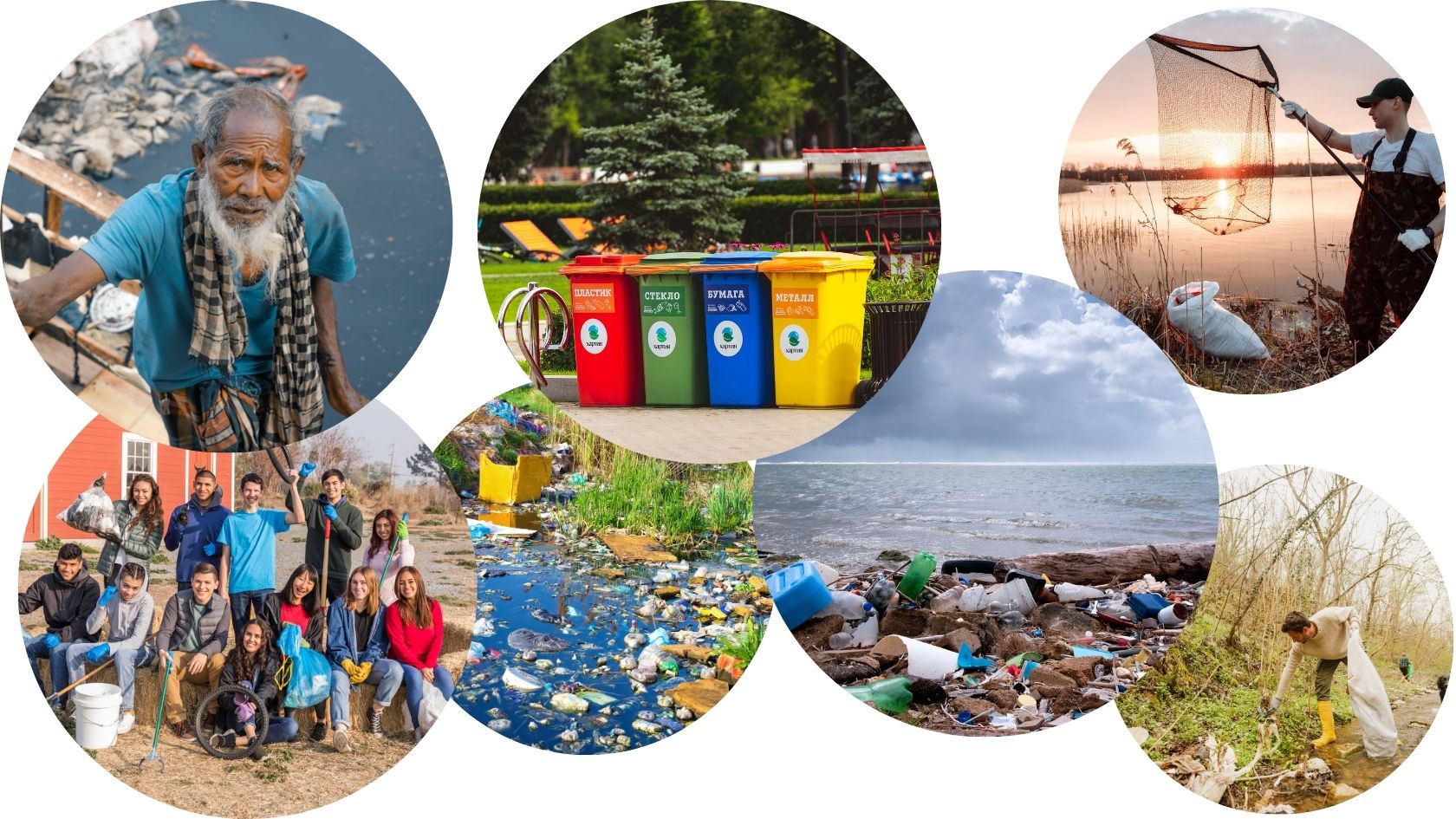
Competency covered in this module:
- Describe federal and state regulatory programs, guidelines, and authorities that control environmental health issues.
-
Learning Objectives:
- Evaluate the concepts of environmental health and occupational health.
- Analyze core concepts of environmental health.
- Understand the relationship between human health and the environment.
Click here to start this lesson
-
Required Learning Resources and Activities
-
-
Students mustView
Read from the beginning of the page to the heading "4.wellbeing."
-
Students mustView
Read from the content under the heading "Reasons for Linking Environmental and Occupational Health" to the end of the page.
-
-
Students mustView
Read the content under the headings 2.1 and 2.2.
-
Students mustView
Read pages 32-35 to understand the concept of individual susceptibility.
-
Students mustView
Read from the content under the heading "Executive Summary" on page X to the end of page XXIII.
-
-
Students mustView
Read the entire document
-
Students mustView
Read the entire page
-
Students mustViewStart discussions: 1
In this activity, you will evaluate and discuss the relationship between the concepts of environmental health and occupational health.
Step 1: Write a 100-300 word statement describing the linkage between “Occupational Health” and “Environmental Health”.
All references should follow 7th Edition APA formatting. See the resource on the Himmelfarb Health Sciences Library for instructions: APA citation resource (references are excluded from word counts).
Step 2: To share your work, click on the button at the bottom of the screen labeled “Add a new discussion topic” and include the title "Discussion: How would you describe the linkages between occupational health and environmental health?" in the subject line.
Step 3: To complete the activity, you will need to comment on at least one post made by your peers, in a respectful and professional manner. Be sure that your post engages your peers' ideas by including a reflection on their comments, sharing insights into the link between environmental and occupational health, applying the link between environmental and occupational health to a specific situation, or asking thought-provoking questions. If a peer comments on your posting, please reply back. To post a reply, click on the particular discussion, then click on “reply”.
OPTIONAL Step 4: Interact (10 minutes)
If you would like to, you can reply to your peers' posts in a respectful and professional manner. Ensure that your post engages your peers' ideas by including a reflection on their comments, sharing ideas of other potential difficulties and parties involved, or asking thought-provoking questions. If a peer comments on your posting, please reply. To post a reply, click “Reply” on a particular discussion, write your feedback and then click on “Post to forum.”
-
Students mustViewStart discussions: 1
In this activity you will analyze and demonstrate the importance of the Sustainable Development Goals (SDGs) for your community’s environmental well-being by creating an educational presentation
Step 1: Select your preferred format/media that you will use to create your educational advocacy tool. You can create slides (PowerPoint or Google Slides presentation), a piece of writing in a blog format (with/without pictures included), a trifold brochure, a video, an infographic for social media, etc.
Step 2: Review the 17 goals on the United Nations - Sustainable Development Goals website.
Step 3: Choose one or more Sustainable Development Goal(s) that you believe best-supports an important and achievable environmental health advance to be implemented in your community. Prepare suggestions for community leaders for overcoming these challenges.
Step 4: Create a tool directed to a specific cohort of community leaders (e.g., City Council, mayor’s office, Health Department, School Board, Hospital Board, social/volunteer group, shareholder meeting), explaining the importance of achieving the SDGs, and including your compellingly conveyed suggestions on how to locally overcome these selected goals for your community. Be sure to create an engaging presentation (using this resource as a reference), and use a language at a B2 level for your audience (use this resource as a reference). Your tool should have a maximum of 20 slides for a presentation, 500 words in a blog format, or 5 minutes in length for a video format.
All references should follow 7th Edition APA formatting. See the resource on the Himmelfarb Health Sciences Library for instructions: APA citation resource (references are excluded from word counts).
Step 5: Self-Analysis and Enhancement
Before you submit, engage in an introspective self-analysis by systematically reviewing each component of your work. Reflect on what aspects of your work were executed well and what could be enhanced. Proceed to refine these elements in your work.
Step 6: Submit your assignment by clicking “add a new discussion topic” below, completing the fields, and clicking “post to forum”.
We want to publish the best works on our website and social media, if you want your work to be published, insert a sentence about it in this forum’s post description.
Step 7 (optional): Submit your presentation or present it to your selected community leadership.
OPTIONAL Step 8: Interact (10 minutes)
If you would like to, you can reply to your peers' posts in a respectful and professional manner. Ensure that your post engages your peers' ideas by including a reflection on their comments, sharing ideas of other potential difficulties and parties involved, or asking thought-provoking questions. If a peer comments on your posting, please reply. To post a reply, click “Reply” on a particular discussion, write your feedback and then click on “Post to forum.”
-
Quiz: Module 1: Lesson 1
To access the quiz, click on the name of the quiz provided above. On the following screen, click the "Preview quiz now" button to respond to the questions.
TO PASS THIS QUIZ, YOU MUST SCORE 80%
Not available unless: The activity Course Registration is marked complete ...Not available unless:- The activity Course Registration is marked complete
- The activity Pre-Test is marked complete
-
Learning objectives:
- Understand how governments, social and cultural determinants, and globalization influence the interaction of human health and the environment.
- Explain how globalization influences the interaction of the environment with the human health.
Click here to start this lesson
-
Students mustMark as done
Required Learning Resources and Activities
-
-
-
-
Students mustView
Read the content under the heading "Social hazards."
-
Students mustView
Read the content under the heading "Cultural/practice-related hazards."
-
Students mustView
Watch the entire video(3 min 42 sec).
-
Discussion Post: What is the influence of the environment on human health? (Completion time: 60 minutes) Forum
In this task, you will analyze the influence of the environment on human health and disease.
Step 1: Reflect on the content reviewed in this lesson and create a 150-300 response piece of writing that includes all the following points:
Identify a disease in your community that is linked to environmental health.
To what environmental factors do you attribute this disease?
Identify one physical determinant, one biological determinant, one chemical determinant, and one psycho-social determinant) environmental health in your community.
Step 2: To share your work, click on the button at the bottom of the screen labeled 'Add a new discussion topic.' and include the title "Discussion: What is the influence of the environment on human health?" in the subject line.
All references should follow 7th Edition APA formatting. See the resource on the Himmelfarb Health Sciences Library for instructions: APA citation resource (references are excluded from word counts).
Step 3: To complete the activity, you will need to comment on at least one other post made by your peers in a respectful and professional manner. Be sure that your post engages your peers' discussion by including a reflection upon learning, sharing insight into the role of environmental factors in human health, identifying relevant environmental health determinants, or asking insightful questions. If a peer comments on your posting, please reply back. To post a reply, click on the particular discussion, then click on 'reply'.
OPTIONAL Step 4: Interact (10 minutes)
If you would like to, you can reply to your peers' posts in a respectful and professional manner. Ensure that your post engages your peers' ideas by including a reflection on their comments, sharing ideas of other potential difficulties and parties involved, or asking thought-provoking questions. If a peer comments on your posting, please reply. To post a reply, click “Reply” on a particular discussion, write your feedback and then click on “Post to forum.”
Not available unless: The activity Quiz: Module 1: Lesson 1 is complete and passed -
Discussion Post: What is the role of globalization in the interaction of the environment with human health? (Completion time: 60 minutes) Forum
This activity will help you explain how globalization influences the interaction of the environment with human health.
Step 1: Create a 250-350 piece of writing that includes all the following points:
-
Describe how nations, peoples, and economies are becoming increasingly interconnected and interdependent.
-
Describe the positive and negative impact and processes of globalization on health.
-
The risk impact of economic globalization on human health.
-
All references should follow 7th Edition APA formatting. See the resource on the Himmelfarb Health Sciences Library for instructions: APA citation resource (references are excluded from word counts).
Step 2: To share your work, click on the button at the bottom of the screen labeled 'Add a new discussion topic.' and include the title "Discussion: What is the role of globalization in the interaction of the environment with human health?" in the subject line.
Step 3: To complete the activity, you will need to comment on at least one other post made by your peers in a respectful and professional manner. Be sure that your post engages your peers' discussion by including a reflection upon learning, sharing insight into the interaction of human health with the environment and how it is influenced by globalization, providing your perspectives on the impact of globalization, or asking insightful questions. If a peer comments on your posting, please reply back. To post a reply, click on the particular discussion, then click on 'reply'.
OPTIONAL Step 4: Interact (10 minutes)
If you would like to, you can reply to your peers' posts in a respectful and professional manner. Ensure that your post engages your peers' ideas by including a reflection on their comments, sharing ideas of other potential difficulties and parties involved, or asking thought-provoking questions. If a peer comments on your posting, please reply. To post a reply, click “Reply” on a particular discussion, write your feedback and then click on “Post to forum.”
Not available unless: The activity Discussion Post: What is the influence of the environment on ... ...Not available unless: The activity Discussion Post: What is the influence of the environment on human health? (Completion time: 60 minutes) is marked complete -
-
Quiz: Module1: Lesson 2:
To access the quiz, click on the name of the quiz provided above. On the following screen, click the "Preview quiz now" button to respond to the questions.
TO PASS THI QUIZ, YOU MUST OBTAIN A SORE OF 80%
Not available unless: The activity Discussion Post: What is the role of globalization in the ... ...Not available unless: The activity Discussion Post: What is the role of globalization in the interaction of the environment with human health? (Completion time: 60 minutes) is marked complete -
Students mustMark as done
Additional Resources for Optional Learning
-
- Understand how governments, social and cultural determinants, and globalization influence the interaction of human health and the environment.
-

Competency covered in this module:
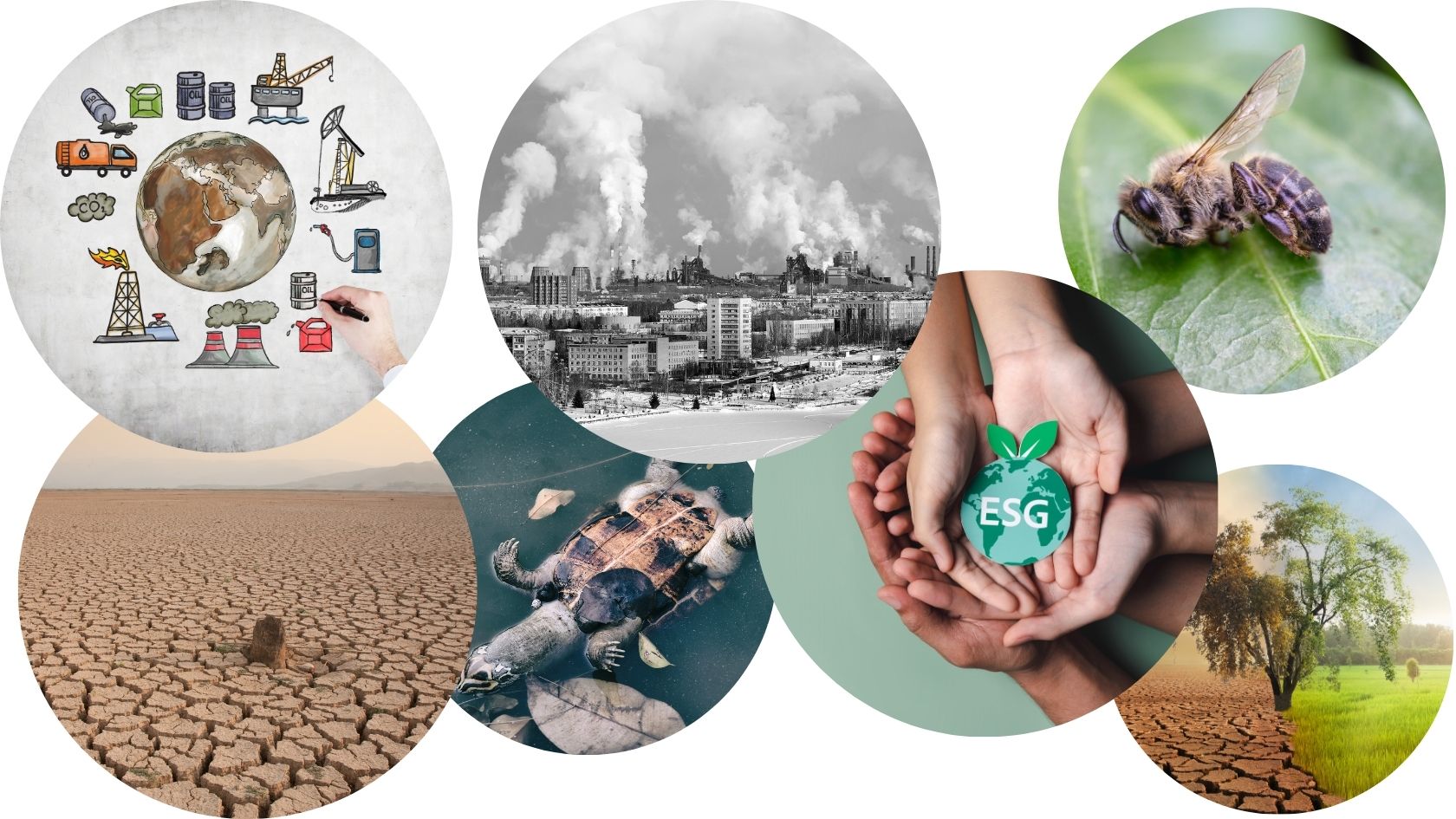
- Describe the direct and indirect human, ecological, and safety effects of major environmental and occupational agents.
-
Learning Objectives:
- Understand the major environmental agents and their direct and indirect human and ecological effects.
Click here to start this lesson
-
Required Learning Resources and Activities
-
-
Students mustViewRead the entire page. Optionally, you can click on each title to complement each agent's information.
-
Students mustViewRead the entire page up to the heading "Additional Topics" and click on each disease heading. Inside each disease page, read until the heading "What is NIEHS doing" or until the end of the page if the heading is missing.
-
Asynchronous Learning Activity 2: Describe health outcomes related to major environmental hazards (Completion time: 4 hours) Forum
In this activity, you will create a tool designed to educate community leaders about the impact of environmental hazards in human health
Step 1: Select your preferred format/media to create your educational tool. You can create Slides(PowerPoint or Google Slides presentation), a piece of writing in a Blog format (with pictures included), a trifold, a video, an infographic for social media, etc.
Step 2: Create a tool directed to laypeople explaining the direct and indirect impact of environmental hazards on human health. Describe 2 direct and 2 indirect health outcomes and their relationship to an environmental hazard of particular concern in your community. Be sure to present an engaging material using this resource as a reference, and use language correspondent to a B1 level for your audience (use this resource as a reference). Your tool must have a maximum of 20 slides in case of a presentation, 500 words in a blog format, or 5 minutes length in case of choosing a video format.
All references should follow 7th Edition APA formatting. See the resource on the Himmelfarb Health Sciences Library for instructions: APA citation resource (references are excluded from word counts).
Step 3: Self-Analysis and Enhancement
Before you submit, engage in an introspective self-analysis by systematically reviewing each component of your work. Reflect on what aspects of your work were executed well and what could be enhanced. Proceed to refine these elements in your work.
Step 4: Submit your assignment by clicking “add a new discussion topic” below, completing the fields, and clicking “post to forum”.
OPTIONAL Step 5: Interact (10 minutes)
If you would like to, you can reply to your peers' posts in a respectful and professional manner. Ensure that your post engages your peers' ideas by including a reflection on their comments, sharing ideas of other potential difficulties and parties involved, or asking thought-provoking questions. If a peer comments on your posting, please reply. To post a reply, click “Reply” on a particular discussion, write your feedback and then click on “Post to forum.”
Not available unless: The activity Quiz: Module1: Lesson 2: is complete and passed -
Quiz: Module 2: Lesson 1
To access the quiz, click on the name of the quiz provided above. On the following screen, click the "Preview quiz now" button to respond to the questions.
TO PASS THIS QUIZ, YOU MUST OBTAIN A SCORE OF 80%
Not available unless: The activity Asynchronous Learning Activity 2: Describe health outcomes ... ...Not available unless: The activity Asynchronous Learning Activity 2: Describe health outcomes related to major environmental hazards (Completion time: 4 hours) is marked complete
-
Learning objectives:
- Understand the major occupational agents that influence human health.
- Understand the human, ecological, and safety effects of common occupational agents.
- Evaluate how environmental medicine can help to prevent and control occupational agents.
- Understand the definition of aerospace medicine and its relationship with environmental health.
- Analyze the role of environmental health on travel safety.
Click here to start this lesson
-
Students mustMark as done
Required Learning Resources and Activities
-
Students mustView
Read the content under the heading occupational toxicology on pages 8-13.
-
Students mustView
Read the entire Document
-
Students mustView
Read the content under the heading "1. Psychosocial Risk Factors" from pages 3 to 9.
-
-
Students mustView
This document provides comprehensive information about physical agents. Read the content under the following headlines(Including subheadlines):
- "1.1 What do you know about noise?"
- "1.2 Which are the health effects?"
- "2.1 What do you know about vibration?"
- "2.2 Which are the health effects?"
- "3.1 What do you know about radiation?"
- "3.2 Which are the health effects?"
- "3.4 What do you know about non-ionizing radiation?"
- "3.5 Which are the health effects?"
- "4.1 What do you know about lighting?"
- "4.2 Which are the health effects?"
- "5.1 What do you know about cold environment?"
- "5.2 Which are the health effect?"
- "B) Hot environment" on page 26
- "5.6 Which are the health effect?"
- "6.1 What do you know about the occupational exposure at air pressure?"
- "6.2 Which are the health effect?"
-
-
Students mustView
Read from the content under the heading "Abstract" to the heading "6.3 Systems and Power: The Ethical Importance of Ecological and Social Context."
-
Students mustView
Read the content under the headings "Abstract," "Results," and "Discussion."
-
-
Students mustView
Read from the beginning of the page until the heading "Board Certification."
-
-
Students mustView
Read the entire table
-
Students mustView
Read the entire page and analyze how travel medicine is related to environmental health.
-
Discussion Post: Defend the role of environmental health in prevention and control of occupational agents. (Completion time: 60 minutes) Forum
In this activity you will discuss the role of environmental health in prevention and control of occupational agents.
Step 1: Write a 200-300 words paragraph answering the following questions:
What activities are oriented to control occupational agents?
Who is responsible for implementing these activities?
Why is an environmental health approach needed for the detection and control of these agents?
All references should follow 7th Edition APA formatting. See the resource on the Himmelfarb Health Sciences Library for instructions: APA citation resource (references are excluded from word counts).
Step 2: To share your work, click on the button at the bottom of the screen labeled 'Add a new discussion topic.' and include the title "Discussion: Defend the role of environmental medicine in prevention and control of occupational agents" in the subject line.
Step 3: To complete the activity, you will also need to comment on at least one other post made by your peers in a respectful and professional manner. If a peer comments on your posting, please reply back. To post a reply, click on the particular discussion, then click on 'reply'.
OPTIONAL Step 4: Interact (10 minutes)
If you would like to, you can reply to your peers' posts in a respectful and professional manner. Ensure that your post engages your peers' ideas by including a reflection on their comments, sharing ideas of other potential difficulties and parties involved, or asking thought-provoking questions. If a peer comments on your posting, please reply. To post a reply, click “Reply” on a particular discussion, write your feedback and then click on “Post to forum.”
Not available unless any of: The activity Quiz: Module 2: Lesson 1 is complete and passed ...Not available unless any of:- The activity Quiz: Module 2: Lesson 1 is complete and passed
- You belong to Completed M2L1 Quiz
-
Discussion Post: The role of environmental health in aerospace medicine (Completion time: 60 minutes) Forum
In this activity, you will discuss the ways that environmental health improves travel safety, and how it relates to aerospace medicine.
Step 1: Write a 200-300 words paragraph answering the following questions:
What environmental risks the study of aerospace medicine is dedicated to?
What are the main environmental risks to travelers?
How do professionals in aerospace medicine improve health, promote safety, and improve the performance of people who work or travel in unusual environments?
All references should follow 7th Edition APA formatting. See the resource on the Himmelfarb Health Sciences Library for instructions: APA citation resource (references are excluded from word counts).
Step 2: To share your work, click on the button at the bottom of the screen labeled 'Add a new discussion topic.' and include the title "Discussion: Discuss how environmental health improves travel safety, and how it relates to aerospace medicine." in the subject line.
Step 3: To complete the activity, you will also need to comment on at least one other post made by your peers in a respectful and professional manner. If a peer comments on your posting, please reply back. To post a reply, click on the particular discussion, then click on 'reply'.
OPTIONAL Step 4: Interact (10 minutes)
If you would like to, you can reply to your peers' posts in a respectful and professional manner. Ensure that your post engages your peers' ideas by including a reflection on their comments, sharing ideas of other potential difficulties and parties involved, or asking thought-provoking questions. If a peer comments on your posting, please reply. To post a reply, click “Reply” on a particular discussion, write your feedback and then click on “Post to forum.”
Not available unless: The activity Discussion Post: Defend the role of environmental health in ... ...Not available unless: The activity Discussion Post: Defend the role of environmental health in prevention and control of occupational agents. (Completion time: 60 minutes) is marked complete -
Quiz: Module 2: Lesson 2:
To access the quiz, click on the name of the quiz provided above. On the following screen, click the "Preview quiz now" button to respond to the questions.
TO PASS THIS QUIZ, YOU MUST OBTAIN A SCORE OF 80%
Not available unless: The activity Discussion Post: Defend the role of environmental health in ... ...Not available unless: The activity Discussion Post: Defend the role of environmental health in prevention and control of occupational agents. (Completion time: 60 minutes) is marked complete -
Students mustMark as done
Additional Resources for Optional Learning
-
- Understand the major occupational agents that influence human health.
-
 Competencies covered in this module:
- Specify approaches for assessing, preventing, and controlling environmental hazards that pose risks to human health and safety.
- Explain the general mechanisms of toxicity in eliciting a toxic response to various environmental exposures.
-
Learning Objectives:
- Analyze approaches of environmental hazards assessment.
- Understand approaches to prevent and control environmental hazards that pose risks to human health and safety.
Click here to start this lesson
-
Required Learning Resources and Activities
-
Students mustView
Read the content under the headings "Introduction," "Results," and "Discussion."
-
-
Students mustView
Watch the entire video(5 min 48 sec).
-
Students mustView
Click on the heading "Hazard Identification" and read the entire page.
-
-
Discussion Post: Environmental Hazards Prevention? (Completion time: 60 minutes) Forum
Step 1: Identify one environmental hazard in your house or community. You can look for potential hazards in places like your bathroom, a deposit, or even take a little field trip in your neighborhood. Once you have a hazard identified, write a 250-500 words paragraph addressing the following points:
Why did you choose that specific hazard?
Describe a few approaches that you could employ to prevent risks to human health and safety related with this hazard. Make sure to include references of the sources you considered to describe them.
From the approaches you mentioned above, which one would you recommend and why?
All references should follow 7th Edition APA formatting. See the resource on the Himmelfarb Health Sciences Library for instructions: APA citation resource (references are excluded from word counts).
Step 2: To share your work, click on the button at the bottom of the screen labeled 'Add a new discussion topic.' and include the title "Discussion: Environmental Hazards Prevention?" in the subject line.
Step 3: To complete the activity, you will need to comment on at least one other post made by your peers in a respectful and professional manner. Be sure that your post engages your peers' discussion by including a reflection upon learning, sharing insight into the health effects of environmental hazards, discussing the different approaches to prevent human risks, or asking insightful questions. If a peer comments on your posting, please reply back. To post a reply, click on the particular discussion, then click on 'reply'.
OPTIONAL Step 4: Interact (10 minutes)
If you would like to, you can reply to your peers' posts in a respectful and professional manner. Ensure that your post engages your peers' ideas by including a reflection on their comments, sharing ideas of other potential difficulties and parties involved, or asking thought-provoking questions. If a peer comments on your posting, please reply. To post a reply, click “Reply” on a particular discussion, write your feedback and then click on “Post to forum.”
Not available unless: The activity Quiz: Module 2: Lesson 2: is complete and passed -
Quiz: Module 3: Lesson 1:
To access the quiz, click on the name of the quiz provided above. On the following screen, click the "Preview quiz now" button to respond to the questions.
TO PASS THIS QUIZ, YOU MUST OBTAIN A SCORE OF 80%
Not available unless: The activity Discussion Post: Environmental Hazards Prevention? (Completion... ...Not available unless: The activity Discussion Post: Environmental Hazards Prevention? (Completion time: 60 minutes) is marked complete
- Analyze approaches of environmental hazards assessment.
-
Learning objectives:
- Evaluate the role of toxicology in environmental and occupational health.
- Understand the major types of toxic substances and common potential sources of these substances.
- Understand approaches to assess, prevent, and control health and safety risks related to common sources of toxic substances.
Click here to start this lesson
-
Students mustMark as done
Required Learning Resources and Activities
-
Students mustView
Read the content under the headings "Whats is Toxicology," "What is a Toxicologist?" and "How does the Science of Toxicology Improve People's Lives?"
-
Students mustView
Read the content under the heading "9.1 Toxicity Testing – Major In Vivo Study Types" on page 114-115.
-
Students mustView
Read the content under the headings "Introduction" and "Types and sources of toxicants."
-
Students mustView
Read the entire page.
-
Students mustView
Read the entire page, pay attention to the agents' sources that may be common to other people.
-
Students mustView
Read from the beginning of the page to the heading "Additional Information."
-
Quiz: Mudule 3: Lesson 2:
To access the quiz, click on the name of the quiz provided above. On the following screen, click the "Preview quiz now" button to respond to the questions.
TO PASS THIS QUIZ, YOU MUST OBTAIN A SCORE OF 80%
Not available unless: The activity Quiz: Module 3: Lesson 1: is complete and passed -
Students mustMark as done
Additional Resources for Optional Learning
-
-
Students mustView
Wacht the video (4 min 10 sec).
- Evaluate the role of toxicology in environmental and occupational health.
-
Competencies covered in this module:
- Specify current environmental risk assessment methods.
- Describe genetic, physiologic, and psychosocial factors that affect susceptibility to adverse health outcomes following exposure to environmental hazards.
- Develop a testable model of environmental insult.
- Discuss various risk management and risk communication approaches in relation to issues of environmental justice and equality.
- Specify current environmental risk assessment methods.
-
Learning Objectives:
- Evaluate exposure assessment strategies used in environmental and occupational health.
- Understand assessment tools and methods to identify risk factors that adversely affect human health.
- Analyze genetic, physiologic, and psychosocial factors that influence the risk of exposure and the susceptibility to adverse health outcomes following exposure to environmental hazards.
- Analyze the concepts of hazard identification, exposure assessment, and dose-response assessment and their role in risk assessment and management.
- Create a risk assessment plan for a given community.
- Understand the concept of environmental insult and what is a testable model of environmental insult.
- Create a testable model of environmental insult related to an environmental risk identified in their communities.
Click here to start this lesson
-
Required Learning Resources and Activities
-
Students mustView
Watch the entire video(2 min 50 sec).
-
Students mustView
Read the entire page, then click on each of the five tabs and read its content(Planning, Hazard Identification, Dose-Response, Exposure Assessment, and Risk characterization).
-
-
Students mustView
Read the content under the heading "Exposure and Dose Rates."
-
Students mustView
Click on "Direct Measurement," "Indirect estimation," and "Exposure reconstruction" and read the content under the heading "Overview" on each of them.
-
Students mustView
Read the content under the heading "2.3.2. Overview of Exposure Assessment" and "2.3.3. Approaches for Exposure Assessment" on pages 12-16.
-
Students mustView
Read from the end of the table on page 3 to the title "2.2. Initiating Factors Prompting CRAs in the Workplace" on page 5.
-
Students mustView
Read the definition of "Cumulative exposure." in Table 1.
-
-
Students mustView
Read the entire article.
-
Students mustView
Read the content under the heading "2. General framework of epidemiological studies on pesticides" and the subheading "2.1 Study Design" to understand the different epidemiological designs' key features.
-
Students mustView
Read the entire document.
-
Students mustView
Read from the beginning of the article to the heading "Question 1. Do environmental factors matter to health?." Then read the content under the heading "Conclusions."
-
Students mustView
Read the definition of Environmental Justice.
-
-
Students mustView
Read the content under the heading "Equity & Environmental Justice."
-
Students mustView
Read the content under the headings "Role of Genetics in the Variability of Response to Occupational exposures" and "The Use of Genetic Information in Quantitative Risk Assessment."
-
-
Students mustView
Read the content of Table 1.
-
Students mustView
Read the content from the heading "Evidence summary: Current knowledge on social inequalities and environmental risk "on page 4 to the heading "Conclusions" on page 13.
-
Students mustView
Read the content under the heading "Executive Summary" on page 8-10.
-
-
Students mustView
Read the entire page, then click on the links "Steps needed to manage risk," "Risk assessment template and examples," and "More detail on managing risk" and read its content.
-
Students mustView
Read the content under the heading "1.3.3 Environmental intervention models."
-
Students mustView
Read the content under the headings "Abstract," "Background," and "Environmental Insults in ALS."
-
Quiz: Module 4: Lesson 1:
To access the quiz, click on the name of the quiz provided above. On the following screen, click the "Preview quiz now" button to respond to the questions.
TO PASS THIS QUIZ, YOU MUST OBTAIN A SCORE OF 80%
Not available unless: The activity Quiz: Mudule 3: Lesson 2: is complete and passed -
Additional Resources for Optional Learning
-
Students mustView
Read the content under the heading "Abstract," "Introduction," and "Conclusion and Policy Recommendations."
-
Students mustViewMake a submission
For advanced audiences, we recommend the completion of this mentored activity require you to connect with a mentor holding a Master of Public Health(MPH) or equivalent degree to evaluate your work.
As we want to ensure equitable access to the courses and understand the limitations of finding mentors in some regions, mentored activities are not required to take the final exam or get the certificate.In this activity, students will engage in the development of a risk assessment for a community or population and make recommendations to address the identified risks.Step 1: Review this Guide For Conducting A Community Risk Assessment as a reference for conducting a risk assessment.
Step 2: Choose a community or population you are related to in order to develop a risk assessment and write an 800-1000 word risk assessment. Include the following:
The 3 main steps and all sub-steps.
Recommendations to address the identified risks.
References to your work in APA format, please review this resource from the Himmelfarb Health Sciences Library on how to use APA Citation Style (references are excluded from word counts).
Step 3: Compile your assignment in a document. Be sure to include all the requirements detailed in Step 2. Submit your assignment and wait for your mentor's feedback.
-
Learning objectives:
- Understand how to create goals, objectives, and strategies for environmental health interventions and the role of the precautionary principle on them.
- Understand evaluation strategies for environmental health interventions.
- Analyze the components and activities of an environmental health intervention.
- Understand the importance of collaboration with key stakeholders to conduct an environmental health intervention.
Click here to start this lesson
-
Students mustMark as done
Required Learning Resources and Activities
-
Students mustView
Read the content under the heading "Abstract" and "Results."
-
Students mustView
Read from the content under the heading "Executive Summary."
-
Students mustView
Read the entire article.
-
-
Students mustView
Read the entire article.
-
-
-
-
Students mustViewStart discussions: 1
Step 1: Keeping the case study provided above in your mind, develop a 300 to 500 word paper that addresses the following questions.
- What is the role of biomarkers in exposure assessment?
- What approaches for assessment, prevention, and control of Arsenic exposure can be applied in this case?
- What is the role of toxicology in environmental and occupational health?
- Develop a table stating the strengths and limitations of the available toxicological assessment methods (blood, urine analysis, and hair or nail testing)?
- All references should follow 7th Edition APA formatting. See the resource on the Himmelfarb Health Sciences Library for instructions: APA citation resource (references are excluded from word counts).
Before you submit, engage in an introspective self-analysis by systematically reviewing each component of your work. Reflect on what aspects of your work were executed well and what could be enhanced. Proceed to refine these elements in your work.
Step 3: Submit your assignment by clicking “add a new discussion topic” below, completing the fields, and clicking “post to forum”.
OPTIONAL Step 4: Interact (10 minutes)
If you would like to, you can reply to your peers' posts in a respectful and professional manner. Ensure that your post engages your peers' ideas by including a reflection on their comments, sharing ideas of other potential difficulties and parties involved, or asking thought-provoking questions. If a peer comments on your posting, please reply. To post a reply, click “Reply” on a particular discussion, write your feedback and then click on “Post to forum.”
-
Discussion Post: How are environmental hazards related to sociocultural determinants? (Completion time: 60 minutes) Forum
Step 1: Write a 150-300 word paragraph answering the following questions:
Is there a correlation of the degree of susceptibility with the number of environmental hazards in LMIC and HIC?
What are the determinants of social and gender inequalities, and how they can be prevented and mitigated?
How can safe, enabling, and equitable environments for health be guaranteed?
All references should follow 7th Edition APA formatting. See the resource on the Himmelfarb Health Sciences Library for instructions: APA citation resource (references are excluded from word counts).
Step 2: To share your work, click on the button at the bottom of the screen labeled 'Add a new discussion topic.' and include the title "Discussion: Explain how the effects of environmental hazards on health are and how they vary between countries, regions, or groups, and how gender, age, and socioeconomic status influence susceptibility to these hazards." in the subject line.
Step 3: To complete the activity, you will need to comment on at least one other post made by your peers in a respectful and professional manner. Be sure that your post engages your peers' discussion by including a reflection upon learning, sharing insight into the link between degree of susceptibility and the number of environmental hazards in LMIC, applying this knowledge to a specific situation, or asking insightful questions. If a peer comments on your posting, please reply back. To post a reply, click on the particular discussion, then click on 'reply'.
OPTIONAL Step 4: Interact (10 minutes)
If you would like to, you can reply to your peers' posts in a respectful and professional manner. Ensure that your post engages your peers' ideas by including a reflection on their comments, sharing ideas of other potential difficulties and parties involved, or asking thought-provoking questions. If a peer comments on your posting, please reply. To post a reply, click “Reply” on a particular discussion, write your feedback and then click on “Post to forum.”
Not available unless: The activity Asynchronous Learning Activity 3: Describe the role of ... ...Not available unless: The activity Asynchronous Learning Activity 3: Describe the role of toxicology in environmental and occupational health (Completion time: 90 minutes) is marked complete -
Students mustViewStart discussions: 1
Step 1: Write a 250-400 words paragraph answering the following questions:
What environmental insults are present in your region or community?
Describe the types of injuries that environmental insults cause to the human body?
All references should follow 7th Edition APA formatting. See the resource on the Himmelfarb Health Sciences Library for instructions: APA citation resource (references are excluded from word counts).
Step 2: To share your work, click on the button at the bottom of the screen labeled 'Add a new discussion topic.' and include the title "Discussion: How are the concepts of environmental insult related to regional environmental risks" in the subject line.
Step 3: To complete the activity, you will need to comment on at least one other post made by your peers in a respectful and professional manner. Be sure that your post engages your peers' discussion by including a reflection upon learning, sharing your knowledge about an specific environmental insult, providing examples of the injuries caused by specific environmental insults, or asking insightful questions. If a peer comments on your posting, please reply back. To post a reply, click on the particular discussion, then click on 'reply'.
OPTIONAL Step 4: Interact (10 minutes)
If you would like to, you can reply to your peers' posts in a respectful and professional manner. Ensure that your post engages your peers' ideas by including a reflection on their comments, sharing ideas of other potential difficulties and parties involved, or asking thought-provoking questions. If a peer comments on your posting, please reply. To post a reply, click “Reply” on a particular discussion, write your feedback and then click on “Post to forum.”
-
Students mustViewStart discussions: 1
In this activity, you will propose a model for the development of lung cancer in the context of the environmental insult case study provided above.
Step 1: Review the case study provided above and the material regarding environmental insults provided in the course. An example of a model is provided here.
Step 2: Create an environmental insult model with the information provided above, it should look like the model presented above. Include a brief discussion that contains the following aspects:
A rationale for the proposed model
The process used to develop the model
Instructions for testing the model
All references should follow 7th Edition APA formatting. See the resource on the Himmelfarb Health Sciences Library for instructions: APA citation resource (references are excluded from word counts).
Step 3: Prepare your work in a document and submit your assignment ensuring it meets the assignment's requirements by clicking “add a new discussion topic” below and completing the fields. Make sure to upload the document that contains your work, do NOT paste your work in the Description box.
Step 4: Self-Analysis and Enhancement
Before you submit, engage in an introspective self-analysis by systematically reviewing each component of your work. Reflect on what aspects of your work were executed well and what could be enhanced. Proceed to refine these elements in your work.Step 5: Submit your assignment by clicking “add a new discussion topic” below, completing the fields, and clicking “post to forum”.
OPTIONAL Step 6: Interact (10 minutes)
If you would like to, you can reply to your peers' posts in a respectful and professional manner. Ensure that your post engages your peers' ideas by including a reflection on their comments, sharing ideas of other potential difficulties and parties involved, or asking thought-provoking questions. If a peer comments on your posting, please reply. To post a reply, click “Reply” on a particular discussion, write your feedback and then click on “Post to forum.”
-
Students mustViewStart discussions: 1
In this activity, you will evaluate the applicability of the precautionary principle.
Step 1: Read this systematic review from the Cochrane Library on Household interventions for preventing domestic lead exposure in children.
Step 2: Write a 150-300 word paragraph that addresses all of the following points:
What is the role of the precautionary principle in this intervention?
Does the precautionary principle limit the management strategies available for this environmental health issue? Why?
Provide an example of a management strategy for lead exposure in children that would violate the precautionary principle.
All references should follow 7th Edition APA formatting. See the resource on the Himmelfarb Health Sciences Library for instructions: APA citation resource (references are excluded from word counts).
Step 3: Self-Analysis and Enhancement
Before you submit, engage in an introspective self-analysis by systematically reviewing each component of your work. Reflect on what aspects of your work were executed well and what could be enhanced. Proceed to refine these elements in your work.Step 4: Submit your assignment by clicking “add a new discussion topic” below, completing the fields, and clicking “post to forum”.
OPTIONAL Step 5: Interact (10 minutes)
If you would like to, you can reply to your peers' posts in a respectful and professional manner. Ensure that your post engages your peers' ideas by including a reflection on their comments, sharing ideas of other potential difficulties and parties involved, or asking thought-provoking questions. If a peer comments on your posting, please reply. To post a reply, click “Reply” on a particular discussion, write your feedback and then click on “Post to forum.”
-
Students mustMark as done
Read the text about the role of toxicology in environmental and occupational health, then answer the questions.
This case study was adapted from Arsenic Poisoning: Overview and Case Study which is linked below.
https://journals.lww.com/joem/fulltext/2018/12000/arsenic_exposure,_assessment,_toxicity,_diagnosis,.16.aspx
-
Students mustMark as done
Read the texts about uranium and its negative effects. Read the question after each text and choose the correct answer.
This case study was adapted from Mining and Environmental Health Disparities in Native American Communities which is linked below.
https://link.springer.com/article/10.1007/s40572-017-0140-5#Sec6
-
Quiz: Module 4: Lesson 2:
To access the quiz, click on the name of the quiz provided above. On the following screen, click the "Preview quiz now" button to respond to the questions.
TO PASS THIS QUIZ, YOU MUST OBTAIN A SCOR OF 11/14Not available unless: The activity Asynchronous Learning Activity 5: Environmental health ... ...Not available unless: The activity Asynchronous Learning Activity 5: Environmental health intervention (Completion time: 60 minutes) is marked complete
- Understand how to create goals, objectives, and strategies for environmental health interventions and the role of the precautionary principle on them.
-
Learning objectives:
- Understand the importance of interdisciplinary collaboration to improve populations' health.
- Advocate for political, social, or economic interventions to improve health in diverse populations.
- Understand the importance of considering environmental justice and equality while communicating and advocating for environmental health interventions.
-
Students mustMark as done
Required Learning Resources and Activities
-
Students mustViewRead the content under the headings:
- "Introduction"
- "What Is Collaboration?"
- "Benefits of Collaboration"
- "Interprofessional Collaboration in Practice"
- "Potential Barriers to Collaboration"
- "Suggested Resources"
- "Conclusion"
-
Students mustView
Read the content under the heading "Chapter 7. Planning and Implementing an Observational Human Exposure Measurement Study" on page 130.
-
-
Students mustView
Read the entire article.
-
Asynchronous Learning Activity 6: Letter to the editor (Completion time: 2 hours) Forum
In this activity, you will draft a letter to a targeted medium (letters published in newspapers or professional journals) concerning an important environmental health issue in your community.
Step 1: Click here to read the example of a letter to the editor.
Step 2: Select an article from the Environmental Health Journal that is related to an environmental health issue present in your community.
Step 3: Suggest an advocacy tool and describe how the tool promotes social, political, or economic interventions to address the environmental health issue in the article that you selected. The letter should be professional and compelling. It should follow the publishers instructions for publication.
All references should follow 7th Edition APA formatting. See the resource on the Himmelfarb Health Sciences Library for instructions: APA citation resource (references are excluded from word counts).
Step 4: Self-Analysis and Enhancement
Before you submit, engage in an introspective self-analysis by systematically reviewing each component of your work. Reflect on what aspects of your work were executed well and what could be enhanced. Proceed to refine these elements in your work.Step 5: Submit your assignment by clicking “add a new discussion topic” below, completing the fields, and clicking “post to forum”. Make sure to redact personal information when posting your letter to the editor in the forum.
Step 6 (optional): Submit your letter to the publisher.
OPTIONAL Step 7: Interact (10 minutes)
If you would like to, you can reply to your peers' posts in a respectful and professional manner. Ensure that your post engages your peers' ideas by including a reflection on their comments, sharing ideas of other potential difficulties and parties involved, or asking thought-provoking questions. If a peer comments on your posting, please reply. To post a reply, click “Reply” on a particular discussion, write your feedback and then click on “Post to forum.”
Not available unless: The activity Quiz: Module 4: Lesson 2: is complete and passed -
Asynchronous Learning Activity 7 : Write a white paper (Completion time: 8 hours) Forum
In this activity, you will write a white paper to advocate for the development or update of federal or state regulatory programs, guidelines, and awareness of authorities to address environmental health issues.
Step 1: Read this resource to understand how to write a white paper. You can also access an example of a white paper from the Environmental Health Journal here. (The estimated reading time for this resource is 46 minutes. This reading contains important information to help you complete all activities).
Step 2: Choose an environmental health issue that affects your community and write a 1500 - 2000 word white paper that addresses all 8 core components of a policy paper listed in the reading, and uses the appropriate structure. Include the following points:
What activities does your government do in your country or region to promote environmental health?
What improvements can be applied to those activities and how do they relate to the issue you chose?
What social and cultural determinants in your community relate to the chosen environmental health issue ?
How can this be framed in the context of the Sustainable Development Goals?
Step 3: Compile your responses in a document. Be sure to include all the requirements detailed in Step 2.
All references should follow 7th Edition APA formatting. See the resource on the Himmelfarb Health Sciences Library for instructions: APA citation resource (references are excluded from word counts).
Step 4: Self-Analysis and Enhancement
Before you submit, engage in an introspective self-analysis by systematically reviewing each component of your work. Reflect on what aspects of your work were executed well and what could be enhanced. Proceed to refine these elements in your work.Step 5: Submit your assignment by clicking “add a new discussion topic” below, completing the fields, and clicking “post to forum”. Make sure to upload the document that contains your work, do NOT paste your work in the Description box.
OPTIONAL Step 6: Interact (10 minutes)
If you would like to, you can reply to your peers' posts in a respectful and professional manner. Ensure that your post engages your peers' ideas by including a reflection on their comments, sharing ideas of other potential difficulties and parties involved, or asking thought-provoking questions. If a peer comments on your posting, please reply. To post a reply, click “Reply” on a particular discussion, write your feedback and then click on “Post to forum.”
Not available unless: The activity Asynchronous Learning Activity 6: Letter to the editor ... ...Not available unless: The activity Asynchronous Learning Activity 6: Letter to the editor (Completion time: 2 hours) is marked complete -
Quiz: Module 4: Lesson 3
To access the quiz, click on the name of the quiz provided above. On the following screen, click the "Preview quiz now" button to respond to the questions.
TO PASS THIS QUIZ, YOU MUST OBTAIN A SCORE OF 10/12Not available unless: The activity Asynchronous Learning Activity 7 : Write a white paper ... ...Not available unless: The activity Asynchronous Learning Activity 7 : Write a white paper (Completion time: 8 hours) is marked complete
- Understand the importance of interdisciplinary collaboration to improve populations' health.
-
Instructional goals covered in this module:
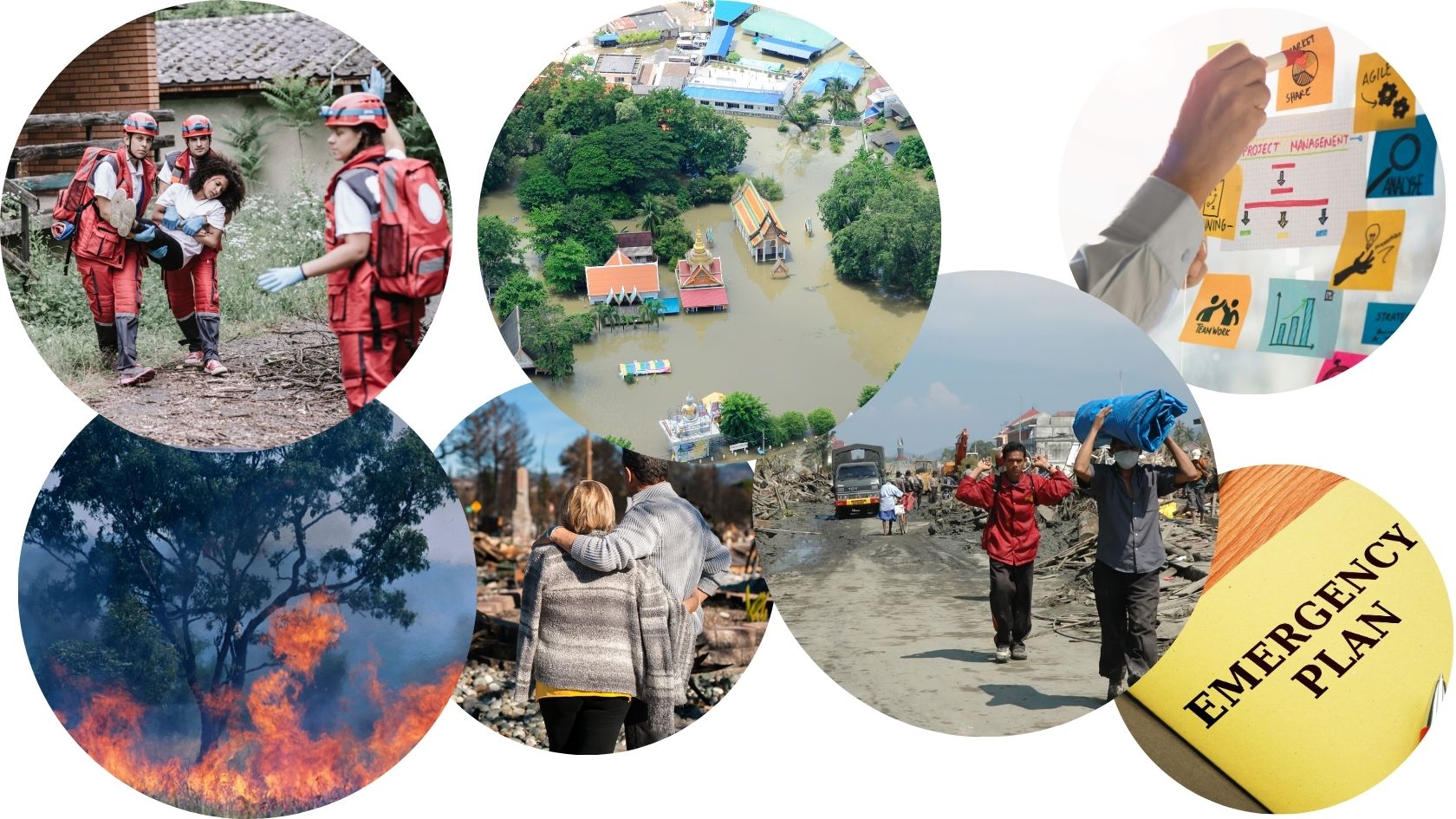 Describe the role of public health in disaster in disaster management.
- Utilize mapping in mitigation planning and response operation.
-
Learning Objectives:
- Understand common natural disasters at a global and local level and their consequences on environmental health services
- Apply their knowledge on risk assessment, communication, and control on a natural disaster case study.
- Understand the relationship between climate change and natural disasters
Click here to start this lesson
-
Required Learning Resources and Activities
-
Students mustViewLook for your region in the list and read the common natural disasters registered. Then, read for common natural disasters in at least the other five regions of your interest.
-
Students mustViewRead from the beginning of the page to the end under the heading "Effects of Hazards."
-
Students mustViewRead the entire paper.
-
-
Read from the heading "Disaster Impact" on page 6 to the end of page 12.
-
Read the entire page.
-
Students mustViewRead from the heading "Introduction" on page 3 to the end of page 6.
-
Students mustViewRead the content under the heading "Vulnerability to Hazards and Disasters" to the heading "This Course."
-
Students mustViewRead the entire article.
-
Students mustViewRead the entire page.
-
Students mustViewRead the content under the headings "Abstract" and "Conclusions."
-
Quiz: Module 5: Lesson 1
To access the quiz, click on the name of the quiz provided above. On the following screen, click the "Preview quiz now" button to respond to the questions.
TO PASS THIS QUIZ, YOU MUST OBTAIN A SCORE OF 26/32
Not available unless any of: The activity Quiz: Module 4: Lesson 3 is complete and passed ...Not available unless any of:- The activity Quiz: Module 4: Lesson 3 is complete and passed
- You belong to Completed M4L3 Quiz
-
Additional Resources for Optional Learning
-
Students mustViewClick on the following links in the left menu and read its content(The links appear below the main text in mobile):
- Hurricanes and COVID-19
- Earthquakes
- Extreme Heat
- Floods
- Hurricanes
- Landslides & Mudslides
- Lightning
- Tornadoes
- Tsunamis
- Volcanoes
- Wildfires
- Winter Weather
- Understand common natural disasters at a global and local level and their consequences on environmental health services
-
Learning Objectives:
- Evaluate the differencies between natural and man made disasters.
- Apply their knowledge on risk assessment, communication, and control on a man made disaster case stud.
Click here to start this lesson
-
Required Learning Resources and Activities
-
-
Read from the heading "Executive Summary" to the end of page 6
-
Read the entire page.
-
Read the entire page.
-
Quiz: Module 5: Lesson 2:
To access the quiz, click on the name of the quiz provided above. On the following screen, click the "Preview quiz now" button to respond to the questions.
TO PASS THIS QUIZ, YOU MUST OBTAIN A SCORE OF 9/11
Not available unless: The activity Quiz: Module 5: Lesson 1 is complete and passed -
Additional Resources for Optional Learning
-
Students mustMark as done
Read the texts about the management of disasters related to climate change. Read the questions and choose the correct answers.
This case study was adapted from the textbook case study that is linked below.
https://www.ipcc.ch/site/assets/uploads/2018/03/SREX-Chap9_FINAL-1.pdf
-
Discussion Post: How relevant are natural and man-made disasters on environmental health? (Completion time: 60 minutes) Forum
In this task, you will discuss the natural and man-made disasters relevant to the field of environmental health in general.
Step 1: Reflect on the content reviewed in this lesson and create a 150-300 piece of writing that includes all the following points:
How do disaster materials influence people and ecosystems according to their toxicity?
What are the physical, chemical, and microbial characteristics of disaster materials?
What is the appropriate way to dispose of materials after a disaster to mitigate environmental health risk?
What kind of materials, natural or man-made, present the most risk to human health?
All references should follow 7th Edition APA formatting. See the resource on the Himmelfarb Health Sciences Library for instructions: APA citation resource (references are excluded from word counts).
Step 2: To share your work, click on the button at the bottom of the screen labeled 'Add a new discussion topic.' and include the title "Discussion: How relevant are natural and man-made disasters on environmental health?" in the subject line.
Step 3: To complete the activity, you will also need to comment on at least one other post made by your peers in a respectful and professional manner. Be sure that your post engages your peers' discussion by including a reflection upon learning, sharing insight into the effect of toxic materials in people and ecosystems health, providing specific examples of materials of higher risks, or asking insightful questions. If a peer comments on your posting, please reply back. To post a reply, click on the particular discussion, then click on 'reply'.
OPTIONAL Step 4: Interact (10 minutes)
If you would like to, you can reply to your peers' posts in a respectful and professional manner. Ensure that your post engages your peers' ideas by including a reflection on their comments, sharing ideas of other potential difficulties and parties involved, or asking thought-provoking questions. If a peer comments on your posting, please reply. To post a reply, click “Reply” on a particular discussion, write your feedback and then click on “Post to forum.”
Not available unless: The activity Quiz: Module 5: Lesson 2: is marked complete -
Students mustViewMake a submissionReceive a grade
For advanced audiences, we recommend the completion of this mentored activity require you to connect with a mentor holding a Master of Public Health(MPH) or equivalent degree to evaluate your work.
As we want to ensure equitable access to the courses and understand the limitations of finding mentors in some regions, mentored activities are not required to take the final exam or get the certificate.In this activity students will develop an assessment of an emergency response team plan from their region.
Step 1: Review this Framework For Evaluating The Effectiveness Of Flood Emergency Management Systems In Europe, focusing on the 7 indicators proposed for the assessment of an emergency management plan.
Step 2: Choose a community or population that you are related to, and search for an emergency management plan developed for that specific community or population.
Step 3: Write a 500-700 word assessment of the chosen emergency management plan according to the steps in the document provided above.
Step 4: Compile your assignment in a document. Submit your assignment and wait for your mentor's feedback.
OPTIONAL Step 5: Interact (10 minutes)
If you would like to, you can reply to your peers' posts in a respectful and professional manner. Ensure that your post engages your peers' ideas by including a reflection on their comments, sharing ideas of other potential difficulties and parties involved, or asking thought-provoking questions. If a peer comments on your posting, please reply. To post a reply, click “Reply” on a particular discussion, write your feedback and then click on “Post to forum.”
-
Learning Objectives:
- Explain how environmental disasters lead to psychosocial issues such as substance use disorders.
- Outline strategies to provide support for individuals experiencing psychosocial issues and substance use disorders after a disaster.
-
Students mustMark as done
Required Learning Resources and Activities
-
-
-
Students mustView
Read the section "Effective Emergency Response".
-
Students mustView
Read the sections "What is the role of mental health professionals in a disaster situation?" and "What is the efficacy of the psychological interventions?".
-
Students mustView
Watch the entire video. (60 minutes)
-
Activity: Discussion Forum
In this learning activity, you will discuss the impact of environmental disasters on overall psychological issues, including substance use disorders and mental health conditions.
Instructions:
Step 1: Review [30 minutes]
Review all the required learning resources for this lesson.
Step 2: Respond [105 minutes]
Prepare a 250-500 word piece of writing that explains how environmental disasters may increase or exacerbate the risk for substance use disorders and mental health conditions. Ensure that your response includes the following:
- The impact of environmental disasters on developing a substance use disorder
- The impact of environmental disasters on mental health conditions
- The impact of environmental disasters on drug user/substance use related services
- Reference an example of a natural disaster in which there was a notable increase in substance use disorders
Step 3: Share [10 minutes]
To share your work, click on the “Add a new discussion topic” button under this post and paste your work into the “Message” box. Make sure to reference others’ intellectual property when necessary. All references should follow 7th Edition APA formatting. For further instructions, see the resource on the Himmelfarb Health Sciences Library: APA citation resource (N.B. references are excluded from word counts).
Step 4: Interact [10 minutes]
To complete the activity, you will need to reply to at least two posts made by your peers in a respectful and professional manner. Ensure that your post engages your peers' ideas by including a reflection on their comments, sharing ideas of other potential difficulties and parties involved, or asking thought-provoking questions. If a peer comments on your posting, please reply. To post a reply, click “Reply” on a particular discussion, write your feedback and then click on “Post to forum.”
OPTIONAL Step 5: Interact (10 minutes)
If you would like to, you can reply to your peers' posts in a respectful and professional manner. Ensure that your post engages your peers' ideas by including a reflection on their comments, sharing ideas of other potential difficulties and parties involved, or asking thought-provoking questions. If a peer comments on your posting, please reply. To post a reply, click “Reply” on a particular discussion, write your feedback and then click on “Post to forum.”
Not available unless: The activity Discussion Post: How relevant are natural and man-made ... ...Not available unless: The activity Discussion Post: How relevant are natural and man-made disasters on environmental health? (Completion time: 60 minutes) is marked complete -
Quiz: Module 5: Lesson 3
To access the quiz, click on the name of the quiz provided above. On the following screen, click the "Preview quiz now" button to respond to the questions.
TO PASS THIS QUIZ, YOU MUST OBTAIN A SCORE OF 6/8
Not available unless: The activity Activity: Discussion Forum is marked complete -
Students mustMark as done
Additional Resources for Optional Learning
-
Students mustView
Read the entire page.
-
Students mustView
Read the entire article.
- Explain how environmental disasters lead to psychosocial issues such as substance use disorders.
-
-
Final Exam Quiz
To take the final exam, you must complete all quizzes and complete all the required activities. The final exam consists of 77 questions, and you will have 77 minutes to complete it. When the time is over, you will have two minutes to submit your attempt before it expires, and your progress is discarded. You will not be able to answer additional questions in the grace period.
To access the exam, click on the name of the exam provided above. On the following screen, click the Preview quiz now button to respond to the questions.
Not available unless any of: You belong to a group in Kirksville College of Osteopathic Medicine ...Not available unless any of:- You belong to a group in Kirksville College of Osteopathic Medicine
-
All of:
-
All of:
- The activity Course Registration is marked complete
- The activity Pre-Test is marked complete
- The activity Quiz: Module 1: Lesson 1 is marked complete
- The activity Quiz: Module1: Lesson 2: is marked complete
- The activity Quiz: Module 2: Lesson 1 is marked complete
- The activity Quiz: Module 2: Lesson 2: is marked complete
- The activity Quiz: Module 3: Lesson 1: is marked complete
- The activity Quiz: Mudule 3: Lesson 2: is marked complete
- The activity Quiz: Module 4: Lesson 1: is marked complete
- The activity Quiz: Module 4: Lesson 2: is marked complete
- The activity Quiz: Module 4: Lesson 3 is marked complete
- The activity Quiz: Module 5: Lesson 1 is marked complete
- The activity Quiz: Module 5: Lesson 2: is marked complete
- The activity Quiz: Module 5: Lesson 3 is marked complete
-
All of:
- The activity Discussion Post: How would you describe the linkages between occupational health and environmental health? (Completion time: 60 minutes) is marked complete
- The activity Asynchronous Learning Activity 1: Importance for environmental health of sustainable development and the Sustainable Development Goals (Completion time: 4 hours) is marked complete
- The activity Discussion Post: What is the influence of the environment on human health? (Completion time: 60 minutes) is marked complete
- The activity Discussion Post: What is the role of globalization in the interaction of the environment with human health? (Completion time: 60 minutes) is marked complete
- The activity Asynchronous Learning Activity 2: Describe health outcomes related to major environmental hazards (Completion time: 4 hours) is marked complete
- The activity Discussion Post: Defend the role of environmental health in prevention and control of occupational agents. (Completion time: 60 minutes) is marked complete
- The activity Discussion Post: The role of environmental health in aerospace medicine (Completion time: 60 minutes) is marked complete
- The activity Discussion Post: Environmental Hazards Prevention? (Completion time: 60 minutes) is marked complete
- The activity Asynchronous Learning Activity 3: Describe the role of toxicology in environmental and occupational health (Completion time: 90 minutes) is marked complete
- The activity Discussion Post: How are environmental hazards related to sociocultural determinants? (Completion time: 60 minutes) is marked complete
- The activity Discussion Post: How are the concepts of environmental insult related to regional environmental risks? (Completion time: 60 minutes) is marked complete
- The activity Asynchronous Learning Activity 4: Model for environmental insult. (Completion time: 90 minutes) is marked complete
- The activity Asynchronous Learning Activity 5: Environmental health intervention (Completion time: 60 minutes) is marked complete
- The activity Asynchronous Learning Activity 6: Letter to the editor (Completion time: 2 hours) is marked complete
- The activity Asynchronous Learning Activity 7 : Write a white paper (Completion time: 8 hours) is marked complete
-
All of:
-
-
 In this section, you can provide feedback about this course to help us make NextGenU.org better. Once evaluations are completed, you will be able to download your certificate of completion.
 -
Course Evaluations QuestionnaireNot available unless: The activity Final Exam is marked complete
-
Self Evaluation QuestionnaireNot available unless: The activity Final Exam is marked complete
-
-
-
Students mustMark as done
-
Students mustMark as done
-
-
 Click here to start Final Examination