You do not have permission to view discussions in this forum.
-
-
Students mustStudent must submit this questionnaire to complete it
-
Students mustStudent must submit this questionnaire to complete it
-
Students mustViewReceive a grade
-
Students mustViewReceive a grade
Show More-

DISCLAIMER: This content is designed to enhance the study of nursing. This content is generic and is not designed to take into account the specific objectives, needs, and/or circumstances of any particular region or country. To become a nurse, learners must successfully complete a program of study approved by the government or state-regulatory agency in their place of residence. We cannot guarantee that the successful completion of these materials will enable you to practice in your place of residence. Make sure that you are in compliance with the scope of practice of your regulatory body before attempting to put into use or practice any of the knowledge gained.

Introduction
This Oncology Nursing Course is designed to provide the learner with an understanding of cancer in the local, regional and global context and the need for nurses with specialized knowledge, skills, and attitudes to provide safe, competent, quality care to individuals.
The five (5) modules are designed to help nurses:
Deliver evidence-based information by enabling them to practice with accurate scientific knowledge, a solid nursing science foundation, excellent communication, and an understanding of the healthcare system for policy development as they work to prevent, identify, and treat patients with cancer.
Identify current treatments in interventional and pharmacological therapeutics with a focus on evidence-based holistic nursing care.
Place emphasis on the development of sound clinical judgment, critical thinking and collaborative care to achieve optimal outcomes for their patients.
Apply safeguards to support a safe practice environment for both patients and healthcare workers.
Identify basic concepts, growth and development considerations, nursing management strategies, stem cell knowledge, blood count interpretation, infection control, side effect management, nutrition, and age-appropriate communication techniques for pediatric oncology and hematology patients.
Approximate time for completion of this course is 167 hours at an average reading rate of 144 words/minute.



The Oncology Nursing course is sponsored by the Innovative Cancer Care Foundation (ICCF) and was developed in partnership with Nurses International (NI) and NextGenU.org (NGU). NextGenU.org courses are competency-based and use learning resources from accredited, world-class organizations such as the U.S. Centers for Disease Control and Prevention (CDC), the U.S. National Institutes of Health, the World Health Organization, the Pan American Health Organization, and International Guidelines, Universities, and peer-reviewed Journals. The Moodle Learning Management System (LMS) is utilized for facilitating distance learning. The course was designed by NextGenU’s Instructional Design team and Nurses International’s team members with particular thanks to Academic Director:Kathleen Capone EdD, CNE, MS, RN; Nurses International Faculty: Stacen Keating PhD, RN; Lillian A Donnelly MSN, RN NPD-BC; Lori Kerley, DNP, MS, RN; Caitlin M. Cartmell, MFS, BSN, RN; and Jordan Wilson, MSN, RN-BC; and oncology subject matter expert reviewers: Beth Hutchason MN, RN, AOCNP; Jennifer Thietz MSN, BSN, RN and Danielle Loumagne BMTCN, BSN, RN.
Last updated: 07/2024
Engaging with this course
- Nurse Educators may register to review all of the course content, and they may instruct students to register for this course by completing the registration form.
- Nurse Educators may contact NextGenU.org and request to use the platform with their students for free using the contact form.
- Begin the course with Module 1. For each lesson, read the description.
- Each lesson comprises introductory remarks. You may click on the collections of resources in each section.
- The Pediatric Oncology Module is offered as a separate course for learners who would like to focus their studies in that area.
- There is a final quiz to assess your understanding of important concepts. Click on the hyperlinks to take you to these items in each topic.
- This content is designed to enhance the study of nursing. To become a nurse, learners must successfully complete a program of study approved by the government or state-regulatory agency in their place of residence.
Requirements to obtain the certificateYou may browse this course for free for your personal enrichment. There are no requirements.
To obtain a certificate, a learner must successfully complete:
- all reading requirements
- all lessons quizzes with a minimum of 80% and unlimited attempts
- all discussion forums
- the final exam with a minimum of 80% and a maximum of 2 attempts and
- the post-course survey, self, and course evaluation forms
Subscribe to our newsletter to be notified of future updates, new courses, and to be part of our community.
-
 This module introduces the learner to the basic physiologic characteristics of cancer biology including epidemiology and pathology, symptoms and disease processes, staging and grading, and incidence. An explanation of primary and secondary cancer prevention and treatment options including radiation, surgery, and use of antineoplastic agents, targeted therapies, and stem cell translations are included. Safe handling of chemotherapy agents along with the nurse’s role in providing safe patient care is explained.
-
Student Learning Outcomes:
- Describe the concepts of normal and cancer cell growth, proliferation, differentiation, and regulatory mechanisms.
- Define the characteristics of benign and malignant cells and tumors.
- Recognize the genetic, immunological, and hormonal basis of cancer.
- Describe processes of invasion and metastases.
- List common classification systems for cancer.
- Compare and contrast common methods for diagnosing, staging, and grading cancer.
-
Required Learning Resources and Activities
-
Students mustView
Read the entire page. (12 minutes)
Winchester Hospital
-
Students mustView
Read sections on 'The Definition of Cancer' and 'Differences between Cancer Cells and Normal Cell'. (3 minutes)
National Cancer Institute
-
Students mustView
Read the table: Characteristics of benign and malignant. (1 minutes)
NCBI
-
Students mustView
Read the entire article. (2 minutes)
Winchester Hospital
-
-
-
-
-
Students mustViewRead the section on 'Cellular Principles of Invasion and Metastasis'. (2 minutes)
Cancer Council Australia -
Students mustView
Read the sections on 'Cancer Invasion and Metastasis: The Role of Cell Adhesion Molecules'. (39 minutes)
NCBI
-
Students mustView
Read the entire page. (4 minutes)
SEER Training Modules, NCI, NIH
-
Students mustView
Read the entire page. Including related resources at the bottom of the page: 'Tumor Grade' and 'Pathology Reports'. (23 minutes)
NCI, NIH
-
Students mustView
Read the entire page. Click the 'Diagnosis' link on this page for more information on how cancer is diagnosed. (10 minutes)
NCI, NIH
-
Students mustMark as done
Additional Learning Options
-
Students mustView
Read the sections COMPONENTS OF THE IMMUNE SYSTEM INVOLVED IN ANTITUMOR RESPONSES and CYTOKINES AND THE PATHOGENESIS OF CANCER. (32 minutes)
The Global Library of Women's Medicine
-
Slide Deck Presentation
-
-
Quiz: Module 1: Lesson 1
To access the quiz, click on the name of the quiz provided above. On the following screen, click the "Preview quiz now" button to view the case studies and respond to the questions.
Not available unless: The activity Course Registration is marked complete
- Describe the concepts of normal and cancer cell growth, proliferation, differentiation, and regulatory mechanisms.
-
Student Learning Outcomes:
- Describe how classification of tumors influence treatment planning.
- Describe the individual related factors that influence cancer treatment planning.
- Discuss influence and use of cancer clinical trials in cancer treatment planning.
- Identify the principles for facilitating decision making by people affected by cancer.
- Define evidence-based guidelines.
- Identify evidence-based guidelines for cancer treatment planning.
Approximate time required for the readings for this lesson (at 144 words/minute): 1 hour and 5 minutes.-
Required Learning Resources and Activities
-
Students mustView
Read the entire page including the section box titled ' Health Care Professionals'. (4 minutes)
UICC
-
-
-
Students mustView
Read the entire page. (25 minutes)
Journal
-
-
Slide Deck Presentation
-
-
Students mustViewReceive a gradeReceive a passing gradeTo access the quiz, click on the name of the quiz provided above. On the following screen, click the "Preview quiz now" button to view the case studies and respond to the questions.
- Describe how classification of tumors influence treatment planning.
-
Student Learning Outcomes:
- Describe the factors influencing the selection of surgery for cancer.
- Identify the types of surgery in the prevention, diagnosis, staging, treatment, and palliation of cancer.
- Identify upcoming surgery alternatives for cancer management.
- Explore nurse's role in surgical cancer treatment.
- Identify the impact of cancer surgery on various aspects of the patient's overall health.
- Discuss the prevention, detection, and management of common health alterations experienced by people undergoing surgery for cancer.
- Explore the nurse's role during pre and post-surgery for cancer.
Approximate time required for the readings for this lesson (at 144 words/minute): 1 hour and 3 minutes.-
Students mustMark as done
Required Learning Resources and Activities
-
Students mustView
Read the entire page except for the 'learning activities'. (3 minutes)
EdCaN - learning resources for nurses-Cancer Australia
-
Students mustView
Read entire sections on, 'prophylactic surgery', 'diagnostic surgery', 'definitive (or curative) surgery',' rehabilitative (or reconstructive) surgery', 'palliative surgery', except for Learning resources. (8 minutes)
EdCaN - learning resources for nurses-Cancer Australia
-
Students mustView
Read all sections: "Diagnostic Surgery", "Preventive Surgery Curative Surgery Palliative", and "Reconstructive Surgery". (9 minutes)
National Cancer Institute US
-
Students mustView
Read the entire page and read other pages. Click on 'Next: Fast track surgery', 'Next: Minimally invasive surgery' and finally 'Next: Robotics' at the bottom of each page and read the contents. (5 minutes)
EdCaN - learning resources for nurses-Cancer Australia
-
Students mustView
Read the entire page. (11 minutes)
American Cancer Society
-
Students mustView
Read the entire page and sections on 'Pre-op assessment', 'Pre-op education', 'Intraoperative issues', and 'Post op care' by clicking on the respective titles. Learning activities are optional. (11 minutes)
EdCaN - learning resources for nurses-Cancer Australia
-
Students mustView
Read the entire page. (10 minutes)
Cancer Research UK
-
-
Students mustMark as done
Slide Deck Presentation
-
Students mustView
Read all the slides and answer the questions.
-
Students mustViewReceive a gradeReceive a passing grade
To access the quiz, click on the name of the quiz provided above. On the following screen, click the "Preview quiz now" button to view the case studies and respond to the questions.
-
Students mustView
Read all the slides and answer the questions.
-
Students mustViewReceive a gradeReceive a passing grade
To access the quiz, click on the name of the quiz provided above. On the following screen, click the "Preview quiz now" button to view the case studies and respond to the questions.
-
Student Learning Outcomes:
- Recognize the concepts of applied radiation physics and radiation biology.
- Describe the factors influencing the selection of radiotherapy for cancer.
- Discuss the role of radiotherapy in the treatment and palliation of cancer.
- List the methods for delivering radiotherapy.
- Describe the radiation safety principles to limit exposure to ionizing radiation for radiotherapy personnel, people affected by cancer, and the general public.
- Identify upcoming radiotherapy alternatives for cancer management.
- Identify the impact of radiotherapy on various aspects of the patients overall health.
- Describe the prevention, detection, and management of common health alterations experienced by people undergoing radiotherapy for cancer.
-
Students mustMark as done
Required Learning Resources and Activities
-
Students mustView
Read the entire page except for the 'learning activities'. (3 minutes)
EdCaN - learning resources for nurses-Cancer Australia
-
-
Students mustView
Read the sections 'Definition/Introduction' and 'Clinical Significance'. (12 minutes)
NCBI, NIH
-
Students mustView
Read the entire page except for the 'learning activities'. (1 minutes)
EdCaN - learning resources for nurses-Cancer Australia
-
Students mustView
Read the entire page, click on "Gamma knife", "External beam radiotherapy", "Brachytherapy" and "Combined modality". (10 minutes)
EdCaN - learning resources for nurses-Cancer Australia
-
Students mustView
Read the section on 'External Beam Radiation Therapy'. (4 minutes)
National Cancer Institure
-
Students mustView
Read the section 'How Brachytherapy Is Put In Place' and 'Types of Brachytherapy'. (4 minutes)
National Cancer Institute
-
Students mustView
Read the entire article. (4 minutes)
Australian Government Cancer Australia
-
Students mustView
Read the entire article. (4 minutes)
Stanford University
-
Students mustView
Read the entire article. (27 minutes)
-
Students mustView
Read the entire page except for the 'learning activities'. (2 minutes)
EdCaN - learning resources for nurses-Cancer Australia
-
Students mustView
Read entire sections on 'Fatigue', 'Radiation enteritis', 'Radiation skin reactions', 'sexual dysfunction' and 'Mucositis' by clicking on respective section titles. Learning activities are optional. (8 minutes)
EdCaN - learning resources for nurses-Cancer Australia
-
Students mustView
Read the entire page (learning activities optional. (3 minutes)
EdCaN - learning resources for nurses-Cancer Australia
-
Students mustMark as done
Additional Learning Options
-
Students mustView
Read the entire page. (4 minutes)
Tripartite National Strategic Plan for Radiation Oncology 2012-2022
-
Students mustView
Read 1.2. Radiotherapy in the Context of Cancer Control on pages 15-16. (5 minutes)
IAEA
-
Students mustMark as done
Slide Deck Presentation
-
Students mustView
Read all the slides and answer the questions.
-
Students mustViewReceive a gradeReceive a passing grade
To access the quiz, click on the name of the quiz provided above. On the following screen, click the "Preview quiz now" button to view the case studies and respond to the questions.
-
Students mustView
Read all the slides and answer the questions.
-
Students mustViewReceive a gradeReceive a passing grade
To access the quiz, click on the name of the quiz provided above. On the following screen, click the "Preview quiz now" button to view the case studies and respond to the questions.
-
Student Learning Outcomes:
- Describe the classification of antineoplastic agents.
- Explain the role of antineoplastic agents in the treatment and palliation of cancer.
- Describe factors influencing the selection of antineoplastic agents for cancer.
- Compare the methods for administering antineoplastic agents.
- Describe the principles of safe handling of antineoplastic agents.
- Identify upcoming alternatives for antineoplastic therapies in the management of cancer.
- Describe the experience and impact of antineoplastic therapies on the patients overall health.
- Discuss the prevention, detection, and management of common health alterations experienced by people receiving antineoplastic therapies for cancer.
-
Required Learning Resources and Activities
-
Students mustView
Read the entire page and click on the five tabs (describing each of the following: Alkylating and alkylating-like agents Antimetabolites, Antitumour antibiotics, Plant alkaloids, Miscellaneous agents, Hormonal agents) at the top and read. (6 minutes)
EdCaN - learning resources for nurses-Cancer Australia
-
Students mustView
Read the entire page except for the 'learning activities'. (2 minutes)
EdCaN - learning resources for nurses-Cancer Australia
-
Students mustView
Read the entire page except for the 'learning activities'. (3 minutes)
EdCaN - learning resources for nurses-Cancer Australia
-
Students mustView
Read the entire page except for the 'learning activities'. (1 minute)
EdCaN - learning resources for nurses-Cancer Australia
-
Students mustView
Read the section on ‘Summary of Methods for Preventing Exposure to Antineoplastic Chemotherapy'. (1 minute)
The Art and Science of Infusion Nursing
-
Students mustView
Read Abstract. (1 minute)
Anti Cancer Research Journal
-
Students mustView
Read the section from "Side Effects and Their Management " to 'Conclusion'. (24 minutes)
Nova express
-
Students mustView
Read the entire page and click 'Next' to read the other pages on Anticipatory responses, Immediate responses, Short-term responses, and Long-term responses. (4 minutes)
EdCaN - learning resources for nurses-Cancer Australia
-
Students mustView
Read the section from"Behavioral Strategies to Alleviate Nutrition-Related Symptoms to Weight Gain". (12 minutes)
NIH
-
Slide Deck Presentation
-
Students mustView
Read all the slides and answer the questions.
-
Students mustViewReceive a gradeReceive a passing grade
To access the quiz, click on the name of the quiz provided above. On the following screen, click the "Preview quiz now" button to view the case studies and respond to the questions.
-
Students mustView
Read all the slides and answer the questions.
-
Students mustViewReceive a gradeReceive a passing grade
To access the quiz, click on the name of the quiz provided above. On the following screen, click the "Preview quiz now" button to view the case studies and respond to the questions.
-
Student Learning Outcomes:
- Describe the role of targeted agents in the treatment and palliation of cancer.
- Define the classification of targeted therapies.
- Describe the factors influencing the selection of targeted therapies for cancer.
- Compare and contrast the methods for administering targeted therapies.
- Summarize the future directions in therapies on various health domains.
- Describe detection of common health alterations experienced by people receiving targeted therapies for cancer.
- Describe prevention of common health alterations experienced by people receiving targeted therapies for cancer.
- Describe the management of common health alterations experienced by people receiving targeted therapies for cancer.
Approximate time required for the readings for this lesson (at 144 words/minute): 2 hours and 52 minutes.-
Students mustMark as done
Required Learning Resources and Activities
-
Students mustView
Read the entire page. (8 minutes)
American Cancer Society
-
-
-
Students mustView
Read the entire page. (15 minutes)
National Cancer Institute
-
Students mustView
Read the entire page. (6 minutes)
Clinical & Radiation Oncologists
-
-
Students mustView
Read "How is it determined whether a patient is a candidate for targeted therapy?". (2 minutes)
NCI
-
Students mustView
Read the entire page. (3 minutes)
EdCaN
-
Students mustView
Read the "THERAPIES AT THE PRECLINICAL STAGE AND IN CLINICAL TESTING". (25 minutes)
NCBI
-
Students mustView
Read the entire page. (23 minutes)
American Cancer Society
-
Students mustView
Read "What are the side effects of targeted therapy?". (2 minutes)
NCI
-
Students mustView
Read the entire page. (23 minutes)
American Cancer Society
-
Students mustView
Read Diarrhea and Constipation section. (12 minutes)
NCI
-
Students mustView
Read "Treat all Cancers that can be treated". (13 minutes)
NCBI
-
Students mustView
Read What is Bone Marrow Transplant, types. (5 minutes)
ASCO
-
Students mustView
Read " Introduction", "Definition of Histocompatibility", "HLA", and "HLA typing". (13 minutes)
NCBI
-
Students mustMark as done
Slide Deck Presentation
-
Students mustView
Read all the slides and answer the questions.
-
Students mustViewReceive a gradeReceive a passing grade
To access the quiz, click on the name of the quiz provided above. On the following screen, click the "Preview quiz now" button to respond to the questions.
-
Students mustView
Read all the slides and answer the questions.
-
Students mustViewReceive a gradeReceive a passing grade
To access the quiz, click on the name of the quiz provided above. On the following screen, click the "Preview quiz now" button to respond to the questions.
-
Student Learning Outcomes:
- Describe the hematological and immunological principles of hematopoietic stem cell transplantation (HSCT).
- Define donor histocompatibility.
- List the types of HSCT.
- Recognize diseases treatable by HSCT.
- Explain acute and chronic graft-versus-host disease.
- Explain the impact of HSCT on various health domains.
- Describe the prevention, detection, and management of common short and long term health alterations experienced by people undergoing HSCT.
-
Students mustMark as done
Required Learning Resources and Activities
-
Students mustView
Read the "Principles of Transplantation" and read the section "Haematopoiesis" and "Transplant immunology". (6 minutes)
EdCaN
-
Students mustView
Read the entire page. (1 minute)
Springer Link
-
Students mustView
Read the entire page. (8 minutes)
American Society for Histocompatibility and Immunogenetics
-
Students mustView
Read the meaning of Histocompatibility. (2 minutes)
ScienceDirect
-
-
Students mustView
Read the entire page. (20 minutes)
American Cancer Society
-
-
Students mustView
Read the entire page. (4 minutes)
BetheMatch
-
Students mustView
Read the entire page. (13 minutes)
MedicineNet
-
Students mustView
Read "Current Challenges and Difficulties that the Participants Experience due to Their Past Illness and Its Complications". (8 minutes)
Frontiers in Psychology
-
-
-
Students mustView
Read the section from 9.1.1. Introduction to 9.3.9. Nursing Aspects (42 minutes)
NCBI
-
Students mustMark as done
Slide Deck Presentation
-
Students mustView
Read all the slides and answer the questions.
-
Students mustViewReceive a gradeReceive a passing grade
To access the quiz, click on the name of the quiz provided above. On the following screen, click the "Preview quiz now" button to respond to the questions.
-
Students mustView
Read all the slides and answer the questions.
-
Students mustViewReceive a gradeReceive a passing grade
To access the quiz, click on the name of the quiz provided above. On the following screen, click the "Preview quiz now" button to respond to the questions.
- Describe the hematological and immunological principles of hematopoietic stem cell transplantation (HSCT).
-
Student Learning Outcomes:
- Identify hazardous drugs related to cancer treatment.
- Describe the risk of exposure to hazardous drugs and its consequences.
- Describe use of personal protective equipment (PPE), spill cleanup and waste disposal of hazardous drugs in cancer treatment.
-
Students mustMark as done
Required Learning Resources and Activities
-
Students mustView
Read from pages 1-19. (45 minutes)
PAHO and WHO
-
Students mustView
Read pages: 6-8, 53-56, 58-62, 69-86. (70 minutes)
Government of South Australia
-
Students mustMark as done
Additional Learning Options
-
Students mustView
Read the entire page. (9 minutes)
New South Wales Government
-
Students mustMark as done
Slide Deck Presentation
-
Students mustView
Read all the slides and answer the questions.
-
Students mustViewReceive a gradeReceive a passing grade
To access the quiz, click on the name of the quiz provided above. On the following screen, click the "Preview quiz now" button to respond to the questions.
-
Students mustMark as done
Case Study for Clinical Judgment
-
Students mustViewStart discussions: 1
-
Students mustViewReceive a gradeReceive a passing grade
To access the quiz, click on the name of the quiz provided above. On the following screen, click the "Preview quiz now" button to respond to the questions.
-
This unit provides a comprehensive description of nursing management and care of the patient with cancer. It includes essential elements of education for the patient and family and addresses the principles of supportive and palliative care, death and dying and the nurse’s role in supporting the grief and bereavement processes. Nursing ethics and compliance consideration are included along with detailed description of treatment for oncologic emergencies.
-
Student Learning Outcomes:
- Identify cancer treatment procedures that affect skin integrity of the patient.
- Describe how skin integrity is assessed and cared for in cancer patients.
- Explain the concept of maintenance of tissue integrity for cancer patient in nursing care management and planning.
- Identify information for patient education/counselling on self-care related to skin integrity.
-
Required Learning Resources and Activities
-
Students mustViewRead entire page. (8 minutes)
National Cancer Institute -
Students mustMark as done
Read contents from 'Overview' to 'Physical Modalities'. (32 minutes)
National Cancer Institute
-
Students mustMark as done
Read contents of sections ‘Dry Skin’, ‘Itchy Skin’, ‘Skin Rash’ ‘Changes in Skin Color’, ‘Pressure Sores’, and ‘Scars and Wound’. (25 minutes)
American Cancer Society
-
Students mustMark as done
Read the entire article. (11 minutes)
MedicalNewsToday
-
Students mustMark as done
Read contents of sections ‘Background’, ‘Assessment’, ‘Management’ and ‘Patient Education’. (7 minutes)
Cancer Institute NSW, eviQ
-
Students mustMark as done
Read contents from section 'Side-effects associated with targeted chemotherapeutic agents' to ‘Conclusion’. (15 minutes)
Journal of the European Academy of Dermatology and Venereology
-
Students mustMark as done
Read the entire article. (8 minutes)
American Academy of Dermatology Association
-
Students mustMark as done
Slide Deck Presentation
-
Students mustMark as done
-
Students mustViewReceive a gradeReceive a passing grade
To access the quiz, click on the name of the quiz provided above. On the following screen, click the "Preview quiz now" button to respond to the questions.
-
Student Learning Outcomes:
- Recognize the importance of promoting nutrition for the cancer patient in nursing care management and planning.
- Identify the main cancer treatment-related nutrition issues.
- Describe how well nutrition is assessed and addressed in cancer patients.
- Identify different nutrition therapy strategies in cancer patients.
- Identify information for patient education/counselling on self-care related to nutrition.
Approximate time required for the readings for this lesson (at 144 words/minute): 49 minutes.
-
Students mustMark as done
Required Learning Resources and Activities
-
Students mustMark as done
Read the sections 'overview to the types of nutritional support'. (30 minutes)
National Cancer Institute, US
-
Students mustMark as doneRead the Abstract that covers the main points of the topic.
-
Students mustMark as done
Read contents of sections 'Screening and nutritional assessment' and 'Energy and nutritional requirements. (3 minutes)
Clinical and Translational Oncology
-
Students mustMark as done
Read contents of the sections ‘physical examination to Dual-energy X-Ray Absorptiometry (DXA)’. (13 minutes)
European Review for Medical and Pharmacological Sciences
-
Students mustMark as done
Slide Deck Presentation
-
Students mustMark as done
-
Students mustViewReceive a gradeReceive a passing grade
To access the quiz, click on the name of the quiz provided above. On the following screen, click the "Preview quiz now" button to respond to the questions.
-
Students mustMark as done
Case Study for Clinical Judgment
-
Students mustViewStart discussions: 1
-
Students mustViewReceive a gradeReceive a passing grade
To access the quiz, click on the name of the quiz provided above. On the following screen, click the "Preview quiz now" button to respond to the questions.
-
Student Learning Outcomes:
- Define the concept and characteristics of pain in cancer care.
- Describe the classifications and mechanisms of pain of cancer patients.
- Describe pain assessment techniques and tools used in cancer care.
- Describe pharmacological pain management in cancer patients.
- Identify interventions for the management of side effects from pain medication in cancer patients.
- Identify non-pharmacological pain management in cancer patients.
- Identify information for patient education/counseling on pain management at home.
Approximate time required for the readings for this lesson (at 144 words/minute): 2 hours and 55 minutes.-
Students mustMark as done
Required Learning Resources and Activities
-
Students mustMark as done
Read contents from sections 'Background and Definitions' to 'Impact on Function and QOL', and 'Pain Classification'. (17 minutes)
National Cancer Institute, US
-
Students mustMark as done
Read the content of the sections ‘Clinical Presentation and Assessment of Pain’ and 'Timing and Temporal Variation'. (8 minutes)
MDPI 'Cancers'
-
Students mustMark as done
Read the content of section 'HOW DO WE CURRENTLY ASSESS PAIN IN CANCER PATIENTS?'. (3 minutes)
The Ulster medical journal
-
Students mustViewRead the entire article. (20 minutes)
-
Students mustMark as done
Read the sections ‘Instruments for pain-intensity assessment’ and ‘Instruments to measure pain affect'. (12 minutes)
European Spine Journal
-
Students mustMark as done
Reade contents of sections 'Pain location (sensory dimension)', ' Pain intensity (sensory dimension)', 'Pain quality (sensory, affective, and cognitive dimensions)', 'Pain pattern (sensory dimension)', and 'Alleviating and aggravating factors (behavioral dimension)'. (3 minutes)
Pain Management Nursing Journal, American Society of Pain Management Nurses
-
Students mustMark as done
Read the section 'Pain Management', 'Pain Management: Non-opioid', 'Pain Management: Opioids’ and 'Opioids related side effects'. (30 minutes)
CA: a cancer journal for clinicians
-
Students mustMark as done
Read the content of the section ‘Managing and preventing side effects'. (4 minutes)
National Cancer Institute
-
Students mustMark as done
Read contents of pages 1072 to 1075. (6 minutes)
Journal of National Comprehensive Cancer Network
-
Students mustMark as done
Read the entire section ‘Non-pharmacological therapies in cancer pain management’. (32 minutes)
Indian Journal of Palliative Care
-
Students mustMark as done
Slide Deck Presentation
-
Students mustMark as done
-
Students mustViewReceive a gradeReceive a passing grade
To access the quiz, click on the name of the quiz provided above. On the following screen, click the "Preview quiz now" button to respond to the questions.
-
Students mustMark as done
-
Students mustViewReceive a gradeReceive a passing grade
To access the quiz, click on the name of the quiz provided above. On the following screen, click the "Preview quiz now" button to respond to the questions.
-
Students mustMark as done
Case Study for Clinical Judgment
-
Students mustViewStart discussions: 1
-
Students mustViewReceive a gradeReceive a passing grade
To access the quiz, click on the name of the quiz provided above. On the following screen, click the "Preview quiz now" button to respond to the questions.
-
Student Learning Outcomes:
- Define the fatigue and weakness normally experienced by cancer patients.
- Describe the methods to assess fatigue and weakness.
- Use methods of non-pharmacological and pharmacological interventions to address the fatigue generally experienced by cancer patients.
- Identify information for patient education/counselling on fatigue management at home.
-
Students mustMark as done
Required Learning Resources and Activities:
-
Students mustMark as done
Read contents of sections ‘Assessment’, ‘Interventions’ and ‘Patient Education (58 minutes)
National Cancer Institute, US -
Students mustMark as done
Read 2nd, 3rd and 4th paragraph of section ‘Barriers to the Translation of CRF Guidelines Into Practice’ (4 minutes)
Clinical Journal of Oncology Nursing -
Students mustMark as done
Read contents of figure FT1-FT2, FT3, FT4, FT5, FT6, and FT7.
(32 minutes)National Comprehensive Cancer Network
-
Students mustViewStart discussions: 1
In this activity, you will describe the methods of interventions that you will implement to address fatigue experienced by patients with co-occurring advanced cancer and opioid use disorder [OUD]
Step 1. Review [15 minutes]
Analyze and review the fictional scenario below
You are part of the group of panelists in palliative care and addiction who participated in a three-round modified Delphi process. The focus of your discussions is all about the appropriateness of strategies for managing fatigue in individuals with advanced cancer and opioid use disorder. Information about the managing methods that are currently used is presented to you.
Step 2. Respond [ 180 minutes]
Prepare a 300-600 word feedback that covers the following components:
- Appropriateness of non-pharmacological and pharmacological interventions for managing fatigues in individuals with advanced cancer and opioid use disorder
- Advantages and disadvantages of both methods
- Recommendations for fatigue management plan based on these two methods of intervention.
Step 3. Share [10 minutes]
To share your work, click on the “Add a new discussion topic” button under this post and paste your work in the “Message” box. Make sure to reference others’ intellectual property when necessary. All references should follow 7th Edition APA formatting. For further instructions, see the resource on the Himmelfarb Health Sciences Library: APA citation resource (N.B. references are excluded from word counts).
Step 4: Interact [10 minutes]
To complete the activity, you will need to reply to at least two posts made by your peers in a respectful and professional manner. Ensure that your post engages your peers' ideas by including a reflection on their comments, sharing ideas of other potential difficulties and parties involved, or asking thought-provoking questions. Your response should respond to each of the three framework elements indicated in the table. If a peer comments on your posting, please reply. To post a reply, click “Reply” on a particular discussion, write your feedback and then click on “post to forum.”
OPTIONAL Step 5: Interact (10 minutes)
If you would like to, you can reply to your peers' posts in a respectful and professional manner. Ensure that your post engages your peers' ideas by including a reflection on their comments, sharing ideas of other potential difficulties and parties involved, or asking thought-provoking questions. If a peer comments on your posting, please reply. To post a reply, click “Reply” on a particular discussion, write your feedback and then click on “Post to forum.”
-
Students mustMark as done
Slide Deck Presentation
-
Students mustMark as done
-
Students mustViewReceive a gradeReceive a passing grade
To access the quiz, click on the name of the quiz provided above. On the following screen, click the "Preview quiz now" button to respond to the questions.
-
Student Learning Outcomes:
- Describe the definition of self-esteem and body image.
- Identify patient's concerns regarding body image and self-esteem as a consequence of cancer treatment.
- Discuss ways to improve body image and self-esteem in the nursing management of cancer patients.
- Identify information for patient education/counseling on self-esteem management and positive image at home.
-
Students mustMark as done
Required Learning Resources and Activities:
-
Students mustMark as done
Read the entire page. (4 minutes)
Cancer Institute NSW
-
Students mustMark as done
Read the entire page. (4 minutes)
Canadian Cancer Society
-
Students mustMark as done
Slide Deck Presentation
-
Students mustMark as done
-
Students mustViewReceive a gradeReceive a passing grade
To access the quiz, click on the name of the quiz provided above. On the following screen, click the "Preview quiz now" button to respond to the questions.
-
Student Learning Outcomes:
- Identify the common side effects of chemotherapy and radiation cancer therapies.
- Identify causes, signs/symptoms, and diagnostic factors of anemia in cancer patients.
- Describe the management of anemia in cancer patients.
- Describe the nurse's role in the management of anemia in cancer patients.
Approximate time required for the readings for this lesson (at 144 words/minute): 1 hour and 9 minutes
-
Students mustMark as done
Required Learning Resources and Activities:
-
Students mustMark as done
Read content from ‘Screening evaluation’ to ‘NCCN Recommendations’ for iron supplementation. (35 minutes)
Journal of National Comprehensive Cancer Network
-
Students mustMark as done
Read content from ‘ESAs’ to ‘RBC Transfusion’. (34 minutes)
ESMO Annals of Oncology
-
Students mustMark as done
Slide Deck Presentation
-
Students mustMark as done
-
Students mustViewReceive a gradeReceive a passing grade
To access the quiz, click on the name of the quiz provided above. On the following screen, click the "Preview quiz now" button to respond to the questions.
-
Student Learning Outcomes:
- Define thrombocytopenia.
- Identify causes, signs/symptoms, and diagnostic factors of thrombocytopenia and bleeding in cancer patients.
- Describe the management of thrombocytopenia/bleeding in cancer patients.
- Describe the nurse's role in the management of thrombocytopenia/bleeding in cancer patients.
-
Students mustMark as done
Required Learning Resources and Activities:
-
Students mustMark as done
Read the entire journal article. (24 minutes)
Annals of Palliative Medicine, Hong Kong
-
Students mustMark as done
Read the entire page. (9 minutes)
Canadian Cancer Society
-
Students mustMark as done
Read the entire page. (8 minutes)
Victoria State Government, BetterHealth Channel
-
Students mustMark as done
Read section ‘Caustic hemostatic agents’. (3 minutes)
HINDAWI Dermatology Research and Practice Journal
-
Students mustMark as done
Slide Deck Presentation
-
Students mustMark as done
-
Students mustViewReceive a gradeReceive a passing grade
To access the quiz, click on the name of the quiz provided above. On the following screen, click the "Preview quiz now" button to respond to the questions.
-
Student Learning Outcomes:
- Describe neutropenia and mouth/throat problems as side effects related to cancer and cancer treatment.
- Describe the management of these side effects.
- Describe the nurse's role in the management of these side effects.
Approximate time required for the readings for this lesson (at 144 words/minute): 51 minutes.
-
Students mustMark as done
Required Learning Resources and Activities:
-
Students mustMark as done
Read the entire page. (11 minutes)
Canadian Cancer Society
-
Students mustMark as done
Read contents of the section on ‘Neutropenia’, ‘Adverse effect’, ‘Neutropenia diagnosis’ and ‘Management of Neutropenia’. (21 minutes)
IntechOpen
-
Students mustMark as done
Read the entire page. (6 minutes)
National Cancer Institute, US
-
Students mustMark as done
Read the entire page. (13 minutes)
Canadian Cancer Society
-
Students mustMark as done
Slide Deck Presentation
-
Students mustMark as done
-
Students mustViewReceive a gradeReceive a passing grade
To access the quiz, click on the name of the quiz provided above. On the following screen, click the "Preview quiz now" button to respond to the questions.
-
Student Learning Outcomes:
- Describe extravasation and peripheral neuropathy as side effects related to cancer and cancer treatment.
- Identify risk factors, signs, and symptoms of extravasation and peripheral neuropathy in cancer treatment.
- Describe the management of these side effects.
- Describe the nurse's role in the management of these side effects.
Approximate time required for the readings for this lesson (at 144 words/minute): 1 hour and 33 minutes.
-
Students mustMark as done
Required Learning Resources and Activities
-
Students mustMark as done
Read contents of ‘Background’, ‘Assessment’ ‘Management’ and ‘Patient education’. (24 minutes)
Cancer Institutes of NSW, eviQ
-
Students mustMark as done
Read the entire article. (22 minutes)
ESMO Annals of Oncology
-
Students mustMark as done
Read the entire page. (7 minutes)
Canadian Cancer Society
-
Students mustMark as done
Read the entire page. (5 minutes)
National Cancer Institute, US.
-
Students mustMark as done
Read contents from section ‘Treatment of CIPN’ to ‘Recommendations’. (24 minutes)
ESMO Annals of Oncology
-
Students mustMark as done
Read contents of section ‘Abstract- Recommendations’ and ‘The Bottom Line’. (5 minutes)
An American Society of Clinical Oncology Journal
-
Students mustMark as done
Read the entire page. (6 minutes)
Oncology Nursing News
-
Students mustMark as done
Slide Deck Presentation
-
Students mustMark as done
-
Students mustViewReceive a gradeReceive a passing grade
To access the quiz, click on the name of the quiz provided above. On the following screen, click the "Preview quiz now" button to respond to the questions.
-
Student Learning Outcomes:
- Define patient education.
- Discuss nurse's role in provision of patient education.
- Identify benefits of patient education in cancer patients.
- Describe evidence-based approaches and process of patient education.
Approximate time required for the readings for this lesson (at 144 words/minute): 1 hour and 2 minutes.
-
Students mustMark as done
Required Learning Resources and Activities
-
Students mustMark as done
Read the entire page. (9 minutes)
World Medical Association
-
Students mustMark as done
Read the entire page. (25 minutes)
Institute of Cancer NSW, eviQ
-
Students mustMark as done
Read the content of ‘THE BOTTOM LINE’.(8 minutes)
Journal of Clinical Oncology
-
Students mustMark as done
Read the entire article. (20 minutes)
Home Healthcare Now, Lippincott Nursing Center
-
Students mustMark as done
Slide Deck Presentation
-
Students mustMark as done
-
Students mustViewReceive a gradeReceive a passing grade
To access the quiz, click on the name of the quiz provided above. On the following screen, click the "Preview quiz now" button to respond to the questions.
-
Student Learning Outcomes:
- Define supportive care during and after cancer treatment.
- Describe the supportive care needs during and after cancer treatment.
- Identify the barriers to supportive care provision to cancer patients.
- Describe evidence-based screening and assessment approaches to identify supportive care needs.
- Explain the role of self-management as part of the supportive care process.
- Recognize self-care practices for nurses.
Approximate time required for the readings for this lesson (at 144 words/minute): 24 minutes.-
Students mustMark as done
Required Learning Resources and Activities
-
Students mustViewRead pages from 2 to 24 (15 minutes)
EdCan Cancer Australia -
Students mustMark as done
Read the entire page (1 minute)
National Cancer Institute
-
Students mustMark as done
Read the entire page ( 3 minutes)
Agency for Healthcare Research and Quality
-
Students mustMark as done
Read the entire page ( 5 minutes)
University of Texas
-
Students mustMark as done
Slide Deck Presentation
-
Students mustMark as done
-
Students mustViewReceive a gradeReceive a passing grade
To access the quiz, click on the name of the quiz provided above. On the following screen, click the "Preview quiz now" button to respond to the questions.
-
Student Learning Outcomes:
- Define palliative care.
- Discuss the role and benefits of palliative care.
- Identify the barriers to palliative care.
- Outline the requirements for having an effective care team in palliative care.
- Discuss the topic of pain management in palliative care.
- Identify the common psychosocial issues during end-of-life care of patients and their families.
-
Students mustMark as done
Required Learning Resources and Activities
-
Students mustMark as done
Read: What is palliative care till how palliative care is paid for (8 minutes)
American Cancer Society
-
Students mustMark as done
Read: Current Reach of Palliative Care to Restrictive Program eligibility (18 minutes)
NCBI
-
Students mustMark as done
Read: The entire article (21 minutes)
Journal of Pediatric Hematology/Oncology
-
Students mustMark as done
Slide Deck Presentation
-
Students mustMark as done
-
Students mustViewReceive a gradeReceive a passing grade
To access the quiz, click on the name of the quiz provided above. On the following screen, click the "Preview quiz now" button to respond to the questions.
-
Student Learning Outcomes:
- Describe the role of spirituality and cross-cultural beliefs and practices surrounding death.
- Identify the various aspects of providing support and comfort to terminally ill patients.
- Recognize common emergencies in oncology.
- Describe actions to address common oncology emergencies.
- Describe nurse's role in end-of-life planning and Advanced Directives
- Provide insights on Legacy and Life Review Projects.
- Describe the nurse's role in respect to funeral practices, rituals, and legalities.
-
Required Learning Resources and Activities
-
Students mustMark as done
Read from ‘Introduction' to 'spirituality to cancer patients in ME countries’ (6 minutes)
Annals of Oncology
-
Students mustMark as done
Read Table 1. Summary of Oncologic Emergencies (3 minutes)
American Family Physician
-
Students mustMark as done
Read the entire page (9 minutes)
ONS VOICE
-
Students mustMark as done
Read the section “Advance Care Planning’ and ‘Advance Directives’ (16 minutes)
Up ToDate
-
Students mustMark as done
Read the entire page (4 minutes)
The University of Texas
-
Students mustMark as done
Read the contents of the sections ‘What Characteristics of Treaters Are Important in the Care of Dying Patients?’ And ‘How Can a Clinician Be Helpful to a Patient Who Is Terminally Ill?’ (15 minutes)
The Primary Care Companion, Journal of Clinical Psychiatry
-
Students mustMark as done
Read the section ‘providing psychological supports’ (10 minutes)
Cancer Council Victoria
-
Students mustMark as done
Slide Deck Presentation
-
Students mustMark as done
-
Students mustViewReceive a gradeReceive a passing grade
To access the quiz, click on the name of the quiz provided above. On the following screen, click the "Preview quiz now" button to respond to the questions.
-
Student Learning Outcomes:
- Describe the stages and expressions of grief.
- Identify the grieving process around cancer diagnosis, trajectory, and prognosis.
- Describe the importance of self-reflection in grief and bereavement management
- Identify resources and support networks to face the diagnosis, trajectory, and prognosis of cancer.
- Summarize the understanding on self-reflection on one's own mortality, myths, beliefs, and attitudes facing the death.
-
Students mustMark as done
Required Learning Resources and Activities
-
Students mustMark as done
Read: The Entire Article (4 minutes)
-
-
Students mustMark as doneRead: The entire Article (10 minutes)
American Cancer Society -
Students mustMark as done
Read: Complicated Grief (2 minutes)
MedicineNet
-
Students mustMark as done
Read: The Entire Article (5 minutes)
National Cancer Institute
-
Students mustMark as done
Read: Culture, Myths ad Stigmna about cancer and their effects on patients Upto "How can we develop opportunities for progress in cancer control" (10 minutes)
Annals of Oncology
-
Students mustMark as done
Additional Learning Options
-
Students mustMark as done
Read: The Entire Article (13 minutes)
The British Psychologist Society
-
Students mustMark as done
Slide Deck Presentation
-
Students mustMark as done
-
Students mustViewReceive a gradeReceive a passing grade
To access the quiz, click on the name of the quiz provided above. On the following screen, click the "Preview quiz now" button to respond to the questions.
-
Student Learning Outcomes:
- Describe the main principles of Nursing practice ethics.
- Identify the provisions of the Nursing Code of Ethics specific guidance for nursing practice.
- Discuss the role and challenges of nursing ethics in oncology.
- Discuss the ethical issues and dilemmas that oncology nurses face in oncology nursing practice.
- Compare and contrast different ethical problem-solving strategies.
-
Students mustMark as done
Required Learning Resources and Activities
-
Students mustMark as done
Read pages from 2 to 10 ( 10 minutes)
International Council of Nurses
-
Students mustMark as doneRead the section ethical principles, pages 67-81. (15 minutes)
-
Students mustMark as done
Read the entire page (11 minutes)
Online Journal of Issues in Nursing
-
Students mustMark as done
Slide Deck Presentation
-
Students mustMark as done
-
Students mustViewReceive a gradeReceive a passing grade
To access the quiz, click on the name of the quiz provided above. On the following screen, click the "Preview quiz now" button to respond to the questions.
- Describe the main principles of Nursing practice ethics.
-
Student Learning Outcomes:
- Define the scope of nursing practice.
- Recognize the provision of nursing care within the scope of practice.
- Discuss the liabilities and limitations such as negligence and malpractice in the scope of nursing oncology practice.
- Identify the ethical considerations in the documentation and medical record-keeping.
- Identify the legal considerations in the documentation and medical record-keeping.
- Discuss the role of documentation and medical record-keeping in oncology nursing.
-
Students mustMark as done
Required Learning Resources and Activities
-
Students mustMark as done
Read the section 'scope of practice' (2 minutes)
ANA
-
Students mustMark as done
Read the section 'ethical principle' and 'value statement' (4 minutes)
South African Nursing Council
-
Students mustMark as done
Read the entire page (3 minutes)
South African Nursing Council
-
Students mustMark as done
Register for free on the Nursingcenter website and read the sections 'Defining and Tracking Malpractice' and 'Reducing Potential Liability' of this open-access article. (5 minutes)
American Journal of Nursing -
Students mustMark as done
Read the entire page (15 minutes)
Indian Society for Clinical Research
-
Students mustMark as done
Read the section ‘purpose of Nursing Documentation' (7 minutes)
Health Science Journal -
Students mustMark as done
Additional Learning Options
-
Students mustMark as done
Read the entire page (7 minutes)
Ausmed
-
Students mustMark as done
Slide Deck Presentation
-
Students mustMark as done
-
Students mustViewReceive a gradeReceive a passing grade
To access the quiz, click on the name of the quiz provided above. On the following screen, click the "Preview quiz now" button to respond to the questions.
- Define the scope of nursing practice.
-
Student Learning Outcomes:
- Explain the underlying pathophysiology of cardiac tamponade.
- Describe the scope of the problem including the incidence, etiology, and risk factors for this oncologic emergency.
- List the clinical manifestations that are associated with this emergency situation.
- Explain the nursing assessment for cardiac tamponade.
- List the nursing role to address cardiac tamponade in a timely and effective manner.
Approximate time required for the readings for this lesson (at 144 words/minute): 12 minutes.
-
Students mustMark as done
Required Learning Resources and Activities
-
Students mustMark as done
Read: Entire article (4 minutes)
MedlinePlus: Medical Encyclopedia
-
Students mustMark as done
Read: Introduction, Etiology, Epidemiology, Pathophysiology, Evaluation, Treatment and Management, Enhancing Health care Team Outcomes (8 minutes)
Statpearls -
Students mustMark as done
Slide Deck Presentation
-
Students mustMark as done
-
Students mustViewReceive a gradeReceive a passing grade
To access the quiz, click on the name of the quiz provided above. On the following screen, click the "Preview quiz now" button to respond to the questions.
- Explain the underlying pathophysiology of cardiac tamponade.
-
Student Learning Outcomes:
- Explain the underlying pathophysiology of Disseminated Intravascular Coagulopathy (DIC).
- Describe the risk factors associated with DIC.
- List the clinical manifestations (signs and symptoms) associated with DIC.
- Explain the nursing assessment for DIC.
- Characterize the nursing interventions and supportive care important to address this problem in a timely and effective manner.
Approximate time required for the readings for this lesson (at 144 words/minute): 20 minutes.
-
Students mustMark as done
Required Learning Resources and Activities
-
Students mustMark as done
Read: Entire article till Living With (13 minutes)
National Heart, Lungs, and Blood Institute -
Students mustMark as done
Read: Entire article up to Treatment of DIC (4 minutes)
Merkmanual -
Students mustMark as done
Read: Entire article up to possible complications (3 minutes)
Medline Plus -
Students mustMark as done
Slide Deck Presentation
-
Students mustMark as done
-
Students mustViewReceive a gradeReceive a passing grade
To access the quiz, click on the name of the quiz provided above. On the following screen, click the "Preview quiz now" button to respond to the questions.
- Explain the underlying pathophysiology of Disseminated Intravascular Coagulopathy (DIC).
-
Student Learning Outcomes:
- Explain the underlying pathophysiology of Hypercalcemia of Malignancy.
- Describe the scope of the problem including the incidence, etiology, and risk factors for this oncologic emergency.
- List the clinical manifestations that are associated with this emergency situation.
- Explain the nursing assessment including relevant diagnostic tests.
- Characterize the nursing interventions and supportive care important to address this problem in a timely and effective manner.
Approximate time required for the readings for this lesson (at 144 words/minute): 39 minutes.
-
Students mustMark as done
Required Learning Resources and Activities
-
Students mustMark as done
Read the entire page. (44 minutes)
Asian Journal of Oncology
-
Students mustMark as done
Read: Entire Article (34 minutes)
North American Journal of Medical Sciences -
Students mustMark as done
Slide Deck Presentation
-
Students mustMark as done
-
Students mustViewReceive a gradeReceive a passing grade
To access the quiz, click on the name of the quiz provided above. On the following screen, click the "Preview quiz now" button to respond to the questions.
- Explain the underlying pathophysiology of Hypercalcemia of Malignancy.
-
Student Learning Outcomes:
- Explain the underlying pathophysiology of septic shock.
- Describe the scope of the problem including etiology and risk factors for this oncologic emergency.
- List the clinical manifestations that are associated with this emergency situation.
- Explain the nursing assessment for septic shock including relevant diagnostic tests.
- Characterize the nursing interventions and supportive care important to address this problem in a timely and effective manner.
-
Students mustMark as done
Required Learning Resources and Activities
-
Students mustMark as done
Read contents of section ‘APPENDIX 1.: Recommendations and Best Practice Statements’. (17 minutes)
Critical Care Medicine
-
Students mustMark as done
Read the entire page. (5 minutes)
Canadian Cancer Society
-
Students mustMark as done
Read contents of ‘Box1’, ‘Box 2’, ‘Box 3’, and ‘Box 4’. (3 minutes)
Journal of American Medical Association
-
Students mustMark as done
Read the entire article. (22 minutes)
Oxford Medicine Online, Oxford Textbook of Critical Care (2 ed.) -
Students mustMark as done
Read contents from section ‘International critical care nursing interventions for patients with sepsis’. (5 minutes)
Intensive Care Medicine Journal
-
Students mustMark as done
Slide Deck Presentation
-
Students mustMark as done
-
Students mustViewReceive a gradeReceive a passing grade
To access the quiz, click on the name of the quiz provided above. On the following screen, click the "Preview quiz now" button to respond to the questions.
-
Students mustMark as done
Case Study
-
Students mustViewStart discussions: 1
-
Students mustViewReceive a gradeReceive a passing grade
To access the quiz, click on the name of the quiz provided above. On the following screen, click the "Preview quiz now" button to respond to the questions.
- Explain the underlying pathophysiology of septic shock.
-
Student Learning Outcomes:
- Explain the underlying pathophysiology of Spinal Cord Compression.
- Describe the scope of the problem including the etiology and risk factors for this oncologic emergency.
- List the clinical manifestations that are associated with this emergency situation.
- Explain the nursing assessment for spinal cord compression including relevant diagnostic tests.
- Characterize the nursing interventions and supportive care important to address this problem in a timely and effective manner.
Approximate time required for the readings for this lesson (at 144 words/minute): 35 minutes.
-
Students mustMark as done
Required Learning Resources and Activities
-
Students mustMark as done
Read the entire page (5 minutes)
Cancer Research UK
-
Students mustMark as done
Read the entire page (8 minutes)
JOHNS HOPKINS MEDICINE
-
Students mustMark as done
Read the entire pages 44-50 (22 minutes)
Wolters Kluwer Health
-
Students mustMark as done
Slide Deck Presentation
-
Students mustMark as done
-
Students mustViewReceive a gradeReceive a passing grade
To access the quiz, click on the name of the quiz provided above. On the following screen, click the "Preview quiz now" button to respond to the questions.
- Explain the underlying pathophysiology of Spinal Cord Compression.
-
Student Learning Outcomes:
- Explain the underlying pathophysiology of Increased Intracranial Pressure (ICP).
- Describe the scope of the problem including the etiology and risk factors for this oncologic emergency.
- List the clinical manifestations associated with this emergency situation.
- Explain the nursing assessment for ICP including relevant diagnostic tests.
- Characterize the nursing interventions and supportive care important to address this problem in a timely and effective manner.
Approximate time required for the readings for this lesson (at 144 words/minute): 24 minutes.-
Students mustMark as done
Required Learning Resources and Activities
-
Students mustMark as done
Read the section from 'Introduction' to 'Prognosis' (11 minutes)
NCBI
-
Students mustMark as done
Read the entire page (5 minutes)
Canadian Cancer Society
-
Students mustMark as done
Read the section 'Management' (8 minutes)
BMJ
-
Students mustMark as done
Slide Deck Presentation
-
Students mustMark as done
-
Students mustViewReceive a gradeReceive a passing grade
To access the quiz, click on the name of the quiz provided above. On the following screen, click the "Preview quiz now" button to respond to the questions.
- Explain the underlying pathophysiology of Increased Intracranial Pressure (ICP).
-
Student Learning Outcomes:
- Explain the underlying pathophysiology of Superior Vena Cava Syndrome.
- Describe the scope of the problem including the etiology and risk factors for this oncologic emergency.
- List the clinical manifestations that are associated with this emergency situation.
- Explain the nursing assessment for superior vena cava syndrome including relevant diagnostic tests.
- Characterize the nursing interventions and supportive care important to address this problem in a timely and effective manner.
Approximate time required for the readings for this lesson (at 144 words/minute): 13 minutes.-
Students mustMark as done
Required Learning Resources and Activities
-
Students mustMark as done
Read the entire page (5 minutes)
American Society of Clinical Oncology
-
Students mustMark as done
Read the entire page (8 Minutes)
StatPearls
-
Students mustMark as done
Slide Deck Presentation
-
Students mustMark as done
-
Students mustViewReceive a gradeReceive a passing grade
To access the quiz, click on the name of the quiz provided above. On the following screen, click the "Preview quiz now" button to respond to the questions.
- Explain the underlying pathophysiology of Superior Vena Cava Syndrome.
-
Student Learning Outcomes:
- Explain the underlying pathophysiology of SIADH.
- Describe the scope of the problem including the incidence, etiology, and risk factors for this oncologic emergency.
- List the clinical manifestations that are associated with this emergency situation.
- Explain the nursing assessment for SIADH including relevant diagnostic tests.
- Characterize the nursing interventions and supportive care important to address this problem in a timely and effective manner.
Approximate time required for the readings for this lesson (at 144 words/minute): 26 mins.-
Students mustMark as done
Required Learning Resources and Activities
-
Students mustMark as done
Read the entire page (4 minutes)
Canadian Cancer Society
-
Students mustMark as done
Download the PDF document ‘Oncologic Emergencies Guidelines’ and read page 20. (1 minute)
Cancer Care Nova Scotia -
Students mustMark as done
Read the section from 'What is SIADH?' to Treatment of SIADH using general and indirect means (21 minutes)
SAGE Journals
-
Students mustMark as done
Slide Deck Presentation
-
Students mustMark as done
-
Students mustViewReceive a gradeReceive a passing grade
To access the quiz, click on the name of the quiz provided above. On the following screen, click the "Preview quiz now" button to respond to the questions.
- Explain the underlying pathophysiology of SIADH.
-
Student Learning Outcomes:
- Explain the underlying pathophysiology of Tumor Lysis Syndrome.
- Describe the scope of the problem including the incidence, etiology, and risk factors for this oncologic emergency.
- List the clinical manifestations that are associated with this emergency situation.
- Explain the nursing assessment for Tumor Lysis Syndrome including relevant diagnostic tests.
- Characterize the nursing interventions and supportive care important to address this problem in a timely and effective manner.
-
Students mustMark as done
Required Learning Resources and Activities
-
Students mustMark as done
Read the entire article. (12 minutes)
NCBI
-
Students mustMark as done
Slide Deck Presentation
-
Students mustMark as done
-
Students mustViewReceive a gradeReceive a passing grade
To access the quiz, click on the name of the quiz provided above. On the following screen, click the "Preview quiz now" button to respond to the questions.
- Explain the underlying pathophysiology of Tumor Lysis Syndrome.
-
Student Learning Outcomes:
- Explain the underlying pathophysiology of hemorrhagic cystitis.
- Describe the scope of the problem including the incidence, etiology, and risk factors for this oncologic emergency.
- List the clinical manifestations that are associated with this emergency situation.
- Explain the nursing assessment for hemorrhagic cystitis including relevant diagnostic tests.
- Characterize the nursing interventions and supportive care important to address this problem in a timely and effective manner.
Approximate time required for the readings for this lesson (at 144 words/minute): 39 mins.-
Students mustMark as done
Required Learning Resources and Activities
-
-
Students mustMark as done
Read the section 'Prevention' and 'Management' (26 minutes)
UpToDate
-
Students mustMark as done
Read the section ‘Mechanisms of bladder inflammation in people’ (6 minutes)
NCBI
-
Students mustMark as done
Slide Deck Presentation
-
Students mustMark as done
-
Students mustViewReceive a gradeReceive a passing grade
To access the quiz, click on the name of the quiz provided above. On the following screen, click the "Preview quiz now" button to respond to the questions.
- Explain the underlying pathophysiology of hemorrhagic cystitis.
-
Student Learning Outcomes:
- Explain the underlying pathophysiology of Anaphylaxis.
- Describe the scope of the problem including the incidence, etiology, and risk factors for this oncologic emergency.
- List the clinical manifestations that are associated with this emergency situation.
- Explain the nursing assessment for Anaphylaxis including relevant diagnostic tests.
- Characterize the nursing interventions and supportive care important to address this problem in a timely and effective manner.
Approximate time required for the readings for this lesson (at 144 words/minute): 43 mins.-
Students mustMark as done
Required Learning Resources and Activities
-
Students mustMark as done
Read the section ‘Immunologic Mechanism of Anaphylaxis’ to ‘Other potential mediators’ (32 minutes)
The Journal of allergy and clinical immunology -
Students mustMark as done
Read the section Etiology of Anaphylaxis’ and ‘Pathophysiology’ (1 minutes)
MSD Manual
-
Students mustMark as done
Read the entire page (4 minutes)
Virginia Cancer Institute
-
Students mustMark as done
Read Table 2. Clinical criteria for diagnosing Anaphylaxis and Management (6 minutes)
ESMO
-
Students mustMark as done
Slide Deck Presentation
-
Students mustMark as done
-
Students mustViewReceive a gradeReceive a passing grade
To access the quiz, click on the name of the quiz provided above. On the following screen, click the "Preview quiz now" button to respond to the questions.
-
Students mustMark as done
Case Study for Clinical Judgment
-
Students mustViewStart discussions: 1
-
Students mustViewReceive a gradeReceive a passing grade
To access the quiz, click on the name of the quiz provided above. On the following screen, click the "Preview quiz now" button to respond to the questions.
- Explain the underlying pathophysiology of Anaphylaxis.
-
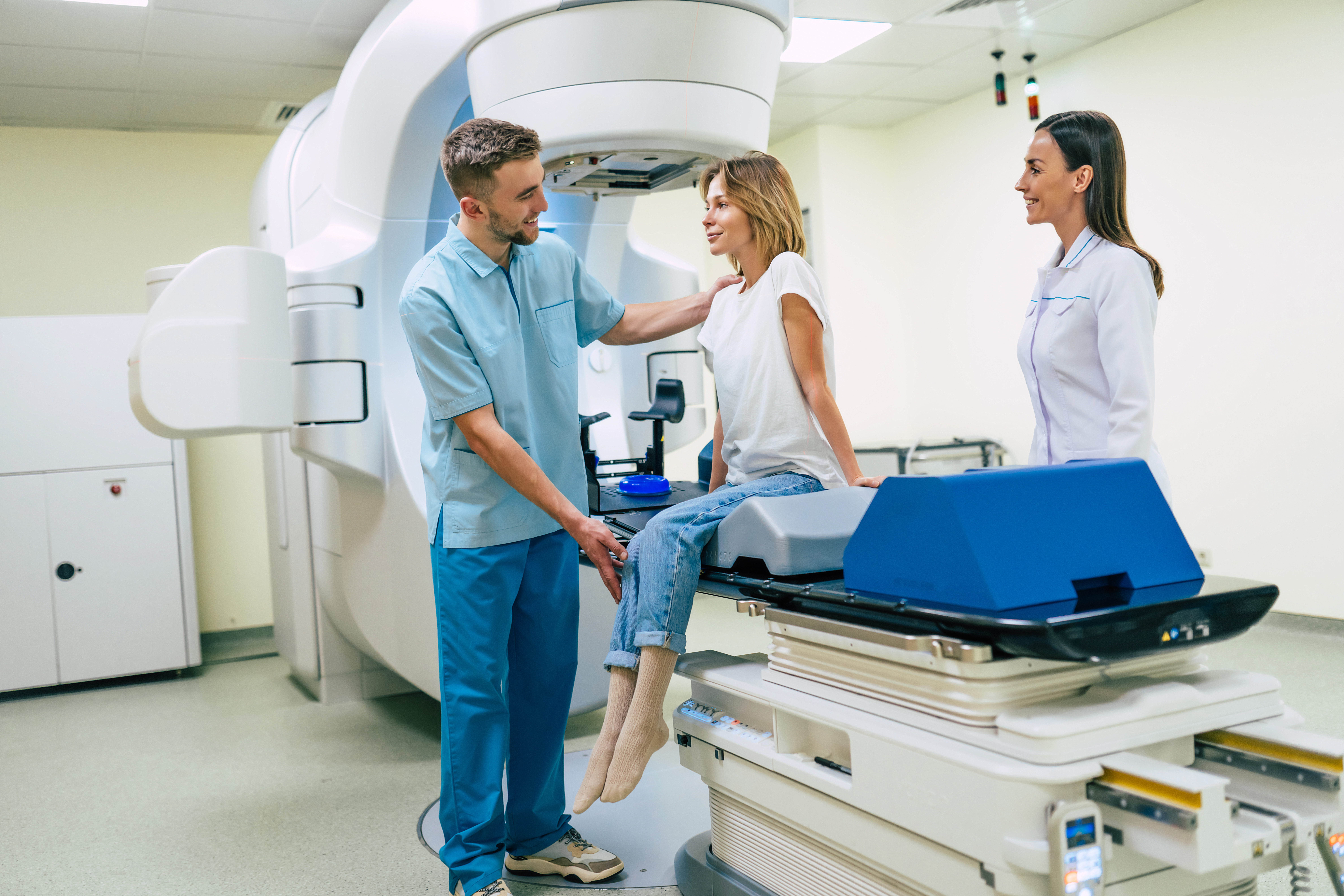 This unit addresses the skills the nurses need related to cancer prevention and treatment including effective communication, knowledge of change and conflict
management, and use of technology. The concepts of critical thinking and clinical judgment along with learning agility and self-care are introduced as essential skills needed by the oncologic nurse. The importance of cultural competence and the identification
of unconscious bias is introduced as key elements in nursing practice.
This unit addresses the skills the nurses need related to cancer prevention and treatment including effective communication, knowledge of change and conflict
management, and use of technology. The concepts of critical thinking and clinical judgment along with learning agility and self-care are introduced as essential skills needed by the oncologic nurse. The importance of cultural competence and the identification
of unconscious bias is introduced as key elements in nursing practice. -
Student Learning Outcomes:
- Describe the fundamentals of communicating clearly and concisely, both orally and in writing.
- Summarize the principles of facilitation skills to help in decision making.
- Describe the learning needs of the adult learner
- Describe the principles to effectively teach virtual coaching/learning situations to inspire and engage team members.
- Use skills to effective coaching in individual and group situations to inspire and engage team members.
-
Required Learning Resources and Activities
-
Students mustMark as done
Read the contents from ‘Principles of Communication’ to ‘Counter-productive communication techniques’. (30 minutes)
IntechOpen
-
Students mustMark as done
Read the entire article. (5 minutes)
Arkansas State University
-
Students mustMark as done
Read the contents of sections ‘Educating adult patients, carers and family members’, ‘Communication in cancer care’. (5 minutes)
Cancer Australia Website, eviQ
-
Students mustMark as done
Read the entire article. (10 minutes)
Brown University
-
Students mustMark as done
Read the contents of section ‘What is nurse coaching?’. (3 minutes)
American Holistic Nurses Association
-
Students mustMark as done
Watch the video clip and take notes of the good and poor communication. Identify barriers and promoters of effective communication. (5 minutes)
Mesa Community College
-
Additional Learning Options
-
Students mustMark as done
Read the entire article. (1 hour and 40 minutes)
Institute of Medicine
-
Students mustMark as done
Slide Deck Presentation
-
Students mustMark as done
-
Students mustViewReceive a gradeReceive a passing grade
To access the quiz, click on the name of the quiz provided above. On the following screen, click the "Preview quiz now" button to respond to the questions.
-
Student Learning Outcomes:
- Define Evidence Based Practice (EBP).
- Discuss the significance of EBP to positive patient outcomes.
- Describe the components and process of EBP.
- Explain the role of nursing research in patient care.
-
Students mustMark as done
Required Learning Resources and Activities
-
Students mustMark as done
Read the entire article. (11 minutes)
American Journal of Nursing
-
Students mustMark as done
Read the contents of section ‘Expertise’ in the literature review of this article. (2 minutes)
Research in Nursing and Health
-
Students mustMark as done
Read the contents of section ‘Determinants of patient’s values’, pages 876-878. (6 minutes).
Patient Education and Counselling Journal
-
Students mustMark as done
Read the entire article. (12 minutes)
American Journal of Nursing
-
Students mustMark as done
Read the entire article. (12 minutes).
American Journal of Nursing
-
Students mustMark as done
Read the entire article. (19 minutes).
American Journal of Nursing
-
Students mustMark as done
Read the contents from ‘Rapid Critical Appraisal’. (16 minutes)
American Journal of Nursing
-
Students mustMark as done
Read the contents starting from ‘Engaging the Stakeholders’. (15 minutes).
American Journal of Nursing
-
Students mustViewWatch the entire video. (60 minutes)
-
Students mustMark as done
Slide Deck Presentation
-
Students mustMark as done
-
Students mustViewReceive a gradeReceive a passing grade
To access the quiz, click on the name of the quiz provided above. On the following screen, click the "Preview quiz now" button to respond to the questions.
-
Student Learning Outcomes:
- Describe several change theories.
- Explain the change process.
- Describe what is meant by learning organizations
- Identify strategies to bring about change.
-
Students mustMark as done
Required Learning Resources and Activities
-
Students mustMark as done
Read the entire article starting from 'Diagnosing Resistance'. (30 minutes)
Harvard Business Review
-
Students mustMark as done
Read the entire article. (2 minutes)
University of Cambridge
-
Students mustMark as done
Read the contents from 'Introduction' to 'Conclusion' (12 minutes)
International Journal of Caring Sciences
-
Students mustMark as done
Read the entire page (7 minutes)
Harvard Business School Online
-
Students mustMark as done
Read the contents from 'The learning organizations' to 'Team learning'. (16 minutes).
Infed.org
-
Students mustMark as done
Read the entire document. (22 minutes).
Commonwealth of Australia
-
Students mustMark as done
Read the contents of 'Table: 2 Factors influencing large-scale change in healthcare'. (6 minutes)
Sax Institute
-
Students mustMark as done
Read the contents of 'Idea in brief' and 'Idea in practice' of page no.1. (4 minutes).
Harvard Business Review
-
Students mustMark as done
Read the content of section '9 key healthcare trends in 2020s'. (3 minutes)
Healthcare Financial Management Association
-
Students mustMark as done
Read the contents starting from 'Planning and Executing Change Effectively'. (16 minutes)
University of Minnesota
-
Students mustMark as done
Read the entire article. (6 minutes)
Boston University School of Public Health
-
Students mustMark as done
Read the entire article. (4 minutes)
William Bridges Associates
-
Students mustMark as done
Slide Deck Presentation
-
Students mustMark as done
-
Students mustViewReceive a gradeReceive a passing grade
To access the quiz, click on the name of the quiz provided above. On the following screen, click the "Preview quiz now" button to respond to the questions.
-
Student Learning Outcomes:
- Define Critical Thinking, Clinical Reasoning, and Clinical Judgment.
- Identify the components of Critical Thinking.
- Explain the relationship of Critical Thinking, Critical Reasoning, and Clinical Judgment.
-
Students mustMark as done
Required Learning Resources and Activities
-
Students mustMark as done
Read contents of pages 18-19, 22-23, 25, 39-42, 44, 54, 58, 67, 83, 87, 97-98, and 114. (39 minutes)
By Nancyruth Leibold
-
-
Students mustMark as done
Read the content of the section 'Research-based model of clinical judgment'. (8 minutes).
Christine A. Tanner
-
Students mustMark as done
Slide Deck presentation
-
Students mustMark as done
-
Students mustViewReceive a gradeReceive a passing grade
To access the quiz, click on the name of the quiz provided above. On the following screen, click the "Preview quiz now" button to respond to the questions.
-
Student Learning Outcomes:
- Describe conflict management and its benefits in health workplace.
- Describe the optimal environment for dialogue in conflict management and resolution.
- Describe communication skills to manage a conflict taking into account the roles of those involved.
-
Students mustMark as done
Required Learning Resources and Activities
-
Students mustMark as done
Read the entire article (6 minutes)
Cranaplus
-
Students mustMark as done
Read contents of section 'Why organizations have so much conflict?'. (3 minutes)
OpenStax
-
Students mustMark as done
Read the entire page (4 minutes)
University of Southampton
-
Students mustMark as done
Read the entire page (5 minutes)
University of Southampton
-
Students mustMark as done
Read the "Different approach of Conflict Management" (2 minutes)
American Management Association
-
Students mustMark as done
Read the entire page (8 minutes)
Mayo Clinic -
Students mustMark as done
Read the entire article (6 minutes)
Healthy WA, Department of Health, Government of Western Australia.
-
Students mustMark as done
Read: The Thomas-Kilmann Model (2 Minutes)
Community Portland College
-
Students mustMark as done
Read: The Entire Article (12 Minutes)
Harvard Business Review
-
Students mustMark as done
Slide Deck Presentation
-
Students mustMark as done
-
Students mustViewReceive a gradeReceive a passing grade
To access the quiz, click on the name of the quiz provided above. On the following screen, click the "Preview quiz now" button to respond to the questions.
-
Student Learning Outcomes:
- Identify the significance of technology related to patient care.
- Describe various types of technology resources.
- Explore the elements of systematic inquiry.
- Describe the nurse’s role in the use of technology resources related to patient care and outcomes.
- Explore future trends in information technology in healthcare.
-
Students mustMark as done
Required Learning Resources and Activities
-
Students mustMark as done
Read the entire first page, contents of 'Building blocks of nursing communication' in the second page, and contents of the section 'Privacy, confidentiality and security of health information' on the third page. (6 minutes)
Canadian Nurses Association
-
Students mustMark as done
Read the entire article. (3 minutes)
Nursing Management (Springhouse)
-
Students mustMark as done
Read the entire article. (3 minutes)
The Office of the National Coordinator for Health Information Technology (ONC)
-
Students mustMark as done
Read the entire article. (6 minutes)
Journal of the American Medical Informatics Association
-
Students mustMark as done
Read the entire article. (5 mintes)
Registered Nurse's Association of Ontario
-
Students mustMark as done
Read the entire article. (47 minutes)
Online Journal of Issues in Nursing
-
Students mustMark as done
Read the entire article. (7 minutes).
Agency of Healthcare Research and Quality
-
Students mustMark as done
Read the entire page (11 minutes)
HIMSS
-
Students mustMark as done
Read the contents starting from 'A New World of Healthcare' to 'Challenges'. (16 minutes).
Health Systems & Reforms Journal
-
Students mustMark as done
Additional Learning Material
-
Students mustMark as done
Read the entire page (22 minutes)
IOSR Journal of Nursing and Health Science (IOSR-JNHS)
-
Students mustMark as done
Slide Deck Presentation
-
Students mustMark as done
-
Students mustViewReceive a gradeReceive a passing grade
To access the quiz, click on the name of the quiz provided above. On the following screen, click the "Preview quiz now" button to respond to the questions.
-
Student Learning Outcomes:
- Define learning agility.
- Describe the importance of learning agility in oncology nursing.
- Describe the dimensions of learning agility and the practices for assessing learning.
- Identify the capabilities needed to perform in a new situation.
-
Students mustMark as done
Required Learning Resources and Activities
-
Students mustMark as done
Read ‘People Agility’, ‘ Results Agility’, ‘Mental Agility’, ‘Change Agility’ and ‘Summary of the characteristics of the learning agile’. (2 minutes)
Human Resource Management Journal
-
Students mustMark as done
Read the entire article. (10 minutes)
Nursing Management (Springhouse)
-
Students mustMark as done
Read the entire article. (10 minutes)
Center for Creative Leadership
-
Students mustMark as done
Slide Deck Presentation
-
Students mustMark as done
-
Students mustViewReceive a gradeReceive a passing grade
To access the quiz, click on the name of the quiz provided above. On the following screen, click the "Preview quiz now" button to respond to the questions.
-
Student Learning Outcomes:
- Describe the concept of compassion fatigue, triggers, signs and symptoms, and treatment.
- Compare and contrast self-care practices that promote psychological and physical well-being.
- Describe stress management techniques such as yoga, meditation, mindfulness, journaling.
-
Students mustMark as done
Required Learning Resources and Activities
-
Students mustMark as done
Read: Section ‘Self-care strategies’ (6 minutes)
National Association for the Education of Young Children
-
Students mustMark as done
Read the entire page (2 minutes)
Australian Government Cancer Australia: EdCaN
-
Students mustMark as done
Read the entire page (2 minutes)
New Jersey City University
-
Students mustMark as done
Read ‘DEFINITIONS AND DISTINCTIONS’ and table 1. Symptoms of compassion fatigue (2 minutes)
Oncology Nurse Advisor -
Students mustMark as done
Slide Deck Presentation
-
Students mustMark as done
-
Students mustViewReceive a gradeReceive a passing grade
To access the quiz, click on the name of the quiz provided above. On the following screen, click the "Preview quiz now" button to respond to the questions.
- Describe the concept of compassion fatigue, triggers, signs and symptoms, and treatment.
-
Student Learning Outcomes:
- Define Implicit and explicit bias.
- Describe the concept of implicit bias on the judgment and behavior of health practices.
- Recognize nursing's best practices to avoid and address the implicit biases.
-
Students mustMark as done
Required Learning Resources and Activities
-
Students mustMark as done
Read the content of sections on 'Introduction, 'Two types of Bias', 'How is it Possible', 'It's HOw We are Wired' and 'The Neuroscience'. Videos are optional. (9 minutes)
National Center for Cultural Competence, Georgetown University
-
Students mustMark as done
Read the entire article. (36 minutes)
The Journal of Infectious Disease
-
Students mustMark as done
Read sections on ‘PLAIN-LANGUAGE SUMMARY’. (3 minutes)
American Journal of Public Health
-
Students mustMark as done
Read the content of pages 8-16. (22 minutes)
American Academy of Family Physicians
-
Students mustMark as done
Read content on section ‘Strategies for reducing implicit race bias’. (4 minutes)
Journal of Experimental Social Psychology
-
Students mustMark as done
Read the content on ‘Tapping five strategies’ and ‘Positive changes’.(5 minutes)
Nursing2021
-
Students mustMark as done
Slide Deck Presentation
-
Students mustMark as done
-
Students mustViewReceive a gradeReceive a passing grade
To access the quiz, click on the name of the quiz provided above. On the following screen, click the "Preview quiz now" button to respond to the questions.
-
 This
unit provides an overview of the health care landscape within the local community and addresses how it affects nursing case management. Concepts related to nursing management and multidisciplinary team roles are
explored.
This
unit provides an overview of the health care landscape within the local community and addresses how it affects nursing case management. Concepts related to nursing management and multidisciplinary team roles are
explored. -
Student Learning Outcomes:
- Describe the South African healthcare system
- Describe how Medical Aid Schemes function.
- Define Prescribed Minimum Benefits.
- Define a “treatable” cancer.
-
Students mustMark as done
Slide Deck Presentation
-
Students mustMark as done
- Describe the South African healthcare system
-
Student Learning Outcomes:
- Define case management.
- Describe the role of the Oncology Case Manager in a multidisciplinary team when caring for cancer patients.
- Describe the role of the Nurse Manager in a multidisciplinary team when caring for cancer patients.
- Describe the importance of a multidisciplinary team approach when caring for cancer patients.
Approximate time required for the readings for this lesson (at 144 words/minute): 4 hours and 7 minutes.
-
Students mustMark as done
Required Learning Resources and Activities
-
-
Students mustView
Read the entire article.
-
Students mustViewStart discussions: 1
In this activity, you will describe the important role of a nurse manager in a multidisciplinary team and using a multidisciplinary approach when caring for patients with co-occurring advanced cancer and substance use disorder [SUD]
Step 1. Review [30 minutes]
Review the hypothetical scenario below
Imagine yourself applying for the position of nurse manager in a healthcare facility caring for patients with co-occurring cancer and substance use disorder. You are about to be interviewed by the soon-to-retire nurse manager of the facility. As this is the final interview, you are asked to create a fictional case scenario simulating the role of a nurse manager in a multidisciplinary team in the same facility.
Step 2. Respond [180 minutes]
Prepare a 200-500 word response to present your fictional case scenario with the following inclusions:
- Description of your tasks and responsibilities as a nurse manager in a multidisciplinary team within the healthcare facility mentioned in Step 1.
- Daily challenges that you may encounter as a nurse manager
- Strategies and practices that you will apply as a nurse manager to surpass these challenges.
- Importance of a multidisciplinary team approach in this kind of setting.
Step 3. Share [10 minutes]
To share your work, click on the “Add a new discussion topic” button under this post and paste your work in the “Message” box. Make sure to reference others’ intellectual property when necessary. All references should follow 7th Edition APA formatting. For further instructions, see the resource on the Himmelfarb Health Sciences Library: APA citation resource (N.B. references are excluded from word counts).
Step 4: Interact [10 minutes]
To complete the activity, you will need to reply to at least two posts made by your peers in a respectful and professional manner. Ensure that your post engages your peers' ideas by including a reflection on their comments, sharing ideas of other potential difficulties and parties involved, or asking thought-provoking questions. Your response should respond to each of the three framework elements indicated in the table. If a peer comments on your posting, please reply. To post a reply, click “Reply” on a particular discussion, write your feedback and then click on “post to forum.”
OPTIONAL Step 5: Interact (10 minutes)
If you would like to, you can reply to your peers' posts in a respectful and professional manner. Ensure that your post engages your peers' ideas by including a reflection on their comments, sharing ideas of other potential difficulties and parties involved, or asking thought-provoking questions. If a peer comments on your posting, please reply. To post a reply, click “Reply” on a particular discussion, write your feedback and then click on “Post to forum.”
-
Students mustMark as done
Slide Deck Presentation
-
Students mustMark as done
-
Students mustViewReceive a gradeReceive a passing grade
To access the quiz, click on the name of the quiz provided above. On the following screen, click the "Preview quiz now" button to respond to the questions.
-
This unit offers an overview of the care and management of pediatric patients with cancer and hematologic disorders, covering assessment, treatment modalities, specific cancers, emergencies, and holistic care, while emphasizing both medical and nursing management strategies to prepare healthcare professionals for the unique challenges of caring for children with cancer and their families.
-
Learning Unit Outcomes:
- Discuss the basic concepts related to pediatric oncology and hematology care.
- Apply knowledge of child growth and development to pediatric oncology and hematology patients.
- Interpret lab values and understand their implications for a child’s health status.
- Implement nursing management strategies based on assessing children and interpreting lab values.
- Apply concepts related to care, including understanding the hematopoietic stem cell chart, interpreting a CBC, implementing neutropenic precautions, and managing fevers.
-
Student Learning Outcomes:
- Assess the physical and emotional state of a child with cancer or a hematologic disorder.
- Identify signs and symptoms that may indicate changes in the child’s condition.
- Apply nursing management principles to plan and implement appropriate care based on the assessment findings.
-
Students mustMark as done
Required Learning Resources and Activities
-
Students mustView
-
Students mustMark as done
Slide Deck Presentation
-
Students mustView
-
Students mustViewReceive a gradeReceive a passing grade
To access the quiz, click on the name of the quiz provided above. On the following screen, click the "Preview quiz now" button to respond to the questions.
-
Student Learning Outcomes:
- Identify the impact of cancer or a hematologic disorder on a child’s growth and development.
- Describe the developmental milestones and how they may be affected by disease or treatment.
- Identify nursing interventions to support average growth and development and address identified issues.
-
Students mustMark as done
Required Learning Resources and Activities
-
Students mustView
-
Students mustMark as done
Slide Deck Presentation
-
Students mustView
-
Students mustViewReceive a gradeReceive a passing grade
To access the quiz, click on the name of the quiz provided above. On the following screen, click the "Preview quiz now" button to respond to the questions.
-
Student Learning Outcomes:
- Interpret lab values and understand their implications for a child’s health status.
- Identify abnormal lab values that may indicate complications or side effects of treatment.
- Utilize nursing management strategies to monitor lab values and manage any identified issues.
-
Students mustMark as done
Required Learning Resources and Activities
-
Students mustView
-
Students mustMark as done
Slide Deck Presentation
-
Students mustView
-
Students mustViewReceive a gradeReceive a passing grade
To access the quiz, click on the name of the quiz provided above. On the following screen, click the "Preview quiz now" button to respond to the questions.
-
Student Learning Outcomes:
- Explain the rationale for neutropenic precautions and the potential consequences of neutropenia.
- Describe how to implement neutropenic precautions to prevent infections in children with cancer or a hematologic disorder.
- Apply nursing management strategies to monitor for signs of infection and intervene.
-
Students mustMark as done
Required Learning Resources and Activities
-
Students mustView
-
Students mustMark as done
Slide Deck Presentation
-
Students mustView
-
Students mustViewReceive a gradeReceive a passing grade
To access the quiz, click on the name of the quiz provided above. On the following screen, click the "Preview quiz now" button to respond to the questions.
-
Student Learning Outcomes:
- Describe the side effects and include cause and treatment and nursing management of the following common side effects of cancer treatment: Fevers; Skin concerns; Nausea and vomiting; Diarrhea and constipation; Fatigue; Knowledge deficit
-
Students mustMark as done
Required Learning Resources and Activities
-
Students mustView
-
Students mustMark as done
Slide Deck Presentation
-
Students mustView
-
Students mustViewReceive a gradeReceive a passing grade
To access the quiz, click on the name of the quiz provided above. On the following screen, click the "Preview quiz now" button to respond to the questions.
-
Student Learning Outcomes:
- Discuss the significance of nutrition and hydration in children undergoing cancer treatment.
- Describe the causes of alterations in nutrition and hydration in children undergoing cancer treatment.
- Outline the nursing management and interventions related to nutrition and hydration in a child undergoing cancer treatment.
-
Students mustMark as done
Required Learning Resources and Activities
-
Students mustView
-
Students mustMark as done
Slide Deck Presentation
-
Students mustView
-
Students mustViewReceive a gradeReceive a passing grade
To access the quiz, click on the name of the quiz provided above. On the following screen, click the "Preview quiz now" button to respond to the questions.
-
Student Learning Outcomes:
- Discuss the unique communication considerations of pediatric oncology patients at varying developmental stages.
- Describe how age influences the experience of pediatric oncology patients in terms of communication.
- Develop nursing interventions and strategies to support appropriate communication with pediatric oncology patients based on their age and developmental level.
-
Students mustMark as done
Required Learning Resources and Activities
-
Students mustView
-
Students mustMark as done
Slide Deck Presentation
-
Students mustViewReceive a gradeReceive a passing grade
To access the quiz, click on the name of the quiz provided above. On the following screen, click the "Preview quiz now" button to respond to the questions.
-
Students mustViewReceive a gradeReceive a passing grade
To access the quiz, click on the name of the quiz provided above. On the following screen, click the "Preview quiz now" button to respond to the questions.
-
Unit Learning Outcomes:
- Describe the various treatment modalities in pediatric oncology and hematology.
- Identify the impact of these treatments on the growth and development of pediatric patients.
- Evaluate the late effects of these treatments.
- Apply nursing management strategies in the care of pediatric patients undergoing these treatments.
-
Student Learning Outcomes:
- Describe the principles and mechanisms of immunotherapy, chemotherapy, surgery and radiation in pediatric oncology.
- Evaluate the effect of immunotherapy, chemotherapy, surgery and radiation on the growth and development of pediatric patients.
- Identify the potential late effects of immunotherapy, chemotherapy, surgery and radiation.
- Apply nursing management strategies in the care of pediatric patients undergoing immunotherapy, chemotherapy, surgery and radiation.
Approximate time required for the readings for this lesson (at 144 words/minute): 1 hour and 17 minutes.
-
Students mustMark as done
Required Learning Resources and Activities
-
Students mustView
-
Students mustMark as done
Slide Deck Presentation
-
Students mustView
-
Students mustViewReceive a gradeReceive a passing grade
To access the quiz, click on the name of the quiz provided above. On the following screen, click the "Preview quiz now" button to respond to the questions.
-
Student Learning Outcomes:
- Describe the principles and mechanisms of stem cell transplants and T-cell therapies in pediatric oncology.
- Explain the potential impact of these advanced therapies on the growth and development of pediatric patients.
- Identify the potential acute and late effects of these advanced therapies.
- Apply nursing management strategies in the care of pediatric patients undergoing these.
-
Students mustMark as done
Required Learning Resources and Activities
-
Students mustView
-
Students mustMark as done
Slide Deck Presentation
-
Students mustView
-
Students mustViewReceive a gradeReceive a passing grade
To access the quiz, click on the name of the quiz provided above. On the following screen, click the "Preview quiz now" button to respond to the questions.
-
Students mustViewReceive a gradeReceive a passing grade
To access the quiz, click on the name of the quiz provided above. On the following screen, click the "Preview quiz now" button to respond to the questions.
-
Unit Learning Outcomes:
- Describe the definitions and presentations of pediatric leukemias and lymphomas.
- Identify the symptoms associated with pediatric leukemias and lymphomas.
- Discuss the medical management of pediatric leukemias and lymphomas.
- Outline the nursing management of pediatric patients with leukemias and lymphomas.
-
Student Learning Outcomes:
a. Leukemias:
Approximate time required for the readings for this lesson (at 144 words/minute): 1 hour and 40 minutes.
i) Acute lymphoblastic leukemia
ii) Acute myeloid leukemia
b. Lymphomas:
i) Hodgkin lymphoma
ii) Non-Hodgkin lymphoma
-
Students mustMark as done
Required Learning Resources and Activities
-
Students mustView
-
Students mustMark as done
Slide Deck Presentation
-
Students mustView
-
Students mustViewReceive a gradeReceive a passing grade
To access the quiz, click on the name of the quiz provided above. On the following screen, click the "Preview quiz now" button to respond to the questions.
-
-
Student Learning Outcomes:
- Define and describe the presentation of common pediatric solid tumors, including medulloblastoma, gliomas, neuroblastoma, Wilms tumor, rhabdomyosarcoma, retinoblastoma, and Ewing sarcoma.
- Identify the symptoms associated with each of these pediatric solid tumors.
- Discuss the medical management of pediatric solid tumors.
- Outline the nursing management of pediatric patients with solid tumors.
-
Students mustMark as done
Required Learning Resources and Activities
-
Students mustView
-
Students mustMark as done
Slide Deck Presentation
-
Students mustView
-
Students mustViewReceive a gradeReceive a passing grade
To access the quiz, click on the name of the quiz provided above. On the following screen, click the "Preview quiz now" button to respond to the questions.
-
Students mustViewReceive a gradeReceive a passing grade
To access the quiz, click on the name of the quiz provided above. On the following screen, click the "Preview quiz now" button to respond to the questions.
-
Unit Learning Outcomes:
- Describe the following pediatric emergencies in children with cancer.
- Describe the medical management and the nursing management of pediatric oncologic emergencies.
-
Student Learning Outcomes:
- Describe the following pediatric oncologic emergencies in children with cancer:
a. Tumor lysis syndrome
b. Febrile neutropenia
c. Increased intracranial pressure/brain herniation
d. Superior vena cava obstruction
e. Spinal cord compression
f. Hyperleukocytosis
g. Typhlitis
h. Malignant GI obstruction
i. Hypercalcemia
j. Posterior reversible encephalopathy syndrome
k. Cardiac tamponade l. disseminated intravascular coagulation - Discuss the medical management of each pediatric oncologic emergency listed above.
- Outline the nursing management for each pediatric oncologic emergency listed above.
-
Students mustMark as done
Required Learning Resources and Activities
-
Students mustView
-
Students mustMark as done
Slide Deck Presentation
-
Students mustView
-
Students mustViewReceive a gradeReceive a passing grade
To access the quiz, click on the name of the quiz provided above. On the following screen, click the "Preview quiz now" button to respond to the questions.
-
Students mustViewReceive a gradeReceive a passing grade
To access the quiz, click on the name of the quiz provided above. On the following screen, click the "Preview quiz now" button to respond to the questions.
- Describe the following pediatric oncologic emergencies in children with cancer:
-
Unit Learning Outcomes:
- Describe the various hematologic disorders in pediatric patients.
- Identify the symptoms and presentation of these disorders.
- Define the medical management of these disorders.
- Apply nursing management and interventions in pediatric patients with hematologic disorders.
-
Student Learning Outcomes:
- Describe the various red blood cell and iron disorders in pediatric patients, including:
a. Sickle cell disease
b. Anemias
c. Thalassemia
d. Iron deficiency anemia
e. Megaloblastic anemia
f. Hemolytic anemia
g. Hemochromatosis - Identify the symptoms and presentation of red blood cell and iron disorders mentioned above in pediatric patients
- Define the medical management of red blood cell and iron disorders mentioned above in pediatric patients
- Apply nursing management and interventions in pediatric patients with the red blood cell and iron disorders mentioned above
-
Students mustMark as done
Required Learning Resources and Activities
-
Students mustView
-
Students mustMark as done
Slide Deck Presentation
-
Students mustView
-
Students mustViewReceive a gradeReceive a passing grade
To access the quiz, click on the name of the quiz provided above. On the following screen, click the "Preview quiz now" button to respond to the questions.
- Describe the various red blood cell and iron disorders in pediatric patients, including:
-
Student Learning Outcomes:
- Describe the various bleeding disorders in pediatric patients, including:
a. Hemophilia
b. Von Willebrand Disease
c. Thrombocytopenia and platelet dysfunctions
d. Fibrinogen disorders - Identify the symptoms and presentation of bleeding disorders mentioned above in pediatric patients
- Define the medical management of the bleeding disorders mentioned above in pediatric patients
- Apply nursing management and interventions in pediatric patients with the bleeding disorders mentioned above
-
Students mustMark as done
Required Learning Resources and Activities
-
Students mustView
-
Students mustMark as done
Slide Deck Presentation
-
Students mustView
-
Students mustViewReceive a gradeReceive a passing grade
To access the quiz, click on the name of the quiz provided above. On the following screen, click the "Preview quiz now" button to respond to the questions.
- Describe the various bleeding disorders in pediatric patients, including:
-
Student Learning Outcomes:
- Describe the various thrombosis and coagulation disorders in pediatric patients, including Inherited coagulation disorders and Thrombosis
- Identify the symptoms and presentation of the thrombosis and coagulation disorders mentioned above in pediatric patients
- Define the medical management of the thrombosis and coagulation disorders mentioned above in pediatric patients
- Apply nursing management and interventions in pediatric patients with the thrombosis and coagulation disorders mentioned above
-
Students mustMark as done
Required Learning Resources and Activities
-
Students mustView
-
Students mustMark as done
Slide Deck Presentation
-
Students mustView
-
Students mustViewReceive a gradeReceive a passing grade
To access the quiz, click on the name of the quiz provided above. On the following screen, click the "Preview quiz now" button to respond to the questions.
-
Student Learning Outcomes:
- Describe the various autoimmune blood cell disorders in pediatric patients, including Immune thrombocytopenia and Autoimmune hemolytic anemia
- Identify the symptoms and presentation of the autoimmune blood cell disorders mentioned above in pediatric patients
- Define the medical management of the autoimmune blood cell disorders mentioned above in pediatric patients
- Apply nursing management and interventions in pediatric patients with the autoimmune blood cell disorders mentioned above
-
Students mustMark as done
Required Learning Resources and Activities
-
Students mustView
-
Students mustMark as done
Slide Deck Presentation
-
Students mustView
-
Students mustViewReceive a gradeReceive a passing grade
To access the quiz, click on the name of the quiz provided above. On the following screen, click the "Preview quiz now" button to respond to the questions.
-
Student Learning Outcomes:
- Describe the various bone marrow failure syndromes in pediatric patients, including Aplastic anemia and Myelodysplastic syndrome
- Identify the symptoms and presentation of the bone marrow failure syndromes mentioned above in pediatric patients
- Define the medical management of the bone marrow failure syndromes mentioned above in pediatric patients
- Apply nursing management and interventions in pediatric patients with the bone marrow failure syndromes mentioned above
-
Students mustMark as done
Required Learning Resources and Activities
-
Students mustView
-
Students mustMark as done
Slide Deck Presentation
-
Students mustView
-
Students mustViewReceive a gradeReceive a passing grade
To access the quiz, click on the name of the quiz provided above. On the following screen, click the "Preview quiz now" button to respond to the questions.
-
Students mustViewReceive a gradeReceive a passing grade
To access the quiz, click on the name of the quiz provided above. On the following screen, click the "Preview quiz now" button to respond to the questions.
-
Unit Learning Outcomes:
- Demonstrate comprehensive understanding and proficiency in providing holistic care to pediatric oncology patients and their families.
- Assess and manage pain effectively, utilizing various methods of pain management.
- Navigate ethical dilemmas commonly encountered in pediatric oncology care.
- Communicate empathetically with patients and families about end-of-life care decisions.
- Support families through pediatric oncology treatment challenges, providing emotional and educational support.
- Facilitate informed decision-making by patients and families regarding treatment options.
- Provide survivorship support, addressing both the long-term physical and psychological effects of pediatric cancer treatment.
- Address fertility preservation needs and discuss reproductive rights with patients and families.
- Integrate alternative and adjunctive therapies into patient care plans as appropriate.
-
Student Learning Outcomes:
- Identify common sources of pain in pediatric oncology patients.
- Describe the various methods of pain management
- Apply effective nursing interventions for pain management.
- Educate patients and families about pain management strategies.
-
Students mustMark as done
Required Learning Resources and Activities
-
Students mustView
-
Students mustMark as done
Slide Deck Presentation
-
Students mustView
-
Students mustViewReceive a gradeReceive a passing grade
To access the quiz, click on the name of the quiz provided above. On the following screen, click the "Preview quiz now" button to respond to the questions.
-
Student Learning Outcomes:
- Define the role of palliative care in pediatric oncology.
- Describe compassionate end-of-life care to pediatric oncology patients.
- Communicate effectively with patients and families about end-of-life decisions.
- Discuss ethics in end-of-life care
-
Students mustMark as done
Required Learning Resources and Activities
-
Students mustView
-
Students mustMark as done
Slide Deck Presentation
-
Students mustView
-
Students mustViewReceive a gradeReceive a passing grade
To access the quiz, click on the name of the quiz provided above. On the following screen, click the "Preview quiz now" button to respond to the questions.
-
Student Learning Outcomes:
- Describe the impact of pediatric oncology on the family unit.
- Define the elements of supportive care and education to families of pediatric oncology patients.
- Discuss methods to facilitate family involvement in the child’s care.
-
Students mustMark as done
Required Learning Resources and Activities
-
Students mustView
-
Students mustMark as done
Slide Deck Presentation
-
Students mustView
-
Students mustViewReceive a gradeReceive a passing grade
To access the quiz, click on the name of the quiz provided above. On the following screen, click the "Preview quiz now" button to respond to the questions.
-
Student Learning Outcomes:
- Identify and describe ethical issues commonly encountered in pediatric oncology (including Consent, Assent, and Dissent).
- Apply ethical principles in decision-making processes
- Describe how an ethics decision-making model can assist nurses in the care of pediatric clients and their families
- Advocate for the rights and best interests of pediatric oncology patients.
-
Students mustMark as done
Required Learning Resources and Activities
-
Students mustView
-
Students mustMark as done
Slide Deck Presentation
-
Students mustView
-
Students mustViewReceive a gradeReceive a passing grade
To access the quiz, click on the name of the quiz provided above. On the following screen, click the "Preview quiz now" button to respond to the questions.
-
Student Learning Outcomes:
- Describe the long-term physical and psychological effects of pediatric cancer treatment.
- Describe supportive care and education to pediatric cancer survivors.
- Discuss ways to facilitate the transition from active treatment to survivorship.
-
Students mustMark as done
Required Learning Resources and Activities
-
Students mustView
-
Students mustMark as done
Slide Deck Presentation
-
Students mustView
-
Students mustViewReceive a gradeReceive a passing grade
To access the quiz, click on the name of the quiz provided above. On the following screen, click the "Preview quiz now" button to respond to the questions.
-
Student Learning Outcomes:
- Describe the impact of pediatric cancer treatment on future fertility.
- Discuss fertility preservation options with patients and families.
- Discuss the reproductive rights of pediatric oncology patients.
-
Students mustMark as done
Required Learning Resources and Activities
-
Students mustView
-
Students mustMark as done
Slide Deck Presentation
-
Students mustView
-
Students mustViewReceive a gradeReceive a passing grade
To access the quiz, click on the name of the quiz provided above. On the following screen, click the "Preview quiz now" button to respond to the questions.
-
Student Learning Outcomes:
- Define the role of alternative and adjunctive care in treating pediatric oncology patients.
- Describe various adjunctive therapies.
- Identify how various belief systems impact the care of children with cancer.
- Describe patient self-care activities and the use of spiritual and traditional healers.
- Describe the nurse’s role in the adaptation of care in managing varied health beliefs as they relate to a child with cancer.
-
Students mustMark as done
Required Learning Resources and Activities
-
Students mustView
-
Students mustMark as done
Slide Deck Presentation
-
Students mustView
-
Students mustViewReceive a gradeReceive a passing grade
To access the quiz, click on the name of the quiz provided above. On the following screen, click the "Preview quiz now" button to respond to the questions.
-
Students mustViewReceive a gradeReceive a passing grade
To access the quiz, click on the name of the quiz provided above. On the following screen, click the "Preview quiz now" button to respond to the questions.
-
-
Students mustMark as done
Cancer-specific Patient Care Sheets
These patient care sheets provide a quick reference for the nurse regarding patient information, disease process, treatment, patient care needs, nursing care, and intervention.
-
Students mustMark as done
-
Students mustMark as done
-
Students mustMark as done
-
Students mustMark as done
-
Students mustMark as done
-
Students mustMark as done
'Nursing Brain Sheet'
The following sheets provide the nurse with a working template to organize their clinical work. Download and customize this sheet as per your need.
-
Students mustMark as done
-
Students mustMark as done
-
Students mustMark as done
Clinical Nursing Skills Procedure Checklists/Videos
Use the following checklists as instructional guides for performing clinical procedures. May be used for self-assessment, peer practice assessments, and competency assessment.
-
Students mustMark as done
-
Students mustMark as done
-
Students mustMark as done
-
Students mustMark as done
-
Students mustMark as done
-
Students mustMark as done
-
Students mustMark as done
-
Students mustMark as done
-
Students mustMark as done
-
Students mustMark as done
-
Students mustMark as done
-
Students mustMark as done
-
Students mustMark as done
-
Students mustMark as done
-
Students mustMark as done
-
Students mustMark as done
-
Students mustMark as done
-
Students mustMark as done
-
Students mustMark as done
-
Students mustMark as done
-
Students mustMark as done
-
Students mustMark as done
-
Students mustMark as done
-
Students mustMark as done
-
Students mustMark as done
-
Students mustMark as done
-
Students mustMark as done
-
Students mustMark as done
-
Students mustMark as done
-
Students mustMark as done
-
Students mustMark as done
-
Students mustMark as done
-
Students mustMark as done
-
Students mustMark as done
-
Students mustMark as done
-
Students mustMark as done
-
Students mustMark as done
-
Students mustMark as done
-
Students mustMark as done
-
Students mustMark as done
-
Students mustMark as done
-
Students mustMark as done
-
Students mustMark as done
-
Students mustMark as done
-
Students mustMark as done
-
Students mustMark as done
-
Students mustMark as done
-
Students mustMark as done
-
Students mustMark as done
-
Students mustMark as done
-
Students mustMark as done
-
Students mustMark as done
-
Students mustMark as done
-
Students mustMark as done
Open Access Textbook on Nursing Clinical Skills
-
Students mustMark as done
This is an open-access textbook on fundamental nursing skills, provided by Chippewa Valley Technical College licensed under Creative Commons – Attribution 4.0 International. Please feel free to download it and use it. For other open-access nursing textbooks, please visit XanEdu.com website.
-
-
-
Students mustViewReceive a gradeReceive a passing grade
To access the exam, click on the name of the exam provided above. On the following screen, click the "Preview quiz now" button to respond to the questions.
-
-
-
Final Exam QuizTo take the final exam, you must complete all quizzes and complete all the required activities. The final exam consists of 60 questions, and you will have 150 minutes to answer and submit them. In case you fail the exam in the first attempt, you can retake the final exam again after 1 week.
To access the exam, click on the name of the exam provided above. On the following screen, click the attempt quiz button to respond to the questions.Not available unless any of: All of: ...Not available unless any of:-
All of:
- The activity Course Registration is marked complete
- The activity Knowledge Assessment is marked complete
- The activity Quiz: Module 2: Lesson 1 is marked complete
- The activity Quiz: Module 2: Lesson 2 is marked complete
- The activity Quiz: NCSBN Nutrition Case Study is marked complete
- The activity Quiz: Module 2: Lesson 3: Part 1 is marked complete
- The activity Quiz: Module 2: Lesson 3: Part 2 is marked complete
- The activity Quiz: Pain Case Study is marked complete
- The activity Quiz: Module 2: Lesson 4 is marked complete
- The activity Quiz: Module 2: Lesson 5 is marked complete
- The activity Quiz: Module 2: Lesson 6 is marked complete
- The activity Quiz: Module 2: Lesson 7 is marked complete
- The activity Quiz: Module 2: Lesson 8 is marked complete
- The activity Quiz: Module 2: Lesson 9 is marked complete
- The activity Quiz: Module 2: Lesson 10 is marked complete
- The activity Quiz: Module 2: Lesson 11 is marked complete
- The activity Quiz: Module 2: Lesson 12 is marked complete
- The activity Quiz: Module 2: Lesson 13 is marked complete
- The activity Quiz: Module 2: Lesson 14 is marked complete
- The activity Quiz: Module 2: Lesson 15 is marked complete
- The activity Quiz: Module 2: Lesson 16 is marked complete
- The activity Quiz: Module 2: Lesson 17 is marked complete
- The activity Quiz: Module 2: Lesson 18 is marked complete
- The activity Quiz: Module 2: Lesson 19 is marked complete
- The activity Quiz: Module 2: Lesson 20 is marked complete
- The activity Quiz: NCSBN Sepsis Case Study is marked complete
- The activity Quiz: Module 2: Lesson 21 is marked complete
- The activity Quiz: Module 2: Lesson 22 is marked complete
- The activity Quiz: Module 2: Lesson 23 is marked complete
- The activity Quiz: Module 2: Lesson 24 is marked complete
- The activity Quiz: Module 2: Lesson 25 is marked complete
- The activity Quiz: Module 2: Lesson 26 is marked complete
- The activity Quiz: Module 2: Lesson 27 is marked complete
- The activity Quiz: NCSBN Anaphylactic Drug Reaction is marked complete
- The activity Quiz: Module 3: Lesson 1 is marked complete
- The activity Quiz: Module 3: Lesson 2 is marked complete
- The activity Quiz: Module 3: Lesson 3 is marked complete
- The activity Quiz: Module 3: Lesson 4 is marked complete
- The activity Quiz: Module 3: Lesson 5 is marked complete
- The activity Quiz: Module 3: Lesson 6 is marked complete
- The activity Quiz: Module 3: Lesson 7 is marked complete
- The activity Quiz: Module 3: Lesson 8 is marked complete
- The activity Quiz: Module 3: Lesson 9 is marked complete
- The activity Quiz: Module 4: Lesson 2 is marked complete
- The activity Quiz: Module 5: Unit 1: Lesson 1 is complete and passed
- The activity Quiz: Module 5: Unit 1: Lesson 2 is complete and passed
- The activity Quiz: Module 5: Unit 1: Lesson 3 is complete and passed
- The activity Quiz: Module 5: Unit 1: Lesson 4 is complete and passed
- The activity Quiz: Module 5: Unit 1: Lesson 5 is complete and passed
- The activity Quiz: Module 5: Unit 1: Lesson 6 is complete and passed
- The activity Unit 1 Exam is complete and passed
- The activity Quiz: Module 5: Unit 2: Lesson 1 is complete and passed
- The activity Quiz: Module 5: Unit 2: Lesson 2 is complete and passed
- The activity Unit 2 Exam is complete and passed
- The activity Quiz: Module 5: Unit 3: Lesson 1 is complete and passed
- The activity Quiz: Module 5: Unit 3: Lesson 2 is complete and passed
- The activity Unit 3 Exam is complete and passed
- The activity Quiz: Module 5: Unit 4: Lesson 1 is complete and passed
- The activity Unit 4 Exam is complete and passed
- The activity Quiz: Module 5: Unit 5: Lesson 1 is complete and passed
- The activity Quiz: Module 5: Unit 5: Lesson 2 is complete and passed
- The activity Quiz: Module 5: Unit 5: Lesson 3 is complete and passed
- The activity Quiz: Module 5: Unit 5: Lesson 4 is complete and passed
- The activity Quiz: Module 5: Unit 5: Lesson 5 is complete and passed
- The activity Unit 5 Exam is complete and passed
- The activity Quiz: Module 5: Unit 6: Lesson 1 is complete and passed
- The activity Quiz: Module 5: Unit 6: Lesson 2 is complete and passed
- The activity Quiz: Module 5: Unit 6: Lesson 3 is complete and passed
- The activity Quiz: Module 5: Unit 6: Lesson 4 is complete and passed
- The activity Quiz: Module 5: Unit 6: Lesson 5 is complete and passed
- The activity Quiz: Module 5: Unit 6: Lesson 6 is complete and passed
- The activity Quiz: Module 5: Unit 6: Lesson 7 is complete and passed
- The activity Unit 6 Exam is complete and passed
- You belong to Cancer Care
- You belong to CE
-
All of:
-
-
 In this section, please provide feedback to help NextGenU.org improve its course offering. Once evaluations are completed, you will be able to download your certificate of completion.
-
Oncology Nursing Post Course Survey URLNot available unless: The activity Final Exam is complete and passed
-
Course Evaluation QuestionnairePlease help us make NextGenU.org courses even better by submitting this evaluation. Your evaluation is confidential and used only for improving our trainings.Not available unless: The activity Final Exam is marked complete
-
Self Evaluation QuestionnairePlease take the time to reflect on how you would evaluate yourself as a learner.Not available unless: The activity Final Exam is marked complete
-
-
-
Students mustMark as done
-
Students mustMark as done
-
Students mustMark as done
-
-