Introduction to Psychology
You do not have permission to view discussions in this forum.
You do not have permission to view discussions in this forum.
-
Health SciencesIntroduction to PsychologyResume0% complete0% complete
-
Students mustStudent must submit this questionnaire to complete it
-
Students mustViewReceive a grade
Show More-


Welcome to the Psychology course, for the Pre-Health Sciences Training Certificate. This course and the certificate are designed primarily for learners interested in preparing for and gaining entry for health-related programs, and to help address the prerequisites for the Medical College Admission Test (MCAT).
This Psychology course provides in-depth learning as it relates to general psychological concepts and techniques used in the natural, behavioral, and social sciences fields.The course will also explore important areas of Psychology including biopsychology, sensation and perception, human development as well as learning and memory. Additionally, students will gain a better understanding of the influence of psychology on social, mental, and physical health.
This course, Introduction to Psychology, is sponsored by the University of the Incarnate Word School of Osteopathic Medicine. Like all NextGenU.org courses, it is competency-based, using competencies based on the Association of American Medical Colleges’ Medical College Admission Test. It uses learning resources from accredited, academic, professional, and world-class organizations and universities such as Rice University, and American Psychological Association. The course was designed by Samantha Baboolal, B.A; Pablo Baldiviezo, MD, DiplEd; Carolina Bustillos, MD, DiplEd; Ma.Genikka Camille Gabral, BEd, MSc; Reisha Narine, MSc, BSc; Rhonda Prudent, BSc; Hugo Rojas, MD, MSc, DiplEd.
For publications on NextGenU.org’s courses’ efficacy, see NextGenU.org’s publication page.

There are 16 modules to complete, which provide an introduction to:
- Module 1: Psychology: The Scientific Study of Behavior
- Module 2: Biopsychology: Biological Bases of Behavior
- Module 3: Perception and Sensation
- Module 4: Consciousness
- Module 5: Human LifeSpan Development
- Module 6: Learning and Attitude
- Module 7: Motivation and Emotion
- Module 8: Cognition and Intelligence
- Module 9: Memory
- Module 10: Personality
- Module 11: Health Psychology, Stress, Coping, and Mental Health
- Module 12: Psychological Disorders
- Module 13: Abnormal Psychology
- Module 14: Social Psychology
- Module 15: Industrial-Organizational Psychology
- Module 16: Counselling Psychology
The completion time for this course is estimated at 193 hours, comprising 25 hours of learning resources, 50 hours of studying and assimilation of the content, and 118 hours of participating in learning activities and quizzes to assist the learners in synthesizing learning materials. This course is equivalent to 3 credit hours s in the U.S. undergraduate/bachelor’s degree system.
The course requires completion of all quizzes, discussion forums, and activities to receive a course certificate, at the end of each module, there is a practice quiz of 10 multiple-choice questions. After you’ve completed each module, learning activity, and quiz, at the end of the course, you’ll have access to a final exam consisting of 50 multiple-choice questions, and a chance to evaluate this course.
Participants have up to three opportunities to take the final exam and achieve the required passing score of >=80%. Once you’ve passed the final exam and completed the evaluations, you will be able to download a certificate of completion from NextGenU.org and our course’s co-sponsoring organizations.
We keep all of your personal information confidential, never sell any of your information, and only use anonymized data for research purposes. Also, we are happy to report your testing information and share your work with anyone (your school, employer, etc.) at your request.
Reading Times:
At NextGenU.org, we provide the estimated reading times for all of our Learning Resources (LRs) i.e. webpages, articles, and slides. The estimated reading time is calculated using a reading speed of 144 words per minute (no. of words recommended to read in the LR ÷ 144 words per minute). Additionally, we calculate the study/assimilation which for primary sources, is multiplied by 2, and for secondary sources, is multiplied by 1 (estimated read time x 2 = study/assimilation time).
Engaging with this Course:
This free course is aimed at students who have graduated from high school and want to prepare to become a health professional, and/or pass the MCAT exam. You may also browse this course for free to learn for your personal enrichment; there are no requirements.
To obtain a certificate, a learner must first register for the course and then successfully complete:
- Pre-test
- All the reading requirements,
- All quizzes and pass with a 80% with unlimited attempts,
- All peer activities,
- All discussion forums,
- The final exam with a minimum of 80% and a maximum of 3 attempts, and
- The self and course evaluation forms.
To obtain credit:
- Complete all requirements listed above for the certificate, and
- Your learning institution or workplace should approve the partner-university-sponsored NextGenU.org course for educational credit, as they usually would for their learner taking a course anywhere.
NextGenU.org is happy to provide your institution with:
- A link to and description of the course training, so they can see all of its components, including the co-sponsoring institutions;
- Your grade on the final exam;
- Your work products (e.g., discussion forum responses) and any other required or optional shared materials that you produce and authorize to share with them;
- Your evaluations -- course, and self-assessments;
- A copy of your certificate of completion, with the co-sponsoring organizations listed.
To obtain a degree, NextGenU.org co-sponsors degree programs with institutional partners. To obtain a full degree co-sponsored with NextGenU.org, registrants must be enrolled in a degree program as a student of a NextGenU.org institutional partner. If you think your institution might be interested in offering a degree with NextGenU.org, contact us.
We hope you will find this a rewarding learning experience, and we count on your assessment and feedback to help us improve this training for future students.
Here are the next steps to take the course and earn a certificate.
- Complete the registration form.
- Take the pre-test.
- Begin the course with Module 1: Psychology: The Scientific Study of Behaviour. In each lesson, read the description, complete all required readings and any required activity, as well as take the corresponding quizzes.
This course meets nationally approved standards of education developed for the addiction/substance use disorders counseling profession. This course's participants are assured that the continuing education (CE) credits provided will be accepted toward national credentialing by the NAADAC Certification Commission for Addiction Professionals (NCC AP), as well as by many of the individual state licensing/certification bodies in the addiction and other helping professions.

-
 Instructional Goals covered in this module:
- Understand psychology as a science, its historical foundations, and its importance.
- Understand Psychological Research and methods of Research.
-
Learning objectives:
- Define Psychology and its merits.
- Explore the paradigm shifts that have influenced psychology.
- Identify the fields and career options in Psychology.
-
Students mustMark as done
Required Learning Resources and Activities
-
Students mustView
Read the entire web page. (6 minutes)
Rice University - 2016
-
Students mustView
Read the entire web page. (29 minutes)
Rice University - 2016
-
Students mustView
Read the entire web page. (11 minutes)
University of Massachusetts Global - 2019
-
Students mustMark as done
Recommended Additional Readings
-
Students mustView
Read the entire web page. (9 minutes)
Rice University - 2016
-
Learning objectives:
- Explain the importance of Psychological research.
- Describe the methods in psychological research.
- Explain ethics in psychological research.
-
Students mustMark as done
Required Learning Resources and Activities
-
Students mustView
Read the entire web page. (20 minutes)
Rice University - 2016
-
Students mustView
Read the content under the headings "methods to understand psychological processes" and "psychological tools" on pages 11-17. (20 minutes)
2012
-
-
Students mustViewStart discussions: 1
In this activity, you will discuss the importance and ethics of psychological research at three life stages.
Step 1. Review (50 mins)
Review these learning resources relevant to the activity.
Step 2. Write (210 mins)
Using psychological perspectives, explain the importance of psychological research by writing a 400-800-word reflective piece with the following inclusions:
A. One real-life example exhibiting the importance of psychological research at all of these life stages (one example for each bullet)
- Infancy (< 1-year-old)
- Childhood and adolescence (aged 2 to 18 years old)
- Early and old adulthood (above 18 years old).
B. Importance of ethics in psychological research using your three examples in Part A of behaviors.
Step 3. Share (10 mins)
To share your work, click on the “Add a new discussion topic” button under this post and paste your work into the “Message” box. Make sure to reference others’ intellectual property when necessary. All references should follow 7th Edition APA formatting. For further instructions, see the resource on the Himmelfarb Health Sciences Library: APA citation resource (N.B. references are excluded from word counts).
Step 4. Interact (10 mins)
Evaluate and categorize the work from one of your peers based on items A - E of the rubric below. Provide a rationale for the grade you have provided, as well as comments or suggestions for improvement. To post a reply, click “Reply” on a particular discussion, write your feedback and then click on “Post to forum.” You can use the list below as an example:Item A is .…. because…. My suggestions for improvement are….
Item B is .…. because…. My suggestions for improvement are….
Item C is .…. because…. My suggestions for improvement are….
Item D is .…. because…. My suggestions for improvement are….
Item E is .…. because…. My suggestions for improvement are….OPTIONAL Step 5: Interact (10 minutes)
If you would like to, you can reply to your peers' posts in a respectful and professional manner. Ensure that your post engages your peers' ideas by including a reflection on their comments, sharing ideas of other potential difficulties and parties involved, or asking thought-provoking questions. If a peer comments on your posting, please reply. To post a reply, click “Reply” on a particular discussion, write your feedback and then click on “Post to forum.”
-
Quiz: Module 1
To access the quiz, click on the name of the quiz provided above. On the following screen, click the "Preview quiz now" button to respond to the questions.
TO PASS THIS QUIZ YOU MUST OBTAIN A SCORE OF 80%.
Not available unless: The activity Course Registration is marked complete ...Not available unless:- The activity Course Registration is marked complete
- The activity Pre-Test is marked complete
- Explain the importance of Psychological research.
-
 Instructional Goals covered in this module:
- Understand the Biological structures and processes by which bodies carry out activities. Understand the Psychological factors which affect behavior.
-
Learning Objectives:
- The nervous system, the neurons and neurotransmitters, neuronal communication, and its influence on behavior.
- Describe the structure and function of the peripheral nervous system.
- Define the structure and function of the central nervous system, and the methods used in studying the brain and the areas of the brain that control language and speech.
-
Students mustMark as done
Required Learning Resources and Activities
-
Students mustView
Read the entire web page. (18 minutes)
Rice University - 2016
-
Students mustView
Read the content under the heading " What Is Neurotransmission?" (4 minutes)
National Institute on Drug Abuse (NIDA) - 2017
-
Students mustViewWatch the entire video. (60 minutes)
-
Students mustView
Read the entire web page. (6 minutes)
Rice University - 2016
-
Students mustView
Read the entire web page. (32 minutes)
Rice University - 2016
-
Students mustView
Read the entire web page. (9 minutes)
BrainFacts.org - 2018
- The nervous system, the neurons and neurotransmitters, neuronal communication, and its influence on behavior.
-
Learning Objectives:
- Identify the components of the endocrine system and its effects on behavior.
- Discuss behavioral genetics in terms of genes, temperament, and heredity, Influence of genetic and environmental factors on the development of behaviors, and genetically based behavioral variation in natural environment.
- Identify adaptive value of traits and behaviors, interaction between heredity and environmental influences.
- Describe why gene regulation of operons is important.
-
Students mustMark as done
Required Learning Resources and Activities
-
Students mustView
Read the entire web page. (6 minutes)
Rice University - 2016
-
Students mustView
Read the entire web page. (23 minutes)
Rice University - 2016
-
Students mustView
Read the entire web page. (5 minutes)
Genetic Science Learning Center - 2021
-
Students mustView
Read from Biopsychology and Evolutionary Psychology to "Social Psychology." (15 minutes)
Rice University - 2016
-
Students mustView
Read from "Learning Objectives" to "Prokaryotic Gene Regulation". (6 minutes)
Rice University - 2016
-
Students mustViewStart discussions: 1
In this activity, you will write a short journal article that discusses how genetics and the environment shape or influence the development of behaviors.
Step 1. Review (48 mins)
Review these learning resources relevant to the activity.
Step 2. Study (30 mins)
Study the given scenario below:
Scenario
You are a behavioral psychologist invited to be the month’s contributor writer for a psychology journal. The main theme of the journal for this month is “Biological Influences in Psychology.” As a contributor, you are expected to write an article that discusses how genetics and the environment shape or influence the development of behaviors.
Step 3. Respond (180 mins)
Respond by writing a 450-850 -word journal article that tackles the following points:
- What is the link between genes and behaviors? And between environment and behaviors?
- What genetic and environmental factors influence the determination of our behaviors? (List several factors for genetic influences and several factors for environmental influences.)
- Choose one genetic factor and explain how it can influence behaviors.
- Choose one environmental factor and explain how it can influence behaviors.
- Why are there genetically based behavioral differences among individuals?
- How do genetically based behavioral differences affect the natural environment?
Step 3. Share (10 mins)
To share your work, click on the “Add a new discussion topic” button under this post and paste your work into the “Message” box. Make sure to reference others’ intellectual property when necessary. All references should follow 7th Edition APA formatting. For further instructions, see the resource on the Himmelfarb Health Sciences Library: APA citation resource (N.B. references are excluded from word counts).
Step 4. Interact (10 mins)
Evaluate and categorize the work from one of your peers based on items A - E of the rubric below. Provide a rationale for the grade you have provided, as well as comments or suggestions for improvement. To post a reply, click “Reply” on a particular discussion, write your feedback and then click on “Post to forum.” You can use the list below as an example:
Item A is .…. because…. My suggestions for improvement are….
Item B is .…. because…. My suggestions for improvement are….
Item C is .…. because…. My suggestions for improvement are….
Item D is .…. because…. My suggestions for improvement are….
Item E is .…. because…. My suggestions for improvement are….OPTIONAL Step 5: Interact (10 minutes)
If you would like to, you can reply to your peers' posts in a respectful and professional manner. Ensure that your post engages your peers' ideas by including a reflection on their comments, sharing ideas of other potential difficulties and parties involved, or asking thought-provoking questions. If a peer comments on your posting, please reply. To post a reply, click “Reply” on a particular discussion, write your feedback and then click on “Post to forum.”
-
Quiz: Module 2
To access the quiz, click on the name of the quiz provided above. On the following screen, click the "Preview quiz now" button to respond to the questions.
TO PASS THIS QUIZ YOU MUST OBTAIN A SCORE OF 80%.
Not available unless: The activity Quiz: Module 1 is marked complete
- Identify the components of the endocrine system and its effects on behavior.
-
 Instructional Goals covered in this module:
- Understand perception and its functions.
- Examine humans sensory processing, functions of sensation and perception, and understand the human senses of sight, hearing, touch, and smell.
-
Learning objectives:
- Discuss perception, Bottom-up/top-down processing, Weber’s Law, and the Gestalt Principles of Perception.
- Describe the concepts of threshold, Signal detection theory, sensory adaptation, sensory receptors, sensory reception by hair cells, and psychophysics.
-
Students mustMark as done
Required Learning Resources and Activities
-
Students mustView
Read the entire web page. (15 minutes)
Rice University - 2016
-
Students mustMark as done
Read the entire web page. (7 minutes)
Rice Univesity - 2016
-
Students mustView
Read the content under the heading " learning objectives" to "sensory modalities". (9 minutes)
Rice University - 2013
-
-
Students mustView
Read the entire web page. (7 minutes)
University of Minnesota - 2022
-
Learning objectives:
- Describe the pathways that sensory systems follow into the central nervous system.
- Discuss sound, perceptual experiences, waves, and wavelengths.
- Describe the structure and function of the eye and visual processing.
- Describe the basic anatomy and function of the auditory system, encode and perceive pitch and localize sound.
- Describe the taste and somatosensation, smell, pheromones, kinesthetic sense, and vestibular sense.
-
Students mustMark as done
Required Learning Resources and Activities
-
Students mustView
Read the content from " Learning Objectives" until " Spinal Cord and Brain Stem." (16 minutes)
Rice University - 2016
-
Students mustView
Read the entire web page. (8 minutes)
Rice University - 2016
-
-
-
Students mustView
Read the entire web page. (11 minutes)
Rice University - 2016
-
Students mustView
Read the content under the heading " somatosensation". (5 minutes)
Rice University - 2016
-
Students mustView
Read the content under the heading "central processing". (2 minutes)
Rice University - 2016
-
Students mustView
Read the entire web page. (3 minutes)
University of Central Florida - 2020
-
Students mustViewStart discussions: 1
In this activity, you will explore different objects using your senses and discuss how different approaches, laws, and principles in psychology explain how you perceive objects.
Step 1. Review (40 mins)
Review the learning resources relevant to this activity
Step 2. Explore (30 mins)
-
Blindfold yourself (with a mask or a scarf) before starting the activity. Then, ask a friend or a housemate to bring five (5) different objects and place them in front of you. While being blindfolded, use your sensory organs to explore the five objects. Describe the physical characteristics of the objects. Try to guess the name of each object. Finally, based on your perceptions, explain where the objects are often found and used and how these objects are used.
-
While still blindfolded, use your sense of hearing to listen and hear the sounds around you. Examine carefully the nearest and farthest sounds that you can hear.
-
Remove the mask/scarf. Did you identify the 5 objects properly?
Step 3. List (30 mins)
List all the explored sensations and perceptions experienced in Step 1.
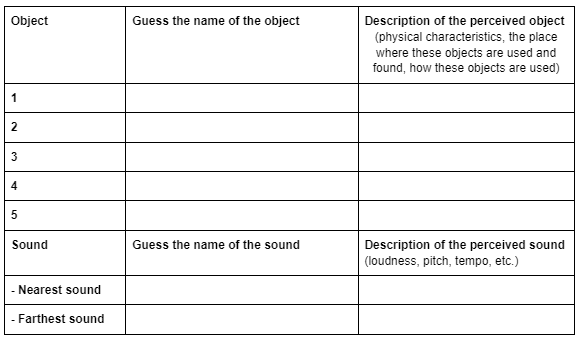
Step 4. Analyze (30 mins)
Analyze the contents of the box from Step 3. Reflect on the following principles:
- Bottom-up/top-down processing
- Weber’s Law
- Gestalt Principles of Perception
- Sound waves and wavelengths
Step 5. Respond (210 mins)
Based from your examples in Step 3, respond by writing a 300-800-word discussion piece that covers the following questions:
- How is the bottom-up/top-down approach used in perceiving the five objects?
- How can Weber’s Law help in guessing the names of the objects correctly?
- Which Gestalt Principles of Perception are applied in this kind of activity?
- How are the physical properties of sound waves, such as wavelengths, amplitude, and frequency, associated with perceptual experience?
- Did you recognize the five objects correctly? If not, what was your guess and what was the real object? In your opinion, what could explain the fact that you could not identify the object?
Step 6. Share (10 mins)
To share your work, click on the “Add a new discussion topic” button under this post and paste your work into the “Message” box. Please share the table from Step 3 AND the discussion from step 5. Make sure to reference others’ intellectual property when necessary. All references should follow 7th Edition APA formatting. For further instructions, see the resource on the Himmelfarb Health Sciences Library: APA citation resource (N.B. references are excluded from word counts).
Step 7. Interact (10 mins)
Evaluate and categorize the work from one of your peers based on items A - E of the rubric below. Provide a rationale for the grade you have provided, as well as comments or suggestions for improvement. To post a reply, click “Reply” on a particular discussion, write your feedback and then click on “Post to forum.” You can use the list below as an example:
Item A is .…. because…. My suggestions for improvement are….
Item B is .…. because…. My suggestions for improvement are….
Item C is .…. because…. My suggestions for improvement are….
Item D is .…. because…. My suggestions for improvement are….
Item E is .…. because…. My suggestions for improvement are….OPTIONAL Step 8: Interact (10 minutes)
If you would like to, you can reply to your peers' posts in a respectful and professional manner. Ensure that your post engages your peers' ideas by including a reflection on their comments, sharing ideas of other potential difficulties and parties involved, or asking thought-provoking questions. If a peer comments on your posting, please reply. To post a reply, click “Reply” on a particular discussion, write your feedback and then click on “Post to forum.”
-
-
Quiz: Module 3
To access the quiz, click on the name of the quiz provided above. On the following screen, click the "Preview quiz now" button to respond to the questions.
TO PASS THIS QUIZ YOU MUST OBTAIN A SCORE OF 80%.
Not available unless: The activity Quiz: Module 2 is marked complete
-

Instructional Goals covered in this module:
- Understand the states of consciousness with emphasis on sleep.
- Understand stages of sleep and sleep disorders.
- Understand altered states of consciousness produced by psychoactive drugs.
- Define hypnosis and meditation.
-
Learning objectives:
- Understand consciousness.
-
Students mustMark as done
Required Learning Resources and Activities
-
Students mustView
Read the entire web page. (15 minutes)
Rice University - 2016
-
Learning Objectives:
- Describe sleep and the different stages.
- Describe sleep cycle, sleep, and circadian rhythms.
- Discuss sleep problems and disorders.
-
Students mustMark as done
Required Learning Resources and Activities
-
Students mustView
Read the entire web page. (8 minutes)
Rice University - 2016
-
Students mustView
Read the entire web page. (12 minutes)
Rice University - 2016
-
Students mustView
Read from "How Does Circadian Rhythm Work?" to "What Can Disrupt Circadian Rhythm?." (10 minutes)
Sleep Foundation - 2022
-
Students mustView
Read the entire web page. (20 minutes)
Rice University - 2016
-
Learning Objectives:
- Discuss the altered state of consciousness produced by psychoactive drugs.
- Discuss the state of consciousness produced by hypnosis and meditation.
-
Students mustMark as done
Required Learning Resources and Activities
-
Students mustView
Read the entire web page. (25 minutes)
Rice University - 2016
-
Students mustView
Read the entire web page. (7 minutes)
Rice University - 2016
-
Students mustViewStart discussions: 1
In this activity, you will prepare an audio recording that discusses sleep problems and disorders and the altered state of consciousness produced by psychoactive drugs.
Step 1. Review (105 mins)
Review the learning resources for this module.
Step 2. Study (30 mins)
Study the given scenario:
Scenario
You are a licensed psychologist running a daily radio program known as “Psychology-in-Action.” The radio program serves as a platform for people seeking medical assistance and advice regarding their situations. For this week, the program is specifically allotted for people who have experienced the following:
- Sleep problems and disorders
- Altered state of consciousness due to:
- Hypnosis
- Meditation
- Psychoactive drugs
Step 3. Record (240 mins)
Simulate the scenario by recording a 6-15 minute audio that discusses the following (Make sure to use language and examples suitable for a general audience):
Common sleep problems and disorders
- Description
- Common signs and symptoms
Description of how different psychoactive drugs, hypnosis, and meditation can affect behavior and experience (altered state of consciousness)
- Signs and symptoms
- Impact
Preventive measures and treatment for a and b
Step 4. Rehearse and Final Record (60 mins)
Rehearse the audio report before making an audio recording of your final work. Ensure that all the necessary and required points are covered by your audio recording. Refer to the rubric below as your guide.
Step 5. Share (10 mins)
To share your audio recording, click on the “Add a new discussion topic” button under this post and paste your work into the “Message” box. Make sure to reference others’ intellectual property when necessary. All references should follow 7th Edition APA formatting. For further instructions, see the resource on the Himmelfarb Health Sciences Library: APA citation resource (N.B. references are excluded from word counts).
Step 6. Interact (10 mins)
Evaluate and categorize the work from one of your peers based on items A - E of the rubric below. Provide a rationale for the grade you have provided, as well as comments or suggestions for improvement. To post a reply, click “Reply” on a particular discussion, write your feedback and then click on “Post to forum.” You can use the list below as an example:
Item A is .…. because…. My suggestions for improvement are….
Item B is .…. because…. My suggestions for improvement are….
Item C is .…. because…. My suggestions for improvement are….
Item D is .…. because…. My suggestions for improvement are….
Item E is .…. because…. My suggestions for improvement are….OPTIONAL Step 7: Interact (10 minutes)
If you would like to, you can reply to your peers' posts in a respectful and professional manner. Ensure that your post engages your peers' ideas by including a reflection on their comments, sharing ideas of other potential difficulties and parties involved, or asking thought-provoking questions. If a peer comments on your posting, please reply. To post a reply, click “Reply” on a particular discussion, write your feedback and then click on “Post to forum.”
-
Quiz: Module 4
To access the quiz, click on the name of the quiz provided above. On the following screen, click the "Preview quiz now" button to respond to the questions.
TO PASS THIS QUIZ YOU MUST OBTAIN A SCORE OF 80%.
Not available unless: The activity Quiz: Module 3 is marked complete
- Discuss the altered state of consciousness produced by psychoactive drugs.
-

Instructional Goals covered in this module:
- Understand human physiological development in three stages: pre-natal, adolescent, and adulthood.
- Understand human physiological development in three stages: pre-natal, adolescent, and adulthood.
-
Learning objectives:
- Describe the stages of prenatal development and recognize the importance of prenatal care, motor development, and developmental changes in adolescence.
- Discuss the developmental changes in adolescence and self-identity.
- Discuss the physical development of adulthood.
-
Students mustMark as done
Required Learning Resources and Activities
-
Students mustView
Read from " Learning Objectives" to " Pre-natal influences." (13 minutes)
Rice University - 2016
-
Students mustView
Read the content from "Adolescence" to "Psychosocial Development." (10 minutes)
Rice University - 2016
-
Students mustView
Read from "Adulthood" until "Physical Development." (2 minutes)
Rice University - 2016
-
Students mustViewStart discussions: 1
In this activity, you will use several pictures to examine and describe the developmental and physical changes experienced by a person from adolescence to middle adulthood.
Step 1. Review (25 mins)
Review the learning resources for this module.
Step 2. Examine (60 mins)
-
Look for an old picture of yourself as an adolescent between ages 10 and 13. Examine the developmental changes that you have experienced from that time until the present. Make sure to list aspects relating to physical, cognitive, and emotional (self-identity) changes.
-
Look for three pictures of adulthood (preferably at ages 20, 40, and 50) of a celebrity or a famous personality. Examine the physical development noticeable in the pictures.
Step 3. List (30 mins)
List down all your observations from Step 2 in this table:
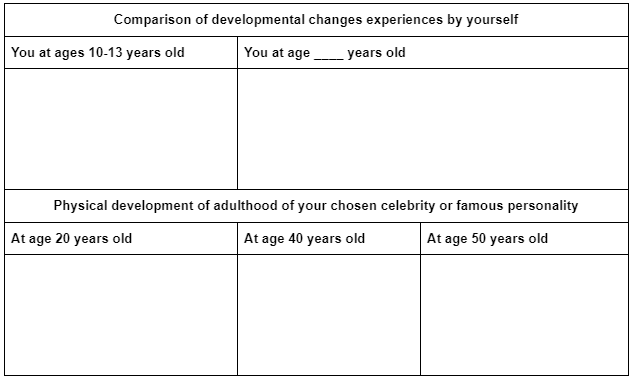
Step 4. Respond (150 mins)
Using your entries in the table from Step 3, write a 300-600-word discussion post that tackles the following:
-
Developmental changes in adolescence
- Physical
- Cognitive
- Emotional (Self-identity)
- Physical development of adulthood
Step 5. Share (10mins)
To share your work, click on the “Add a new discussion topic” button under this post and paste your complete work (Table from step 3 and discussion. You do not have to post the pictures) into the “Message” box. Make sure to reference others’ intellectual property when necessary. All references should follow 7th Edition APA formatting. For further instructions, see the resource on the Himmelfarb Health Sciences Library: APA citation resource (N.B. references are excluded from word counts).
Step 6. Interact (10 mins)
To complete the activity, you will need to reply to at least two posts made by your peers in a respectful and professional manner. Ensure that your post engages your peers' ideas by including a reflection on their comments, sharing ideas of other potential difficulties and parties involved, or asking thought-provoking questions. If a peer comments on your posting, please reply. To post a reply, click “Reply” on a particular discussion, write your feedback and then click on “Post to the forum.”
OPTIONAL Step 7: Interact (10 minutes)
If you would like to, you can reply to your peers' posts in a respectful and professional manner. Ensure that your post engages your peers' ideas by including a reflection on their comments, sharing ideas of other potential difficulties and parties involved, or asking thought-provoking questions. If a peer comments on your posting, please reply. To post a reply, click “Reply” on a particular discussion, write your feedback and then click on “Post to forum.”
-
-
Quiz: Module 5
To access the quiz, click on the name of the quiz provided above. On the following screen, click the "Preview quiz now" button to respond to the questions.
TO PASS THIS QUIZ YOU MUST OBTAIN A SCORE OF 4/6.
Not available unless: The activity Quiz: Module 4 is marked complete
- Describe the stages of prenatal development and recognize the importance of prenatal care, motor development, and developmental changes in adolescence.
-
 Instructional Goals covered in this module:
- Understand the Theories of Learning.
- Understand the Theories of Learning.
-
Learning objectives:
- Recognize and define three basic forms of learning—classical conditioning, operant conditioning, and observational learning.
- Define observational learning and the steps in the modeling process.
- Describe habituation and dishabituation.
-
Students mustMark as done
Required Learning Resources and Activities
-
Students mustView
Read the entire web page. (7 minutes)
Rice University - 2016
-
Students mustView
Read from "Learning Objectives" to "General Processes in Classical Conditioning." (24 minutes)
Rice University - 2016
-
Students mustView
Read the entire web page. (14 minutes)
Rice University - 2016
-
Students mustView
Read the content under the heading "Habituation." (9 minutes)
Britannica - 2016
-
Students mustViewStart discussions: 1
In this activity, you will examine a fictional case and describe how habituation and dishabituation can impact the case scenario.
Step 1. Review (34 mins)
Review the learning resources for this module.
Step 2. Study (30 mins)
Study the given fictional case assessment table of a person named Ruben below:
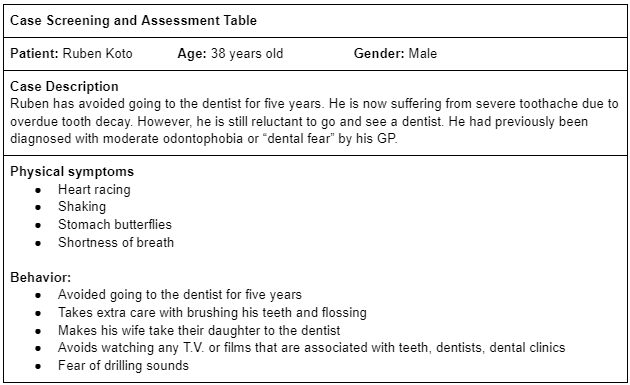
Step 3. Respond (120 mins)
Respond by writing a 200-500-word post that describes how habituation and exposure can help Ruben overcome his phobia and how dishabituation can interfere with and even worsen Ruben’s behavior and phobia. To be more specific, include the following elements in your post:
- Description of habituation and dishabituation as concepts.
- Description of how habituation as a concept can be used to positively address Ruben’s phobia and associated behaviors.
- Description of how dishabituation can worsen the intensity of the phobia and the behavior associated with it.
Step 4. Share (10 mins)
To share your work, click on the “Add a new discussion topic” button under this post and paste your complete work into the “Message” box. Make sure to reference others’ intellectual property when necessary. All references should follow 7th Edition APA formatting. For further instructions, see the resource on the Himmelfarb Health Sciences Library: APA citation resource (N.B. references are excluded from word counts).
Step 5. Interact (10 mins)
To complete the activity, you will need to reply to at least two posts made by your peers in a respectful and professional manner. Ensure that your post engages your peers' ideas by including a reflection on their comments, sharing ideas of other potential difficulties and parties involved, or asking thought-provoking questions. If a peer comments on your posting, please reply. To post a reply, click “Reply” on a particular discussion, write your feedback and then click on “Post to the forum.”
OPTIONAL Step 6: Interact (10 minutes)
If you would like to, you can reply to your peers' posts in a respectful and professional manner. Ensure that your post engages your peers' ideas by including a reflection on their comments, sharing ideas of other potential difficulties and parties involved, or asking thought-provoking questions. If a peer comments on your posting, please reply. To post a reply, click “Reply” on a particular discussion, write your feedback and then click on “Post to forum.”
-
Quiz: Module 6
To access the quiz, click on the name of the quiz provided above. On the following screen, click the "Preview quiz now" button to respond to the questions.
TO PASS THIS QUIZ YOU MUST OBTAIN A SCORE OF 80%.
Not available unless: The activity Quiz: Module 5 is marked complete -
Students mustMark as done
Recommended Additional Readings
-
Students mustView
Read the content under the heading " Introduction" and "Characteristics Of Habituation".
Wiley Online Library - 2022
- Recognize and define three basic forms of learning—classical conditioning, operant conditioning, and observational learning.
-
Instructional Goals covered in this module:

- Explore issues relating to both motivation and emotion.
- Explore issues relating to both motivation and emotion.
-
Learning objectives:
- Define intrinsic and extrinsic motivation and basic concepts associated with Maslow’s hierarchy of needs.
- Describe how hunger and eating are regulated.
- Understand basic biological mechanisms regulating sexual behavior and motivation, sexual orientation, and gender identity.
- Understand the concept of Emotion.
-
Students mustMark as done
Required Learning Resources and Activities
-
-
Students mustView
Read the entire web page. (15 minutes)
Rice University - 2016
-
Students mustView
Read from "Learning Objectives" to " Cultural Factors in Sexual Orientation and Gender Identity." (25 minutes)
Rice University - 2016
-
-
Students mustViewStart discussions: 1
In this activity, you will examine fictional cases and justify how biological mechanisms of sexual behavior and motivation, sexual orientation, and gender identity can be used to address these cases.
Step 1. Review (45 mins)
Review the learning resources for this module.
Step 2. Study (60 mins)
Study and analyze two fictional cases below:
Case 1: Bongbong is a 60-year-old man who reports significant erectile dysfunction (E.D.) that has progressed over the past 8 months. This has been distressing to him and his wife and has caused significant marital strife. He reports no morning erections, nocturnal erections, or spontaneous erections satisfactory for vaginal penetration.
Case 2: At 16-years old, Sara, who is biologically female at birth, finds herself sexually and emotionally attracted to individuals of the same sex. She maintains that she identifies and sees herself still as a female. However, Sarah’s parents do not understand her and still believe she might undergo transgender hormone therapy.
Step 3. Respond (120 mins)
Respond by writing a 300-600-word discussion post (150-300 words for each case) that will detail how these two cases can be addressed and explained using one or several of the following concepts below:
- Biological mechanisms explaining sexual behavior and motivation
- Differences between sexual orientation and gender identity
- Factors affecting sexual orientation and gender identity (biological factors, cultural factors…)
Step 4. Share (10 mins)
To share your work, click on the “Reply” button under this post and paste your complete work into the “Message” box. Make sure to reference others’ intellectual property when necessary. All references should follow 7th Edition APA formatting. For further instructions, see the resource on the Himmelfarb Health Sciences Library: APA citation resource (N.B. references are excluded from word counts).
Step 5. Interact (10 mins)
To complete the activity, you will need to reply to at least two posts made by your peers in a respectful and professional manner. Ensure that your post engages your peers' ideas by including a reflection on their comments, sharing ideas of other potential difficulties and parties involved, or asking thought-provoking questions. If a peer comments on your posting, please reply. To post a reply, click “Reply” on a particular discussion, write your feedback and then click on “Post to the forum.”
OPTIONAL Step 6: Interact (10 minutes)
If you would like to, you can reply to your peers' posts in a respectful and professional manner. Ensure that your post engages your peers' ideas by including a reflection on their comments, sharing ideas of other potential difficulties and parties involved, or asking thought-provoking questions. If a peer comments on your posting, please reply. To post a reply, click “Reply” on a particular discussion, write your feedback and then click on “Post to forum.”
-
Quiz: Module 7
To access the quiz, click on the name of the quiz provided above. On the following screen, click the "Preview quiz now" button to respond to the questions.
TO PASS THIS QUIZ YOU MUST OBTAIN A SCORE OF 5/7.
Not available unless: The activity Quiz: Module 6 is marked complete
- Define intrinsic and extrinsic motivation and basic concepts associated with Maslow’s hierarchy of needs.
-
 Instructional Goals covered in this module:
- Understand the higher levels of cognitive processes and the development of languages.
- Understand the higher levels of cognitive processes and the development of languages.
-
Learning objectives:
- Discuss how humans process information they receive, rather than merely responding to stimuli.
- Describe Piajet's stages of cognitive development.
- Describe cognitive changes in late adulthood.
- Discuss the role of culture in cognitive development.
- Influence of heredity and environment on cognitive development.
-
Students mustMark as done
Required Learning Resources and Activities
-
Students mustView
Read the entire web page. (14 minutes)
Rice University - 2016
-
Students mustView
Read the content under the heading "Information Processing Theories", "Selective Attention" and Divided Attention". (4 minutes)
Lumen Learning - 2015
-
Students mustView
Read the content from "Cognitive Theory of Development" to "Beyond Formal Operational Thought." (12 minutes)
Rice University - 2016
-
Students mustView
Read the content under "Adulthood: Cognitive Development" (4 minutes)
Rice University - 2016
-
Students mustView
Read the content under "Culture and Cognitive Development" (3 minutes)
Maricopa County Community College - 2020
-
Students mustView
Read the content under the heading " Dig Deeper : Two Perspectives on Genetics and Behavior" (2 minutes)
Rice University - 2016
-
Students mustView
Read the content under the headings "Abstract" and " Introduction" (7 minutes)
Nature - 2018
-
Students mustViewStart discussions: 1
In this activity, you will select and analyze one common happening in a person’s life and explain how information processing occurs in the selected happening, as well as how cognitive development varies in terms of culture.
Step 1. Review (55 mins)
Review the learning resources for this module.
Step 2. Study (30 mins)
Study and analyze the following common events in a person’s life:
- Being interviewed for a job vacancy
- Teaching someone how to cook the usual dishes for a family celebration
- Checking in the airport before departure
- Drawing an animal
- Preparing for an exam or a test
Step 3. Select, Analyze, and Reflect (30 mins)
Select one common event in the list in Step1. Analyze how information processing happens in the selected event. To be more specific, analyze how a person processes the information they receive, rather than merely responding to the stimuli.
After analyzing the selected event, think and reflect about your own culture. Is there an event or experience that exhibits cognitive development uniquely in your culture? Give one personal example.
- For example, in Mexican villages, children of pottery makers know at such a young age that reshaping clay does not change the amount of clay. This exhibits culturally unique cognitive development as children of other cultures who have no exposure to pottery cannot tell the same thing at the same age.
Step 4. Respond (180 mins)
Respond by writing a 300-700-word response that discusses how the following information processing stages occur in the selected event:
- How is the information being encoded within the memory system?
- How is the encoded information being stored in retention?
- How is the stored information retrieved and brought back to awareness?
- In terms of your personal event or experience, how does culture affect the cognitive development of children? Is their a significant difference between cognitive development of children of different cultures?
Step 5. Share (10 mins)
Share your work by clicking on the “Add a new discussion topic” button under this post and pasting your work into the “Message” box. Make sure to reference others’ intellectual property when necessary. All references should follow 7th Edition APA formatting. For further instructions, see the resource on the Himmelfarb Health Sciences Library: APA citation resource (N.B. references are excluded from word counts).
Step 6. Interact (10 mins)
To complete the activity, you will need to reply to at least two posts made by your peers in a respectful and professional manner. Ensure that your post engages your peers' ideas by including a reflection on their comments, sharing ideas of other potential difficulties and parties involved, or asking thought-provoking questions. If a peer comments on your posting, please reply. To post a reply, click “Reply” on a particular discussion, write your feedback and then click on “Post to the forum.”
OPTIONAL Step 7: Interact (10 minutes)
If you would like to, you can reply to your peers' posts in a respectful and professional manner. Ensure that your post engages your peers' ideas by including a reflection on their comments, sharing ideas of other potential difficulties and parties involved, or asking thought-provoking questions. If a peer comments on your posting, please reply. To post a reply, click “Reply” on a particular discussion, write your feedback and then click on “Post to forum.”
-
Students mustMark as done
Recommended Additional Readings
-
Students mustView
Read the content under the heading " summary". (2 minutes)
Oxford University Press - 2020
- Discuss how humans process information they receive, rather than merely responding to stimuli.
-
Learning objectives:
- Describe problem solving strategies and common roadblocks to effective problem solving and decision making.
-
Define intelligence and identify the differences in the intelligence theories.
- Describe the purposes and benefits of intelligence testing.
- Describe the Influence of heredity and environment on intelligence.
- Describe how genetics and environment affect intelligence and what are the variations in intellectual ability.
-
Students mustMark as done
Required Learning Resources and Activities
-
Students mustView
Read the entire webpage. (15 minutes)
Rice University - 2016
-
Students mustView
Read the entire webpage. (12 minutes)
Rice University - 2016
-
Students mustView
Read the entire webpage. (22 minutes)
Rice University - 2016
-
Students mustView
Read the entire web page. (2 minutes)
MedlinePlus - 2020
-
Students mustView
Read the entire webpage. (13 minutes)
Rice University - 2016
- Describe problem solving strategies and common roadblocks to effective problem solving and decision making.
-
Learning objectives:
- Define language and demonstrate familiarity with the components of language development and the relationship between language and thinking.
-
Students mustMark as done
Required Learning Resources and Activities
-
-
Students mustView
Read from the "Introduction" to " How Is Language Reinforced In The Environment" (9 minutes)
The Virtual Library of Virginia (VIVA) - 2021
-
Quiz: Module 8
To access the quiz, click on the name of the quiz provided above. On the following screen, click the "Preview quiz now" button to respond to the questions.
TO PASS THIS QUIZ YOU MUST OBTAIN A SCORE OF 80%.
Not available unless: The activity Quiz: Module 7 is marked complete
-
 Instructional Goals covered in this module:
- Understand: how humans process and store information; the different types of memory; how we retrieve our memories and why do we forget.
-
Learning objectives:
- Describe the process of encoding information.
-
Discuss the types of memory storage; semantic networks and spreading activation, and relearning.
-
Students mustMark as done
Required Learning Resources and Activities
-
Students mustView
Read the page section. (29 minutes)
Rice University - 2016
-
Students mustView
Read the content under the headings "Explicit Memory" and "Implicit Memory". (10 minutes)
BCcampus - 2014
- Describe the process of encoding information.
-
Learning objectives:
- Discuss memory problems, memory construction, and source monitoring.
- Explain memory dysfuntion and forgetfullness in relation to aging.
-
Students mustMark as done
Required Learning Resources and Activities
-
Students mustView
Read the content under the headings "Amnesia", "Anterograde Amnesia and "Retrograde Amnesia" (4 minutes)
Rice University - 2016
-
Students mustView
Read the content from "Memory Construction and Reconstruction" to "Controversies over Repressed and Recovered Memories" (14 minutes)
Rice University - 2016
-
Students mustView
Read the entire webpage. (6 minutes)
National Institute on Aging - 2020
-
-
Students mustView
Read the entire webpage. (5 minutes)
Harvard Health Publishing - 2019
-
Students mustViewStart discussions: 1
In this activity, you will analyze a fictional case about memory problems and discuss how memory construction and source monitoring can be used to solve the case.
Step 1. Review (50 mins)
Review the learning resources for this module.
Step 2. Study (30 mins)
Study the fictional case below:
The Leody-Leni case
Leody, who works as a personal secretary of a high-profile drug lord, overheard a face-to-face conversation between his boss and a skilled hitman. From the conversation, Leody learned that his boss hired a hitman to assassinate Leni, a lawyer currently handling the illegal drug trafficking case against his boss. As his morals have remained intact, he decided to warn Leni about the assassination plan.
While Leni and Leody were having this conversation inside a moving car, they saw an unknown person targeting them with multiple shots of gunfire. Leody recognized the face of the assassin. However, he wasn’t able to secure evidence since their car had smashed a wall violently. In the next few days, Leody wakes up without any memory from the past, while Leni cannot remember new information. However, she can remember information and events that happened prior to her injury. With the unfolding of these unfortunate events, how can the culprit be caught and be held liable and punishable by law?
Step 3. Analyze (45 mins)
After reading the fictional case, analyze the following points:
- What are the memory problems exhibited by the two fictional characters in the case?
- How different is Leody’s memory problem from Leni’s?
- What forms of memory construction and reconstruction can be used to address and solve this case?
- How can this case benefit from or be harmed by these forms of memory construction and reconstruction?
Step 4. Respond (150 mins)
Respond by writing a 300-600-word case resolution that covers all the points listed in Step 3.
Step 5. Share (10 mins)
Share your work by clicking on the “Add a new discussion topic” button under this post and pasting your work into the “Message” box. Make sure to reference others’ intellectual property when necessary. All references should follow 7th Edition APA formatting. For further instructions, see the resource on the Himmelfarb Health Sciences Library: APA citation resource (N.B. references are excluded from word counts).
Step 6. Interact (10 mins)
To complete the activity, you will need to reply to at least two posts made by your peers in a respectful and professional manner. Ensure that your post engages your peers' ideas by including a reflection on their comments, sharing ideas of other potential difficulties and parties involved, or asking thought-provoking questions. If a peer comments on your posting, please reply. To post a reply, click “Reply” on a particular discussion, write your feedback and then click on “Post to the forum.”
OPTIONAL Step 7: Interact (10 minutes)
If you would like to, you can reply to your peers' posts in a respectful and professional manner. Ensure that your post engages your peers' ideas by including a reflection on their comments, sharing ideas of other potential difficulties and parties involved, or asking thought-provoking questions. If a peer comments on your posting, please reply. To post a reply, click “Reply” on a particular discussion, write your feedback and then click on “Post to forum.”
-
Students mustMark as done
Recommended Additional Readings
-
Students mustView
Read from "Introduction" to "Key Points" (29 minutes)
Behavioral Neurology and Neuropsychiatry - 2015
- Discuss memory problems, memory construction, and source monitoring.
-
Learning objectives:
- Differentiate between memory and learning.
-
Describe the processes that aid in encoding memories.
- Discuss the changes in synaptic connections which underlie memory.
- Discuss neural plasticity.
- Recognize and apply memory-enhancing strategies and study techniques.
-
Students mustMark as done
Required Learning Resources and Activities
-
Students mustView
Read the content under the heading "How does Memory Work?" and "Improving Recall". (3 minutes)
Derek Bok Center, Harvard University - 2018
-
Students mustView
Read the entire web page. (8 minutes)
Lumen Learning
-
Students mustView
Read the entire web page. (8 minutes)
Simply Psychology - 2021
-
Students mustView
Read the entire web page. (18 minutes)
Rice University - 2016
-
Students mustView
Read the content under the heading
"Neural Plasticity". (2 minutes)Rice University - 2016
-
-
Students mustView
Read the entire webpage. (11 minutes)
Rice University - 2016
-
Students mustViewStart discussions: 1
In this activity, you will design an interactive slide presentation to showcase changes in synaptic connections which underlie the memory and neural plasticity of a specific audience.
Step 1. Review (50 mins)
Review the learning resources for this specific lesson.
Step 2. Select (30 mins)
Select one target audience of your choice among the following audiences:
- Stroke victims regaining mobility in paralyzed limbs
- Traumatic brain injury patients recovering from their brain injuries
- Alzheimer’s patients regaining short and long-term memory
Step 3. Design (240 mins)
Design a slide presentation to showcase how the brain works for the selected audience. To be more specific, your work must be able to address the following questions:
- What are common changes in synaptic connections that underlie learning and memory?
- How do these changes in synaptic connections affect your target audience’s memory and learning?
- What is neuroplasticity and how does it work?
- How do neurons change over time with respect to the target audience?
- How can the principles of neuroplasticity be applied to the functional recovery of your selected audience?
Step 4. Respond
Respond by designing an interactive slide presentation consisting of 15-25 slides (maximum of 40 words per slide, including the title/headings) that covers everything from Step 3. You may include pictures, graphics, and other interactive elements.
Recommendations
You may use one of the following software for your work:
Powerpoint, MS Sway, Genially, Articulate 360, Google Slides
Step 5. Share (10 mins)
Share your work by clicking on the “Add a new discussion topic” button under this post and pasting your work into the “Message” box. Make sure to reference others’ intellectual property when necessary. All references should follow 7th Edition APA formatting. For further instructions, see the resource on the Himmelfarb Health Sciences Library: APA citation resource (N.B. references are excluded from word counts).
Step 6. Interact (10 mins)
Evaluate and categorize the work from one of your peers based on items A - E of the rubric below. Provide a rationale for the grade you have provided, as well as comments or suggestions for improvement. To post a reply, click “Reply” on a particular discussion, write your feedback and then click on “Post to forum.” You can use the list below as an example:
Item A is .…. because…. My suggestions for improvement are….
Item B is .…. because…. My suggestions for improvement are….
Item C is .…. because…. My suggestions for improvement are….
Item D is .…. because…. My suggestions for improvement are….
Item E is .…. because…. My suggestions for improvement are….OPTIONAL Step 7: Interact (10 minutes)
If you would like to, you can reply to your peers' posts in a respectful and professional manner. Ensure that your post engages your peers' ideas by including a reflection on their comments, sharing ideas of other potential difficulties and parties involved, or asking thought-provoking questions. If a peer comments on your posting, please reply. To post a reply, click “Reply” on a particular discussion, write your feedback and then click on “Post to forum.”
-
Quiz: Module 9
To access the quiz, click on the name of the quiz provided above. On the following screen, click the "Preview quiz now" button to respond to the questions.
TO PASS THIS QUIZ YOU MUST OBTAIN A SCORE OF 80%.
Not available unless: The activity Quiz: Module 8 is marked complete -
Students mustMark as done
Recommended Additional Readings
-
Students mustView
Read the content under the heading "Neural Plasticity" (4 minutes)
Science Direct/ Web Journal - 2014
- Differentiate between memory and learning.
-
 Instructional Goals covered in this module:
- Understand the theories of personality and the influences on human behavior.
-
Learning objectives:
- Describe personality and the early theories about personality development.
-
Describe the assumptions of the psychodynamic perspective on personality development.
- Discuss the concept of the inferiority complex.
- Describe the behaviorist, cognitive and social perspectives on personality.
- Discuss the contributions of Abraham Maslow and Carl Rogers to personality development.
- Discuss the evolutionary perspective on personality development.
- Discuss early trait theories of Cattell and Eysenck, the Big Five factors, and describe someone who is high and low on each of the five factors.
-
Students mustMark as done
Required Learning Resources and Activities
-
Students mustView
Read the entire webpage. (6 minutes)
Rice University - 2016
-
Students mustView
Read the entire webpage. (18 minutes)
Rice University - 2016
-
Students mustView
Read the content under the heading " Alfred Adler". (3 minutes)
Rice University - 2016
-
Students mustView
Read the entire webpage. (14 minutes)
Rice University - 2016
-
Students mustView
Read the entire webpage. (4 minutes)
Rice University - 2016
-
Students mustView
Read the entire webpage. (4 minutes)
Rice University - 2016
-
Students mustView
Read the entire webpage. (10 minutes)
Rice University - 2016
-
Learning objectives:
- Discuss the cultural understandings of Personality.
-
Recognize and describe common projective tests used in personality assessment.
-
Students mustMark as done
Required Learning Resources and Activities
-
Students mustView
Read the entire webpage. (7 minutes)
Rice University - 2016
-
Students mustView
Read the entire webpage. (11 minutes)
Rice University - 2016
-
Students mustViewStart discussions: 1
In this activity, you will take the Big Five personality test and write a critical analysis of the results to address all the learning outcomes for this lesson.
Step 1. Review (41 mins)
Review the learning resources for these lessons.
Step 2. Explore (60mins)
Access the Big Five Personality test website. This website will allow you to take the psychology test to find out more about the five dimensions of your personality. Additionally, you will also have to simultaneously compare your personality to a sibling or a parent (if you are an only child) by ticking the type of relation in the dropdown menu:
Once this has been completed, read and follow the directions carefully. Ensure to take the test considerably and truthfully. Do not forget to select “SUBMIT” at the bottom of the page to gain access to the results.
Step 3. Analyze (360 mins)
Upon submission of the completed test, analyze the results. During your analysis, keep in mind the following questions:
- What aspects of personality does the test tell you about?
- How do the results of the Big Five differentiate you from your sibling or parent?
- How do your Big Five personality test results relate to Cattell and Eynseck's theories of personality?
- Based on the comparative analysis between your results and the other person related to you, how can an evolutionary perspective be used to explain the relationship between personality traits and their underlying mechanisms?
- Suppose the Big Five test is administered to two people from two different cultures: one is from a collectivist culture and the other is from an individualist culture. How do you think each result will turn out?
- Is culture a factor to be considered in understanding personality? Please justify your answer.
Step 4. Respond
Respond by writing a 300-800-word critical analysis that covers all the questions introduced in Step 3.
Step 5. Share (10 mins)
Share your complete work (critical analysis and a screenshot of your Big Five Personality results) by clicking on the “Add a new discussion topic” button under this post and pasting your work into the “Message” box. Make sure to reference others’ intellectual property when necessary. All references should follow 7th Edition APA formatting. For further instructions, see the resource on the Himmelfarb Health Sciences Library: APA citation resource (N.B. references are excluded from word counts).
Step 6. Interact (10 mins)
Evaluate and categorize the work from one of your peers based on items A - E of the rubric below. Provide a rationale for the grade you have provided, as well as comments or suggestions for improvement. To post a reply, click “Reply” on a particular discussion, write your feedback and then click on “Post to forum.” You can use the list below as an example:
Item A is .…. because…. My suggestions for improvement are….
Item B is .…. because…. My suggestions for improvement are….
Item C is .…. because…. My suggestions for improvement are….
Item D is .…. because…. My suggestions for improvement are….
Item E is .…. because…. My suggestions for improvement are….OPTIONAL Step 7: Interact (10 minutes)
If you would like to, you can reply to your peers' posts in a respectful and professional manner. Ensure that your post engages your peers' ideas by including a reflection on their comments, sharing ideas of other potential difficulties and parties involved, or asking thought-provoking questions. If a peer comments on your posting, please reply. To post a reply, click “Reply” on a particular discussion, write your feedback and then click on “Post to forum.”
-
Quiz: Module 10
To access the quiz, click on the name of the quiz provided above. On the following screen, click the "Preview quiz now" button to respond to the questions.
TO PASS THIS QUIZ YOU MUST OBTAIN A SCORE OF 7/9.
Not available unless: The activity Quiz: Module 9 is marked complete
- Discuss the cultural understandings of Personality.
-
 Instructional Goals covered in this module:
- Understand the role of the stress on mental health and mechanism to coping it.
- Understand the role of the stress on mental health and mechanism to coping it.
-
Learning objectives:
- Describe stress and different types of possible stressors.
- Describe stress-related illness.
- Define coping and differentiate between problem-focused and emotion-focused coping.
- Describe the field of positive psychology and identify the types of problems it addresses.
-
Students mustMark as done
Required Learning Resources and Activities
-
Students mustView
Read the page section. (26 minutes)
Rice University - 2016
-
-
Students mustView
Read the entire webpage. (42 minutes)
Rice University - 2016
-
Students mustView
Read the entire webpage. (28 minutes)
Rice University - 2016
-
Students mustView
Read the content under the headings " Positive Psychology", "Positive Affect and Optimism" and "Flow". (9 minutes)
Rice University - 2016
-
Students mustViewStart discussions: 1
In this activity, you will analyze real-life pictures demonstrating the field of positive psychology and identify the problems that it addresses.
Step 1. Review (30 mins)
Review the learning resources for this lesson.
Step 2. Study (30 mins)
Study these pictures taken in real life.
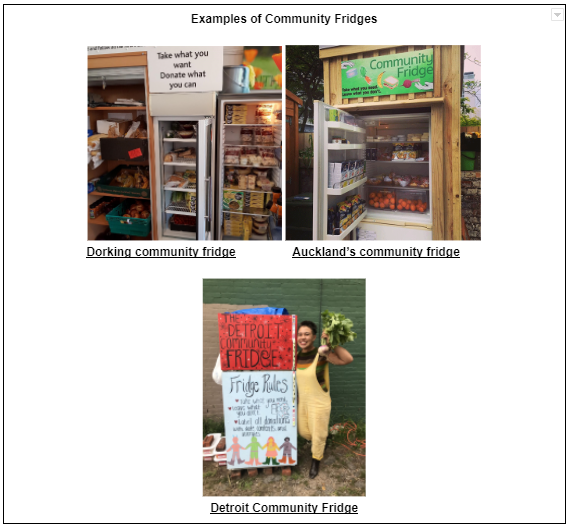
Step 3. Analyze (60 mins)
After studying the pictures, analyze and explain how these real-life pictures can be representative of positive psychology. To be specific, think of the following questions:
- What kind of problems can be addressed by the study of positive psychology?
- How does positive psychology relate to happiness?
- How are these examples aligned with the definition and goals of positive psychology as a field?
- What positive human qualities are being exhibited by the pictures?
- Should the same amount of attention and funding be given to positive qualities as to negative qualities (illness)?
- What advantages could be gained from the study of positive qualities?
Step 4. Respond (120 mins)
Respond by writing a 200-500-word discussion post that covers all the questions introduced in Step 3.
Additionally, include one simple example in your own personal life that demonstrates the concepts of positive psychology.
Step 5. Share (10 mins)
Share your work by clicking on the “Add a new discussion topic” button under this post and pasting your work into the “Message” box. Make sure to reference others’ intellectual property when necessary. All references should follow 7th Edition APA formatting. For further instructions, see the resource on the Himmelfarb Health Sciences Library: APA citation resource (N.B. references are excluded from word counts).
Step 6. Interact (10 mins)
To complete the activity, you will need to reply to at least two posts made by your peers in a respectful and professional manner. Ensure that your post engages your peers' ideas by including a reflection on their comments, sharing ideas of other potential difficulties and parties involved, or asking thought-provoking questions. If a peer comments on your posting, please reply. To post a reply, click “Reply” on a particular discussion, write your feedback and then click on “Post to the forum.”
OPTIONAL Step 7: Interact (10 minutes)
If you would like to, you can reply to your peers' posts in a respectful and professional manner. Ensure that your post engages your peers' ideas by including a reflection on their comments, sharing ideas of other potential difficulties and parties involved, or asking thought-provoking questions. If a peer comments on your posting, please reply. To post a reply, click “Reply” on a particular discussion, write your feedback and then click on “Post to forum.”
-
Quiz: Module 11
To access the quiz, click on the name of the quiz provided above. On the following screen, click the "Preview quiz now" button to respond to the questions.
TO PASS THIS QUIZ YOU MUST OBTAIN A SCORE OF 80%.
Not available unless: The activity Quiz: Module 10 is marked complete
- Describe stress and different types of possible stressors.
-
 Instructional Goals covered in this module:
- Understand psychological disorders and the problems inherent in defining the concept of a psychological disorder.
- Understand psychological disorders and the problems inherent in defining the concept of a psychological disorder.
-
Learning objectives:
- Identify the criteria of thoughts, feelings, and behaviors that must be met to be considered abnormal and, thus, symptomatic of a psychological disorder.
- Identify the most common disorders.
- Describe modern biological and supernatural perspectives on the origin of psychological disorders.
-
Students mustMark as done
Required Learning Resources and Activities
-
Students mustView
Read the entire webpage. (17 minutes)
Rice Unversity - 2016
-
Students mustView
Read the entire webpage. (12 minutes)
Rice Unversity - 2016
-
Students mustView
Read the entire webpage. (7 minutes)
Rice Unversity - 2016
-
Learning objectives:
- Describe the major anxiety disorders, including their main features and prevalence.
-
Describe the main features and prevalence of obsessive-compulsive disorder, body dysmorphic disorder, and hoarding disorder.
- Describe the nature and symptoms of post-traumatic stress disorder and the risk factors.
- Describe the symptoms of major depressive disorder and bipolar disorder, and the differences between major depressive disorder and persistent depressive disorder, and identify two subtypes of depression.
- Discuss Statistics related to mental health disorders.
- Discuss the nature of schizophrenia, addressing the misconception that it involves a split personality.
- Identify and differentiate the symptoms of dissociative disorders, amnesia, depersonalization/ derealization disorder, and dissociative identity disorder.
- Identify and differentiate the symptoms of dissociative disorder, amnesia, depersonalization/ derealization disorder, and dissociative identity disorder in childhood.
- Describe the nature of personality disorders and how they differ from other disorders.
-
Students mustMark as done
Required Learning Resources and Activities
-
Students mustView
Read the entire webpage. (25 minutes)
Rice University - 2016
-
Students mustView
Read the entire webpage. (11 minutes)
Rice University - 2016
-
Students mustView
Read the entire webpage. (10 minutes)
Rice University - 2016
-
Students mustView
Read the entire webpage. (37 minutes)
Rice University - 2016
-
Students mustView
Read the entire webpage. (3 minutes)
John Hopkins Medicine - 2019
-
Students mustView
Read the entire webpage. (20 minutes)
Rice University - 2016
-
Students mustView
Read the entire webpage. (8 minutes)
Rice University - 2016
-
Students mustView
Read the entire webpage. (25 minutes)
Rice University - 2016
-
Students mustView
Read the entire webpage. (18 minutes)
Rice University - 2016
-
Students mustViewStart discussions: 1
In this activity, you will design an infographic on schizophrenia prevalence statistics, its nature, and any other important related information.
Step 1. Review (45 mins)
Review learning resources for this lesson.
Step 2. Explore (60 mins)
Explore Our World in Data’s Mental Health Statistics. Upon access, you will see a summary table that shows some mental health disorders and their global statistics. Each mental health disorder has a hyperlink that directs you to specific statistics for the chosen mental health disorder. Explore each hyperlink from the summary table. Give particular attention to schizophrenia by considering the following statistics upon access:
- Top 10 countries with the lowest number of recorded schizophrenia cases
- Top 10 countries with the highest number of recorded schizophrenia cases
- Top 5 countries with the lowest prevalence of schizophrenia among men
- Top 5 countries with the highest prevalence of schizophrenia among men
- Top 5 countries with the lowest prevalence of schizophrenia among women
- Top 5 countries with the highest prevalence of schizophrenia among women
Step 3. Design (240 mins)
Design a simple infographic (1-2 A4 pages) that will present and discuss the interpretation of the specific statistics in Step 2.
Additionally, include the following information in the infographics:
- The nature of schizophrenia
- Diagnosis: signs and symptoms
- Causes and risk factors
- Prevention and treatment
- The misconception that schizophrenia involves a split personality
Recommendations
You may use one of the free following software for your work:
- Powerpoint, Google Slides, Canva, Word
Step 4. Share (10 mins)
Share your complete work by clicking on the “Add a new discussion topic” button under this post and pasting your work into the “Message” box. Make sure to reference others’ intellectual property when necessary. All references should follow 7th Edition APA formatting. For further instructions, see the resource on the Himmelfarb Health Sciences Library: APA citation resource (N.B. references are excluded from word counts).
Step 5. Interact (10 mins)
Evaluate and categorize the work from one of your peers based on items A - E of the rubric below. Provide a rationale for the grade you have provided, as well as comments or suggestions for improvement. To post a reply, click “Reply” on a particular discussion, write your feedback and then click on “Post to forum.” You can use the list below as an example:
Item A is .…. because…. My suggestions for improvement are….
Item B is .…. because…. My suggestions for improvement are….
Item C is .…. because…. My suggestions for improvement are….
Item D is .…. because…. My suggestions for improvement are….
Item E is .…. because…. My suggestions for improvement are….OPTIONAL Step 6: Interact (10 minutes)
If you would like to, you can reply to your peers' posts in a respectful and professional manner. Ensure that your post engages your peers' ideas by including a reflection on their comments, sharing ideas of other potential difficulties and parties involved, or asking thought-provoking questions. If a peer comments on your posting, please reply. To post a reply, click “Reply” on a particular discussion, write your feedback and then click on “Post to forum.”
-
Quiz: Module 12
To access the quiz, click on the name of the quiz provided above. On the following screen, click the "Preview quiz now" button to respond to the questions.
TO PASS THIS QUIZ YOU MUST OBTAIN A SCORE OF 80%.
Not available unless: The activity Quiz: Module 11 is marked complete
-
 Instructional Goals covered in this module:
- Understand abnormal behavior from Psychologic perspective and their respective treatments.
-
Learning objectives:
- Describe normative and nonnormative behavior in society.
-
Students mustMark as done
Required Learning Resources and Activities
-
Students mustView
Read the entire webpage. (17 minutes)
King University - 2018
-
Students mustView
Read the content under the heading "General Issues". (13 minutes)
Stanford Encyclopedia of Philosophy - 2018
- Describe normative and nonnormative behavior in society.
-
Module 13: Lesson 2: Mental Health Therapy and Treatments; evolution, types, and modes of treatment.
Learning objectives:
- Explain how people with psychological disorders have been treated throughout the ages.
- Discuss psychotherapy and biomedical therapy.
-
Distinguish between the various modalities of treatment.
- Describe how addictive disorders are treated.
- Explain how the sociocultural model is used in therapy.
-
Students mustMark as done
Required Learning Resources and Activities
-
Students mustView
Read the entire webpage. (17 minutes)
Rice University - 2016
-
Students mustView
Read the entire webpage. (37 minutes)
Rice University - 2016
-
Students mustView
Read the entire webpage. (11 minutes)
Rice University - 2016
-
Students mustView
Read the entire webpage. (6 minutes)
Rice University - 2016
-
Students mustView
Read the entire webpage. (12 minutes)
Rice University - 2016
-
Students mustViewStart discussions: 1
In this activity, you will write a correspondence letter discussing various modalities of treatment and therapies.
Step 1. Review (70 mins)
Review the learning resources for this lesson.
Step 2. Study (30 mins)
Study the fictional scenario below:
Scenario
You are a psychologist-contributing writer of “Psychology Now,” a general-interest psychology magazine aimed at presenting information and advice related to self-improvement, relationships, alternative medicine, health and fitness, and other health and well-being issues. Your magazine section is especially dedicated to audiences seeking advice by acting as their correspondent. For this month, the majority of your readers are seeking advice on which therapy, between psychotherapy and biomedical therapy, is the best option to improve their mental health. Additionally, some of your readers are asking for your recommendation on other mental health treatment modalities.
Step 3. Write (180 mins)
Respond by writing a 300-700-word correspondence letter that aims to address the following points:
- Differences between psychotherapy and biomedical therapy
- Description of the two therapies
- When each therapy can be used
- Pros and cons of each therapy
- Examples (for each therapy)
- Other mental health treatment modalities
- Description of each treatment modality
- When each treatment modality can be used
- Risks and benefits of each treatment modality
- Examples (for each treatment modality )
Step 4. Share (10 mins)
Share your work by clicking on the “Add a new discussion topic” button under this post and pasting your work into the “Message” box. Make sure to reference others’ intellectual property when necessary. All references should follow 7th Edition APA formatting. For further instructions, see the resource on the Himmelfarb Health Sciences Library: APA citation resource (N.B. references are excluded from word counts).
Step 5. Interact (10 mins)
Evaluate and categorize the work from one of your peers based on items A - E of the rubric below. Provide a rationale for the grade you have provided, as well as comments or suggestions for improvement. To post a reply, click “Reply” on a particular discussion, write your feedback and then click on “Post to forum.” You can use the list below as an example:
Item A is .…. because…. My suggestions for improvement are….
Item B is .…. because…. My suggestions for improvement are….
Item C is .…. because…. My suggestions for improvement are….
Item D is .…. because…. My suggestions for improvement are….
Item E is .…. because…. My suggestions for improvement are….OPTIONAL Step 6: Interact (10 minutes)
If you would like to, you can reply to your peers' posts in a respectful and professional manner. Ensure that your post engages your peers' ideas by including a reflection on their comments, sharing ideas of other potential difficulties and parties involved, or asking thought-provoking questions. If a peer comments on your posting, please reply. To post a reply, click “Reply” on a particular discussion, write your feedback and then click on “Post to forum.”
-
Quiz: Module 13
To access the quiz, click on the name of the quiz provided above. On the following screen, click the "Preview quiz now" button to respond to the questions.
TO PASS THIS QUIZ YOU MUST OBTAIN A SCORE OF 80%.
Not available unless: The activity Quiz: Module 12 is marked complete
- Explain how people with psychological disorders have been treated throughout the ages.
-
 Instructional Goals covered in this module:
- Describe how social psychology plays a role in social behavior at the individual and collective levels.
-
Learning objectives:
- Describe social psychology and situational versus dispositional influences on behavior.
-
Students mustMark as done
Required Learning Resources and Activities
-
Students mustView
Read the entire webpage. (19 minutes)
Rice University - 2016
-
Learning objectives:
- Describe social roles and how they influence behavior.
-
Describe how people’s attitudes are internally changed through cognitive dissonance.
- Discuss the different agents of socialization.
- Describe the Psychology of making group decisions.
- Describe social thinking.
-
Students mustMark as done
Required Learning Resources and Activities
-
Students mustView
Read the entire webpage. (13 minutes)
Rice University - 2016
-
Students mustView
Read the entire webpage. (20 minutes)
Rice University - 2016
-
Students mustView
Read the entire webpage. (21 minutes)
University of Minnesota - 2016
-
Students mustView
Read the content under the headings "Groupthink," "Group Polarization," " Social Facilitation" and "Social Loafing." (9 minutes)
Rice University - 2016
-
Students mustViewStart discussions: 1
In this activity, you will reflect and discuss how the different agents of socialization impact your personal socialization process.
Step 1. Review (45 mins)
Review the learning resources for this lesson.
Step 2. Reflect (60 mins)
Reflect on your own socialization process and how the different agents of socialization below impact this process:
- Family, schools, peers, mass media, and religion
Step 3. Create and Write (240 mins)
After reflecting, create a visual representation that shows how each agent of socialization affects your own socialization process using a pie graph or chart showing the percentage of contribution for each of the five agents of socialization.
Then, write a 300-600-word well-developed paragraph that discusses the interpretation and meaning of your pie chart/graph. Additionally, include the following information in your paragraph:
- How the different agents of the socialization process have impacted your life and helped define who you are.
- Which agent of socialization has the greatest influence on your life, and which one has the least influence.
- What positive and negative aspects of socialization, in general, do these agents produce in your society and other societies.
Step 4. Share (10 mins)
Share your complete work by clicking on the “Add a new discussion topic” button under this post and pasting your work (pie chart/graph and paragraph) into the “Message” box. Make sure to reference others’ intellectual property when necessary. All references should follow 7th Edition APA formatting. For further instructions, see the resource on the Himmelfarb Health Sciences Library: APA citation resource (N.B. references are excluded from word counts).
Step 5. Interact (10 mins)
To complete the activity, you will need to reply to at least two posts made by your peers in a respectful and professional manner. Ensure that your post engages your peers' ideas by including a reflection on their comments, sharing ideas of other potential difficulties and parties involved, or asking thought-provoking questions. If a peer comments on your posting, please reply. To post a reply, click “Reply” on a particular discussion, write your feedback and then click on “Post to the forum.”
OPTIONAL Step 6: Interact (10 minutes)
If you would like to, you can reply to your peers' posts in a respectful and professional manner. Ensure that your post engages your peers' ideas by including a reflection on their comments, sharing ideas of other potential difficulties and parties involved, or asking thought-provoking questions. If a peer comments on your posting, please reply. To post a reply, click “Reply” on a particular discussion, write your feedback and then click on “Post to forum.”
-
Quiz: Module 14
To access the quiz, click on the name of the quiz provided above. On the following screen, click the "Preview quiz now" button to respond to the questions.
TO PASS THIS QUIZ YOU MUST OBTAIN A SCORE OF 7/9.
Not available unless: The activity Quiz: Module 13 is marked complete -
Students mustMark as done
Recommended Additional Readings
-
Students mustView
Watch the entire video. (5 minutes)
Social Thinking - 2020
- Describe social roles and how they influence behavior.
-
 Instructional Goals covered in this module:
- Understand the role of industrial and organizational psychology.
-
Learning objectives:
- Discuss the scope of study in the field of industrial and organizational psychology.
-
Describe the approaches to issues surrounding performance assessment.
- Explain the role of human factors- psychology in safety, productivity, and job satisfaction.
-
Students mustMark as done
Required Learning Resources and Activities
-
Students mustView
Read the entire webpage. (23 minutes)
Rice University - 2016
-
Students mustView
Read the content under the headings "Evaluating Employees" and "Bias and Protections in Hiring." (8 minutes)
Rice University - 2016
-
Students mustView
Read the entire webpage. (9 minutes)
Rice University - 2016
-
Students mustView
Read the content under the heading "Job Satisfaction". (10 minutes)
Rice University - 2016
-
Students mustViewStart discussions: 1
In this activity, you will explain the role of human factors psychology in safety, productivity, and job satisfaction in a particular career field/industry.
Step 1. Review (40 mins)
Review the learning resources for this lesson.
Step 2. Explore (60 mins)
Learn more about career paths, industries, and opportunities for gaining experience in the field of your choice by exploring this website: Job Outlook. Select one career path or occupation that interests you.
Step 3. Research (60 mins)
Gather more information about the selected occupation, such as:
- Job nature
- Required degrees (if any)
- Knowledge, skills, and abilities needed
- Examples of tasks, activities, and responsibilities usually associated with the selected occupation
- Work environment
Step 4. Analyze (180 mins)
Using the gathered information, analyze the role of human factors psychology and workplace design in your selected occupation. To be more specific, analyze the following key points:
- Detail the chosen occupation
- The areas of human factors psychology that are observed and experienced in the occupation
- The impact of these human factors as well as the workplace design on the occupation’s safety, employees’ productivity, and job satisfaction
- Strategies for strengthening the organizational culture for the chosen occupation
Step 5. Respond
Respond by writing a 300-600-word reflective piece that covers all the key points listed in Step 4.
Step 6. Share (10 mins)
Share your complete work by clicking on the “Add a new discussion topic” button under this post and pasting your work into the “Message” box. Make sure to reference others’ intellectual property when necessary. All references should follow 7th Edition APA formatting. For further instructions, see the resource on the Himmelfarb Health Sciences Library: APA citation resource (N.B. references are excluded from word counts).
Step 7. Interact (10 mins)
To complete the activity, you will need to reply to at least two posts made by your peers in a respectful and professional manner. Ensure that your post engages your peers' ideas by including a reflection on their comments, sharing ideas of other potential difficulties and parties involved, or asking thought-provoking questions. If a peer comments on your posting, please reply. To post a reply, click “Reply” on a particular discussion, write your feedback and then click on “Post to the forum.”
OPTIONAL Step 8: Interact (10 minutes)
If you would like to, you can reply to your peers' posts in a respectful and professional manner. Ensure that your post engages your peers' ideas by including a reflection on their comments, sharing ideas of other potential difficulties and parties involved, or asking thought-provoking questions. If a peer comments on your posting, please reply. To post a reply, click “Reply” on a particular discussion, write your feedback and then click on “Post to forum.”
-
Quiz: Module 15
To access the quiz, click on the name of the quiz provided above. On the following screen, click the "Preview quiz now" button to respond to the questions.
TO PASS THIS QUIZ YOU MUST OBTAIN A SCORE OF 6/8.
Not available unless: The activity Quiz: Module 14 is marked complete
- Discuss the scope of study in the field of industrial and organizational psychology.
-
 Instructional Goals covered in this module:
- Understand Counselling Psychology and the Counselling Relationship.
-
Learning objectives:
- Describe counseling psychology.
- Discuss the counseling relationship between the patient and psychologist.
-
Students mustMark as done
Required Learning Resources and Activities
-
Students mustView
Read the entire webpage.(3 minutes)
American Psychological Association - 2022
-
Students mustView
Read the content until "Using Feedback". (15 minutes)
American Psychological Association - 2019
-
Students mustViewStart discussions: 1
In this activity, you will analyze how the patient-psychologist relationship influences three clinical case examples and write an expository essay that addresses it.
Step 1. Review (35 mins)
Review the learning resources for this lesson.
Step 2. Analyze (90 mins)
Study these case examples from the American Psychological Association website. Analyze how the patient-psychologist relationship is essential to each of these cases.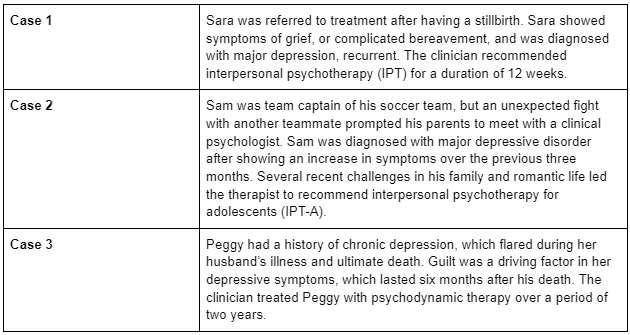
Step 3. Respond (240 mins)
After analyzing the case examples from Step 2, respond by writing a 300-750-word expository essay that covers the following key ideas:
- Importance of the counseling relationship between the patient and psychologist in the three case examples
- Key areas of new thinking on the therapy relationship that apply to the three case examples above
- Strategies to apply this thinking in the counseling practice for better outcomes.
Step 4. Share (10 mins)
Share your complete work by clicking on the “Add a new discussion topic” button under this post and pasting your work into the “Message” box. Make sure to reference others’ intellectual property when necessary. All references should follow 7th Edition APA formatting. For further instructions, see the resource on the Himmelfarb Health Sciences Library: APA citation resource (N.B. references are excluded from word counts).
Step 5. Interact (10 mins)
To complete the activity, you will need to reply to at least two posts made by your peers in a respectful and professional manner. Ensure that your post engages your peers' ideas by including a reflection on their comments, sharing ideas of other potential difficulties and parties involved, or asking thought-provoking questions. If a peer comments on your posting, please reply. To post a reply, click “Reply” on a particular discussion, write your feedback and then click on “Post to the forum.”
OPTIONAL Step 6: Interact (10 minutes)
If you would like to, you can reply to your peers' posts in a respectful and professional manner. Ensure that your post engages your peers' ideas by including a reflection on their comments, sharing ideas of other potential difficulties and parties involved, or asking thought-provoking questions. If a peer comments on your posting, please reply. To post a reply, click “Reply” on a particular discussion, write your feedback and then click on “Post to forum.”
-
Quiz: Module 16
To access the quiz, click on the name of the quiz provided above. On the following screen, click the "Preview quiz now" button to respond to the questions.
TO PASS THIS QUIZ YOU MUST OBTAIN A SCORE OF 3/5.
Not available unless: The activity Quiz: Module 15 is marked complete
- Describe counseling psychology.
-
Approximate time required for the readings for this lesson (at 144 words/minute): 6 hours and 50 minutes.
-
Students mustViewStart discussions: 1Post replies: 1Make forum posts: 2
In this activity, you will write and illustrate a psychology booklet in a way that is suitable to present to a lay audience.
Step 1. Study (30 mins)
Study the list of topic areas below (all of these topics were covered in the course):
- Foundations of Psychology
- Biopsychology
- Perception, Sensation, and Consciousness
- Human Lifespan Development
- Learning, Attitude, Motivation, and Emotion
- Cognition, Intelligence, and Memory
- Personality
- Health Psychology
- Abnormal Psychology and Psychological Disorders
- Social Psychology
- Industrial-Organizational Psychology
- Counseling Psychology
Step 2. Review and Reflect (30 mins)
Review the modules that are related to the topic areas, especially the topics that you are not familiar with.
Reflect on the strategies that you may use to present these psychological topics in a way that a lay audience would understand and would feel interested in.
Step 3. Write and Illustrate (330 mins)
Write and illustrate a psychology booklet to cover key information on these 12 topic areas. The key information presented can include definitions, the clinical relevance of the topic, scientific and health facts, treatment options, etc. The booklet should be suitable to present to a lay audience. The booklet must present these 12 topics in a way that a lay audience would be able to visualize, understand and comprehend the key ideas and concepts presented, and ideally, the audience would be able to retain the information acquired. Therefore, the booklet should contain images, graphics, illustrations, and language that are relatable to the audience. Furthermore, the following guidelines should be observed:
- The page orientation of your document must be Landscape.
- A book fold in the middle of the document must be visible.
- A 3mm margin to the document must be added as a safety zone to work within.
- Two pages of the booklet must be allotted to each one (1) of the 12 topic areas, within a 50-100 word limit for each topic.
- Based on the previous bullet point, the booklet is expected to have 24 pages and an overall 600-1200 word limit. Two extra pages may be added for the title page and a brief introduction.
- Microsoft Word or Google Docs may be used to do this final activity.
Example of layout for the booklet:
Step 4. Share (10 mins)
Share your complete work by clicking on the “Add a new discussion topic” button under this post and pasting your work into the “Message” box. Make sure to reference others’ intellectual property when necessary. Please note that if you include images or graphs taken from other sources (websites, reports, articles…), these need to be referenced as well. All references should follow 7th Edition APA formatting. For further instructions, see the resource on the Himmelfarb Health Sciences Library: APA citation resource (N.B. references are excluded from word counts).
Step 5. Interact (10 mins)
To complete the activity, you will need to reply to at least two posts made by your peers in a respectful and professional manner. Ensure that your post engages your peers' ideas by including a reflection on their comments, sharing ideas of other potential difficulties and parties involved, or asking thought-provoking questions. If a peer comments on your posting, please reply. To post a reply, click “Reply” on a particular discussion, write your feedback and then click on “Post to the forum.”
OPTIONAL Step 6: Interact (10 minutes)
If you would like to, you can reply to your peers' posts in a respectful and professional manner. Ensure that your post engages your peers' ideas by including a reflection on their comments, sharing ideas of other potential difficulties and parties involved, or asking thought-provoking questions. If a peer comments on your posting, please reply. To post a reply, click “Reply” on a particular discussion, write your feedback and then click on “Post to forum.”
-
-
-
Final Exam Quiz
To take the final exam, you must complete all quizzes and complete all the required activities. The final exam consists of 40 questions, and you will have 80 minutes to complete it. When the time is over, you will have two minutes to submit your attempt before it expires, and your progress is discarded. You will not be able to answer additional questions in the grace period.
To access the exam, click on the name of the exam provided above. On the following screen, click the "Preview quiz now" button to respond to the questions.
Not available unless: All of: ...Not available unless:-
All of:
- The activity Course Registration is marked complete
- The activity Pre-Test is marked complete
- The activity Quiz: Module 1 is marked complete
- The activity Quiz: Module 2 is marked complete
- The activity Quiz: Module 3 is marked complete
- The activity Quiz: Module 4 is marked complete
- The activity Quiz: Module 5 is marked complete
- The activity Quiz: Module 6 is marked complete
- The activity Quiz: Module 7 is marked complete
- The activity Quiz: Module 8 is marked complete
- The activity Quiz: Module 9 is marked complete
- The activity Quiz: Module 10 is marked complete
- The activity Quiz: Module 11 is marked complete
- The activity Quiz: Module 12 is marked complete
- The activity Quiz: Module 13 is marked complete
- The activity Quiz: Module 14 is marked complete
- The activity Quiz: Module 15 is marked complete
- The activity Quiz: Module 16 is marked complete
-
All of:
- The activity Peer Activity 1 - Importance and Ethics of Psychological Research [280 minutes] is marked complete
- The activity Peer Activity 2: Biological Influences in Psychology (278 minutes) is marked complete
- The activity Peer Activity 4: Consciousness (455 minutes) is marked complete
- The activity Discussion Forum 1: Human Lifespan Development (285 minutes) is marked complete
- The activity Discussion Forum 2: Habituation and Dishabituation (204 minutes) is marked complete
- The activity Discussion Forum 3: On Sexual Behavior and Motivation, Sexual Orientation and Gender Identity (245 minutes) is marked complete
- The activity Discussion Forum 4: Informing Processing and Human Memory (315 minutes) is marked complete
- The activity Discussion Forum 5: Memory Problems (295 minutes) is marked complete
- The activity Peer Activity 5: The Role of Memory in Learning and Retrieval Methods (340 minutes) is marked complete
- The activity Peer Activity 6: Personality in the Context of Culture, Personality Assessment, and Evolutionary Perspective (481 minutes) is marked complete
- The activity Discussion Forum 6: Positive Psychology (260 minutes) is marked complete
- The activity Peer Activity 7: Schizophrenia as a Mental Health Disorder (365 minutes) is marked complete
- The activity Peer Activity 8: Mental Health Therapy and Treatments (300 minutes) is marked complete
- The activity Discussion Forum 7: Agents of Socialization (365 minutes) is marked complete
- The activity Discussion Forum 8: The Role of Psychology in the Workplace (360 minutes) is marked complete
- The activity Discussion Forum 9: Counseling Relationships (385 minutes) is marked complete
- The activity Final Activity: Introduction to Psychology (410 minutes) is marked complete
-
All of:
-
-
 In this section, you can provide feedback about this course to help us make NextGenU.org better. Once evaluations are completed, you will be able to download your certificate of completion.
-
Course Evaluation QuestionnaireNot available unless: The activity Final Exam is complete and passed
-
Self Evaluation QuestionnaireNot available unless: The activity Final Exam is complete and passed
-
-
-
Students mustMark as done
-
Students mustMark as done
-
Students mustMark as done
-
-