War and Public Health
You do not have permission to view discussions in this forum.
-
Public HealthWar and Public HealthResume0% complete0% complete
-
Students mustStudent must submit this questionnaire to complete it
-
Students mustViewReceive a grade
Show More-
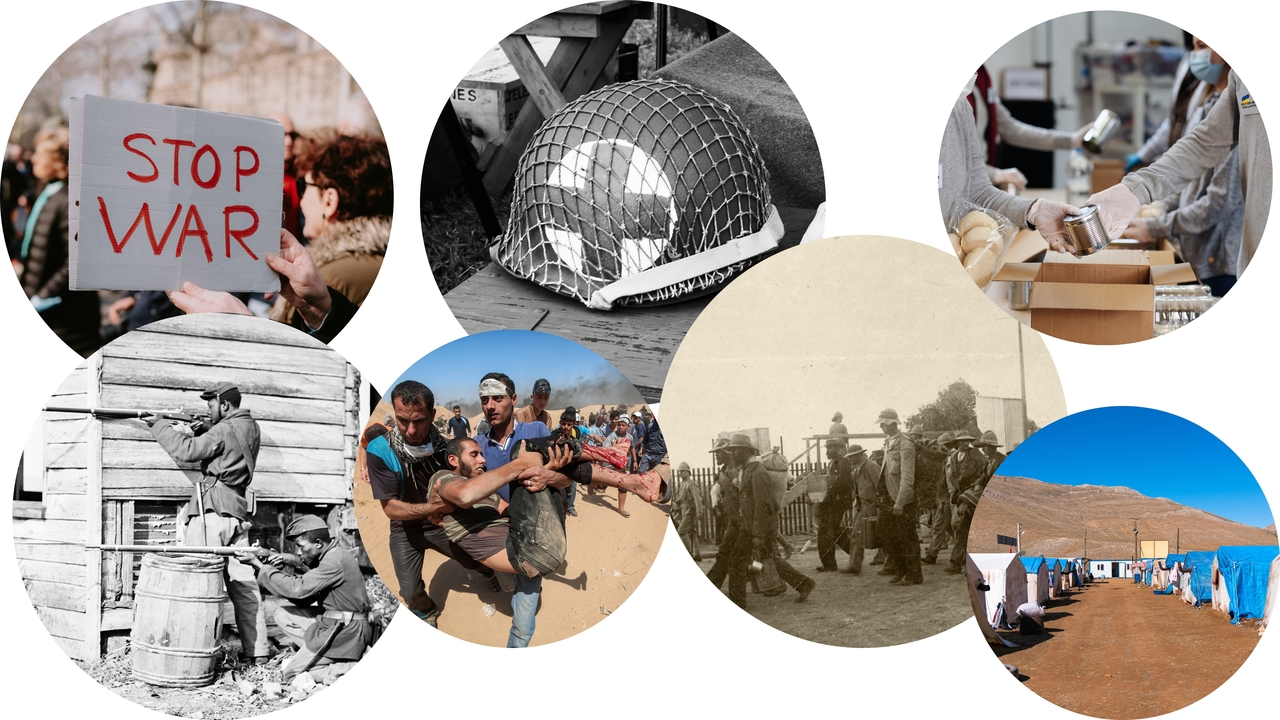

Welcome to the course War and Public Health. According to the World Health Organization, “nearly a quarter of the global population currently lives in settings affected by conflict, displacement, and natural disasters. Combined with weak national health systems, these settings make it difficult to deliver basic health services where they are most needed and would make the biggest difference” (2019).
This course provides a comprehensive overview of the public health consequences of war and conflict on different populations, including refugees, humanitarian responses to war, the role of public health workers in supporting response efforts, and measures to prevent the escalation of violence. This course also explores the public health consequences of past and present wars, including the Vietnam War, the Iraq War, the Democratic Republic of Congo, the Ukraine-Russian Conflict, and the double burden posed by the COVID-19 pandemic.
This War and Public Health course was developed in partnership with the University of Incarnate Word (UIW). Like all NextGenU courses, it is competency-based. This course utilizes course objectives from the University of Incarnate Word and competencies adapted from the European Medical Peace Work Network. The course uses learning resources from accredited, world-class organizations such as the World Health Organization, Centers for Disease Control and Prevention, the United Nations, and other professional and academic sources.
The course was designed by Pablo Baldiviezo, MD, MSc, DiplEd; Reisha Narine, BSc, MSc; Magali Collonnaz, MD, MPH MSc; Rhonda Prudent, BSc; Maryam Musa, MBBS; and Sara Wildman, BSc, and reviewed by Professor Dr. Richard George Holt, MD, D.Bioethics, MSE, MP Faculty of the UIW.
For publications on NextGenU.org’s courses’ efficacy, see NextGenU.org’s publication page. Subscribe to our newsletter to be notified of future updates and new courses and to be part of our community.
This course consists of (4) modules, which include:
Module 1: War and Public Health Introduction
Module 2: The Impact of War on Public Health
Module 3: The Impact of War on the Provision of Health Care for Vulnerable Populations
Module 4: Preventing and Responding to War and Violent ConflictsThe completion time for this course is estimated at 60 hours, comprising 15 hours of learning resources, 30 hours of studying and assimilating the content, and 15 hours of participating in learning activities and quizzes to assist the learners in synthesizing learning materials. This course is equivalent to 1 credit hour.
Upon completing the training (4 modules), you will need to complete a final exam. The final exam will be designed so you have three opportunities to answer correctly until the required score of 70% or higher is obtained.
At the end of each module, there is a practice quiz of multiple-choice questions. At the end of the course, after you’ve completed each module, quiz, and learning activity, you will have access to a final exam of multiple-choice questions, a discussion forum, and a chance to evaluate this course. Once you’ve passed the last test, you will be able to download a certificate of completion from NextGenU.org. We keep all of your personal information confidential, never sell any of your information, and only use anonymized data for research purposes. We are happy to report your testing information and share your work with anyone (your school, employer, etc.) at your request.
Engaging with this Course:
This free course is primarily intended for public health students, public health professionals, or anyone who would like to learn more about the consequences of war and conflict on public health, the importance of preserving public health in times of war, and effective public health interventions in conflict-affected areas.
To obtain a certificate, a learner must successfully complete:
- All the reading requirements,
- All quizzes and pass with 80% having unlimited attempts,
- All discussion forums,
- The final assignment,
- The final exam with a minimum of 80% and a maximum of 3 attempts, and
- The self and course evaluation forms.
NextGenU.org is happy to provide your institution with:- A link to and description of the course training so they can see all its components, including the cosponsoring universities and other professional organization cosponsors,
- Your grade on the final exam,
- Your work products (e.g., learning activities) and any other required or optional shared materials that you produce and authorize to share with them,
- Your evaluations -- course and self-assessments,
- A copy of your certificate of completion, with the cosponsoring universities and other organizations listed.
To obtain a degree, NextGenU.org cosponsors degree programs with institutional partners. To obtain a full degree cosponsored with NextGenU.org, registrants must be enrolled in a degree program as a student of a NextGenU.org institutional partner. If you think that your institution might be interested in offering a degree with NextGenU.org, contact us.We hope that you will find this a rewarding learning experience, and we count on your assessment and feedback to help us improve this training for future students.
Here are the next steps to take the course for credit:
- Complete the registration form.
- Begin the course with Module One: War and Public Health Introduction. In each lesson, read the description, complete all required readings and any required activity, and take the corresponding quizzes.
-
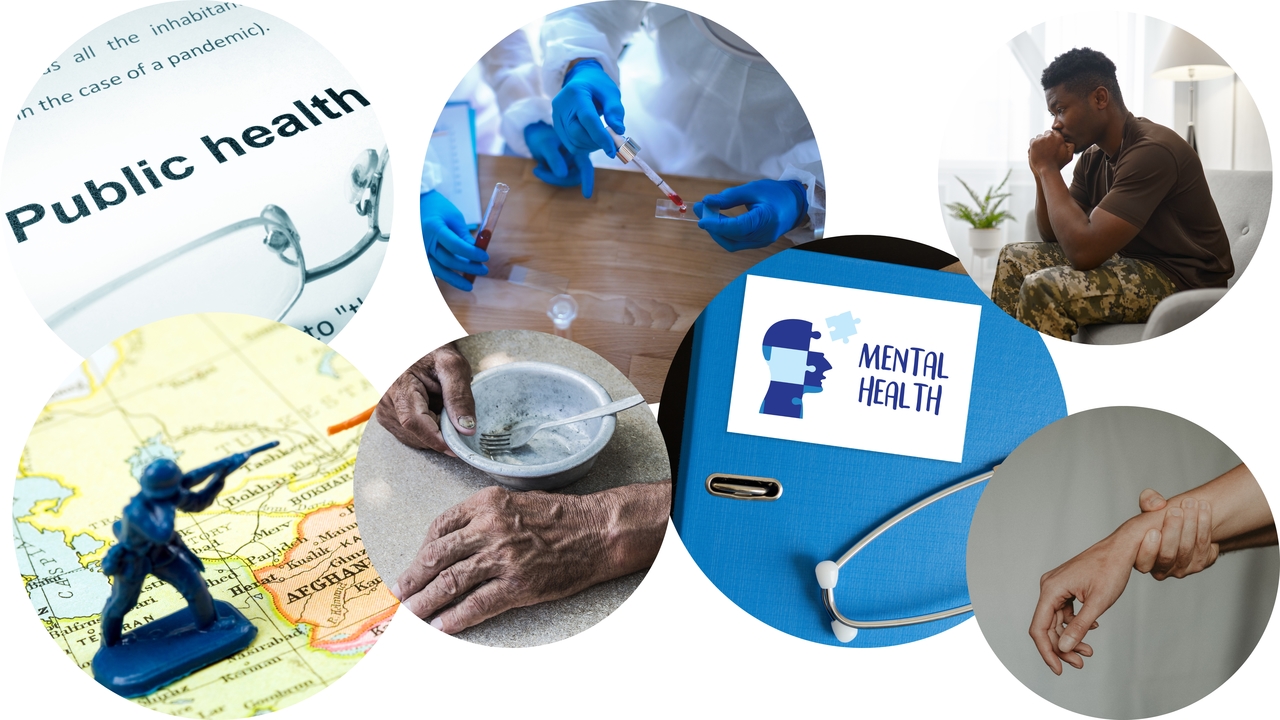 Instructional Goals covered in this module:
- Recognize the basic terminology for public health issues in war and discuss the global impact of violence/conflict on the types of interventions and policy responses.
- Examine and explain the root causes of war and conflict (e.g., social inequity and injustice) and their impact on public health.
- Recognize the basic terminology for public health issues in war and discuss the global impact of violence/conflict on the types of interventions and policy responses.
-
Upon completion of this lesson, you will be able to:Student Learning Outcomes:
- Define the key terms related to public health issues in war (morbidity and mortality, displacement, malnutrition, infectious diseases, psychological trauma, disability, civilians).
- Describe the impact of armed conflict on the delivery of public health programs and interventions.
- Explain how conflict affects public health policy responses.
- Discuss the consequences of war on economic activities and the distribution of resources.
- Discuss how violence and conflict can reduce the availability of resources and how this can impact people and communities.
- Identify and examine the public health issues that have arisen as a result of past wars.
- Discuss how war has impacted public health and health systems throughout history.
-
Required Learning Resources and Activities
-
Students mustView
Read the content under the topics "Definition/ Introduction". (6 minutes)
StatPearls - 2022
-
Students mustView
Read the definition for displaced person. (1 minute)
Eurpoean Commission - 2019
-
Students mustView
Read from the beginning of the page to "Scope of the problem" (excluded). (4 minutes)
WHO - 2021
-
Students mustView
Read the entire webpage. (5 minutes)
International Committee of the Red Cross - 2014
-
Students mustView
Read the content under the heading "What is emotional and psychological trauma?". (2 minutes)
HelpGuide.org - 2022
-
Students mustView
Read the following sections: (20 minutes)
- Abstract
- Introduction
- Background
- The impact of armed conflict on childhood immunization.
- Attacks on health-care facilities and workers.
- Forceful displacement and denial of access to health-care services.
- Armed conflict, infectious disease outbreaks and the reemergence of VPDs.Him Vaccine Immunother - 2020
-
Students mustViewRead the following sections: (5 minutes)
- Global strategy.
- Requirements for polio surveillance.
- Challenges in surveillance in armed conflicts.
- Context in Borno State, Nigeria. Conflict and Health - 2022 -
Students mustViewRead the entire article. (1 minute) World Health Organization - 2022
-
Students mustViewRead the content under "Neonatal health" and "NCDs."(4 minutes) Journal of public health - 2019
-
Students mustViewRead the following sections: (12 minutes)
- Introduction
- Aim
- Scope
- Objectives
- Public Health and Emergency Management Roles.
- The first paragraph of Concepts of Operations. Government of Canada - 2018 -
Students mustViewRead the content under "Guiding principles."(2 minutes) Government of Canada - 2018
-
Students mustViewRead the entire article. (7 minutes) The conference board of Canada - 2022
-
Students mustView
Read the entire webpage. (13 minutes)
Economicshelp.org - 2022 -
Students mustView
Under the section "Discussion ", read from "Internally displaced people and refugees" to "Education, health spending, and other factors" (included). (14 minutes)
International Journal of Surgery Global Health - 2020 -
Students mustView
Read the content under "Effects of conflict on health" and "Reduced access to quality healthcare."(4 minutes)
Journal of Public Health - 2019
-
Students mustView
Read the entire article. (13 minutes)
Future Microbiology - 2019 -
Students mustView
Read the content under "Tactics of war are a public health issue" and "Secular and inter-generational health effects."(7minutes)
Journal of public health - 2020 -
Students mustView
Read the following sections: (40 minutes)
- Introduction (first 2 paragraphs)
- The channels of long-term effect of WWII
- Mortality
- Hunger
- Measures of war exposure
- Microlevel regressions of adult health and SES outcomes
- Selection effects
- Models of channels of war
- Uneven consequences of war ConclusionsRev Econ Stat - 2014
-
Students mustViewStart discussions: 1
General Instructions:
In this learning activity, you will write a fictional journal entry or social media post about your life during the war.
Step 1: Review and Reflect
Review the required learning material for this module and reflect on the consequences of the war on health and public health services.
Step 2: Respond
Prepare a 500-600 word written piece discussing the consequences of war on public health from the perspective of a victim of the war. Ensure that your response addresses the following key points:
- How does the war’s environmental impact affect public health services? (I.e., access to water, food, transport, and sanitation services)
- How does the war impact physical health and well-being? (I.e., the spread of non-communicable diseases, malnutrition, illness, disability, and other public health concerns)
- How does war impact civilians’ mental health? (I.e., post-traumatic stress disorder (PTSD), depression, and anxiety)
Step 3: Share
To share your work, click the “Add a new discussion topic” button under this post and paste your work into the “Message” box. Make sure to reference others’ intellectual property when necessary. All references should follow 7th Edition APA formatting. For further instructions, see the resource on the Himmelfarb Health Sciences Library: APA citation resource (N.B. references are excluded from word counts).
Step 4: Interact
To complete the activity, you will need to reply to at least two posts made by your peers in a respectful and professional manner. Be sure your post engages your peers' ideas by including a reflection on their comments, sharing ideas on other potential difficulties and parties involved, or asking thought-provoking questions. If a peer comments on your posting, please reply. To post a reply, click “Reply” on a particular discussion, write your feedback and then click “Post to forum.”
OPTIONAL Step 5: Interact (10 minutes)
If you would like to, you can reply to your peers' posts in a respectful and professional manner. Ensure that your post engages your peers' ideas by including a reflection on their comments, sharing ideas of other potential difficulties and parties involved, or asking thought-provoking questions. If a peer comments on your posting, please reply. To post a reply, click “Reply” on a particular discussion, write your feedback and then click on “Post to forum.”
-
Students mustMark as done
Recommended Additional Readings
-
Students mustView
Read the entire article. (2 minutes)
Lancet - 2022 -
Students mustView
Read pages 3-14 of "War and Public Health: An Overview."(32 minutes)
Oxford University Press - 2008To access this book, you must follow the instructions provided on this link.
Take into account that at some point, some of the copies are not available and are in use. During this time, you will not be able to access a copy of the War and Public Health text. If so, please wait a moment and try to access the book later.
-
Students mustView
Read the content from "Attacks on healthcare facilities and attrition of health workers" to "Gender-based sexual violence and rape" (included). (10 minutes)
BMJ Global Health - 2022
-
Student Learning Outcomes:
Upon completion of this lesson, you will be able to:- Explain how social inequity, injustice, and health and education disparities can lead to war.
- Explain how structural violence can lead to the outbreak of conflict and how it can exacerbate and prolong existing conflicts.
- Explore the impact of war on access to other services such as transportation or communication.
- Explore the impact of war on access to essentials services including water, food, and sanitation.
- Outline the different ways in which war has influenced the spread of disease and other health concerns.
- Examine the physical and psychosocial impact of war on children (Injury, Illness, Malnutrition, Growth retardation, PTSD, Anxiety, Depression, ADHD.
- Examine the physical and psychosocial impact of war on women (gender-based violence, rape, HIV/AIDS, anxiety, PTSD, depression).
- Examine the physical and psychosocial impact of war on youth and elderly (injury, chronic illness, anxiety, depression, PTSD).
-
Required Learning Resources and Activities
-
Students mustView
Read the entire article. (4 minutes)
Small wars Journal - 2018 -
Students mustView
Read the following sections: Introduction and Discussion. (18 minutes)
Sage Journal - 2013 -
Students mustView
Read the following section: Introduction, Educational Inequalities Economic Inequalities, Demographic Inequalities. (12 minutes)
Global Data Lab - 2016 -
Students mustView
Read the following section: We must be white: Race and Class, Conclusion. (13 minutes)
Sage journals - 2019 -
Students mustView
Read the following sections: Introduction and Conclusion. (5 minutes)
Frontiers - 2022 -
Students mustView
Read the section: Impact of the conflict. (7 minutes)
Rethinking Yemen's Economy - 2022 -
Students mustView
Read the section: Impact of Russian Attacks and Sanctions on Transport. (5 minutes)
European Parliamentary Research Service - 2022 -
-
-
Students mustView
Read the following sections: Introduction, Results and Conclusions. (21 minutes)
Sustainability - 2021 -
Students mustView
Read the following sections: Introduction, Global Burden of Armed Conflict on Child Health on Child Health, Effect of Armed Conflict on Children's Physical Health, Effect of Armed Conflict on Children's Mental and Psychosocial Health. (21 minutes)
American Academics of Paediatrics - 2018 -
Students mustView
Read the following sections: Background and Discussion. (16 minutes)
Global Mental Health - 2018 -
Students mustView
Read the following sections: Mortality, Malnutrition, Non-fatal physical injuries and disabilities, Acute and infectious illness, Chronic and non-communicable diseases, Mental health, and Sexual and reproductive health. (26 minutes)
-
Students mustView
Read the section: Effect of Violence on Youth in LAMIC. (2 minutes)
Springler Link - 2013 -
Students mustView
Read the following sections: Abuses against older people in conflict, Not fleeing hostilities. (21 minutes)
Human Rights Watch - 2022 -
Quiz: Module 1
To access the quiz, click on the name of the quiz provided above. On the following screen, click the attempt quiz button to view the case studies and respond to the questions.
TO PASS THIS QUIZ YOU MUST OBTAIN A SCORE OF 80%.
Not available unless: The activity Course Registration is marked complete ...Not available unless:- The activity Course Registration is marked complete
- The activity Pre-Test is marked complete
-
Students mustMark as done
Recommended Additional Readings
-
Students mustView
Read the entire article. (8 minutes)
Nature human behaviour - 2022 -
Students mustView
Read the content under the chapter "Consequences of War" from pages 23 to 83. (2 hours 15 minutes)
To access this book, you must follow the instructions provided on this link.
Take into account that at some point, some of the copies are not available and are in use. During this time, you will not be able to access a copy of the War and Public Health text. If so, please wait a moment and try to access the book later.
Oxford University Press - 2008
-
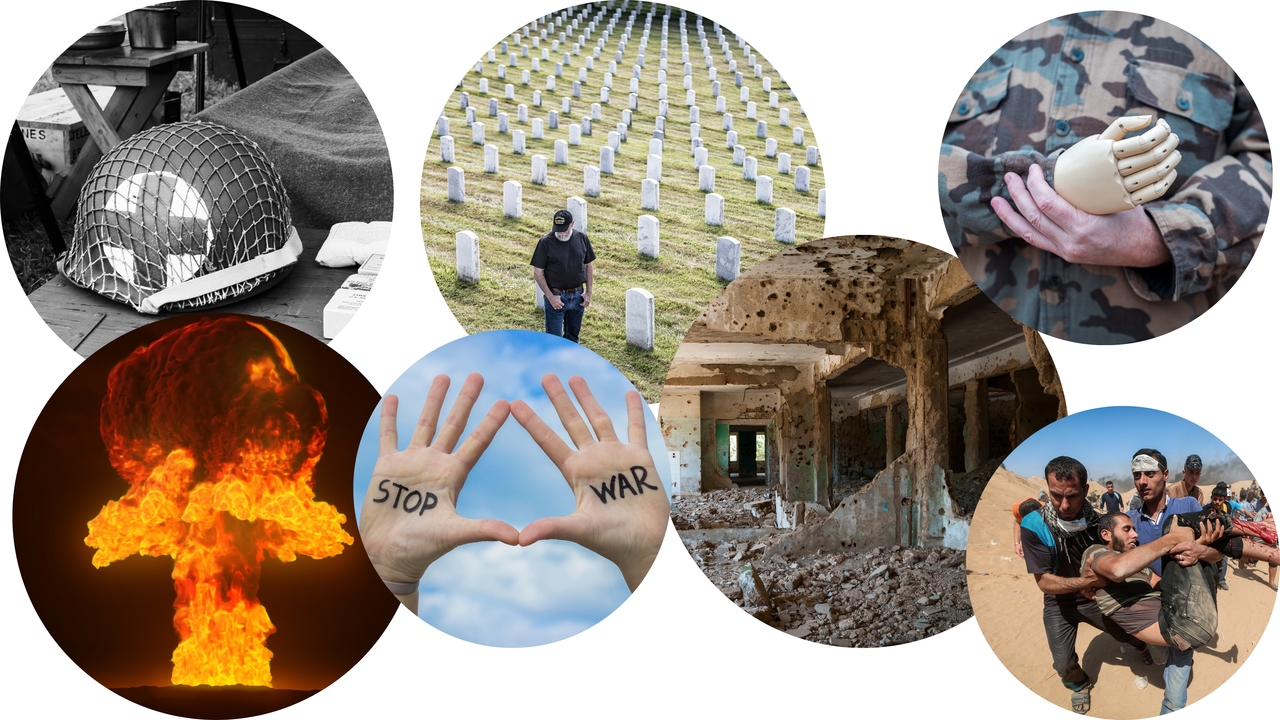 Instructional Goals covered in this module:
- Examine and discuss the health consequences, of a selected war in history, to populations including infectious disease, chronic health conditions, and environmental and health system infrastructure.
- Understand how the different weapons used in war impact public health (conventional, biological, chemical, and nuclear weapons)
- Predict the impact the threat of war has on public health.
- Examine and discuss the health consequences, of a selected war in history, to populations including infectious disease, chronic health conditions, and environmental and health system infrastructure.
-
Student Learning Outcomes:
Upon completion of this lesson, you will be able to:
- Examine the impact of the war in the Democratic Republic of Congo on the healthcare system and the exacerbation of the Ebola outbreak.
- Outline the immediate and long-term health impact of the Vietnam War.
- Explore the consequences of the war in Iraq on the environment and structures that support health.
- Examine the health impact of the Russia-Ukraine war on infectious diseases, chronic diseases, and disabilities.
- Outline the implications of the Russia- Ukraine conflict in managing the COVID-19 pandemic (infection rates, availability of PPE, vaccination programs).
- Explore the consequences of the destruction caused by the Russia-Ukraine war on the environment and on systems that support health.
- Illustrate the consequences of the war in Ethiopia on population health.
- Summarize the main types of weapons used in war (biological, chemical, nuclear, conventional, land mines).
- Discuss the health impact of the biological, chemical and conventional weapons and land mines used in war.
- Describe the immediate and long-term health consequences of the nuclear weapons used in war.
- Examine how armed conflict can lead to death, injuries, and disabilities among military personnel.
- Examine the consequences of armed conflict on death, injuries, and disabilities among civilians.
-
Required Learning Resources and Activities
-
Students mustView
Read the "Introduction," "Results," and "Discussion." (26 minutes)
Yale University - 2019
-
Students mustView
Read the background under "The Vietnam war and agent orange." (5 minutes)
Asian Economic Journal - 2022
-
Students mustView
Read the content under the following sections from Chapter 19, "Vietnam War:" (16 minutes)
- Immediate effects of the war (pg. 317)
- Health services during the war (pg. 317)
- Post-war and long-term effects of the war (pg. 323)
- Nutrition (pg. 326)To access this book, you must follow the instructions provided on this link.
Take into account that at some point, some of the copies are not available and are in use. During this time, you will not be able to access a copy of the War and Public Health text. If so, please wait a moment and try to access the book later.
Oxford University Press - 2018
-
Students mustView
Read the entire article. (16 minutes)
Reviews on Environmental Health - 2016
-
Students mustView
On page 257 of Chapter 15, "Iraq War," read the content under "Adverse effects on health services" and "Damage to the infrastructure that supports health." (2 minutes)
To access this book, you must follow the instructions provided on this link.
Take into account that at some point, some of the copies are not available and are in use. During this time, you will not be able to access a copy of the War and Public Health text. If so, please wait a moment and try to access the book later.
Oxford University Press - 2018
-
Students mustView
Read "Key health risks" (pgs. 2-4). (8 minutes)
World Health Organization - 2022
-
Students mustView
Read the entire article. (10 minutes)
The New England Journal of Medicine - 2022
-
Students mustView
Read the entire article. (7 minutes)
BMJ Global Health - 2022
-
Students mustView
Read the following sections:
- Environmental damage in Ukraine
- Long term health risks
- Unsafe water supply
- Military waste in Ukraine
- Nature in Ukraine is suffering
- Toxic weaponryWorld Economic Forum - 2022
-
Students mustView
Read the content under "Introduction" to "Gender-based sexual violence" (included). (14 minutes)
BMJ Global Health - 2022
-
Students mustView
Read the content under "Overview." (2 minutes)
World Health Organization - 2022
-
Students mustView
Read the content of Chapter 9, "Biological Weapons," from pages 135-142. (17 minutes)
To access this book, you must follow the instructions provided on this link.
Take into account that at some point, some of the copies are not available and are in use. During this time, you will not be able to access a copy of the War and Public Health text. If so, please wait a moment and try to access the book later.
Oxford University Press - 2008
-
Students mustView
In Chapter 8, "Chemical Weapons," read pages 117-124, which covers "The Basis and Major Classes of Chemical Agents," and pages 127-132 under "The Use of Chemicals Agents in War," "Terrorist Attacks and Chemical Agents," and "International Law and Control of Chemical Weapons Proliferation." (31 minutes)
To access this book, you must follow the instructions provided on this link.
Take into account that at some point, some of the copies are not available and are in use. During this time, you will not be able to access a copy of the War and Public Health text. If so, please wait a moment and try to access the book later.
Oxford University Press - 2008
-
-
-
Students mustView
Read the entire article. (3 minutes)
International campaign to ban landmines - 2022
-
Students mustView
Read the content under "Introduction," "What Is Agent Orange?" and "15 Diseases Caused by Agent Orange." (12 minutes)
Benefits.com - 2022
-
Students mustView
Read the content of Chapter 9, "Biological Weapons," under "Potential Biological Weapons and Their Adverse Health Effects" on pages 141-149. (18 minutes)
To access this book, you must follow the instructions provided on this link.
Take into account that at some point, some of the copies are not available and are in use. During this time, you will not be able to access a copy of the War and Public Health text. If so, please wait a moment and try to access the book later.
Oxford University Press - 2008
-
Students mustView
Read the entire article. (5 minutes)
NIH - 2013 -
Students mustView
To access this book, you must follow the instructions provided on this link Read the following -the content from 'Introduction of Landmines' on page 102 to 'Use of Landmines" on page 105. -'Medical Consequences of Mine Casualties' from page 107 -108. (12 minutes)
To access this book, you must follow the instructions provided on this link.
Take into account that at some point, some of the copies are not available and are in use. During this time, you will not be able to access a copy of the War and Public Health text. If so, please wait a moment and try to access the book later.
Oxford University Press - 2008
-
Students mustView
Read the entire webpage. (2 minutes)
United Nations - 2020
-
Students mustView
Read the content under Chapter 6, "Explosives," from pages 89-92. (7 minutes)
To access this book, you must follow the instructions provided on this link.
Take into account that at some point, some of the copies are not available and are in use. During this time, you will not be able to access a copy of the War and Public Health text. If so, please wait a moment and try to access the book later.
Oxford University Press - 2008
-
Students mustView
Read the entire article. (9 minutes)
Colombia University - 2012
-
Students mustView
To use this online archive, you need to create an account to enable your access to borrow the book and view the chapters.
Read the content of Chapter 10, "Health Impacts of the Use of Nuclear Weapons," from 153-158.. (11 minutes)Oxford University Press - 2008
-
Students mustView
Read the "Introduction" section. (9 minutes)
Statpearls publishing - 2022
-
Students mustView
Read the "Background" and "Discussion." (11 minutes)
BMC Public Health - 2022
-
Students mustView
Read the following sections: (28 minutes)
- Introduction
- Magnitude of the problem of mass war trauma in Africa
- The events of mass war trauma
- Common mental disorders: Anxiety, Depression and Post Traumatic Stress DisorderFrontiers - 2022
-
Students mustViewStart discussions: 1
General Instructions:
In this learning activity, you will examine the Ukraine-Russia conflict and discuss the resulting public health consequences.
Step 1: Review
Review the required learning material for this module.
Step 2: Respond
Prepare a 500-600 word written piece discussing the consequences of the Ukraine-Russia conflict on public health. Using supporting data to back up your arguments, you will ensure that your response addresses the following key points:
- The impact of the conflict on health systems and access to healthcare
- The impact of the war on health infrastructure
- The impact of the conflict on the health of the populations involved (e.g., civilians, military, and healthcare providers of war zones)
- The impact of the conflict on managing COVID-19 infections and the surge of COVID-19 patients needing hospital care
- The impact of the conflict on disrupting immunization campaigns for COVID-19 and other vaccine-preventable diseases
Step 3: Share
To share your work, click the “Add a new discussion topic” button under this post and paste your work into the “Message” box. Make sure to reference others’ intellectual property when necessary. All references should follow 7th Edition APA formatting. For further instructions, see the resource on the Himmelfarb Health Sciences Library: APA citation resource (N.B. references are excluded from word counts).
Step 4: Interact
To complete the activity, you will need to reply to at least two posts made by your peers in a respectful and professional manner. Be sure your post engages your peers' ideas by including a reflection on their comments, sharing ideas on other potential difficulties and parties involved, or asking thought-provoking questions. If a peer comments on your posting, please reply. To post a reply, click “Reply” on a particular discussion, write your feedback and then click “Post to forum.”
OPTIONAL Step 5: Interact (10 minutes)
If you would like to, you can reply to your peers' posts in a respectful and professional manner. Ensure that your post engages your peers' ideas by including a reflection on their comments, sharing ideas of other potential difficulties and parties involved, or asking thought-provoking questions. If a peer comments on your posting, please reply. To post a reply, click “Reply” on a particular discussion, write your feedback and then click on “Post to forum.”
-
Students mustMark as done
Recommended Additional Readings
-
Students mustView
Read the first page of the fact sheet under "What is a chemical weapon?" (3 minutes)
Organization for the Prohibition of Chemical Weapons - 2014
-
Students mustView
Read the content under "Abstract" and "Clinical manifestations."(10 minutes)
Eur J Microbiol Immunol - 2020
-
Student Learning Outcomes:
Upon completion of this lesson, you will be able to:- Discuss the economic, social, and health consequences of the threat of war and how it affects public health.
-
Students mustMark as done
Required Learning Resources and Activities
-
Students mustView
Read the entire article EXCEPT "Securing the future we want". (24 minutes)
Article 36 - 2015
-
Quiz: Module 2
To access the quiz, click on the name of the quiz provided above. On the following screen, click the attempt quiz button to view the case studies and respond to the questions.
TO PASS THIS QUIZ YOU MUST OBTAIN A SCORE OF 80%.
Not available unless: The activity Quiz: Module 1 is marked complete
-
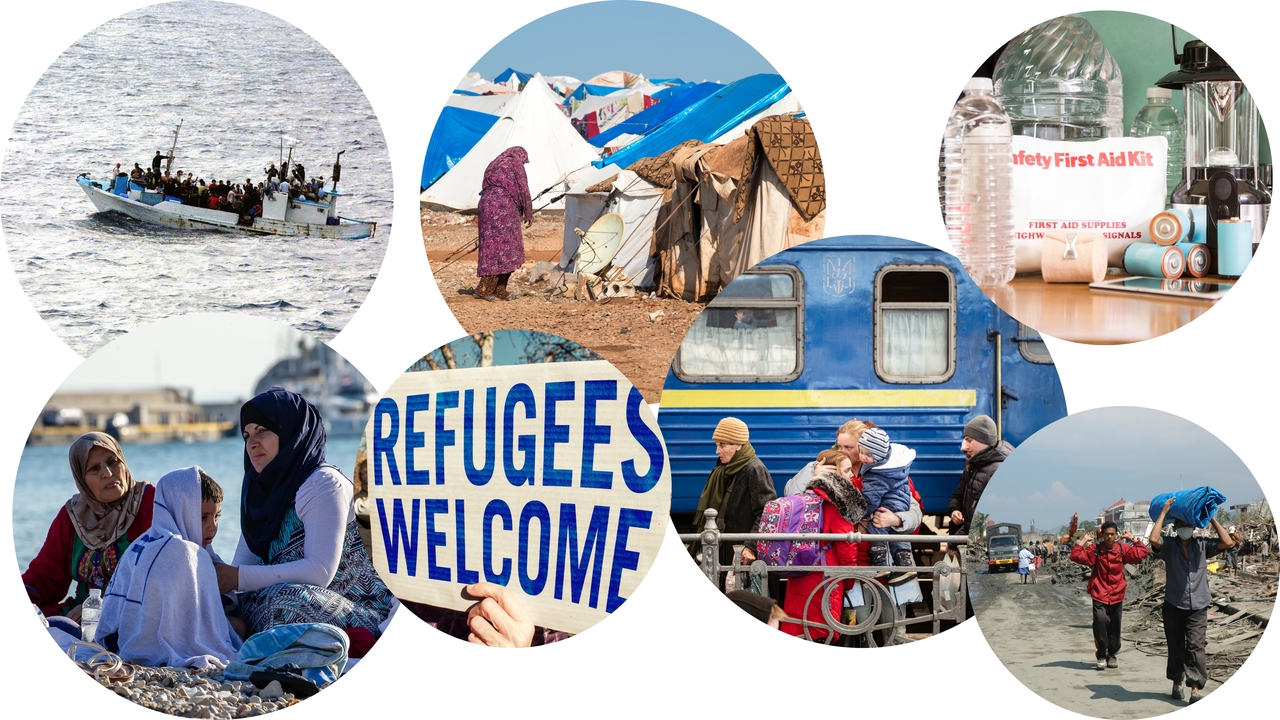 Instructional Goals covered in this module:
- Explore and justify the immediate public health needs and healthcare support of migrants and refugees fleeing war and conflict.
- Know and understand how armed conflicts affect the provision of medical aid and discuss strategies of peacebuilding through improving healthcare.
-
Student Learning Outcomes:
Upon completion of this lesson, you will be able to:- Describe the concepts related to migrants and refugees (internally displaced persons, refugees, migrants, asylum seekers).
- Discuss the public health needs of refugees and migrants.
- Discuss the challenges faced by refugees and migrants in accessing public health and public health services.
- Summarize the factors that contribute to the spread of disease among migrants and refugees.
- Explain the health consequences of war on the Syrian refugees.
- Explore the social and cultural factors that define the experiences of refugees and migrants.
- Examine the burden of refugees and immigrants on the health and public health infrastructure of host countries.
- Examine the public health impacts of mass migration and why it is important to support the health needs of migrants and refugees.
- Discuss the importance of inter-agency cooperation and partnership among organizations that protect refugees and immigrants.
- Discuss the roles of governments, international organizations, and non-governmental organizations (NGOs) in protecting the rights and well-being of refugees and internally displaced persons.
Click here to start this lesson-
Required Learning Resources and Activities
-
Students mustView
Read the first paragraph "1. Overview". (2 minutes)
UNHCR - 2022
-
Students mustView
Read the content under "Definitions: What Exactly Is a Refugee, an Asylum Seeker, and a Migrant?". (3 minutes)
Amnesty International - 2016
-
Students mustView
Read the entire document. (5 minutes)
United Nations
-
Students mustView
Read the content under "What are the main health needs of refugees?". (2 minutes)
UNHCR - 2022
-
-
Students mustView
Read the content under the headings: ( 8 minutes)
- Refugees and migrants: common health problems.
- Migration and communicable diseases: no systematic association.
- Communicable diseases: interventions to prevent the spread.
- Interventions to prevent food and waterborne diseases.WHO - 2017
-
Students mustView
Read the content under "Introduction," "Current health status for the population inside Syria," and "Public health indicators of the Syrian population." (28 minutes)
BMC - Globalisation and Health - 2021
-
Students mustView
Read the following sections: (17 minutes)
- Introduction
- Individual-level themes
- Organization-level themesHealth Equity Journal - 2021
-
Students mustView
Read the entire article. (6 minutes)
NIH - 2020
-
Students mustView
Read the contents under "International frameworks on migration and health" and "Main text" to "Policies in a regional and global context," "Framing," and "Conclusion." (28 minutes)
BMC - 2018
-
Students mustView
Read the content under "Cooperation at global level" on page 32 and "Global cooperation on migration" on page 33. (4 minutes)
UNHCR - 2016
-
Students mustView
Read the content under: (25 minutes)
- Introduction
- Recommendation
- LOOKING AHEAD: OPPORTUNITIES FOR REDUCING INTERNAL DISPLACEMENT AND MEETING LOCAL DEVELOPMENT PRIORITIESCouncil of Europe - 2019
-
Students mustView
Read "Part 3" and "Part 4" on pages 27- 41. (40 minutes)
Ganhri.org - 2019
-
Students mustView
Read from "ROLES AND RESPONSIBILITIES OF INTERNATIONAL ORGANIZATIONS AND NON-STATE ACTORS" to the end of the document. (25 minutes)
WHO - 2019
-
Students mustViewStart discussions: 1
General Instructions:
In this learning activity, you will discuss the impact of war on Syrian refugees.
Step 1: Review
Review the required learning material for this module.
Step 2: Respond
Prepare a 500-600 word written piece discussing the war's impact on Syrian refugees. Using supporting data to back up your arguments, you will ensure your response addresses the following key points:
- What challenges do Syrian refugees face in accessing health and public health services?
- How is the Syrian Civil War affecting children's health and development, i.e., nutritional deficiencies among refugees, malnutrition, etc.?
- How is it impacting general population health?
- Where are Syrian refugees migrating, and how are host countries supporting the health needs of the refugees?
- How has the COVID-19 pandemic impacted Syrian refugees?
- What is the role of international organizations and NGOs in protecting the rights of Syrian refugees?
Step 3: Share
To share your work, click the “Add a new discussion topic” button under this post and paste your work into the “Message” box. Make sure to reference others’ intellectual property when necessary. All references should follow 7th Edition APA formatting. For further instructions, see the resource on the Himmelfarb Health Sciences Library: APA citation resource (N.B. references are excluded from word counts).
Step 4: Interact
To complete the activity, you will need to reply to at least two posts made by your peers in a respectful and professional manner. Be sure your post engages your peers' ideas by including a reflection on their comments, sharing ideas on other potential difficulties and parties involved, or asking thought-provoking questions. If a peer comments on your posting, please reply. To post a reply, click “Reply” on a particular discussion, write your feedback and then click “Post to forum.”
OPTIONAL Step 5: Interact (10 minutes)
If you would like to, you can reply to your peers' posts in a respectful and professional manner. Ensure that your post engages your peers' ideas by including a reflection on their comments, sharing ideas of other potential difficulties and parties involved, or asking thought-provoking questions. If a peer comments on your posting, please reply. To post a reply, click “Reply” on a particular discussion, write your feedback and then click on “Post to forum.”
-
Students mustMark as done
Recommended Additional Readings
-
- Describe the concepts related to migrants and refugees (internally displaced persons, refugees, migrants, asylum seekers).
-
Student Learning Outcomes:
Upon completion of this lesson, you will be able to:
- Discuss how violent conflicts can impede the delivery of medical aid to the general population.
- Summarize how different public health strategies can be used to prevent war.
- Discuss the role of public health in the structural prevention of war at the primary level through effective negotiation and communication.
-
Students mustMark as done
Required Learning Resources and Activities
-
Students mustView
Read "Introduction," "Results," and "Discussion." (33 minutes)
Wiley Online Library - 2022
-
Students mustView
Read the entire document. (5 minutes)
The Lancet - 2022
-
Students mustView
Read the content under "A PUBLIC HEALTH PERSPECTIVE ON THE PREVENTION OF WAR" and "PUBLIC HEALTH SKILLS RELEVANT TO PREVENTING WARS." (14 minutes)
NCBI - 2014
-
Quiz: Module 3
To access the quiz, click on the name of the quiz provided above. On the following screen, click the attempt quiz button to view the case studies and respond to the questions.
TO PASS THIS QUIZ YOU MUST OBTAIN A SCORE OF 80%.
Not available unless: The activity Quiz: Module 2 is marked complete
-
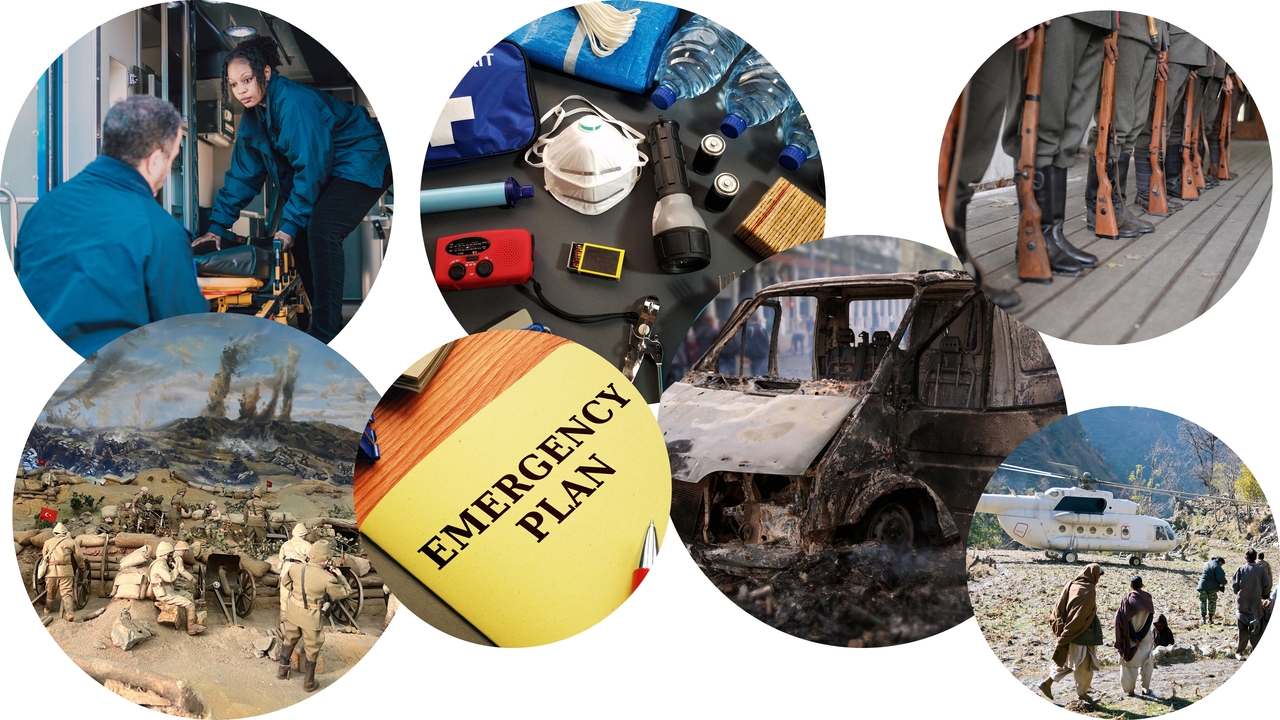 Instructional Goals covered in this module:
- Evaluate and discuss approaches to the prevention of war and conflict through advocacy, measurement and application of epidemiological methods, promotion of health and social equity.
- Develop skills required to teach emergency preparedness in the health care professions.
- Apply humanitarian law and human rights principles to the prevention of war and preparedness responses in conflict or war situations.
- Respect others in both spoken and written correspondence by responding post or synchronous sessions in a professional manner.
- Evaluate and discuss approaches to the prevention of war and conflict through advocacy, measurement and application of epidemiological methods, promotion of health and social equity.
-
Student Learning Outcomes:
Upon completion of this lesson, you will be able to:
- Describe the strategy for the prevention of war using the socio-ecological model.
- Outline the different public health actions that can be taken to prevent war and promote peace (peace advocacy, peace research, international peace work).
- Outline the role of public health professionals in preventing war and its consequences.
- Examine strategies for peace advocacy and conflict resolution.
Click here to start this lesson-
Required Learning Resources and Activities
-
Students mustView
Read the entire webpage. (2 minutes)
CDC - 2022
-
Students mustView
Read the entire page. (7 minutes)
CDC - 2022
-
Students mustView
Read the entire page. (5 minutes)
The Lancet - 2022
-
Students mustView
Read the content under the heading "The prevention principle: addressing the precursors of conflict" and "Conclusion". (6 minutes)
BMJ Nutrition, Prevention and Health - 2020
-
Students mustView
Read the content under ''Context". (10 minutes)
Government of Canada - 2019 -
Students mustView
Read the content under "A framework to guide public health" from pages 340-345. (12 minutes)
To access this book, you must follow the instructions provided on this link.
Take into account that at some point, some of the copies are not available and are in use. During this time, you will not be able to access a copy of the War and Public Health text. If so, please wait a moment and try to access the book later.
Newyork: Oxford University Press - 2008
-
Students mustView
Read the content under Chapter 28, "Toward a Culture of Peace" from pgs 452-460. (27 minutes)
To access this book, you must follow the instructions provided on this link.
Take into account that at some point, some of the copies are not available and are in use. During this time, you will not be able to access a copy of the War and Public Health text. If so, please wait a moment and try to access the book later.
Newyork: Oxford University Press - 2008
-
Students mustView
Under Introduction; read the fifth paragraph. (6 minutes)
Terrorism and political violence - 2021
-
Students mustView
Read the entire article. (14 minutes)
JSTOR - 2016
-
Students mustMark as done
Recommended Additional Readings
-
Students mustView
Read the content under "Socio-ecological public health framework for preventing war." (5 minutes)
American Journal of Public Health - 2014
-
Students mustView
Read from "Continuation of the conflict, complicated mediations and failed negotiations" to "Assad in Geneva I Statement..." (10 minutes)
Research Gate - 2021
-
Student Learning Outcomes:
Upon completion of this lesson, you will be able to:- Define the concepts related to public health emergency preparedness (capacity, coordination, emergency, risk assessment, operational readiness, governance, etc.)
- Describe the importance of multisectoral collaboration for public health emergency preparedness and response.
- Summarize the different types of coordination that can take place during public health emergencies.
- Describe the role of the WHO in public health emergency preparedness and response, including the key principles of the WHO's Emergency Response Framework.
- Discuss how some countries (such as the U.S.) can assist other countries in their response to public health emergencies.
- Explain the importance and purpose of creating alternative care sites in public health emergencies.
- Discuss the role and importance of crisis communication during conflicts.
- Describe the differences between international humanitarian law and international human rights law.
- Discuss how International Human Rights Law protects the rights of people in peace and war.
- Discuss how International Human Rights Law protects detainees from torture in times of war and peace.
- Explain how international humanitarian law protects war victims from the effects of armed conflict.
- Discuss how humanitarian principles and human rights can be used to build peace and prevent further violence in conflict zones.
- Discuss the importance of developing a legal framework for public health emergency responses.
- Explain how the global legal framework for public health emergency preparedness affects national and local responses to public health emergencies.
-
Students mustMark as done
Required Learning Resources and Activities
-
Students mustView
Read the entire article. (21 minutes)
Journal of Epidemiology and community medicine - 2007
-
Students mustView
Read the Executive Summary (page v) and section "2.4 Stakeholders relevant for health emergency preparedness and health security" (pages 5 to 7). (11 minutes)
World Health Organization - 2020
-
Students mustView
Read the section "Coordination." (2 minutes)
Intechopen - 2021
-
Students mustView
Read the content under "Principles for Emergency Preparedness." (4 minutes)
World Health Organization - 2017
-
Students mustView
Read the entire article. (1minute)
World Health Organization - 2022
-
Students mustView
Read the following sections: "Abstract" and "Introduction: Why Have an Alternative Care Site?". (2 minutes)
Western Journal of Emergency Medicine - 2020
-
Students mustView
Read the entire article. (10 minutes)
Institute for Security + Technology - 2022
-
Students mustView
Read the entire article. (16 minutes)
International Committee of the Red Cross - 2015
-
Students mustView
Read the entire article. (4 minutes)
European Commission - 2022
-
Students mustView
Read Chapter 3, "War and Human Rights," starting from "War and Intellectual Corruption: Justifying Violations" to the end of the chapter (pages 44-49). (17 minutes)
To access this book, you must follow the instructions provided on this link.
Take into account that at some point, some of the copies are not available and are in use. During this time, you will not be able to access a copy of the War and Public Health text. If so, please wait a moment and try to access the book later.
Newyork: Oxford University Press - 2008
-
Students mustView
Read the entire webpage. (16 minutes)
International Committee of the Red Cross - 2014
-
Students mustView
Read page 13. (2 minutes)
Canadian Red Cross
-
Students mustView
Read the entire article. (4 minutes)
ICRC - 2010
-
Students mustView
Read "Overview," "'Relevance for emergency operation," and "Description and guidance." (4 minutes)
ACF International - 2013
-
Students mustView
Read from the "Introduction" to "Human Rights and Positive Peace." (7 minutes)
International Peace Institute - 2017 -
Students mustView
Read the content under "Introduction" and "The role of PHLP in emergency response." (3 minutes)
Global Health Action - 2015
-
Students mustView
Read the "Background" and "Discussion." (17 minutes)
BMC Public Health - 2018
-
Students mustView
Read the entire article. (2 minutes)
International Journal of Qualitative Studies in Health and Well-being - 2016
-
Students mustView
Read the entire article. (13 minutes)
Indian Journal of Anaesthesia - 2016
-
Students mustViewStart discussions: 1
General Instructions:
In this learning activity, you will select one of the wars identified below and discuss the role of emergency preparedness and response.
Step 1: Select
Select a particular war or conflict of your interest from the selection below.
- Syrian Civil War
- Ukraine-Russia Conflict
- The Second Congo War
- Afghanistan War
- Iraq War
Step 2: Respond
Based on the war you have selected above, prepare a 500-600 word written piece discussing the war as it relates to emergency preparedness and response. Using supporting data to back up your arguments, ensure your response answers the following key questions:
- What are the main needs of the population that have to be addressed?
- What have international organizations/NGOs done to alleviate health consequences and human suffering?
- Were the measures effective in mitigating the health consequences?
- What could have been done differently?
- What is the role of other countries, such as the U.S., in assisting countries to respond to the identified war/conflict?
Step 3: Share
To share your work, click the “Add a new discussion topic” button under this post and paste your work into the “Message” box. Make sure to reference others’ intellectual property when necessary. All references should follow 7th Edition APA formatting. For further instructions, see the resource on the Himmelfarb Health Sciences Library: APA citation resource (N.B. references are excluded from word counts).
Step 4: Interact
To complete the activity, you will need to reply to at least two posts made by your peers in a respectful and professional manner. Be sure your post engages your peers' ideas by including a reflection on their comments, sharing ideas on other potential difficulties and parties involved, or asking thought-provoking questions. If a peer comments on your posting, please reply. To post a reply, click “Reply” on a particular discussion, write your feedback and then click “Post to forum.”
OPTIONAL Step 5: Interact (10 minutes)
If you would like to, you can reply to your peers' posts in a respectful and professional manner. Ensure that your post engages your peers' ideas by including a reflection on their comments, sharing ideas of other potential difficulties and parties involved, or asking thought-provoking questions. If a peer comments on your posting, please reply. To post a reply, click “Reply” on a particular discussion, write your feedback and then click on “Post to forum.”
-
Quiz: Module 4
To access the quiz, click on the name of the quiz provided above. On the following screen, click the attempt quiz button to view the case studies and respond to the questions.
TO PASS THIS QUIZ YOU MUST OBTAIN A SCORE OF 80%.
Not available unless: The activity Quiz: Module 3 is marked complete -
Students mustMark as done
Recommended Additional Readings
-
Students mustView
Read "4.2 Multisectoral coordination for preparedness" (pages 19-22). (7 minutes)
World Health Organization - 2021
-
Students mustView
Read the content under Chapter 21 "International Law" from Pages 357-367. (33 minutes)
To access this book, you must follow the instructions provided on this link.
Take into account that at some point, some of the copies are not available and are in use. During this time, you will not be able to access a copy of the War and Public Health text. If so, please wait a moment and try to access the book later.
Newyork: Oxford University Press - 2008
-
Students mustView
To use this online archive, you need to create an account to enable your access to borrow the book and view the chapters.
Read the content under Chapter 14, "Detainees and the New Face of Torture," from pages 227-237. (30 minutes)To access this book, you must follow the instructions provided on this link.
Take into account that at some point, some of the copies are not available and are in use. During this time, you will not be able to access a copy of the War and Public Health text. If so, please wait a moment and try to access the book later.
Newyork: Oxford University Press - 2008
-
Students mustView
Read from the "Rights of a prisoner of war" to the end of the article. (14 minutes)
Research Gate - 2010
-
Students mustView
Read the sections: "Health workers under attack", and "Global action on health workers in conflict: policy imperatives". (26 minutes)
The Lancet - 2017
-
Students mustView
Read the content under Chapter 22, "The Roles of Humanitarian Assistance Organizations," on pages 369-379. (26 minutes)
To access this book, you must follow the instructions provided on this link.
Take into account that at some point, some of the copies are not available and are in use. During this time, you will not be able to access a copy of the War and Public Health text. If so, please wait a moment and try to access the book later.
Newyork: Oxford University Press - 2008
-
Students mustView
Read pages 73 - 78. (18 minutes)
IFRC - 2021
-
-
Students mustViewStart discussions: 1
General Instructions
In this learning activity, you will be required to select a public health issue linked to one of the wars identified below. This learning activity requires you to apply everything you have learned from the previous modules.
Step 1: Select
Select one of the topics below regarding a public health outbreak and an identified war:
- Ukraine-Russia War & COVID-19 Outbreak
- The Democratic Republic of the Congo and Ebola Outbreak
Step 2: Respond
Prepare a 1000-1500 word commentary based on your selected topic. Using supporting data to back up your arguments, ensure that your response answers the following key questions:
- Discuss the epidemiological and supporting facts that illustrate how the war has impacted the identified public health issue
- Discuss how the war has impacted the country’s economic, social, and health domains and how this has specifically impacted individuals’ access to health services. (i.e., access to clean water, food, sanitation, and the risk of contracting communicable diseases)
- Discuss what public health strategies could have been employed to help mitigate the health consequences of war
- Discuss how international bodies, such as the WHO, have responded to the public health emergency
- Discuss how humanitarian principles and human rights were/can be used to build peace and prevent further violence in identified conflict zones
- Discuss how humanitarian organizations can play a role in strengthening war emergency preparedness capabilities
Step 3: Share
To share your work, click the “Add a new discussion topic” button under this post and paste your work into the “Message” box. Make sure to reference others’ intellectual property when necessary. All references should follow 7th Edition APA formatting. For further instructions, see the resource on the Himmelfarb Health Sciences Library: APA citation resource (N.B. references are excluded from word counts).
Step 4: Interact
To complete the activity, you will need to reply to at least two posts made by your peers in a respectful and professional manner. Be sure your post engages your peers' ideas by including a reflection on their comments, sharing ideas on other potential difficulties and parties involved, or asking thought-provoking questions. If a peer comments on your posting, please reply. To post a reply, click “Reply” on a particular discussion, write your feedback and then click “Post to forum.”
-
-
-
Final Exam Quiz
To take the final exam, you must complete all quizzes and complete all the required activities. The final exam consists of 40 questions, and you will have 40 minutes to complete it. When the time is over, you will have two minutes to submit your attempt before it expires, and your progress is discarded. You will not be able to answer additional questions in the grace period.
To access the exam, click on the name of the exam provided above. On the following screen, click the attempt quiz button to respond to the questions.
Not available unless: All of: ...Not available unless:-
All of:
- The activity Course Registration is marked complete
- The activity Pre-Test is marked complete
- The activity Quiz: Module 1 is marked complete
- The activity Quiz: Module 2 is marked complete
- The activity Quiz: Module 3 is marked complete
- The activity Quiz: Module 4 is marked complete
-
All of:
- The activity Discussion forum: Public health consequences of war through the eyes of a victim (150 minutes) is marked complete
- The activity Discussion forum: The public health consequences of Ukraine- Russia Conflict (270 minutes) is marked complete
- The activity Discussion forum: The public health consequence of the war on Syrian refugees (270 minutes) is marked complete
- The activity Discussion forum: Responding to War and Violent Conflicts (270 minutes) is marked complete
- The activity Discussion forum: War and Violent conflicts amid a public health outbreak (540 minutes) is marked complete
-
All of:
-
-
 In this section, you can provide feedback about this course to help us make NextGenU.org better. Once evaluations are completed, you will be able to download your certificate of completion.
-
Course Evaluation QuestionnaireNot available unless: The activity Final Exam is marked complete
-
Self Evaluation QuestionnaireNot available unless: The activity Final Exam is marked complete
-
-
-
Students mustMark as done
-
-