Obstetrics and Gynecologic Clerkship for Medical Students
You do not have permission to view discussions in this forum.
-
Medicine CoursesObstetrics and Gynecologic Clerkship for Medical StudentsResume0% complete0% complete
Introduction
-
Students mustStudent must submit this questionnaire to complete it
-
Students mustViewReceive a grade
Show More-
Obstetrics and Gynecologic Homepage
Highlighted

Welcome to our Obstetrics and Gynecology: Resource Library for Medical Students. This digital repository is dedicated to equipping you with essential knowledge and skills in obstetrics and gynecology. Dive into various resources spanning critical topics — from maternal health and reproductive science to specific clinical practices in the specialty.
Our library has been meticulously curated, grounding itself in the “APGO's Medical Student Education Objectives.” Like all NextGenU.org materials, this library was developed as a joint effort of expert instructional designers and subject matter experts. The subject matter expert involved in reviewing these materials is Vaneza Valentina L. Penolio, MD, FPOGS, FPSRM, FPSGE, FPSUOG, Department of Obstetrics and Gynecology of Bicol Regional Hospital and Medical Center and Vasant Basdeo, MD. Primary Care Physician. Our instructional designers participating in the development of this library are Alixandria Ali, BSc; Pablo Baldiviezo, MD, MSc; Carolina Bustillos, MD, DiplEd; Daniel Luna, MD, DiplEd; and Shivani Boodram, PhD, BSc.
The library is enriched with resources from globally recognized institutions: the Association of Professors of Gynecology and Obstetrics (APGO), the International Federation of Gynecology and Obstetrics (FIGO), the American College of Obstetricians and Gynecologists (ACOG), and World Health Organization (WHO), to name a few.
For publications on the efficacy of NextGenU.org’s courses, see our publication page.
This library is divided into five modules:
- Module 1: Introduction to Patient Attention
- Module 2: Obstetrics
- Module 3: Gynecology
- Module 4: Reproductive Endocrinology, Infertility, and Other Related Topics
- Module 5: Neoplasia
- Module 6: Human Sexuality
- Module 7: Violence Against Women
- Module 8: Osteopathy Women’s Health Care
Beyond textual content, the library harnesses multimedia elements like videos. These are case scenarios presented in discussion forum formats, leveraging the power of collective insights, fostering critical thinking, and promoting collaborative learning.
- Readings: Offer foundational knowledge with comprehensive details for a deep understanding. They support self-paced learning, allowing you to achieve mastery over concepts.
- Videos: Complement readings by visually representing complex procedures and concepts. They enhance the grasp of practical aspects, like surgeries and patient interactions, which are crucial in ObGyn.
- Case Scenarios in Discussion Forums: Bridge theoretical knowledge with real-world application. These interactive forums promote peer-to-peer learning, fostering clinical reasoning and communication skills while simulating real-life clinical situations.
Engaging with this library:
You may browse these resources for free; there are no requirements. We hope that you will find this a rewarding learning experience. Subscribe to our newsletter to be notified of future updates, including interactive case studies and quizzes to complement this library.
Professional Ethics:
It is imperative to acknowledge and act within the perimeter of one's skills. Always extend care within the boundaries of your expertise. If a situation arises that exceeds your knowledge or experience, it is not only acceptable but crucial to seek guidance from seasoned health workers. This manual is an invaluable tool, yet it cannot replace the nuanced learning derived from hands-on training with a seasoned instructor. Embrace every opportunity to augment your skills and knowledge.
In our curriculum, the topic of abortion is addressed with the utmost seriousness and respect. We prioritize reducing maternal mortality due to unsafe abortions by emphasizing the need for rigorous training and professional, safe abortion practices. We stand by the principle that every medical professional should be equipped with comprehensive knowledge to safeguard the well-being of every patient.
-
This module aims to develop your competence in the medical interview and physical examination of women while emphasizing the importance of ethical, social, and diverse perspectives in providing culturally competent health care. You will learn to conduct comprehensive women's medical interviews covering various domains and assess risks for different health conditions. Additionally, you will gain skills in performing sensitive physical examinations, such as breast and pelvic exams. The module will also cover topics like cervical cancer and STI screening, diagnosis and management planning, emotional dimensions and interpersonal communication, legal and ethical issues, and preventive care and health maintenance. By completing this module, you'll be equipped to provide holistic care, address patient needs, and consider socio-cultural factors in your practice. Competency covered in this module:
-
Student Learning Outcomes:
Upon completion of this module, students you will be able to:- Complete a comprehensive women’s medical interview, including: Gyneco/Obstetric history, Family/genetic history and present illnes in general.
- Assess risk for unintended pregnancy, sexually transmitted infections, cervical dysplasia, breast malignancy, gynecologic malignancies, nutrition/obesity, domestic violence, and eating disorders in the context of population health, including social and environmental factors.
- Recommend screening tests for malignancy, infection, and other conditions, with consideration of population health and value-based care.
- Demonstrate interpersonal and communication skills that build trust by addressing relevant factors, including culture, ethnicity, language/literacy, socioeconomic status, spirituality/ religion, age, sexual orientation, and disability.
- Produce well-organized written and oral reports to communicate the results of the ob-gyn and general medical interview
-
Students mustMark as done
Required Learning Resources and Activities
-
-
Students mustView
Read the content on page 1 and 2 until "Family history". (10 minutes)
FIGO
-
Students mustView
Reading the content under the headline "History". (8 minutes)
MSD MANUAL Professional Version - 2022
-
Students mustView
Watch the entire video. (8 minutes)
AVRC HQ and UC San Diego Health Visual Media Group. - 2019
-
Students mustView
Reading under headlines (20 minutes)
- Screening Recommendations
- Recommended Clinician Timeline for Screening for Syphilis, HIV, HBV, HCV, Chlamydia, and Gonorrhea.
- Targeted Testing and Treatment of Women at High Risk for Tuberculosis.CDC - 2022
-
Students mustView
Read the content under the heading "The ADDRESSING Framework". (8 minutes)
APA - 2016
-
Students mustView
Read the entire webpage. (11 minutes)
ACOG - 2016
- Complete a comprehensive women’s medical interview, including: Gyneco/Obstetric history, Family/genetic history and present illnes in general.
-
Student Learning Outcomes:
Upon completion of this module, students you will be able to:- Describe the Normal female anatomy and the appearance of common pathology of the urogenital tract and of common breast changes and disorders.
- Describe the female reproductive system pelvic organs and their relevance to perform a physical examination.
- Describe the recommendations for screening breast and pelvic examinations in women’s health care maintenance, with consideration of population health and value-based care.
- Demonstrate interpersonal communication skills to establish trust and cooperation between patient and provider and assure patient’s comfort and dignity.
- Perform accurate examinations in a sensitive manner, including the examination breast, abdominal, complete pelvic and the general body.
- Demonstrate the ability to conduct a thorough and comprehensive health assessment of the patient, taking into account their physical, emotional, and psychological status.
- Producewell-organized written and oral reports to communicate findings of the examination.
- Communicate examination findings with the patient using language commensurate with level of health literacy.
-
Students mustMark as done
Required Learning Resources and Activities
-
-
Students mustView
Watch the entire video. (12 minutes)
APGO - 2019
-
Students mustView
Watch the entire video. (28 minutes)
The Noted Anatomist - 2019
-
Students mustView
Read the content from page 2 until page 17. (20 minutes)
Regine Unkels
-
Students mustView
Watch the entire video. (5 minutes)
Michael Hughey, MD - 2014
-
-
Students mustView
Watch the entire video. (6 minutes)
Jinnah Sindh Medical University - 2020
-
Students mustView
Read the entire article. (10 minutes)
The New England Journal of Medicine - 2007
-
Students mustView
Read the entire article. (15 minutes)
Katz Institute for Women’s Health - 2023
-
Students mustView
Read the entire article. (5 minutes)
MedlinePlus Trusted Health Information for You - 2020
- Describe the Normal female anatomy and the appearance of common pathology of the urogenital tract and of common breast changes and disorders.
-
Student Learning Outcomes:
Upon completion of this module, students you will be able to:- Describe the indications for cervical cancer and Sexually Transmitted Infection screening, with consideration of population health and value-based care.
- Obtain specimens for cervical cancer screening, including cytology and Human papillomavirus testing.
- Obtain specimens to detect sexually transmitted infections.
- Explain to the patient the purpose of cervical cancer and Sexually Transmitted Infection screening, and the impact on population health, in language commensurate with level of health literacy.
- Describe the role of cervical cancer and Sexually Transmitted Infection screening in improving population health outcomes.
-
Students mustMark as done
Required Learning Resources and Activities
-
Students mustView
Watch the entire video. (5 minutes)
APGO - 2016
-
Students mustView
Read the content under the heading "Recommendation Summary". (5 minutes)
the U.S. Preventive Services Task Force - 2018
-
Students mustView
See the full video. (4 minutes)
ACOG - 2023
-
Students mustView
Read under the headlines: (11 minutes)
- 1D Skills: Screening tests for syphilis.
- 1E Skills: Screening tests for HIV.Perinatal Education Programme - 2017
-
Students mustView
Watch the entire video. (10 minutes)
APGO - 2015
-
-
Students mustViewStart discussions: 1
Introduction:
Welcome to this Obstetrics and Gynecology teaching case. As future practitioners, you will soon realize that this specialty demands more than just clinical and technical expertise; it requires exceptional interpersonal skills. Early detection of cervical abnormalities is paramount to women's health, and mastering the Pap smear technique is a fundamental skill you will employ frequently. This teaching case has been designed to offer you a well-rounded scenario. Here, you will not only learn about the technicalities of the procedure but also the nuances of patient interaction. As you delve into this case, ensure that your approach is holistic. Aim to provide comprehensive answers, ensuring that all important aspects are covered, and always strive to deliver the highest standard of care.
Case Profile:
Sarah is a 26-year-old woman with no prior pregnancies, visiting the clinic for her regular health checkup. Two years ago, her Pap smear results showed no abnormalities. Recently, she entered a new relationship and has had five sexual partners in her lifetime. She's never been diagnosed with any sexually transmitted infections. For birth control, she relies on contraceptive pills. Sarah reports that her menstruation has just ended, and she has mild spotting. She has a habit of smoking about five cigarettes a week, doesn't consume alcohol, and has tried cannabis a few times in the past. Her physical examination revealed no unusual findings.
Activity Questions:
Procedure for Collecting Cervical Samples for Pap Smears: Detail the steps involved in this procedure. Explain the rationale behind each step and any potential pitfalls or challenges.
Hint: Consider the importance of the transformation zone.
Available Laboratory Techniques for Pap Smears: Describe the main techniques available. How do they differ, and why might one be preferred?
Hint: Think about the pros and cons of each method.
Additional Tests for Sarah: Based on Sarah's profile, what other tests would you recommend? Justify your choices.
Hint: Consider the age, relationship status, and lifestyle factors.
Pap Smear Frequency: How often should Sarah undergo a Pap smear, and why?
Hint: Base your response on current guidelines and Sarah's personal history.
Sarah's Risk Factors for Cervical Dysplasia and Cancer: List and explain the risk factors evident from Sarah's profile.
Hint: Smoking and sexual activity patterns might be relevant.
Identifying a Visible Lesion During the Speculum Exam: If you discovered a noticeable lesion on the cervix during the examination, what would your next steps be?
Hint: Think about diagnostic and therapeutic procedures.
Counseling Points: Outline the key counseling topics you would cover with Sarah during her visit.
Hint: Consider both immediate concerns and future preventative measures.
Ensure that your answers are comprehensive and well-reasoned. Aim to cover all essential aspects of each question to showcase your understanding and application of the subject matter.
Share:
To share your work, click the "Add a new discussion topic" button under this post and paste your work into the "Message" box. Remember to reference others' intellectual property when necessary. All references should follow the 7th Edition APA formatting. For further instructions, see the resource on the Himmelfarb Health Sciences Library: APA citation resource (Note: references are excluded from word counts).
Interact:
To complete the activity, you must reply to at least two posts made by your peers in a respectful and professional manner. Make sure your post engages your peers' ideas by including a reflection on their comments, sharing ideas about other potential difficulties and involved parties, or asking thought-provoking questions. If a peer comments on your post, please reply. To post a reply, click "Reply" on a particular discussion, write your feedback, and then click "Post to forum."
-
Student Learning Outcomes:
Upon completion of this module, students you will be able to:- Generate a problem list.
- Formulate a diagnostic impression, including differential diagnosis
Describe clinical reasoning process to arrive at diagnoses, with interpretation of relevant confirming and disconfirming findings. - Appraise cultural, psychosocial, economic, and ethical issues in patient care.
- Describe the role cognitive biases may play in the diagnostic process.
- Develop a management plan, with consideration of value-based care and of social, cultural, and economic factors that may affect access to and utilization of health care:
1. Laboratory and diagnostic studies
2. Treatment options, including medical, surgical, and lifestyle modifications
3. Patient education commensurate with level of health literacy
4. Continuing care plans
-
Students mustMark as done
Required Learning Resources and Activities
-
Students mustView
Read the entire page. (14 minutes)
Manual Connect Care - 2023
-
Students mustView
Read the entire page. (55 minutes)
The Physician Assistant Student’s Guide to the Clinical Year: OB/GYN - 2019
- Generate a problem list.
-
Student Learning Outcomes:
Upon completion of this module, students you will be able to:- Understand the emotional changes, challenges, and needs associated with different stages of a woman's life, especially as they pertain to gynecological health.
- Comprehend the relevance and management of Premenstrual dysphoric disorder, depression, grief, palliative care, and hospice care within the context of gynecology.
- Understand the emotional aspects of sexual development, considering cultural, social, and individual factors.
- Develop an ability to provide holistic care, addressing both physical and emotional needs, especially in contexts like palliative and hospice care.
- Reflect on feedback specifically related to addressing emotional features in gynecology, and implementing changes in practice for improved patient care.
-
Students mustMark as done
Required Learning Resources and Activities
-
Students mustView
Read the entire article. (60 minutes)
APA - 2014
-
Students mustView
Read the entire page. (4 minutes)
Hesperian Health Guides - 2023
-
Students mustView
Read the entire page. (7 minutes)
Hesperian Health Guides - 2023
-
Students mustView
Read the entire page. (7 minutes)
Hesperian Health Guides - 2021
-
Students mustView
Read the entire page. (3 minutes)
Hesperian Health Guides - 2021
-
Students mustView
Read the entire page. (22 minutes)
Hesperian Health Guides - 2021
-
Students mustView
Read the entire page. (49 minutes)
BMC - 2019
-
Student Learning Outcomes:
Upon completion of this module, students you will be able to:- Explain the following legal/ ethical issues in Gynecology and Obstetrics Patients:
1. Informed consent for procedures, tests or treatment
2. Confidentiality
3. Advance directives for healthcare
4. Screening and reporting of suspected child abuse, sexual abuse, and intimate partner violence. - Discuss legal and ethical issues in provision of reproductive health care to minors.
- Discuss the foundational principles of bioethics and their relevance in gynecological scenarios.
- Apply bioethical principles in practical situations to resolve conflicts arising from differing perspectives, including patient autonomy, clinician recommendations, and societal norms.
- Discuss the legal and ethical issues of pain management and opioid addiction in obstetrics and gynecology.
- Describe issues of justice relating to reproductive health care access.
- Describe the social and structural determinants of health that may influence access to health care and medical decision-making.
- Recognize his/her role as a leader and advocate for women.
- Recognize the ethical issues of other specialties and disciplines as they relate to women’s health care.
-
Students mustMark as done
Required Learning Resources and Activities
-
Students mustView
Read the entire page. (26 minutes)
The American College of Obstetricians and Gynecologists - 2022
-
Students mustView
Read the entire article. (16 minutes)
Am Fam Physician - 2019
-
Students mustView
Read the entire article. (8 minutes)
AMA Journal of Ethics - 2012
-
Students mustView
Read the entire article. (48 minutes)
GLOWM - 2015
-
-
Students mustView
Read the entire article. (14 minutes)
Santa Clara University - 2021
-
Students mustView
Read the entire article. (40 minutes)
GLOWM - 2015
-
Students mustView
Read under headlines ¨Section 1 PRENATAL SCREENINGS AND ASSESSMENTS¨ (20 minutes)
SAMHSA - 2018
-
Students mustView
Read the entire article. (10 minutes)
Kaiser Family Foundation - 2021
-
Students mustView
Read the entire article. (19 minutes)
National Library of Medicine - 2020
-
Students mustView
Read the entire article. (18 minutes)
Tulane Universitu - 2021
-
Students mustView
Read the entire article. (30 minutes)
Commonwealth Fund - 2022
-
-
Students mustViewStart discussions: 1
Introduction:
In this teaching case, we will engage in a scenario that sheds light on the complexities of patient care in the context of legal and ethical considerations. As future healthcare professionals, you will often encounter such intricate situations. This case aims to equip you with the knowledge and skills to navigate these challenges effectively while prioritizing patient safety and well-being.
Case Profile:
Meet Emma, a 31-year-old woman currently in her second pregnancy, presenting at 33 weeks of gestation for a scheduled prenatal visit and a discussion about her mode of delivery. Emma reports no complications in this pregnancy. Of note, her husband is a well-known baseball player, which has brought significant media attention. Two years ago, in her previous pregnancy, Emma had a cesarean delivery with a transverse uterine incision, and it proceeded without any complications. Her physical examination shows normal blood pressure, and her weight is within the expected range. Fundal height, fetal position, and heart rate are unremarkable. Diagnostic tests return results of Hgb: 12.4 g/dL; WBC: 11,000; urinalysis is negative for bacteria and leukocytes; and her urine drug screen is negative.
Activity Questions:
Options for Delivery: Discuss the potential delivery options with Emma, including trial of labor after cesarean delivery (TOLAC) for vaginal birth after cesarean delivery (VBAC) or scheduling a repeat cesarean delivery. Consider the pros and cons of each choice.
Hint: Address the competency of patient care and medical knowledge.
Ethical Principle of Autonomy: How does the principle of autonomy guide your counseling of Emma regarding her delivery options? Consider the importance of respecting her right to make decisions affecting her health.
Hint: Discuss the ethical dimension of this principle.
Ethical Principle of Beneficence/Non-Maleficence: In your counseling, how does the ethical principle of beneficence/non-maleficence impact your recommendations? In Emma's case, are there potential conflicts between this principle and patient autonomy?
Hint: Explore the concept of balancing patient benefit and harm.
Ethical Principle of Justice: Discuss the principle of justice and how it influences your recommendations. How do you ensure fair and equal treatment for all patients, regardless of external factors?
Hint: Address the ethical dimension of justice.
Physician's Role in Informed Consent: Define the physician's role in obtaining informed consent from patients like Emma. What steps should be taken to ensure the process is ethical and thorough?
Hint: Reflect on interpersonal and communication skills and professionalism.
Informed Consent Topics: Outline the topics that should be included in an informed consent discussion at this stage, covering labor and delivery management, associated risks, and alternatives. Be attentive to questions from Emma and her family.
Hint: Emphasize clear and comprehensive communication.
Patient Declines TOLAC: If Emma chooses to decline a trial of labor after a history of low-transverse cesarean delivery (TOLAC), explain the approach you would take to support her decision while ensuring a successful outcome for both mother and baby.
Hint: Patient-centered care and patient care.
Ensure that your answers are comprehensive and well-reasoned. Aim to cover all essential aspects of each question to showcase your understanding and application of the subject matter.
Share:
To share your work, click the "Add a new discussion topic" button under this post and paste your work into the "Message" box. Remember to reference others' intellectual property when necessary. All references should follow the 7th Edition APA formatting. For further instructions, see the resource on the Himmelfarb Health Sciences Library: APA citation resource (Note: references are excluded from word counts).
Interact:
To complete the activity, you must reply to at least two posts made by your peers in a respectful and professional manner. Make sure your post engages your peers' ideas by including a reflection on their comments, sharing ideas about other potential difficulties and involved parties, or asking thought-provoking questions. If a peer comments on your post, please reply. To post a reply, click "Reply" on a particular discussion, write your feedback, and then click "Post to forum."
- Explain the following legal/ ethical issues in Gynecology and Obstetrics Patients:
-
Student Learning Outcomes:
Upon completion of this module, students will be able to:- Acquire proficiency in executing standard gynecology office procedures safely and effectively.
- Counsel patients regarding the following and suggest appropriate referral if necessary (i.e. social worker, nutritionist, psychologist): Contraception, Violence, Sexually infections, Exercise, Depression, Substance abuse among others.
- Explain prevention guidelines, including screening procedures, with an understanding of value-based care for diseases of the organs and systems involved in gynecology and obstetrics process
- Identify risk factors in a patient’s personal and family history, including socio-economic status and status as member of racial, ethnic or gender minority, for diseases of the the organs and systems involved in gynecology and obstetrics process.
- Advise patients on a broad range of preventive and proactive measures to maintain a state of wellness, including regular medical check-ups, balanced diet, exercise, and mental well-being.
- Identify barriers to accessing preventive health care services:
1. Personal (social, economic, insurance)
2. Provider (implicit bias, stereotyping)
3. Community/ Local (transportation, facility access, hours of operation)
4. Regional
5. National
-
Students mustMark as done
Required Learning Resources and Activities
-
Students mustView
Read the entire article. (35 minutes)
Global Library of Womens Medicine
-
Students mustView
Watch the entire video. (10 minutes)
The Association of Professors of Gynecology and Obstetrics (APGO) - 2015
-
Students mustView
Read the entire article. (6 minutes)
Baylor University Medical Center Proceedings - 2017
-
Students mustView
Read the content under the heading "Appendix. Gaps and Barriers in Women’s Primary Health Care." (24 minutes)
The Commonwealth Fund - 2020
-
This comprehensive module covers a wide range of topics related to maternal and fetal health. You will learn about the physiological and anatomical changes of pregnancy, fetal and placental physiology, diagnostic studies for assessing fetal well-being, and preconception screening based on risk factors. The module also addresses genetic risks, substance abuse, intimate partner violence, nutrition, mental health, environmental hazards, and folic acid intake. Additionally, you will explore ethical issues in prenatal genetic screening, gestational age determination, normal pregnancy diagnostic studies, newborn care, postpartum complications, breastfeeding benefits, medication safety during breastfeeding, pregnancy termination, and common medical and surgical conditions in pregnancy. By completing this module, you will be well-equipped to provide comprehensive and patient-centered care during the reproductive journey. Competency covered in this module:
-
Student Learning Outcomes:
Upon completion of this module, students you will be able to:- Discuss the maternal physiologic and anatomic changes associated with pregnancy.
- Describe fetal physiology.
- Describe placental physiology.
- Interpret common diagnostic studies of fetal well-being during pregnancy, with consideration of value-based care.
-
Students mustMark as done
Required Learning Resources and Activities
-
Students mustView
Watch the entire video. (10 minutes)
The Association of Professors of Gynecology and Obstetrics (APGO) - 2015
-
Students mustView
Read the entire article. (14 minutes)
Rice University - 2019
-
-
Students mustView
Read the entire article. (21 minutes)
Cureus - 2022
- Discuss the maternal physiologic and anatomic changes associated with pregnancy.
-
Student Learning Outcomes:
Upon completion of this module, students you will be able to:- Describe preconception screening for common medical conditions based on risk factors, with consideration of value-based care.
- Describe recommended preconception immunizations.
- Assess paternal and maternal contributions to genetic risks to pregnancy and child well-being, with consideration of value-based care, as part of an interprofessional team.
- Describe genetic screening options in pregnancy, with consideration of value-based care, as part of an interprofessional team.
- Recognize a patient’s risk of substance abuse and intimate partner violence, and explain how this would be addressed with a patient as part of an interprofessional team.
- Appraise a patient’s nutritional status and make recommendations to the patient on nutrition and exercise, with consideration of value-based care, as part of an interprofessional team.
- Appraise a patient’s oral health, with consideration of value-based care, and make recommendations for dental care.
- Appraise a patient’s mental health and make recommendations for mental/ behavioral health referrals, as part of an interprofessional team.
- Assess a patient’s environmental hazards in pregnancy, with consideration of social and economic determinants of risk exposure.
- Explain recommendations for folic acid intake for prevention of birth defects.
- Identify ethical issues associated with prenatal genetic screening and diagnostic tests, with consideration of value-based care, as part of an interprofessional team.
-
Students mustMark as done
Required Learning Resources and Activities
-
Students mustView
Watch the entire video. (8 minutes)
The Association of Professors of Gynecology and Obstetrics (APGO) - 2015
-
Students mustView
Read the entire article. (12 minutes)
Merck Manual - 2022
-
Students mustView
Watch the entire video. (9 minutes)
The Association of Professors of Gynecology and Obstetrics (APGO) - 2018
-
Students mustView
Read the entire content. (8 minutes)
THE RECOVERY VILLAGE - 2022
-
Students mustView
Read the entire content. (5 minutes)
CDC - 2022
-
Students mustView
Read the entire content. (40 minutes)
NIH - 2018
-
Students mustView
Read the entire content. (17 minutes)
ACOG - 2020
-
Students mustView
Read the entire content. (9 minutes)
AHA - 2022
-
Students mustView
Read the entire content. (22 minutes)
NIH - 2021
-
Students mustView
Read the entire content. (8 minutes)
Alcohol and Substance Exposed Pregnancy (AStEPP) Initiative Adapated from CDC - 2022
-
-
Students mustView
Read the content under headlines (21 minutes)
- Abstract.
- Results.
- Discussion.
- Conclussion.IEA - 2010
-
Students mustView
Read the entire article. (35 minutes)
NIH - 2019
- Describe preconception screening for common medical conditions based on risk factors, with consideration of value-based care.
-
Student Learning Outcomes:
Upon completion of this module, students you will be able to:- Diagnose pregnancy.
- Determine gestational age and use of antenatal card.
- Assess risk factors for pregnancy complications, including screening for intimate partner violence.
- Describe appropriate screening tests and timing for normal pregnancy, with consideration of value-based care.
- Describe appropriate diagnostic studies and timing for normal pregnancy, with consideration of value-based care.
- List the nutritional needs of pregnant women.
- Identify adverse effects of drugs and environmental factors on pregnancy.
- Perform a physical examination on obstetric patient according gestational age.
- Discuss answers to commonly asked questions concerning pregnancy, labor, and delivery.
- Describe approaches to assessing the following:
1. Fetal well-being
2. Fetal growth
3. Amniotic fluid volume
4. Fetal lung maturity - Describe the impact of pregnancy on medical conditions and the impact of medical conditions on pregnancy.
- Describe the effects of pregnancy on women’s social and economic roles.
-
Students mustMark as done
Required Learning Resources and Activities
-
Students mustView
Watch the entire video. (6 minutes)
The Association of Professors of Gynecology and Obstetrics (APGO) - 2015
-
Students mustView
Read the entire content. (10 minutes)
Perinatal Education Programme - 2017
-
Students mustView
Watch the entire video. (9 minutes)
The Association of Professors of Gynecology and Obstetrics (APGO) - 2015
-
Students mustView
Watch the entire video. (5 minutes)
Michael Hughey - 2022
-
Students mustView
Read the entire page. (44 minutes)
Obstetrics and Gynecology of Atlanta - 2022
-
Students mustView
Read the entire page. (29 minutes)
ScienceDirect - 2015
-
Students mustView
Read the entire content except "Materials and Methods" Headlines. (30 minutes)
NIH - 2019
- Diagnose pregnancy.
-
Student Learning Outcomes:
Upon completion of this module, students you will be able to:- Differentiate between the signs and symptoms of true labor and false labor.
- Perform initial assessment of a laboring patient, with consideration of value-based care.
- Describe the four stages of labor and recognize common abnormalities.
- Explain pain management approaches during labor within a framework of interprofessional teamwork.
- Describe methods of monitoring the mother and fetus, with consideration of patient safety and value-based care.
- Describe the steps of a vaginal delivery.
- List indications for operative delivery, with consideration of patient safety.
- Describe the steps of a Cesarean delivery, with consideration of patient safety and an approach to improve the quality of care for surgical interventions.
- Identify maternal and fetal risks specific to delivery in low-resource settings.
- Describe the role of a multidisciplinary and interprofessional team in providing intrapartum care.
-
Students mustMark as done
Required Learning Resources and Activities
-
Students mustView
Watch the entire video. (8 minutes)
The Association of Professors of Gynecology and Obstetrics (APGO) - 2015
-
Students mustView
Watch the entire video. (8 minutes)
Merck Manual - 2022
-
-
Students mustView
Read the entire page. (17 minutes)
Merck Manual - 2022
-
-
-
-
-
Students mustView
Read the under headlines: (40 minutes)
- 4 Delivery of intrapartum care in low-resource settings.
- 5 Considerations for programs.
- 6 Conclusion.
- Appendix A Supplementary data (References, Panel 1 and 2).Obstetrics and Gynecology - 2009
-
Students mustView
Read the under headlines: (18 minutes)
- Abstract.
- Introduction.
- Results.
- Discussion.NIH - 2018
- Differentiate between the signs and symptoms of true labor and false labor.
-
Student Learning Outcomes:
Upon completion of this module, students you will be able to:- List techniques for assessing newborn status within a framework of interprofessional teamwork.
- Describe immediate care of the normal newborn, with consideration of value-based care.
- Recognize findings requiring immediate intervention in newborn care.
- Describe the risks and benefits of male infant circumcision, with consideration for patient safety and recognition of cultural and social factors.
-
Students mustMark as done
Required Learning Resources and Activities
-
Students mustView
Read the entire document. (45 minutes)
WHO - 2017
-
Students mustViewStart discussions: 1
Introduction:
The assessment of the newborn is a critical skill. It allows them to recognize abnormalities requiring intervention, ensuring the well-being of both the newborn and the mother. In this teaching case, we aim to evaluate your ability to assess a newborn with hypotonia, a condition that can present challenges and complications if not managed appropriately.
Case Profile:
You are on your Obstetrics and Gynecology clerkship, and you are asked to assess a term male newborn infant born to a 25-year-old G2P1 mother with an uneventful pregnancy. The baby was delivered via uncomplicated vaginal delivery, and at 5 minutes of age, the infant was assigned an Apgar score of 3 at 1 minute by the charge nurse. Currently, he exhibits significant hypotonia, poor respiratory effort, a weak cry, bluish extremities, and poor reflex responses. Because of the low 1-minute Apgar score and his condition, the charge nurse decides to send a cord gas. The 5-minute Apgar score is 8.
The following umbilical arterial gas measurements were noted: pH 7.08, pCO2 75 mm Hg, HCO3 20.
Activity Questions:
How do you decide if this newborn is doing well, considering the Apgar score and umbilical cord gas measurements? What is the significance of these findings?
Hint: To determine whether the newborn is doing well, consider the Apgar score and the clinical signs. Apgar scores assess various aspects of the newborn's condition, such as heart rate, respiratory effort, muscle tone, reflex activity, and color. Focus on understanding the significance of these components in the context of neonatal assessment.
What are the potential causes of hypotonia in a newborn, and how might they be differentiated in this case?
Describe the steps involved in the systematic assessment of a newborn with hypotonia.
Hint: When caring for a newborn, it's essential to prioritize specific steps. Think about what immediate actions should be taken after birth, including suctioning, drying, Apgar scoring, clamping and cutting the umbilical cord, assessing vital signs, and initiating breastfeeding if applicable. These steps contribute to the overall well-being of the neonate.
Based on your assessment, what immediate interventions, if any, should be initiated for this newborn?
Hint: While this newborn didn't require additional resuscitation, it's crucial to know what signs and symptoms may warrant further interventions. Consider the conditions that might lead to respiratory distress, such as difficulty breathing, a heart rate below 100, or severe acidosis. Think about the interventions available, ranging from suctioning and stimulation to oxygen therapy and even more advanced measures. Weigh the potential risks and benefits of each intervention.
What are the risks and benefits of male infant circumcision, and is it appropriate for this newborn at this time?
Hint: Think about the factors that may contribute to hypotonia in newborns. Explore conditions such as acidosis, anemia, and narcotic depression. Consider how each of these conditions can impact the newborn's muscle tone and overall health. Understanding the root causes of hypotonia is crucial for determining the appropriate course of action.
This teaching case encourages you to apply your knowledge and skills to assess and manage a newborn with hypotonia, addressing key competencies required during the ObGyn clerkship. It provides a realistic scenario to evaluate your decision-making, communication, and clinical skills in a high-stress situation.
Share: To share your work, click the "Add a new discussion topic" button under this post and paste your work into the "Message" box. Remember to reference others' intellectual property when necessary. All references should follow the 7th Edition APA formatting. For further instructions, see the resource on the Himmelfarb Health Sciences Library: APA citation resource (Note: references are excluded from word counts).
Interact: To complete the activity, you must reply to at least two posts made by your peers in a respectful and professional manner. Make sure your post engages your peers' ideas by including a reflection on their comments, sharing ideas about other potential difficulties and involved parties, or asking thought-provoking questions. If a peer comments on your post, please reply. To post a reply, click "Reply" on a particular discussion, write your feedback, and then click "Post to forum."
-
Student Learning Outcomes:
Upon completion of this module, students you will be able to:- Define Puerperium and its stages.
- Describe normal maternal physiological changes of the postpartum period.
- Describe the components of postpartum care, with consideration of value-based care and social, racial and economic disparities in postpartum outcomes.
- Explain the immediate postpartum care for vaginal deliveries, including monitoring of the parturient and fluid administration.
- Diagnose and evaluate potential postpartum complications, identifying common issues such as postpartum hemorrhage (early or late), vulvar/vaginal hematoma, surgical site infections, and more.
- Describe postpartum patient counseling, including risk factors for medical and mental health complications.
- Outline discharge instructions and out-patient follow-up visits, encompassing:
- Perineal/wound care
- Ambulation
- Diet recommendations
- Bladder and bowel function monitoring
- Pain management strategies
- Describe postpartum contraception options, with consideration of value-based care and opportunities for advocacy
-
Students mustMark as done
Required Learning Resources and Activities
-
Students mustView
Watch the entire video. (6 minutes)
The Association of Professors of Gynecology and Obstetrics (APGO) - 2015
-
Students mustView
Read the under headlines: (15 minutes)
- Abstract.
- Background.
- Results.
- Discussion.
- Conclusion.BMC International Journal for Equity in Health - 2015
-
Students mustView
Read the entire content. (3 minutes)
MSF medical guidelines - 2023
-
Students mustView
Read the entire content. (7 minutes)
MSF medical guidelines - 2023
-
Students mustView
Read the entire content. (3 minutes)
Michael Hughey, MD - 2020
-
-
Students mustView
Read the entire content. (14 minutes)
Dr Toni Hazell, - 2022
-
Students mustViewStart discussions: 1
Introduction:
Welcome to this educational case designed for you. This case revolves around a 22-year-old multigravida who has recently given birth to her third child. This patient, ready for discharge, presents a series of interesting and important clinical scenarios. By navigating through this case, you will have the opportunity to assess and develop your skills and knowledge in patient care, medical knowledge, interpersonal and communication skills, and systems-based practice.
Case Profile:
Mrs. Rodriguez is a 22-year-old multigravida who has recently delivered her third healthy child vaginally. She had an uncomplicated delivery and is preparing for discharge from the hospital. Mrs. Rodriguez has chosen to breastfeed her newborn, just as she did with her two previous children. However, she reports difficulty with latching on. Despite being unmarried, she is in a stable relationship and is considering permanent sterilization. During discussions about her postpartum check-up, she mentioned that she doesn't want any contraception at the time of discharge, as she believes breastfeeding will prevent pregnancy. Further inquiry reveals that she might have had a prior history suggestive of deep venous thrombosis (DVT) and experienced postpartum depression after a previous pregnancy. Despite her familiarity with motherhood, she inquires about when she can expect her first postpartum period.
Activity Question:
As Mrs. Rodriguez's healthcare provider, how would you advise her regarding the appropriate time to resume sexual activity after her C-section?
Hint: Initiate a conversation about her concerns and address the specific question about post-C-section sexual activity. Clarify that recommendations may vary based on individual healing and her particular case. Discuss the typical timeframe for resuming sexual activity after a C-section and the importance of healing and comfort.
Mrs. Rodriguez expresses concerns about her postpartum weight and wants to know how to get back in shape. What guidance would you provide?
Hint: Show empathy and understanding for her concerns. Explain the importance of gradual and safe postpartum weight loss. Recommend appropriate postpartum exercises and discuss the role of a well-balanced diet in her recovery.
Mrs. Rodriguez is interested in contraception options postpartum. How would you approach this discussion?
Hint: Initiate a discussion about postpartum contraception, respecting her preferences.
Present a range of contraceptive options available after childbirth, considering her medical history. Highlight the importance of choosing a contraceptive method that aligns with her goals and health considerations.
How would you address Mrs. Rodriguez's concerns regarding the signs of postpartum depression and what she should be aware of?
Hint: Express empathy for her concerns and acknowledge the significance of postpartum mental health. Discuss the signs and symptoms of postpartum depression. Explain when and how to seek help if she suspects she might be experiencing postpartum depression.
Mrs. Rodriguez wants to know more about breastfeeding and how to ensure it goes smoothly. What advice and information would you provide her?
Hint: Initiate a conversation about her breastfeeding goals and any concerns she may have. Offer guidance on positioning and latching techniques to ensure successful breastfeeding. Discuss the potential challenges she might face during the postpartum period and strategies for overcoming them.
If Mrs. Rodriguez had gestational diabetes during her pregnancy, how would you adjust your postpartum care plan, particularly regarding contraception and weight management?
Hint: Address the implications of gestational diabetes on postpartum care, including contraception and weight management. Modify your contraceptive counseling and weight management advice to align with her history of gestational diabetes. Emphasize the importance of postpartum follow-up and potential monitoring of blood sugar levels.
Mrs. Rodriguez is concerned about her episiotomy wound and wants advice on its care and healing. How would you guide her in managing this concern?
Hint: Discuss her concerns about the episiotomy wound with empathy and reassurance. Explain how to care for the episiotomy wound, including cleanliness and pain management. Provide information on signs of infection and when to seek medical attention for wound-related issues.
Share:
To share your work, click the "Add a new discussion topic" button under this post and paste your work into the "Message" box. Remember to reference others' intellectual property when necessary. All references should follow the 7th Edition APA formatting. For further instructions, see the resource on the Himmelfarb Health Sciences Library: APA citation resource (Note: references are excluded from word counts).
Interact:
To complete the activity, you must reply to at least two posts made by your peers in a respectful and professional manner. Make sure your post engages your peers' ideas by including a reflection on their comments, sharing ideas about other potential difficulties and involved parties, or asking thought-provoking questions. If a peer comments on your post, please reply. To post a reply, click "Reply" on a particular discussion, write your feedback, and then click "Post to forum."
- Define Puerperium and its stages.
-
Student Learning Outcomes:
Upon completion of this module, students you will be able to:- List the normal physiologic and anatomic changes of the breast during pregnancy and postpartum.
- Diagnose and recommend treatment for common postpartum abnormalities of the breast, with consideration of value-based care.
- List the benefits of breastfeeding, with an understanding of social, economic, ethnic and racial disparities in health outcomes for breastfeeding patients and their infants, and opportunities for advocacy.
- Describe the resources and approach to determining medication safety during breastfeeding with a framework for interprofessional teamwork.
- Describe common challenges in the initiation and maintenance of lactation, recognizing social and structural determinants of health that may affect breastfeeding.
- Promote the advantages of breastfeeding for both mother and baby through education and referral to specialist consultants.
- Solve common challenges faced during the initiation of breastfeeding.
- Identify common complications related to breastfeeding.
- Describe the WHO/UNICEF 10 steps to successful breastfeeding.
-
Students mustMark as done
Required Learning Resources and Activities
-
Students mustView
Watch the entire video. (8 minutes)
The Association of Professors of Gynecology and Obstetrics (APGO) - 2016
-
Students mustView
Read the section "LACTATION AND BREAST FEEDING" (7 minutes)
GLOWN - 2021
-
Students mustView
Watch the entire video. (9 minutes)
APGO - 2018
-
Students mustView
Watch the entire video. (14 minutes)
Dr. G Bhanu Prakash - 2022
-
Students mustView
Read the entire content and graphics. (20 minutes)
The Pharmaceutical Journal - 2021
-
Students mustView
Read the entire content. (29 minutes)
ACOG - 2021
-
Students mustView
Read the entire article and look at the explanatory images and videos. (17 minutes)
MSD - 2023
-
Students mustView
Read the entire article. (5 minutes)
WHO - 2018
- List the normal physiologic and anatomic changes of the breast during pregnancy and postpartum.
-
Student Learning Outcomes:
Upon completion of this module, students you will be able to:- Identify signs and symptoms of extrauterine pregnancy.
- Develop a differential diagnosis for vaginal bleeding and pelvic pain in the first trimester.
- Perform a physical exam to assess for acute abdomen.
- List risk factors for ectopic pregnancy, with an understanding of ethnic and racial disparities in health outcomes for women who experience ectopic pregnancy and opportunities for advocacy.
- Discuss diagnostic protocols for ectopic pregnancy, with consideration of value-based care and patient safety.
- Describe treatment options for patients with ectopic pregnancy, with consideration of value-based care and patient safety.
-
Students mustMark as done
Required Learning Resources and Activities
-
Students mustView
Read the entire article. (43 minutes)
The American College of Obstetricians and Gynecologists - 2018
-
-
Students mustView
Watch the entire video. (10 minutes)
MedLecturesMadeEasy - 2017
-
Students mustViewStart discussions: 1
Introduction:
This teaching case focuses on the evaluation, diagnosis, and management of ectopic pregnancies, a challenging and potentially life-threatening obstetric and gynecological condition. It presents a patient scenario with suspected ectopic pregnancy, guiding learners through a series of activity questions that emphasize risk factors, diagnostic tests, and treatment options.
Case Profile:
A 28-year-old G2A1 woman presents to the emergency room with sudden-onset, severe lower abdominal pain, which began about three hours ago. She describes the pain as sharp and constant, radiating to her right shoulder. She also reported vaginal spotting for the last few days and missed her last menstrual period. Her last menstrual period occurred seven weeks ago, and she has a history of one previous ectopic pregnancy. On examination, she appears anxious and in moderate distress. Her temperature is 99.5°F orally, her blood pressure is 110/70 mmHg, and her pulse is 100 bpm. Her abdomen is tender in the lower right quadrant, with rebound tenderness. Vaginal bleeding is noted on examination. Quantitative β-hCG is found to be 1800 mIU/ml.
Activity Questions:
-
In the management of a patient with a suspected ectopic pregnancy, which of the following tests is crucial to potentially guide future treatments and prevent complications? Choose an option and justify your answer.
a) Only quantitative β-hCG measurements are necessary to guide treatment.
b) Complete Blood Count (CBC) is not necessary to guide treatment.
c) Rhesus (Rh) blood typing, alongside a Complete Blood Count (CBC), serial β-hCG readings, and progesterone levels, is crucial.
d) Only progesterone levels are necessary to guide treatment.
Your answer: ____ Justification: ____________________________________________________________________________________________________________________________________________
__________________________________________________________________________________________________________________________________________________________
__________________________________________________________________________________________________________________________________________________________
Hint: Immediate testing may include evaluating the trend on β-hCG, complete evaluation for anemia due to potential bleeding, and imaging studies to visualize the adnexa and uterine cavity. The stability of the patient is crucial for determining the urgency of further investigations.
-
What are the potential differential diagnoses for this patient? Which aspects of her history and physical examination are concerning for an ectopic pregnancy?
Hint: Differential diagnoses may include ectopic pregnancy, appendicitis, ovarian cyst rupture, or even a kidney stone. For an ectopic pregnancy, consider her history of a previous ectopic pregnancy, vaginal spotting, and the presence of severe right lower abdominal pain.
-
What risk factors for ectopic pregnancy should you inquire about, and which ones does this patient have?
Hint: You should ask about previous ectopic pregnancies, history of pelvic inflammatory disease or sexually transmitted infections, prior gynecologic surgeries, contraceptive methods, and use of assisted reproductive technology. Note that this patient has a history of one previous ectopic pregnancy, which is a significant risk factor.
-
How do different locations of ectopic pregnancies affect their management?
Hint: Ectopic pregnancies can occur in various locations, including the fallopian tube (ampullary, isthmic, fimbrial, or cornual), abdominal cavity, ovary, or cervix. Understanding the location is essential, as it can influence the management approach.
-
If her β-hCG test is positive, what additional tests and considerations are necessary to make a definitive diagnosis?
Hint: If the β-hCG is positive, you may consider further evaluations such as serial β-hCG measurements, transvaginal ultrasound findings, and serum progesterone levels. These will help differentiate between intrauterine and ectopic pregnancies.
-
What are the management options for ectopic pregnancy, and how do you decide which is most appropriate?
Hint: Management options include medical treatment with methotrexate, laparoscopic or laparotomic surgical intervention, or expectant management. The choice depends on the patient's clinical condition, β-hCG levels, and preferences.
-
In this specific case, which management option is the most appropriate?
Hint: Consider the patient's history of a previous ectopic pregnancy, β-hCG levels, clinical stability, and her preference when determining the most suitable management approach. Discuss the advantages and disadvantages with her.
Share:
To share your work, click the "Add a new discussion topic" button under this post and paste your work into the "Message" box. Remember to reference others' intellectual property when necessary. All references should follow the 7th Edition APA formatting. For further instructions, see the resource on the Himmelfarb Health Sciences Library: APA citation resource (Note: references are excluded from word counts).
Interact:
To complete the activity, you must reply to at least two posts made by your peers in a respectful and professional manner. Make sure your post engages your peers' ideas by including a reflection on their comments, sharing ideas about other potential difficulties and involved parties, or asking thought-provoking questions. If a peer comments on your post, please reply. To post a reply, click "Reply" on a particular discussion, write your feedback, and then click "Post to forum."
-
- Identify signs and symptoms of extrauterine pregnancy.
-
Student Learning Outcomes:
Upon completion of this module, students you will be able to:- Develop a differential diagnosis for first trimester vaginal bleeding.
- Describe the types of spontaneous abortions (missed, complete, incomplete, threatened, inevitable, septic).
- List causes of spontaneous abortion, with consideration of ethnic, racial and cultural disparities in health outcomes.
- List common complications of spontaneous abortion, with consideration of social and structural determinants of health outcomes.
- Discuss treatment options for spontaneous abortion, with consideration for patient safety and value-based care.
- Recognize the psychological impact of spontaneous abortion on patients and their families, and the role of mental/behavioral health services.
-
Students mustMark as done
Required Learning Resources and Activities
-
Students mustView
Watch the entire video. (4 minutes)
The Association of Professors of Gynecology and Obstetrics (APGO) - 2015
-
-
Students mustView
Read the under headlines: (27 minutes)
- Introduction.
- CLINICAL PRESENTATIONS.
- DIAGNOSIS.
- DIFFERENTIAL DIAGNOSIS.
- PATIENT CATEGORIZATION BY CLINICAL PRESENTATION.Wolters Kluwer - 2019
-
Students mustView
Read the content under the headings "Introduction" and "Results". (16 minutes)
Oxford Academic - 2018
- Develop a differential diagnosis for first trimester vaginal bleeding.
-
Student Learning Outcomes:
Upon completion of this module, students you will be able to:- Understand and identify the clinical criteria for Recurrent Pregnancy Loss.
- Recognize the prevalence and key risk factors associated with RPL.
- Recommend behavior modifications to reduce RPL risks.
- Discern indications for and interpret results of genetic, thrombophilia, immunologic, metabolic, and endocrinologic tests.
- Familiarize with medical and surgical treatment for RPL.
- Provide empathetic counseling on RPL's psychosocial impacts and guide on future pregnancies.
-
Students mustMark as done
Required Learning Resources and Activities
-
Students mustView
Read the entire document. (37 minutes)
The Global Library of Women’s Medicine - 2012
-
Students mustView
Read the entire article. (14 minutes)
American Psychological Association
- Understand and identify the clinical criteria for Recurrent Pregnancy Loss.
-
Student Learning Outcomes:
Upon completion of this module, students you will be able to:- Understand the ethical obligations of a healthcare provider in the context of pregnancy termination, emphasizing patient safety and rights.
- Differentiate between legal and illegal practices surrounding pregnancy termination in the jurisdiction of practice.
- Understand and adhere to the legal guidelines of pregnancy termination in the jurisdiction of practice, recognizing the ethical responsibilities towards patient safety and rights.
- Provide nondirective counseling to patients surrounding pregnancy, including unintended pregnancy, and discuss how health policy and advocacy, as well as social and environmental factors, impact reproductive rights in health care.
- List surgical and non-surgical methods of pregnancy termination, with consideration of value-based care.
- Identify potential complications and patient safety implications of pregnancy termination.
- Describe the public health impact of the legal status of abortion, and discuss how health policy and advocacy, as well as social and environmental factors, impact access to abortion.
-
Students mustMark as done
Required Learning Resources and Activities
-
-
Students mustView
Review the page. (15 minutes)
GUTTMACHER INSTITUTE - 2023
-
Students mustView
Read the entire article. (37 minutes)
Nigerian Journal of Clinical Practice - 2015
-
Students mustView
Read the entire document. (11 minutes)
National Abortion Federation - 2011
-
Students mustView
Read the entire document. (10 minutes)
Reproductive Health National Training Center
-
Students mustView
Read the entire article. (45 minutes)
NIH - 2015
-
-
Students mustView
Read the entire article. (27 minutes)
BMC Public Health - 2022
- Understand the ethical obligations of a healthcare provider in the context of pregnancy termination, emphasizing patient safety and rights.
-
Student Learning Outcomes:
Upon completion of this module, students you will be able to:- Recognize and describe the following medical and surgical conditions in pregnancy, including their impact on the care and safety of both the gravid patient and the fetus/newborn, the appropriate initial history, physical examination and diagnostic evaluation, and the impact of social and environmental factors on the management of:
- 1. Anemia
- 2. Endocrine disorders, including diabetes mellitus and thyroid disease
- 3. Cardiovascular disease
- 4. Hypertension
- 5. Pulmonary disease, including asthma, Tb, URI
- 6. Renal disease
- 7. Common gastrointestinal diseases, including GERD, gastroenteritis, cholecystitis, cholestasis
- 8. Common neurologic conditions, including epilepsy, migraine, carpal tunnel syndrome, Bell’s palsy, multiple sclerosis
- 9. Autoimmune disorders, including SLE and rheumatoid arthritis
- 10. Alcohol, tobacco, and substance abuse, including opioids
- 11. Surgical abdomen
- 12. Infectious diseases, including
a) Syphilis
b) TORCH (Toxoplasmosis, Rubella, Cytomegalovirus, Herpes)
c) Group B Streptococcus
d) Hepatitis
e) Human Immunodeficiency Virus (HIV)
f) Human Papillomavirus (HPV) and other sexually transmitted infections
g) Parvovirus h) Varicella - 13. Trauma and injury, including intimate partner violence, gun injury and motor vehicle injury
-
Students mustMark as done
Required Learning Resources and Activities
-
Students mustView
Read the under headline ¨Anaemia in pregnancy.¨ (5 minutes)
Perinatal Education Programme - 2017
-
Students mustView
Read the entire article. (50 minutes)
Clinical Pain Advisor - 2019
-
-
Students mustView
Read the Section "3 Hypertensive disorders of pregnancy" inder headlines (27 minutes)
-The hypertensive disorders of pregnancy.
-The classification of hypertension during pregnancy.
- Gestational hypertension.
- Chronic Hypertension.
- Postpartum hypertension.Perinatal Education Programme - 2017
-
Students mustView
Read the entire article. (17 minutes)
SpringerLink - 2020
-
Students mustView
Read the entire article. (4 minutes)
WebMD - 2022
-
Students mustView
Read the entire article. (40 minutes)
JLPM - 2020
-
Students mustView
Read the entire article. (32 minutes)
NIH - 2018
-
Students mustView
Read the entire article. (19 minutes)
Dr Pamela Tan - 2020
-
Students mustView
Read the entire article until headline "Statistical analysis". (37 minutes)
NIH - 2020
-
Students mustView
Read entire article and look at the images. (11 minutes)
CDC - 2022
-
Students mustView
Read the entire article and look at the images. (40 minutes)
NIH - 2019
-
Students mustView
Read the entire article until headline "Complications". (27 minutes)
NIH - 2022
- Recognize and describe the following medical and surgical conditions in pregnancy, including their impact on the care and safety of both the gravid patient and the fetus/newborn, the appropriate initial history, physical examination and diagnostic evaluation, and the impact of social and environmental factors on the management of:
-
Student Learning Outcomes:
Upon completion of this module, students you will be able to:- Define types of hypertensive disorders in pregnancy.
- Describe the pathophysiology of preeclampsia.
- Discuss risk factors for preeclampsiaeclampsia, including social and environmental factors.
- Recognize the signs, symptoms, and diagnostic criteria of preeclampsiaeclampsia, with consideration of value-based care.
- Describe the management of preeclampsiaeclampsia at term and remote from term, including the role of the multidisciplinary team.
- Discuss maternal and fetal complications and patient safety implications associated with preeclampsia, recognizing disparities in health outcomes related to social factors.
-
Students mustMark as done
Required Learning Resources and Activities
-
Students mustView
Watch the entire video. (7 minutes)
The Association of Professors of Gynecology and Obstetrics (APGO) - 2015
-
Students mustView
Read the Section "3 Hypertensive disorders of pregnancy" under the headlines: (6 minutes)
- The hypertensive disorders of pregnancy.
- The classification of hypertension during pregnancy.Perinatal Education Programme - 2017
-
Students mustView
Read the Section "3 Hypertensive disorders of pregnancy" under the headlines: (5 minutes)
- Pre-eclampsia.Perinatal Education Programme - 2017
-
Students mustView
Read the Section "3 Hypertensive disorders of pregnancy" under the headlines: (3 minutes)
- Patients at increased risk of pre-eclampsia.
- The management of pre-eclampsia.Perinatal Education Programme - 2017
-
Students mustView
Read the Section "3 Hypertensive disorders of pregnancy" under the headlines: (12 minutes)
- The management of pre-eclampsia.
- The emergency management of severe pre-eclampsia and imminent eclampsia.
- The management of eclampsia.
- The further management of severe pre-eclampsia and imminent eclampsia at the referral hospital.Perinatal Education Programme - 2017
-
Students mustView
Watch the entire video. (7 minutes)
The Association of Professors of Gynecology and Obstetrics (APGO) - 2015
-
Students mustViewRead the Section "3 Hypertensive disorders of pregnancy" under the headlines: (13 minutes)
- Gestational hypertension.
- Chronic hypertension.
- Postpartum hypertension
- Case study 1.
- Case study 2.
- Case study 3.
- Case study 4.
Perinatal Education Programme - 2017 -
Students mustView
Watch the entire video. (7 minutes)
The Association of Professors of Gynecology and Obstetrics (APGO) - 2015
-
Students mustViewStart discussions: 1
Introduction:
Welcome to this instructive case designed to enhance your understanding of hypertensive disorders during pregnancy, specifically focusing on preeclampsia. This case delves into the clinical presentation and management of a pregnant patient facing this challenging condition. It will guide you through a series of activity questions, offering insights into identifying hypertensive blood pressure levels in pregnancy, recognizing various hypertensive syndromes, understanding the underlying physiology of preeclampsia, and diagnosing the condition based on relevant laboratory findings. Additionally, you will explore the maternal and fetal complications associated with preeclampsia, enabling you to provide comprehensive care to pregnant individuals facing these complex issues.
Let's begin with the case profile and the first activity question.
Case Profile:
You are presented with an 18-year-old G1P0 patient, currently at 37 weeks of gestation according to her last menstrual period, who arrives for her regular prenatal visit. She has experienced an uncomplicated pregnancy, albeit with a late initiation of prenatal care and a BMI of 35 kg/m². The patient reports recent symptoms of hand and foot swelling, increased fatigue, and intermittent headaches over the past week. Although she has had some contractions, they are not persistent, and she notes good fetal movement. During the examination, her blood pressure reads 148/92, and her urine dip reveals 2+ protein with no ketones or glucose. Her fundal height measures 36 cm, and the fetus is cephalic with a heart rate of 144 bpm. The 1st-trimester ultrasound scan also confirms 37 weeks at this point in her pregnancy. Physical assessment reveals 3+ pre-tibial edema, along with trace edema in her hands and face. The patient's lungs are clear upon pulmonary evaluation, with no signs of pulmonary edema. The absence of crackles, wheezing, or other abnormal breath sounds on auscultation evidences this. She presents with 2+ deep tendon reflexes and 2 beats of clonus. The patient's blood pressure seems to have risen at each prenatal visit since her first one at 18 weeks, from 130/76, along with no protein in her urine, to the current presentation. She has also gained 5 pounds over the past week.
Activity Question:
What is considered hypertensive blood pressure during pregnancy?
Hint: In pregnancy, hypertension is defined based on specific criteria for systolic and diastolic blood pressure. Understand these criteria to identify hypertensive blood pressure during pregnancy effectively.
What types of hypertensive syndromes can occur during pregnancy?
Hint: Hypertensive disorders during pregnancy encompass a range of conditions, each with distinct characteristics. Familiarize yourself with these syndromes to provide accurate assessments and care. Remember to evaluate preexisting hypertensive disorders.
How does the physiology of preeclampsia lead to the clinical symptoms and findings?
Hint: Understanding the underlying physiological changes is crucial to recognizing the clinical symptoms and manifestations of preeclampsia, which will guide diagnosis and management.
What are the laboratory findings that support a diagnosis of preeclampsia-eclampsia syndrome?
Hint: An accurate diagnosis of preeclampsia involves identifying specific laboratory findings. Gain proficiency in interpreting these findings to diagnose the condition appropriately.
What types of maternal and fetal complications are associated with preeclampsia-eclampsia syndrome?
Hint: Recognizing the potential complications for both the pregnant individual and the fetus is essential to providing comprehensive care and mitigating risks. Explore these complications for a well-rounded understanding.
Share:
To share your work, click the "Add a new discussion topic" button under this post and paste your work into the "Message" box. Remember to reference others' intellectual property when necessary. All references should follow the 7th Edition APA formatting. For further instructions, see the resource on the Himmelfarb Health Sciences Library: APA citation resource (Note: references are excluded from word counts).
Interact:
To complete the activity, you must reply to at least two posts made by your peers in a respectful and professional manner. Make sure your post engages your peers' ideas by including a reflection on their comments, sharing ideas about other potential difficulties and involved parties, or asking thought-provoking questions. If a peer comments on your post, please reply. To post a reply, click "Reply" on a particular discussion, write your feedback, and then click "Post to forum."
- Define types of hypertensive disorders in pregnancy.
-
Student Learning Outcomes:
Upon completion of this module, students you will be able to:- Describe the pathophysiology and diagnosis of alloimmunization.
- Describe the use of immunoglobulin prophylaxis during pregnancy for the prevention of alloimmunization.
- Discuss the multidisciplinary management of a patient with Rh-D sensitization in pregnancy.
-
Students mustMark as done
Required Learning Resources and Activities
-
Students mustView
Watch the entire video. (8 minutes)
The Association of Professors of Gynecology and Obstetrics (APGO) - 2015
-
Students mustView
Read the content under the heading "Abstract", "Nomenclature", "Causes of RH D Alloimmunization" and "Anti-D Immune Globulin to Prevent Alloimmunization" (16 minutes)
American College of Obstetricians and Gynecologists.
- Describe the pathophysiology and diagnosis of alloimmunization.
-
Student Learning Outcomes:
Upon completion of this module, students you will be able to:- List the risk factors for multifetal gestation.
- Describe the embryology of multifetal gestation.
- Describe maternal and fetal physiologic changes associated with multifetal gestation.
- Describe diagnosis and multidisciplinary management of multifetal gestation (multifetal monitoring and birth planning).
- Describe the potential maternal and fetal complications and safety concerns associated with multifetal gestation.
-
Students mustMark as done
Required Learning Resources and Activities
-
Students mustView
Watch the entire video. (8 minutes)
The Association of Professors of Gynecology and Obstetrics (APGO) - 2015
-
- List the risk factors for multifetal gestation.
-
Student Learning Outcomes:
Upon completion of this module, students you will be able to:- Describe the symptoms and common causes of fetal demise in each trimester, including genetic, social, environmental, and nutritional factors
- Describe the diagnosis and management of fetal demise, with consideration of value-based care and patient safety.
- Describe the multidisciplinary team approach to medical and psychosocial management of fetal demise.
- Describe the steps to disclose a diagnosis of fetal demise to a patient.
- Identify factors unique to low resource settings, including social, cultural, and environmental factors that may lead to fetal demise.
-
Students mustMark as done
Required Learning Resources and Activities
-
Students mustView
Read the entire article. (59 minutes)
The American College of Obstetricians and Gynecologists - 2009
-
Student Learning Outcomes:
Upon completion of this module, students you will be able to:- Define abnormal labor patterns.
- Describe the possible etiologies of abnormal labor, with an understanding of the role of social and environmental factors on the risk of developing abnormal labor.
- Describe methods of evaluating labor patterns and the role of nursing professionals and midwives in diagnosis of abnormal labor, with consideration of value-based care.
- Discuss fetal and maternal complications of abnormal labor.
- List indications and contraindications for oxytocin administration, with consideration of patient safety.
- Describe risks and benefits of trial of labor after Cesarean delivery.
- Discuss strategies for emergency management of breech presentation, shoulder dystocia, and cord prolapse, including the role of the interprofessional team required to achieve a safe outcome for mother and infant.
-
Students mustMark as done
Required Learning Resources and Activities
-
Students mustView
Watch the entire video. (12 minutes)
APGO - 2016
-
Students mustView
Watch the entire video. (15 minutes)
OB-GYN To Go - 2018
-
-
Students mustViewStart discussions: 1
Introduction:
Welcome to this obstetrics and gynecology teaching case. In this scenario, we will explore a case involving a pregnant woman named Charlene, who is 40 weeks and 6 days pregnant. Charlene's situation provides a valuable opportunity for medical students to delve into topics such as abnormal labor, indications for a cesarean section, labor management, and the risks and benefits of various obstetric interventions. Let's engage in this case to enhance your understanding of these critical aspects of obstetrics.
Case Profile:
Charlene is a 31-year-old, first-time mother at 40 weeks and 6 days of gestation, as determined by in vitro fertilization dating. She presents with contractions, and her prenatal care has been uncomplicated thus far. However, her situation takes a turn as her labor progresses, and various obstetric interventions are required.
Charlene arrived at the hospital with regular contractions every 5 minutes, each lasting about 45 seconds. On initial examination, her cervix is dilated to 3 cm, effaced 80%, and the fetal head is at -2 station. The fetus has a cephalic presentation.
Over the next 12 hours, despite regular and increasingly intense contractions, Charlene's cervical dilation progresses slowly. After 12 hours, she is only 5 cm dilated.
Fetal heart rate monitoring throughout labor shows occasional variable decelerations but remains reassuring. However, as labor progresses, there are more frequent decelerations, some of which are late, indicating possible fetal distress.
This case provides an opportunity to explore issues related to abnormal labor patterns, indications for a cesarean section, and the potential complications that can arise during labor and delivery.
Activity Question:
What is the reason for this patient’s cesarean section, and what pattern of abnormal labor does her case exhibit? Can you identify the causes of abnormal labor, including factors related to power, passenger, and passage?
Hint: Charlene underwent a cesarean section for a specific reason, which is linked to the pattern of her labor. To provide comprehensive care, explore the different patterns of abnormal labor and delve into the factors that can lead to labor complications, including issues related to uterine contractions, fetal presentation, and maternal anatomy.
What methods and criteria are essential for assessing labor progress when evaluating labor? How does the graphical representation of labor patterns help in this evaluation?
Hint: To make informed clinical decisions during labor and delivery, it's crucial to understand the methods and criteria used to assess labor progress. Familiarize yourself with the graphical representation of labor patterns to identify deviations from the norm.
If this patient had refused a cesarean section and continued with labor despite an abnormal pattern, what maternal and fetal complications could have occurred? What interventions might be needed to manage these complications?
Hint: When considering potential complications that can arise from obstetric interventions, focus on how these complications impact both the mother and fetus. Additionally, explore the interventions and strategies that may be required to address these issues.
What are the indications for and contraindications to oxytocin administration in the context of labor and delivery? How does oxytocin help in achieving successful labor progress?
Hint: Gain a comprehensive understanding of when oxytocin should be administered to enhance labor progression and when it should be avoided due to contraindications. Explore the role of oxytocin in facilitating successful labor.
In her subsequent pregnancies, this patient would like to attempt a vaginal delivery after a prior cesarean section. What are the specific risks and benefits associated with a trial of labor after cesarean (TOLAC)? What factors influence the likelihood of a successful TOLAC?
Hint: Consider the risks and benefits of TOLAC as they relate to the patient's desire for a vaginal delivery in subsequent pregnancies. Explore the factors that can influence the success of TOLAC, including patient characteristics and previous cesarean section details.
How do you manage obstetric situations such as breech presentation, shoulder dystocia, and cord prolapse? What specific maneuvers and strategies are employed to ensure the mother's and fetus's safety in each case?
Hint: Explore the management of obstetric emergencies, including breech presentation, shoulder dystocia, and cord prolapse. Understand the precise maneuvers and strategies used to address these situations and safeguard the mother and fetus's well-being.
Share:
To share your work, click the "Add a new discussion topic" button under this post and paste your work into the "Message" box. Remember to reference others' intellectual property when necessary. All references should follow the 7th Edition APA formatting. For further instructions, see the resource on the Himmelfarb Health Sciences Library: APA citation resource (Note: references are excluded from word counts).
Interact:
To complete the activity, you must reply to at least two posts made by your peers in a respectful and professional manner. Make sure your post engages your peers' ideas by including a reflection on their comments, sharing ideas about other potential difficulties and involved parties, or asking thought-provoking questions. If a peer comments on your post, please reply. To post a reply, click "Reply" on a particular discussion, write your feedback, and then click "Post to forum."
- Define abnormal labor patterns.
-
Student Learning Outcomes:
Upon completion of this module, students you will be able to:- List the causes of third trimester bleeding, with an understanding of social, ethnic, and racial disparities in access to care and health outcomes.
- Describe the initial evaluation of a patient with third trimester bleeding.
- Provide a differential diagnosis for the cause of third trimester bleeding.
- List the maternal and fetal complications of placenta previa and placental abruption, and role of patient safety and quality improvement systems to optimize care.
- Describe the initial evaluation and management plan for acute blood loss, including the role of an interprofessional team to ensure patient safety.
- List the indications and potential complications of blood product transfusion, with consideration of value-based care and patient safety.
-
Students mustMark as done
Required Learning Resources and Activities
-
Students mustView
Watch the entire video. (8 minutes)
APGO - 2016
-
Students mustView
Read the entire article. (20 minutes)
NIH - 2021
-
Students mustView
Watch the entire video. (8 minutes)
APGO - 2016
-
Students mustView
Read the entire article. (40 minutes)
FIGO - 2021
-
Students mustView
Read the entire article. (15 minutes)
NIH - 2018
-
Students mustView
Read the entire article. (14 minutes)
NIH - 2020
-
Students mustViewStart discussions: 1
Introduction:
This case involves a third-trimester pregnant woman experiencing severe abdominal pain without vaginal bleeding. The patient's vital signs indicate that she is hemodynamically stable at the moment. She had a previous ultrasound that revealed a normally located placenta, and her prenatal course has been uncomplicated. However, her presentation suggests a potential obstetric emergency, and it is essential to evaluate her thoroughly to determine the cause of her symptoms and provide appropriate care.
Case Profile:
A 28-year-old G1P0 woman at 36 weeks of gestation arrives at the labor and delivery unit in the early hours of the morning, accompanied by her partner. She reports a sudden onset of severe abdominal pain and describes it as constant and crampy. The pain is localized to the lower abdomen and has been present for the last two hours. Her prenatal course has been uneventful, with regular prenatal visits and no complications noted. She denies any vaginal bleeding, leakage of fluid, or recent trauma. Her blood pressure at the initial assessment was 132/78 mmHg, her pulse rate was 96 beats per minute, her respiratory rate was 18 breaths per minute, and her temperature was 98.6°F. Her physical examination reveals abdominal tenderness upon palpation, uterine contractions every 5 minutes on the tocodynamometer, and fetal heart tones within the normal range. There is no bleeding noted on the vaginal exam. She had an ultrasound at 20 weeks, which showed a normally located placenta.
Activity Question:
What is your initial differential diagnosis for the potential causes of the patient's severe abdominal pain in the third trimester? What obstetric and non-obstetric conditions should be considered?
Hint: When assessing a pregnant patient with severe abdominal pain, consider a broad range of obstetric and non-obstetric causes, taking into account conditions related to pregnancy, such as placental abruption and preterm labor, as well as non-pregnancy-related conditions that can mimic these symptoms.
What steps would you take to evaluate and manage this patient's condition, considering her abdominal pain and contractions? How would you assess both maternal and fetal well-being?
Hint: Develop a systematic approach to evaluating this patient, considering maternal and fetal well-being. Include assessments for maternal hemodynamic stability, uterine contractions, fetal status, and any diagnostic tests that might be necessary.
What clinical signs and symptoms should you pay attention to when attempting to differentiate the potential causes of this patient's abdominal pain? What are the epidemiology and risk factors associated with placental abruption and other relevant obstetric conditions?
Hint: To differentiate between obstetric causes of abdominal pain, such as placental abruption and preterm labor, focus on the specific clinical characteristics of these conditions. Additionally, explore the epidemiology and risk factors associated with each condition.
How would you address the patient's vital signs, including her low blood pressure and increased heart rate? What are the key principles for managing a pregnant patient with suspected blood loss and potential shock?
Hint: Recognize the importance of addressing vital sign abnormalities promptly, especially in cases involving acute blood loss. Consider the principles of managing a pregnant patient who may be at risk of hypovolemic shock due to bleeding.
Under what circumstances would you consider blood product transfusion for this patient? What are the indications for blood product transfusion in obstetric emergencies, and what potential complications should be monitored?
Hint: Understand the criteria for considering blood product transfusion in obstetric emergencies, including parameters for blood loss and coagulation abnormalities. Be aware of potential complications associated with blood transfusions.
Share: To share your work, click the "Add a new discussion topic" button under this post and paste your work into the "Message" box. Remember to reference others' intellectual property when necessary. All references should follow the 7th Edition APA formatting. For further instructions, see the resource on the Himmelfarb Health Sciences Library: APA citation resource (Note: references are excluded from word counts).
Interact: To complete the activity, you must reply to at least two posts made by your peers in a respectful and professional manner. Make sure your post engages your peers' ideas by including a reflection on their comments, sharing ideas about other potential difficulties and involved parties, or asking thought-provoking questions. If a peer comments on your post, please reply. To post a reply, click "Reply" on a particular discussion, write your feedback, and then click "Post to forum."
- List the causes of third trimester bleeding, with an understanding of social, ethnic, and racial disparities in access to care and health outcomes.
-
Student Learning Outcomes:
Upon completion of this module, students you will be able to:- Identify the modifiable and non-modifiable risk factors and causes for preterm labor, including the role of social, economic, ethnic, and racial disparities in access to care and health outcomes.
- Describe the signs and symptoms of preterm labor.
- Describe the initial management of preterm labor.
- List indications and contraindications of medications used in preterm labor, with consideration of value-based care and patient safety.
- List the adverse outcomes associated with preterm birth, including key correlations between quality and safety principles with patient outcomes, with an understanding of economic, ethnic, and racial disparities in health outcomes for patients who experience preterm birth.
- Describe the counseling for reducing preterm birth risk, including the role of a multidisciplinary team and an understanding of social, economic, ethnic, and racial disparities in access to care and health outcomes.
-
Students mustMark as done
Required Learning Resources and Activities
-
-
Students mustView
Read the entire article. (20 minutes)
The American College of Obstetricians and Gynecologists - 2016
-
-
- Identify the modifiable and non-modifiable risk factors and causes for preterm labor, including the role of social, economic, ethnic, and racial disparities in access to care and health outcomes.
-
Student Learning Outcomes:
Upon completion of this module, students you will be able to:- List the symptoms, signs, and diagnostic methods used to confirm rupture of membranes, with consideration of value-based care.
- Identify risk factors for premature rupture of membranes, including social and economic factors, with an understanding of ethnic and racial disparities in the care of and health outcomes for patients with premature rupture of membranes.
- Describe the risks and benefits of expectant management versus immediate delivery based on gestational age, with consideration of patient safety.
- Describe the methods to monitor maternal and fetal status during expectant management, including patient safety and quality parameters.
-
Students mustMark as done
Required Learning Resources and Activities
-
Students mustView
Watch the entire video. (8 minutes)
APGO - 2016
-
Students mustView
Read the Section "5 Preterm labour and preterm rupture of the membranes" under the headlines: (13 minutes)
- Preterm labour and preterm rupture of the membranes.
- Diagnosis of preterm labour and preterm rupture of the membranes.Perinatal Education Programme - 2017
-
Students mustView
Read the entire article. (19 minutes)
Am Fam Physician. - 2006
- List the symptoms, signs, and diagnostic methods used to confirm rupture of membranes, with consideration of value-based care.
-
Student Learning Outcomes:
Upon completion of this module, students you will be able to:- Describe the methods of fetal surveillance.
- Interpret intrapartum electronic fetal heart rate monitoring, including the role of an interprofessional team, with consideration of value-based care and the impact on patient safety.
-
Students mustMark as done
Required Learning Resources and Activities
-
Students mustView
Read the under headline: (25 minutes)
- "2. Risk Factors"
- "3.Fetal Heart Rate Monitoring"
- "4.Cardiotocograph"
- "5.Intrapartum Fetal Blood Sampling"
- "6 Paired umbilical cord blood gas or lactate analysis"
- "7 Other methods of fetal monitoring" from page 9 to page 21.Clinical Guideline - 2019
-
Students mustView
Watch the entire video. (7 minutes)
APGO - 2016
- Describe the methods of fetal surveillance.
-
Student Learning Outcomes:
Upon completion of this module, students you will be able to:- List the risk factors for postpartum hemorrhage, with an understanding of how racial and ethnic disparities impact the risks, diagnosis, care, and outcome of patients with postpartum hemorrhage.
- Construct a differential diagnosis for immediate and delayed postpartum hemorrhage.
- Develop an evaluation and management plan for postpartum hemorrhage, including consideration of available resources and the role of an interprofessional team to ensure patient safety.
-
Students mustMark as done
Required Learning Resources and Activities
-
Students mustView
Watch the entire video. (7 minutes)
APGO - 2016
-
Students mustView
Read the entire article. (22 minutes)
AFP - 2017
-
Students mustViewStart discussions: 1
Introduction:
This teaching case presents an opportunity for you to delve into the complexities of managing postpartum complications.
Case Profile:
Jane, a 36-year-old female with her first pregnancy, was induced for labor at 42 weeks gestation due to an overdue pregnancy. To ripen the cervix, prostaglandins were used, followed by an oxytocin infusion to induce labor. Jane underwent an extended first and second stages of labor, and vacuum assistance was eventually employed for delivery. The baby weighed 8 pounds 9 ounces at birth. The third stage of labor was uneventful. However, an hour post-delivery, Jane experienced heavy vaginal bleeding that did not respond to uterine massage administered by the nursing staff.
Activity Questions:
Define postpartum hemorrhage
Hint: Consider volume of blood loss, timing, and classification.
Identify the risk factors for postpartum hemorrhage present in Jane's case
Hint: Reflect on Jane's labor and delivery process.
What are other potential risk factors for postpartum hemorrhage?
Hint: Consider factors relating to childbirth, medical history, and other physiological elements.
What could be the probable causes of postpartum hemorrhage in Jane’s case?
Hint: Consider aspects of Jane's delivery and common causes of postpartum hemorrhage.
How would you manage Jane's postpartum hemorrhage?
Hint: Think about immediate steps, prevention strategies, and interventions in response to the underlying cause.- How would you incorporate a multidisciplinary approach into Jane’s management?
Hint: Consider the roles of other healthcare professionals in managing severe postpartum hemorrhage.
Share: To share your work, click the "Add a new discussion topic" button under this post and paste your work into the "Message" box. Remember to reference others' intellectual property when necessary. All references should follow the 7th Edition APA formatting. For further instructions, see the resource on the Himmelfarb Health Sciences Library: APA citation resource (Note: references are excluded from word counts).
Interact: To complete the activity, you must reply to at least two posts made by your peers in a respectful and professional manner. Make sure your post engages your peers' ideas by including a reflection on their comments, sharing ideas about other potential difficulties and involved parties, or asking thought-provoking questions. If a peer comments on your post, please reply. To post a reply, click "Reply" on a particular discussion, write your feedback, and then click "Post to forum."
- List the risk factors for postpartum hemorrhage, with an understanding of how racial and ethnic disparities impact the risks, diagnosis, care, and outcome of patients with postpartum hemorrhage.
-
Student Learning Outcomes:
Upon completion of this module, students you will be able to:- List common postpartum infections.
- List risk factors for postpartum infections.
- Describe the approach to a patient with a postpartum fever, with consideration of available resources.
- Develop an evaluation and management plan for the patient with postpartum infection, with consideration of value-based care and patient safety.
-
Students mustMark as done
Required Learning Resources and Activities
-
-
Students mustViewRead the Section "6 The puerperium and family planning" Under headlines: (40 minutes)
- Puerperal pyrexia.
- Genital tract infection.
- Urinary tract infection.
- Thrombophlebitis.
- Respiratory tract infection.
- Secondary postpartum haemorrhage.
- Self-monitoring.
- HIV positive mothers.
Perinatal Education Programme - 2017 -
-
-
-
Students mustViewStart discussions: 1
Introduction:
This case offers you a deep understanding of managing postpartum complications, with a focus on postoperative fever.
Case Profile:
Elena, a 26-year-old G1P1 African-American woman, is seen with a fever of 102.4oF after undergoing a primary cesarean section 4 days earlier. She denies experiencing nausea or vomiting but mentions increased discomfort in her lower abdomen since the previous night. Her pregnancy was generally uneventful. She was admitted to the hospital for childbirth at 39 5/7 days with a ruptured membrane and cervical dilation of 3 cm/50% effacement. Labor was induced using oxytocin. Her progression into the active phase was slow, and 10 hours later, she was 6 cm/completely effaced with the vertex at zero station, but further labor progression was sluggish. An intrauterine pressure catheter was placed, and the oxytocin dose was titrated to achieve effective labor. Despite adequate contractions (245 Montevideo units per 10 minutes), she showed no progress over the next 5 hours. The fetal heart rate increased to 175 beats per minute, prompting a low transverse cesarean delivery. The procedure was without complications, and she delivered a viable male, 3850 grams, with Apgar scores of 9/9 at one and five minutes, respectively. A prophylactic antibiotic (Cefazolin 1 gm) was administered at the time of the cesarean delivery.
Activity Questions:
What elements in the story put Elena at risk for postpartum fever? What other factors could increase the risk of postpartum infection not covered in this history?
Hint: Consider Elena's delivery history and general risk factors for postpartum infection. Pay special attention to the antibiotic prophylaxis guidelines. Did she receive the dose on time?
What would be your differential diagnosis for the cause of Elena's postpartum fever?
Hint: Consider various systems and potential postoperative complications that could lead to fever.
How would you approach Elena's evaluation?
Hint: Think about a comprehensive approach that includes history, physical examination, lab tests, and potentially imaging.
What are the likely pathogens involved in postpartum endometritis?
Hint: Consider the route of infection and the typical flora involved.
What is your management plan for Elena's condition?
Hint: Think about empirical treatment choices based on likely pathogens and current guidelines.
What steps can be taken to prevent such postoperative complications?
Hint: Consider strategies applicable at various stages – preoperative, intraoperative, and postoperative.
Share:
To share your work, click the "Add a new discussion topic" button under this post and paste your work into the "Message" box. Remember to reference others' intellectual property when necessary. All references should follow the 7th Edition APA formatting. For further instructions, see the resource on the Himmelfarb Health Sciences Library: APA citation resource (Note: references are excluded from word counts).
Interact:
To complete the activity, you must reply to at least two posts made by your peers in a respectful and professional manner. Make sure your post engages your peers' ideas by including a reflection on their comments, sharing ideas about other potential difficulties and involved parties, or asking thought-provoking questions. If a peer comments on your post, please reply. To post a reply, click "Reply" on a particular discussion, write your feedback, and then click "Post to forum."
- List common postpartum infections.
-
Student Learning Outcomes:
Upon completion of this module, students you will be able to:- Discuss the prevalence of and identify risk factors for postpartum blues, depression, and psychosis, including social, economic, ethnic, and racial factors, as well as disparities in access to care and health outcomes.
- Differentiate between postpartum blues, depression, and psychosis.
- Compare and contrast treatment options for postpartum blues, depression, and psychosis, including the role of an interprofessional team to ensure patient safety.
- Recognize appropriate treatment options for mood disorders during pregnancy and lactation, including the role of an interprofessional team to ensure patient safety.
-
Students mustMark as done
Required Learning Resources and Activities
-
-
Students mustView
Read the entire article until "4 DISCUSSION" (22 minutes)
The International Journal of Gynecology & Obstetrics - 2022
-
Students mustView
Read the entire article. (20 minutes)
NHI - 2015
-
Students mustView
Watch the entire video. (9 minutes)
APGO - 2018
-
Students mustViewStart discussions: 1
Introduction:
This case presents an opportunity to understand and manage postpartum mental health disorders, focusing on detection, diagnosis, and patient-centered care. This case aims to help you understand the nuances involved in diagnosing and managing postpartum mental health disorders. It emphasizes the need for patient-centered care and considers the impact of treatment on breastfeeding.
Case Profile:
Mrs. Thompson is a 25-year-old G3P2A1 woman who expresses feeling overwhelmed with caring for her 3-week-old newborn and her 3-year-old son, who recently had a severe illness. During the visit, Mrs. Thompson reported that her feelings of exhaustion, inadequacy, and episodes of crying began approximately two weeks after the birth of her newborn and have persisted daily since then.
Upon further conversation, Mrs. Thompson expresses self-reproach and a deep sense of worthlessness. She states, “I feel like I'm failing at everything like I'm just not good enough as a mother or a wife.” She mentions that her mother has a history of depression and is treated with sertraline. She denies having suicidal or homicidal thoughts. Her mother-in-law is helping with the children. She is a stay-at-home mom and has been married for six years. Her pregnancy was uneventful, and she had a normal vaginal delivery at term. She attempted to breastfeed but stopped after 4 days due to "sore nipples."
Activity Questions:
What are the crucial symptoms to look for in a patient like Mrs. Thompson, and why?
Hint: Consider potentially severe symptoms and their implications. Consider the typical time frame for postpartum blues, which helps to differentiate it from postpartum depression.
Do her symptoms align with postpartum blues, postpartum depression, or postpartum psychosis?
Hint: Reflect on the onset, duration, and severity of her symptoms.
What would a treatment plan for Mrs. Thompson look like?
Hint: Consider both pharmacological and non-pharmacological interventions.
Which pharmacological agents could be included in her treatment plan, and how would lactation affect the agents selected?
Hint: Consider first-line choices for postpartum depression and the effects of these drugs on lactation.
Share:
To share your work, click the "Add a new discussion topic" button under this post and paste your work into the "Message" box. Remember to reference others' intellectual property when necessary. All references should follow the 7th Edition APA formatting. For further instructions, see the resource on the Himmelfarb Health Sciences Library: APA citation resource (Note: references are excluded from word counts).
Interact:
To complete the activity, you must reply to at least two posts made by your peers in a respectful and professional manner. Make sure your post engages your peers' ideas by including a reflection on their comments, sharing ideas about other potential difficulties and involved parties, or asking thought-provoking questions. If a peer comments on your post, please reply. To post a reply, click "Reply" on a particular discussion, write your feedback, and then click "Post to forum."
- Discuss the prevalence of and identify risk factors for postpartum blues, depression, and psychosis, including social, economic, ethnic, and racial factors, as well as disparities in access to care and health outcomes.
-
Student Learning Outcomes:
Upon completion of this module, students you will be able to:- Identify the normal duration of gestation.
- List the complications of prolonged gestation.
- Describe the evaluation and evidence-based management options for prolonged gestation, with consideration of value-based care and patient safety.
-
Students mustMark as done
Required Learning Resources and Activities
-
-
Students mustView
Read the entire article. (7 minutes)
STANFORD MEDICINE CHILDREN'S HEALTH - 2022
- Identify the normal duration of gestation.
-
Student Learning Outcomes:
Upon completion of this module, students you will be able to:- Define macrosomia and fetal growth restriction.
- Describe etiologies of abnormal growth, including effects of socio-economic status and nutrition.
- List methods of detection for fetal growth abnormalities, with consideration of value-based care.
- Describe the management of fetal growth abnormalities, with consideration of value-based care and patient safety.
- List the associated morbidity and mortality of fetal growth abnormalities, with an understanding of the effect of social, economic, ethnic and racial disparities in access to care and health outcomes.
-
Students mustMark as done
Required Learning Resources and Activities
-
-
Students mustView
Read the entire article. (5 minutes)
Columbia University - 2023
-
Students mustView
Read the entire article. (20 minutes)
NHI - 2017
-
Students mustView
Read the entire article. (15 minutes)
Ultrasound in Ginecology and Obstetrics - 2021
-
Students mustViewStart discussions: 1
Introduction:
This case presents an opportunity to explore the management and implications of intrauterine growth restriction (IUGR). This case will help you understand the risks, diagnostics, and management strategies associated with IUGR, highlighting the importance of personalized care and communication in obstetrics.
Case Profile:
Ms. Bennett is a 23-year-old G2P1Ab1 African-American woman referred to you by her local healthcare provider for an obstetrics consultation. Currently, she is at 36 0/7 weeks based on a reliable LMP with regular 28-day cycles. At her recent prenatal visit, her fundal height measured 31 cm. In discussing her previous delivery, she informs you that she gave birth two weeks before her due date, and the baby weighed 2500 grams. She reports no other pregnancy complications. She smokes a pack of cigarettes a day and has gained 7 pounds during this pregnancy. Physical Exam: BP 115/65; fundal height is 31 cm. Fetal heart tones are present. The obstetrical ultrasonography report indicates a single fetus in a cephalic position with an anterior placenta, normal amniotic fluid volume, and normal fetal anatomy, but it shows fetal biometry consistent with a gestational age of 32 weeks. The estimated fetal weight is 1800 ± 300 grams, less than the 10th percentile at 35.2 weeks. Umbilical artery Doppler flow is normal.
Activity Questions:
How do you interpret the ultrasound?
Hint: Consider the estimated fetal weight and its relationship to the gestational age.
What could be the possible causes of IUGR in Ms. Bennett's case?
Hint: Consider maternal, fetal, and placental factors.
Ms. Bennett inquires why the fetal growth issue was not detected earlier. What are the methods to screen and diagnose fetal growth disorders?
Hint: Look into routine antenatal screening methods and diagnostic tools.
What potential consequences of IUGR would you explain to Ms. Bennett?
Hint: Consider short-term and long-term outcomes for the baby, as well as intrapartum complications.
How would you approach managing Ms. Bennett's case?
Hint: Think about monitoring strategies, antenatal testing, and considerations for the timing of delivery.
Share: To share your work, click the "Add a new discussion topic" button under this post and paste your work into the "Message" box. Remember to reference others' intellectual property when necessary. All references should follow the 7th Edition APA formatting. For further instructions, see the resource on the Himmelfarb Health Sciences Library: APA citation resource (Note: references are excluded from word counts).
Interact: To complete the activity, you must reply to at least two posts made by your peers in a respectful and professional manner. Make sure your post engages your peers' ideas by including a reflection on their comments, sharing ideas about other potential difficulties and involved parties, or asking thought-provoking questions. If a peer comments on your post, please reply. To post a reply, click "Reply" on a particular discussion, write your feedback, and then click "Post to forum."
- Define macrosomia and fetal growth restriction.
-
Student Learning Outcomes:
Upon completion of this module, students you will be able to:- Describe the key components of preoperative evaluation and planning, including history, physical examination, informed consent (including risks, benefits, and alternatives), surgical checklists and pre-operative time-out, including the role of an interprofessional team to ensure patient safety.
- Describe common peri-operative interventions for the prevention of infection, deep venous thrombosis and other surgical complications.
- Describe key components of postoperative care, including the role of an interprofessional team to ensure patient safety.
- Discuss common postoperative complications.
- Describe the communication of operative findings and complications to patient and family.
- Describe common outpatient and inpatient obstetrical procedures with their indications and possible complications, with consideration of value-based care and patient safety:
1. Ultrasound
2. Amniocentesis and chorionic villous sampling
3. Induction and augmentation of labor
4. Spontaneous vaginal delivery
5. Vaginal birth after Cesarean delivery
6. Operative vaginal delivery
7. Breech delivery and external cephalic version
8. Cesarean delivery
9. Postpartum tubal ligation
10. Cerclage
11. Newborn circumcision
-
Students mustMark as done
Required Learning Resources and Activities
-
-
Students mustView
Read the entire article. (7 minutes)
Association of Professors of Gynecology and Obstetrics (APGO) - 2014
-
Students mustView
Read under the headline: 13.3.3. POST-OPERATIVE CARE from pages 41 to 44. (7 minutes)
OBSTETRICS AND GYNAECOLOGY DEPARTMENT
-
Students mustView
Read under headlines: (40 minutes)
- Global Burden of Surgically Treatable Obstetric Conditions.
- Overview of Surgical Obstetrical Procedures.
- Conclusion: Future Directions.NIH - 2015
-
Students mustView
Read the entire article and slides. (10 minutes)
AHRQ - 2017
-
Students mustViewStart discussions: 1
Introduction:
This case provides you with detailed insights into managing a dichorionic/diamniotic twin pregnancy, focusing on the challenges and potential complications associated with vaginal deliveries. This case aims to improve your understanding of managing twin pregnancies by emphasizing careful planning, multidisciplinary management, and prompt response to complications.
Case Profile:
Ms. Williams is a 28-year-old G3P2002 woman who arrives at Labor and Delivery complaining of regular, painful uterine contractions and leaking fluid. She has been receiving prenatal care through your clinic, and her records show her to be at 37 2/7 weeks with a spontaneous dichorionic/diamniotic twin pregnancy. To this point, her pregnancy has been uncomplicated, except for her obesity. She is 5' 5" tall and weighs 230 pounds, resulting in a BMI of 38.3 kg/m2. Your examination reveals the patient is 9 cm dilated, fully effaced, and +2 station. But, with ruptured membranes, you are uncertain about the presenting part. Both twins have Category 1 fetal heart rate tracings. Throughout your evaluation, Ms. Williams frequently reiterates her desire for a vaginal delivery of her twins, as she had vaginal births for her previous two children and does not want a prolonged recovery from a cesarean.
Activity Questions:
Is Ms. Williams a good candidate for a vaginal delivery of her twins? What additional information do you need to make that decision?
Hint: Reflect on key factors determining delivery mode.
If Ms. Williams qualifies for a vaginal delivery, what are the possible complications she might face?
Hint: Consider common intrapartum and postpartum complications linked to twin vaginal deliveries.
What pre-delivery preparations can you make to minimize these risks for Ms. Williams?
Hint: Consider the specific needs and resources for managing a twin vaginal delivery.
Ms. Williams successfully delivered the first infant without complications. When you assess the second twin's presentation, you discover it to be breech. What are your options for delivering the second twin?
Hint: Consider different approaches depending on the fetal position and health status.
You decide to proceed with a vaginal delivery for the second twin. While waiting for the second fetus to progress in labor, you notice heavy vaginal bleeding, and the fetal heart rate tracing shifts to a persistent Category 2. You perform a cesarean delivery. What measures can you take intra-operatively to prevent complications from the cesarean?
Hint: Think about prophylactic measures for surgical, thromboembolic, and uterine atony complications.
After completing the cesarean successfully, you note an estimated blood loss of 1600 mL, likely due to an abruption. What measures can you take post-operatively to assess for and diagnose complications?
Hint: Consider routine post-operative assessments and specific checks for this scenario.
Share: To share your work, click the "Add a new discussion topic" button under this post and paste your work into the "Message" box. Remember to reference others' intellectual property when necessary. All references should follow the 7th Edition APA formatting. For further instructions, see the resource on the Himmelfarb Health Sciences Library: APA citation resource (Note: references are excluded from word counts).
Interact: To complete the activity, you must reply to at least two posts made by your peers in a respectful and professional manner. Make sure your post engages your peers' ideas by including a reflection on their comments, sharing ideas about other potential difficulties and involved parties, or asking thought-provoking questions. If a peer comments on your post, please reply. To post a reply, click "Reply" on a particular discussion, write your feedback, and then click "Post to forum."
- Describe the key components of preoperative evaluation and planning, including history, physical examination, informed consent (including risks, benefits, and alternatives), surgical checklists and pre-operative time-out, including the role of an interprofessional team to ensure patient safety.
-
Student Learning Outcomes:
Upon completion of this module, students you will be able to:- Understand the significance of vaccinations in preventing infections in pregnant women and their potential transmission to newborns.
- Discuss infections with noteworthy fetal adverse outcomes, including:
Maternal Rubella Infection
Congenital Varicella Syndrome
Maternal Hepatitis B Infection
- Recognize vaccines contraindicated during pregnancy, specifically:
Measles Mumps Rubella (MMR)
Varicella
-
Students mustMark as done
Required Learning Resources and Activities
-
Students mustView
Read the entire article. (31 minutes)
GLOWM - 2023
-
Students mustView
Read the entire article. (12 minutes)
NIH - 2023
-
Students mustView
Read the entire article. (20 minutes)
BMC - 2021
-
- Understand the significance of vaccinations in preventing infections in pregnant women and their potential transmission to newborns.
-
Student Learning Outcomes:
Upon completion of this module, students you will be able to:- Understand the nuances of teenage pregnancy (Adolescent sexual behavior, its spectrum and cultural implications).
- Explain the phychological and physical effect of pregnancy and parenthood on adolescents.
- Advocate for positive mental health outcomes in pregnant teenagers, recognizing the unique challenges they face.
- Describe approaches to Teen Pregnancy Prevention (CDC's Promoting Science-Based Approaches to Teen Pregnancy Prevention Using Getting to Outcomes (PSBA-GTO).
- Conduct thorough patient histories using the HEADSSS format (Home, Education, Activity, Drugs, Sex, Safety, Suicide) to gather comprehensive insights.
- Evaluate and recommend suitable options for contraception based on medical eligibility, patient preferences, and potential compliance.
-
Students mustMark as done
Required Learning Resources and Activities
-
-
Students mustView
Read the entire article. (20 minutes)
Scientific Research Publishing Inc. - 2019
-
Students mustView
Read the article until "Coparenting" subtitle (18 minutes)
NIH - 2014
-
Students mustView
Read the entire article. (30 minutes)
CDC - 2008
-
Students mustView
Read the entire article. (15 minutes)
Starship clinical guidelines - 2022
-
Students mustView
Read the entire article. (30 minutes)
NIH - 2020
- Understand the nuances of teenage pregnancy (Adolescent sexual behavior, its spectrum and cultural implications).
-
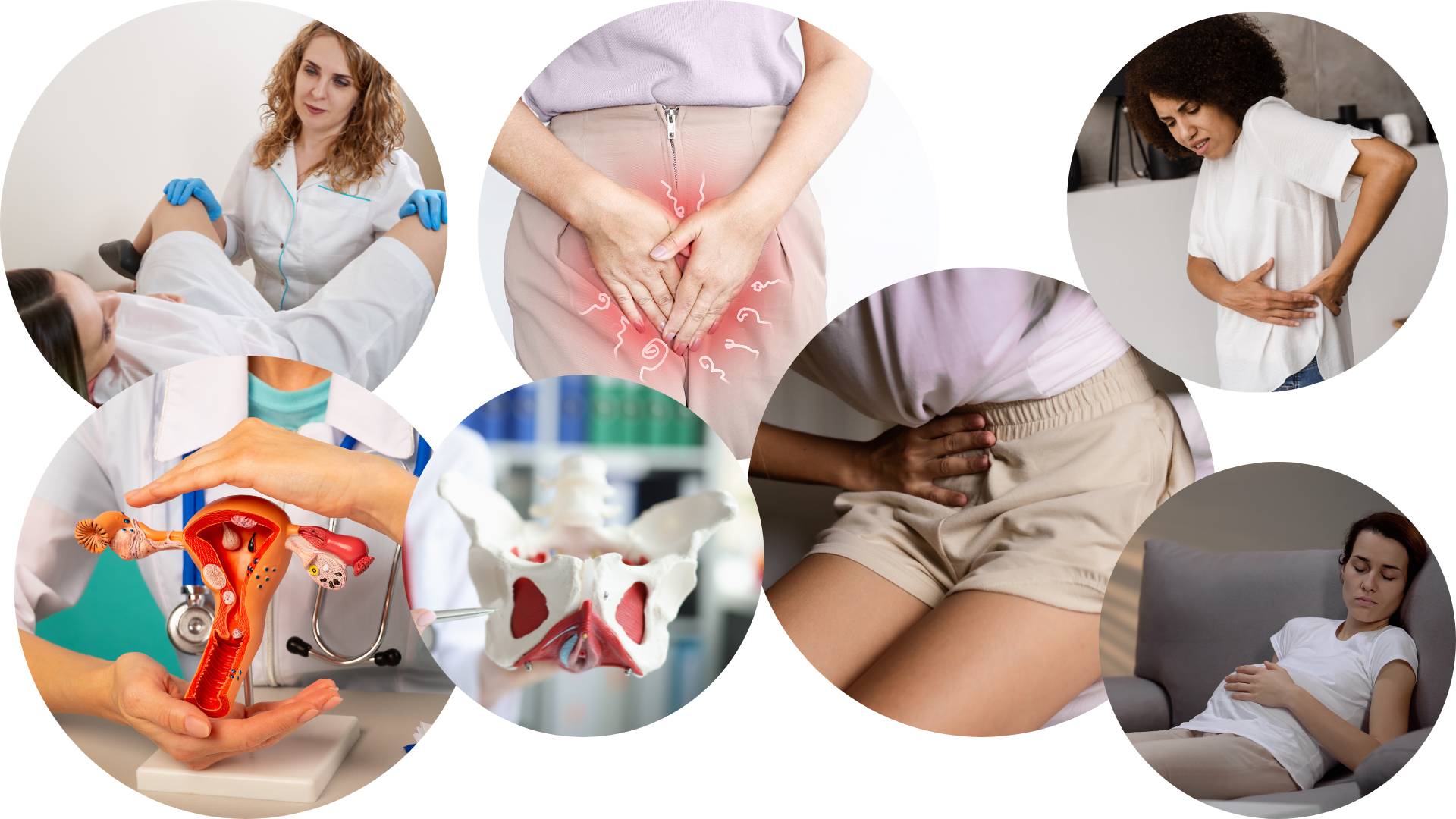 Competency covered in this module:
- Welcome to Module 3 of the OB/GYN content for medical students. In this module, you will learn about various topics, including contraceptive methods, pregnancy termination, vulvar and vaginal diseases, sexually transmitted infections (STIs) and urinary tract infections (UTIs), pelvic floor disorders, endometriosis, chronic pelvic pain, disorders of the breast, and gynecologic procedures. Throughout these lessons, you will gain knowledge about the mechanisms of action, effectiveness, and risks of contraceptive methods, as well as the impact of health policy, advocacy, and social/environmental factors on family planning and population health. You will also understand the evaluation, management, and potential complications of these conditions. This module emphasizes value-based care, patient safety, and the influence of social/environmental factors on reproductive health.
- Welcome to Module 3 of the OB/GYN content for medical students. In this module, you will learn about various topics, including contraceptive methods, pregnancy termination, vulvar and vaginal diseases, sexually transmitted infections (STIs) and urinary tract infections (UTIs), pelvic floor disorders, endometriosis, chronic pelvic pain, disorders of the breast, and gynecologic procedures. Throughout these lessons, you will gain knowledge about the mechanisms of action, effectiveness, and risks of contraceptive methods, as well as the impact of health policy, advocacy, and social/environmental factors on family planning and population health. You will also understand the evaluation, management, and potential complications of these conditions. This module emphasizes value-based care, patient safety, and the influence of social/environmental factors on reproductive health.
-
Student Learning Outcomes:
Upon completion of this module, students you will be able to:- Describe the mechanism of action and effectiveness of contraceptive methods (Fertility Awareness-Based Methods, Barrier Methods, Hormonal Methods, Intrauterine Methods, Emergency Contraception, Sterilization).
- Identify patients eligible for a specific type of contraception method.
- Counsel the patient regarding the benefits, risks and use for each contraceptive method, including emergency contraception, and discuss how health policy, advocacy and social and environmental factors impact family planning and population health.
- Discuss barriers to effective contraceptive use and reduction of unintended pregnancy, and how health policy, advocacy, and social and environmental factors impact family planning and population health.
- Describe methods of male and female surgical sterilization.
- Explain the risks, benefits, and patient safety implications of female surgical sterilization procedures.
-
Students mustMark as done
Required Learning Resources and Activities
-
Students mustView
Watch the entire video. (10 minutes)
APGO - 2016
-
Students mustView
Read the Section "6 The puerperium and family planning Under headlines: (18 minutes)
- Family planning in the puerperium.Perinatal Education Programme - 2017
-
Students mustView
Read under the headline: "HOW TO DO CONTRACEPTIVE COUNSELING" and "THE SHARED DECISION-MAKING PROCESS" (25 minutes)
UpToDate - 2023
-
Students mustView
Read the Section "6 The puerperium and family planning." Under headlines: (14 minutes)
- Case study 1.
- Case study 2.
- Case study 3.
- Case study 4.
- Case study 5.
- Case study 6.
- Case study 7.Perinatal Education Programme - 2017
-
Students mustView
Watch the entire video. (3 minutes)
UCSF Bixby Center for Global Reproductive Health - 2015
-
Students mustView
Watch the entire presentation. (20 minutes)
UCSF Bixby Center for Global Reproductive Health - 2015
-
Students mustView
Read the entire article. (15 minutes)
American College of Obstetricians and Gynecologists - 2023
-
Students mustView
Read the entire article. (40 minutes)
ACOG - 2017
-
Students mustView
Read the entire article. (15 minutes)
NIH - 2017
-
Students mustViewStart discussions: 1Post replies: 1Make forum posts: 2
Introduction:
This case provides a chance to explore contraceptive options for a sexually active young female, integrating medical history and personal preferences to formulate a suitable contraceptive plan. This teaching case aims to improve your practical knowledge of providing patient-centered contraceptive advice, considering both patient preferences and underlying medical conditions.
Case Profile:
Ms. Taylor, a 19-year-old G0 woman, visits the clinic seeking information on reliable contraceptive methods. She shares that she is sexually active with her steady boyfriend and uses condoms sporadically "whenever she feels the need." She has never used any other form of contraception. She has been sexually active since she was 16, first with a different partner, and didn't use contraception during those few instances. For the past year, she has been sexually active with her current partner. She is concerned because she had unprotected intercourse four days ago and is worried about a potential pregnancy. She does not desire to become pregnant in the next four years as she gains financial stability.
She has never undergone a pelvic examination. Her medical history includes an adequately managed seizure disorder and a bout of pyelonephritis at age 12. She's currently taking carbamazepine. She smokes half a pack of cigarettes a day, enjoys social drinking, and occasionally uses marijuana. Her blood pressure is 105/65, and her pulse is 70.
Activity Questions:
What key historical information should you gather from this patient before recommending suitable contraception?
Hint: Consider sexual history, medical history, menstrual history, and future fertility plans:
• Sexual history
- Onset of sexual activity
- Number of partners since the onset
- History of STIs
• Medical history – contraindications to estrogen-containing hormonal contraceptives
- Migraines with aura
- DVT
- Uncontrolled hypertension
- Smoking age > 35
• Menstrual history
- LMP (pregnancy)
- Irregular menses
• Future fertility plans
What physical examinations and studies are required prior to prescribing hormonal contraceptives?
Hint: Think about the relevance of Pap smears, STI screening, and blood pressure monitoring.
Which contraceptive methods would be most suitable for this patient?
Hint: Reflect on the pros and cons of various contraceptive methods, considering the patient's medical history and lifestyle.
What is the best way to start the contraceptive method for this patient?
Hint: Consider the benefits of starting contraception immediately and the different ways to initiate different contraceptive methods.
Given that her last unprotected intercourse was just four days ago, what steps can you take to address her concern about potential pregnancy from that incident?
Hint: Consider emergency contraception options and timing.
Share:
To share your work, click the "Add a new discussion topic" button under this post and paste your work into the "Message" box. Remember to reference others' intellectual property when necessary. All references should follow the 7th Edition APA formatting. For further instructions, see the resource on the Himmelfarb Health Sciences Library: APA citation resource (Note: references are excluded from word counts).
Interact:
To complete the activity, you must reply to at least two posts made by your peers in a respectful and professional manner. Make sure your post engages your peers' ideas by including a reflection on their comments, sharing ideas about other potential difficulties and involved parties, or asking thought-provoking questions. If a peer comments on your post, please reply. To post a reply, click "Reply" on a particular discussion, write your feedback, and then click "Post to forum."
-
Student Learning Outcomes:
Upon completion of this module, students you will be able to:- Formulate a differential diagnosis for vulvovaginitis.
- Formulate a differential diagnosis for dermatologic disorders of the vulva.
- Discuss the steps in the evaluation and management of a patient with vulvovaginal symptoms, with consideration of value-based care.
- Interpret a wet mount microscopic examination.
-
Students mustMark as done
Required Learning Resources and Activities
-
-
Students mustView
Read the entire article. (25 minutes)
American Academy of Family Physicians. - 2018
-
Students mustView
Read the entire article. (45 minutes)
NIH. - 2015
-
Students mustViewStart discussions: 1
Introduction:
This case provides an opportunity for you to delve into diagnosing and managing persistent vaginal discharge while considering contraceptive methods for a sexually active young female. This case aims to reinforce your understanding of diagnosing, managing, and preventing sexually transmitted infections, as well as providing comprehensive contraceptive counseling.
Case Profile:
Ms. Smith, a 21-year-old college student, visits the clinic due to a persistent vaginal discharge and to discuss birth control options. She and her boyfriend have been sexually active for about a year. Their main contraceptive method is condoms, but they are not always consistently used. She seeks a method with a lower failure rate. She maintains regular menstrual cycles and has no significant past medical or gynecological history. She describes her vaginal discharge as greenish-yellow and reports mild vulvar itching. Upon physical exam, she has normal external female genitalia without any lesions or erythema but does have a greenish discharge present on the vaginal walls and pooling in the posterior fornix. Her cervix appears normal but shows friability with light manipulation. Her bimanual examination is unremarkable.
Activity Questions:
What is your differential diagnosis?
Hint: Consider conditions associated with abnormal vaginal discharge.
What diagnostic tests are currently available for these disorders?
Hint: Reflect on microscopy, culture, pH testing, antigen detection, and molecular techniques.
What test results would point towards a diagnosis of Trichomoniasis?
Hint: Consider the features of Trichomonas infection on microscopy, pH, and antigen tests.
What two findings would confirm the diagnosis of vulvovaginal candidiasis?
Hint: Consider the characteristic microscopic findings and culture results.
What are Amsel's criteria for the diagnosis of Bacterial Vaginosis?
Hint: Reflect on the key clinical and microscopic features of bacterial vaginosis.
If the patient is diagnosed with Trichomoniasis, what is your treatment plan for her?
Hint: Consider first-line therapy, partner treatment, and precautions with certain medications.
What additional reproductive health issues should you discuss with this patient?
Hint: Consider STI protection, contraception, and the role of condom use.
Would you recommend screening for additional sexually transmitted infections in this patient, and if so, how?
Hint: Consider serological testing and cervical cultures for specific infections.
Share: To share your work, click the "Add a new discussion topic" button under this post and paste your work into the "Message" box. Remember to reference others' intellectual property when necessary. All references should follow the 7th Edition APA formatting. For further instructions, see the resource on the Himmelfarb Health Sciences Library: APA citation resource (Note: references are excluded from word counts).
Interact: To complete the activity, you must reply to at least two posts made by your peers in a respectful and professional manner. Make sure your post engages your peers' ideas by including a reflection on their comments, sharing ideas about other potential difficulties and involved parties, or asking thought-provoking questions. If a peer comments on your post, please reply. To post a reply, click "Reply" on a particular discussion, write your feedback, and then click "Post to forum."
- Formulate a differential diagnosis for vulvovaginitis.
-
Student Learning Outcomes:
Upon completion of this module, students you will be able to:- Describe the guidelines for STI screening and partner notification/ treatment, understanding the impact on public health.
- Understand the importance of patient counseling in preventing disease spread and demonstrate effective patient counseling techniques.
- Understand how social and environmental factors can play a role in the prevalence, incidence, diagnosis, and treatment of STIs.
- Describe STI prevention strategies, including immunization, with consideration of social and environmental factors, value-based care, and population health.
- Describe the symptoms and physical exam findings associated with common STIs.
- Understand and describe the diagnostic tools and criteria for detecting STIs and UTIs.
- Discuss the steps in the evaluation and management of common STIs as part of an interprofessional team, including appropriate referral, with consideration of value-based care.
- Describe the pathophysiology of salpingitis and pelvic inflammatory disease.
- Describe the evaluation, diagnostic criteria, and initial management of salpingitis/pelvic inflammatory disease, with consideration of value-based care and impact on population health and patient safety.
- Identify possible long-term sequelae of salpingitis/ pelvic inflammatory disease.
- Describe the evaluation and management of UTIs, with consideration of value-based care.
-
Students mustMark as done
Required Learning Resources and Activities
-
-
Students mustView
Read the entire article. (26 minutes)
NIH - 2018
-
Students mustView
Watch the entire video. (10 minutes)
APGO - 2018
-
-
Students mustView
Read the entire article. (10 minutes)
MSD MANUAL - 2022
-
Students mustView
Read the entire article. (10 minutes)
Springer - 2022
-
Students mustView
Read the entire article. (56 minutes)
Global Library of Women’s Medicine’s - 2022
-
Students mustViewStart discussions: 1
Introduction:
This case represents an opportunity to investigate and manage severe lower abdominal pain in a sexually active young female, integrating factors such as sexual history, physical findings, lab results, and management options. This case aims to approach reproductive health issues by promoting an understanding of diagnosis, management, and prevention strategies in the context of sexually transmitted infections.
Case Profile:
Ms. Johnson, an 18-year-old G1P1 female, LMP two weeks ago, visits your clinic with a two-week history of severe lower abdominal pain. The pain is constant, bilateral, and associated with fever and chills. She reports occasional nausea and several instances of vomiting. She's been sexually active for four years and has had unprotected intercourse with multiple partners. She denies irregular bleeding, dysmenorrhea, or dyspareunia. She has no significant past medical history, but her surgical history includes a routine adenoidectomy in childhood and a complication-free vaginal delivery two years ago.
On physical examination, she appears ill with a temperature of 99°F (37.2°C), a pulse of 92 bpm, a BP of 120/80, and a respiratory rate of 20 breaths/minute. Her abdomen shows palpable tenderness in the lower quadrants, slight distension, and rebound tenderness but negative psoas and Murphy’s signs. On genital examination, Bartholins, Urethral, and Skene’s glands appear normal, and the vagina is pink and moist. There's a purulent discharge from the cervical os, and the cervix appears indurated. The uterus is tender to palpation and occupies a midline position, with bilateral adnexal fullness and moderate tenderness.
Laboratory findings show positive GC, negative RPR, and a WBC of 18.6 with a left shift, and urinalysis shows a few WBCs, no bacteria, no leukocyte esterase, no nitrites, 2+ ketones, and a negative urine HCG.
Activity Questions:
What is your differential diagnosis for acute lower abdominal pain in a sexually active female?
Hint: Think of possible gynecologic and non-gynecologic causes, including sexually transmitted infections and other abdominal conditions.
What is the most likely diagnosis in this case?
Hint: Consider her sexual history, symptoms, and examination findings.
Which organisms are most likely to cause this condition?
Hint: Think about sexually transmitted pathogens and their association with her symptoms.
What are common presenting signs and symptoms of this condition?
Hint: Reflect on the typical clinical features of acute PID.
What is the definitive diagnostic tool for cases where the diagnosis is unclear?
Hint: Think about the role of laparoscopy in diagnosing PID.
What criteria would you use to determine whether this patient should be treated as an inpatient or outpatient for PID?
Hint: Think about the severity of symptoms, patient compliance, and potential complications.
What is your management plan and plan for follow-up?
Hint: Consider both empiric treatment for PID and the need for follow-up to ensure treatment success.
If this condition were left untreated, what complications might arise?
Hint: Consider both the immediate and long-term complications of untreated PID.
How can a diagnosis of UTI be ruled out in this patient?
Hint: Think about the specific urinary symptoms and urinalysis findings associated with a UTI.
What are some STI prevention strategies?
Hint: Consider behavioral, barrier, immunization, and partner notification strategies.
Share: To share your work, click the "Add a new discussion topic" button under this post and paste your work into the "Message" box. Remember to reference others' intellectual property when necessary. All references should follow the 7th Edition APA formatting. For further instructions, see the resource on the Himmelfarb Health Sciences Library: APA citation resource (Note: references are excluded from word counts).
Interact: To complete the activity, you must reply to at least two posts made by your peers in a respectful and professional manner. Make sure your post engages your peers' ideas by including a reflection on their comments, sharing ideas about other potential difficulties and involved parties, or asking thought-provoking questions. If a peer comments on your post, please reply. To post a reply, click "Reply" on a particular discussion, write your feedback, and then click "Post to forum."
- Describe the guidelines for STI screening and partner notification/ treatment, understanding the impact on public health.
-
Student Learning Outcomes:
Upon completion of this module, students you will be able to:- Describe normal adominal wall, pelvic anatomy and pelvic support.
- Understand and describe the different types of abdominal wall defects, their clinical implications, and appropriate management strategies.
- Describe signs and symptoms of pelvic floor disorders.
- List risk factors for pelvic floor disorders, including social and environmental factors that influence health outcomes for patients with pelvic floor disorders.
- Explain the pathophysiology, risk factors, clinical presentation, and diagnostic tools for Pelvic Organ Prolapse (POP).
- Explain the pathophysiology, risk factors, clinical presentation, and diagnostic tools for Obstetric Anal Sphincter Injuries (OASIS) and understand its implications in postpartum care.
- Describe the clinical presentation, diagnostic methods, and management strategies for urinary retention and urinary Incontinence.
- Discuss the steps in evaluation of pelvic floor disorders, with consideration of value-based care, as part of an interprofessional team.
- Describe the anatomic changes associated with pelvic floor disorders.
- Describe nonsurgical and surgical management options for pelvic floor disorders, with consideration of value-based care.
-
Students mustMark as done
Required Learning Resources and Activities
-
-
Students mustView
Watch the entire video. (10 minutes)
APGO - 2015
-
Students mustView
Read the entire article. (11 minutes)
NIH - 2021
-
Students mustView
Read the entire article. (14 minutes)
GLOWN - 2023
-
Students mustView
Read under the headline "RECTO-VAGINAL FISTULA" (10 minutes)
GLOWN - 2023
-
Students mustView
Watch the entire video. (10 minutes)
APGO - 2017
-
Students mustView
Read the entire article. (4 minutes)
ACOG - 2023
-
Students mustView
Read the under headlines. (25 minutes)
- 1.2. Risk factors for pelvic floor dysfunction.
- 1.3. Preventing pelvic floor dysfunction.
- 1.4. Communicating with and providing information to women with pelvic floor dysfunction.
- 1.5. Assessment in primary care.
-1.6. Non-surgical management of pelvic floor dysfunction.NHI - 2021
- Describe normal adominal wall, pelvic anatomy and pelvic support.
-
Student Learning Outcomes:
Upon completion of this module, students you will be able to:- Describe theories of pathogenesis of endometriosis.
- List the most common sites of endometriosis.
- Describe the symptoms and physical exam findings in a patient with endometriosis.
- Describe the diagnosis and management options for endometriosis, with consideration of value-based care and an understanding of any social and economic disparities in health outcomes for patients with endometriosis.
-
Students mustMark as done
Required Learning Resources and Activities
-
-
Students mustView
Read the entire article. (2 minutes)
ACOG
- Describe theories of pathogenesis of endometriosis.
-
Student Learning Outcomes:
Upon completion of this module, students you will be able to:- Define chronic pelvic pain.
- Define prevalence and common etiologies of chronic pelvic pain, with an understanding of social and environmental factors.
- Describe the symptoms and physical exam findings in a patient with chronic pelvic pain.
- Discuss evaluation and management options for chronic pelvic pain, with consideration of value-based care and social and environmental factors that may lead to disparities in care and health outcomes, as part of an interprofessional team.
- Discuss the psychosocial issues associated with chronic pelvic pain and situations where advocacy and an interprofessional team approach are beneficial, with an understanding of social and environmental factors that may impact these issues.
-
Students mustMark as done
Required Learning Resources and Activities
-
-
Students mustView
Reading the entire article. (12 minutes)
Mayo Clinic - 2021
-
Students mustView
Reading the entire article. (6 minutes)
Cleveland Clinic - 2020
- Define chronic pelvic pain.
-
Student Learning Outcomes:
Upon completion of this module, students you will be able to:- Understand the anatomy and embryology of the breast.
- Describe the epidemiolgical patterns of breast diseases.
- Emphasize the importance and methods of regular breast cancer screening for early detection.
- List factors that place individuals at risk for breast disorders, with consideration of population health impact and an understanding of social and environmental factors that can lead to disparities in health outcomes for patients with breast disorders.
- Describe symptoms and physical examination findings of benign or malignant conditions of the breast.
- Demonstrate the performance of a clinical breast examination and interpreting results.
- Discuss the steps in the evaluation of common breast complaints, including mastalgia, mass, and nipple discharge, with consideration for value-based care.
- Discuss initial management options for benign and malignant conditions of the breast, with consideration of value-based care.
-
Students mustMark as done
Required Learning Resources and Activities
-
Students mustView
Read under the headlines: "Gross anatomy" ,"Embryology" and "Clinical significance" (12 minutes)
AMBOS - 2022
-
Students mustView
Read the entire article. (25 minutes)
AMBOS - 2022
-
Students mustView
Read the entire article. (15 minutes)
GLOWN - 2009
-
-
Students mustView
Read the entire article. (9 minutes)
The American College of Obstetricians and Gynecologists - 2020
-
Students mustView
Read the entire article. (31 minutes)
BMC - 2020
-
Students mustView
Read the entire article. (24 minutes)
American Academy of Family Physicians - 2023
-
Students mustView
Read the entire article. (9 minutes)
A Cancer Journal for Clinicians - 2004
- Understand the anatomy and embryology of the breast.
-
Student Learning Outcomes:
Upon completion of this module, students you will be able to:- Describe the key components of preoperative evaluation and planning, including history, physical examination and describing key elements of informed consent (including risks, benefits, alternatives and social and environmental factors that may impact informed consent).
- Discuss in-depth the ethical and legal aspects of informed consent, ensuring students can effectively communicate with patients, addressing concerns and answering questions.
-
Describe common measures for the prevention of infection, deep venous thrombosis and other perioperative complications, with key consideration for patient safety.
- Describe the components of postoperative care within a framework of interprofessional teamwork, with consideration of patient handover communication.
- Discuss common postoperative complications.
- Describe the communication of operative findings and complications to patients and family.
- Describe the key members of an operating room team within a framework of interprofessional teamwork.
- Describe key components of a preprocedural or preoperative time out.
- Understand how surgical management can emotionally impact a patient and her family, with consideration of social and environmental factors.
- Describe common outpatient and inpatient gynecologic procedures with their indications, contraindications and possible complications
1. Pelvic ultrasonography
2. Colposcopy and cervical biopsy
3. Excisional procedures of the cervix
4. Vulvar biopsy
5. Endometrial biopsy
6. IUD insertion and removal
7. Contraceptive implant placement and removal
8. Dilation and curettage
9. Hysteroscopy
10. Laparoscopy
11. Tubal ligation
12. Hysterectomy and bilateral salpingooophorectomy
13. Pregnancy termination
- Demonstrate the ability to complete procedural tasks and general procedures of a physician
1. Sterile technique
2. Foley catheter insertion
3. Basic suturing
4. Knot tying
-
Students mustMark as done
Required Learning Resources and Activities
-
Students mustView
Read the entire article. (16 minutes)
MSD Manual - 2020
-
Students mustView
Read the entire article. (23 minutes)
ACOG Committee - 2021
-
Students mustView
Read the entire article. (16 minutes)
MSD Manual - 2023
-
Students mustView
Read the content under the heading "4. Characteristics of team members". (7 minutes)
Intechopen - 2020
-
Students mustView
Read the entire article. (2 minutes)
University of Rochester Medical Center Rochester, NY - 2023
-
-
Students mustViewStart discussions: 1
Introduction:
This case serves to explore the management of menorrhagia due to a fibroid uterus in a patient with a complex medical history. The case focuses on perioperative management and the importance of interdisciplinary communication. This teaching case aims to understand the perioperative management of complex patients, the importance of interdisciplinary communication and coordination, as well as the importance of informed consent and patient communication.
Case Profile:
The patient is a 42-year-old G0 woman suffering from menorrhagia as a result of a fibroid uterus. Despite oral iron therapy, she has anemia with a hematocrit of 28%. Her periods last 10-14 days each month. She was diagnosed with lupus and anti-phospholipid antibody syndrome at the age of 27. Her primary symptoms are arthritis, and she had a history of deep venous thrombosis (DVT) 8 years ago. Although her lupus isn't currently flaring, she takes prednisone 5 mg per day and warfarin 2.5 mg per day. She has no other medical issues, and her only surgery was an adenoidectomy at the age of 18, during which she reportedly experienced "more bleeding than usual" but did not require a transfusion. She seeks definitive surgical management with a hysterectomy. She is married, works as a department manager, and has never had children. Her physical exam shows a BP of 120/75, a weight of 165, and a height of 5’6”. She has several small bruises on her extremities. Her uterus is palpable just below her umbilicus but is non-tender. The pelvic exam is significant only for the enlarged uterus. Pelvic ultrasound confirms a large fibroid uterus with normal ovaries. Labs show an INR of 2.5, normal chemistry panel.
Activity Questions:
What would be your approach to obtaining surgical consent from this patient?
Hint: Consider all aspects of informed consent, including procedure details, risks, benefits, and alternatives.
What are the main surgical risks this patient faces?
Hint: Consider both intra-operative and post-operative risks associated with her underlying medical conditions and the proposed surgery.
What steps can you implement to mitigate these risks?
Hint: Consider preoperative preparations, perioperative measures, and post-operative care.
Which other health professionals would you consult before and after surgery?
Hint: Think of the interdisciplinary approach needed for optimal care for this complex patient.
What measures can you implement post-operatively to assess for and diagnose complications?
Hint: Consider physical signs, potential lab work, and monitoring strategies.
If an incidental cystotomy occurs and is repaired during the hysterectomy, how would you communicate this information to the patient and her family?
Hint: Reflect on the importance of transparency, empathy, and clear communication in a difficult situation.
Who are the key members of an operating room team?
Hint: Review the roles of the surgeon, anesthesiologist, and nursing staff.
What are the key components of a surgical timeout?
Hint: Consider the purpose of a surgical timeout and its key components, according to the World Health Organization.
Share: To share your work, click the "Add a new discussion topic" button under this post and paste your work into the "Message" box. Remember to reference others' intellectual property when necessary. All references should follow the 7th Edition APA formatting. For further instructions, see the resource on the Himmelfarb Health Sciences Library: APA citation resource (Note: references are excluded from word counts).
Interact: To complete the activity, you must reply to at least two posts made by your peers in a respectful and professional manner. Make sure your post engages your peers' ideas by including a reflection on their comments, sharing ideas about other potential difficulties and involved parties, or asking thought-provoking questions. If a peer comments on your post, please reply. To post a reply, click "Reply" on a particular discussion, write your feedback, and then click "Post to forum."
-
Student Learning Outcomes:
Upon completion of this module, students you will be able to:- Recall the normal anatomy of the female reproductive tract, specifically the vagina, cervix, corpus, and adnexae.
- Describe common and rare congenital anomalies of the vagina, cervix, corpus, and adnexae.
- Recognize the typical clinical presentations and associated symptoms of patients with congenital anomalies of the female reproductive tract.
- Demonstrate the ability to select and interpret appropriate imaging and diagnostic tests to evaluate suspected congenital anomalies.
- Differentiate between various congenital anomalies of the female reproductive tract and other conditions with similar presentations.
-
Students mustMark as done
Required Learning Resources and Activities
-
Students mustView
(20 minutes)
GLOWM - 2011
-
Students mustView
Read the entire article. (15 minutes)
Lecturio - 2022
-
Students mustView
Read the entire article and the images. (15 minutes)
AMBOSS - 2022
-
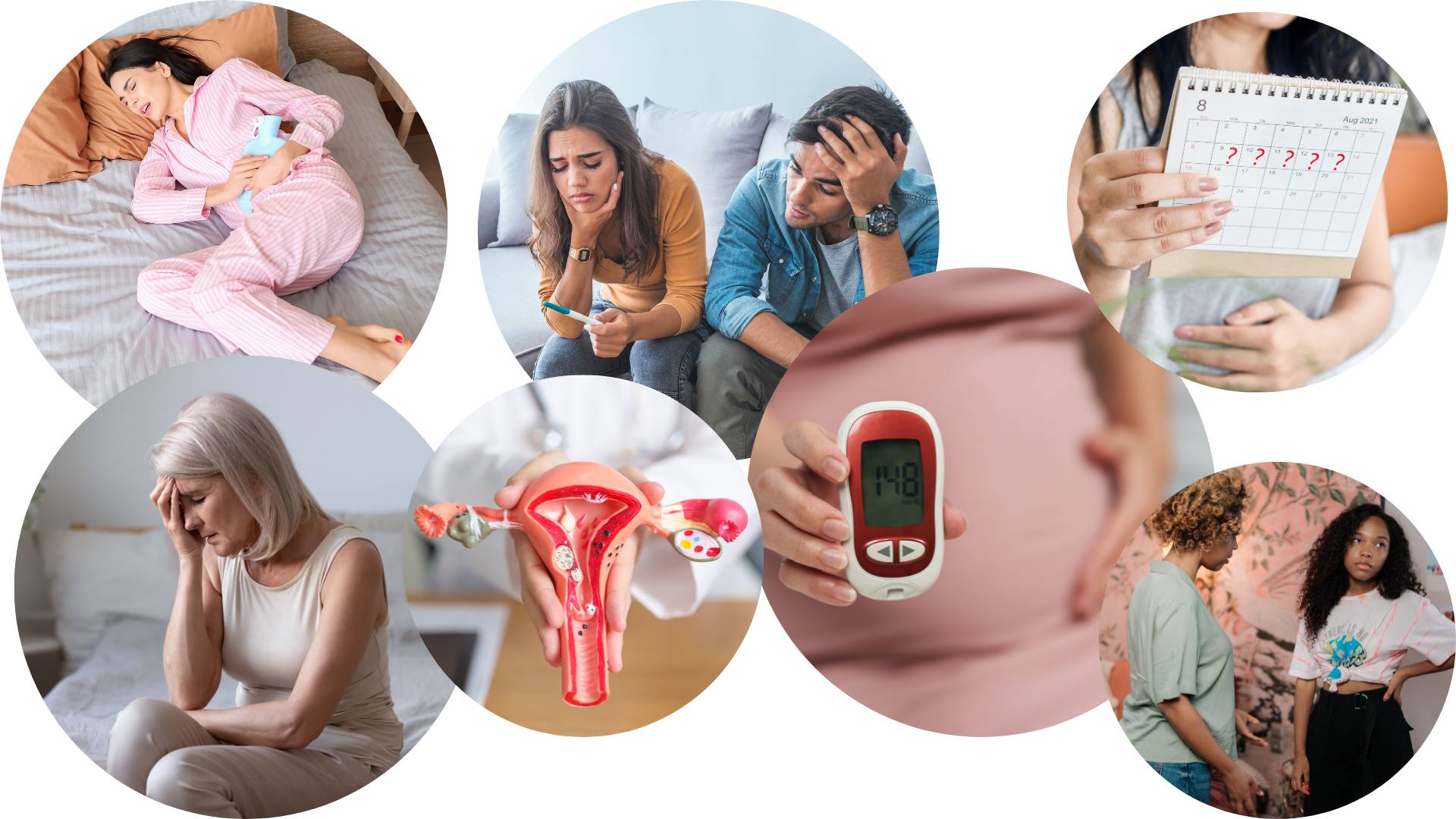 Competency covered in this module:
- Welcome to Module 4 of the OB/GYN content for medical students! In this module, we will cover a range of topics related to reproductive health. You will learn about amenorrhea, hirsutism, abnormal uterine bleeding, dysmenorrhea, menopause, infertility, premenstrual syndrome (PMS) and premenstrual dysphoric disorder (PMDD), as well as gestational trophoblastic neoplasia (GTN). Throughout these lessons, we will explore the pathophysiology, etiologies, evaluation, and management options for these conditions while considering value-based care, social and environmental factors, patient safety, and health disparities. By the end of this module, you will have a comprehensive understanding of these important reproductive health topics.
- Welcome to Module 4 of the OB/GYN content for medical students! In this module, we will cover a range of topics related to reproductive health. You will learn about amenorrhea, hirsutism, abnormal uterine bleeding, dysmenorrhea, menopause, infertility, premenstrual syndrome (PMS) and premenstrual dysphoric disorder (PMDD), as well as gestational trophoblastic neoplasia (GTN). Throughout these lessons, we will explore the pathophysiology, etiologies, evaluation, and management options for these conditions while considering value-based care, social and environmental factors, patient safety, and health disparities. By the end of this module, you will have a comprehensive understanding of these important reproductive health topics.
-
Student Learning Outcomes:
Upon completion of this module, students you will be able to:- Describe the changes in the hypothalamicpituitary-ovarian axis and target organs during normal puberty.
- Explain the normal sequence of pubertal events and ages at which these changes occur across different patient populations.
- Discuss the psychological issues associated with puberty and how social and environmental factors may affect them.
- Define precocious and delayed puberty, and describe the steps in the initial evaluation of these conditions, with consideration of value-based care.
- Recognizing the unique needs and challenges on Pediatric and Adolescent Gynecology.
- Trauma & Infections: Identify common types of gynecological trauma and infections in pediatric and adolescent patients and initiate appropriate management.
- Understand the signs, implications, and protocols associated with sexual abuse in pediatric and adolescent patients.
- Recognize the indicators of pelvic masses in pediatric and adolescent patients and understand the initial steps in evaluation and management.
- Diagnose and manage common pediatric & adolescent GYN problems, integrating knowledge of anatomy, physiology, and common pathologies.
-
Students mustMark as done
Required Learning Resources and Activities
-
-
-
Students mustView
Read the entire article. (4 minutes)
NHI
-
Students mustView
Read the entire article. (38 minutes)
NHI - 2014
-
Students mustView
Read the entire article. (11 minutes)
Elsevier - 2023
-
Students mustView
Read the entire article. (22 minutes)
GLOWM - 2022
-
Students mustView
Read the entire article. (19 minutes)
NIH - 2021
-
-
Students mustView
Read the entire article and analyze the images. (14 minutes)
GLOWM - 2023
-
Students mustView
Read the entire article. (23 minutes)
NIH - 2023
- Describe the changes in the hypothalamicpituitary-ovarian axis and target organs during normal puberty.
-
Student Learning Outcomes:
Upon completion of this module, students you will be able to:- Describe the endocrinology and physiology of the normal menstrual cycle.
- Understand the Premenstrual Syndrome (PMS).
- Define abnormal uterine bleeding.
- Describe the pathophysiology and identify etiologies of abnormal uterine bleeding.
- Describe the steps in the evaluation and initial management of abnormal uterine bleeding, with an understanding of ethnic and racial disparities in health outcomes for patients who experience abnormal uterine bleeding.
- Summarize medical and surgical management options for patients with abnormal uterine bleeding, with consideration of value-based care and an understanding of the impact on patient safety.
-
Students mustMark as done
Required Learning Resources and Activities
-
-
Students mustView
Read the under headlines: (9 minutes)
- What is a normal menstrual cycle?
- When is bleeding abnormal?
- What is the difference between chronic and acute abnormal uterine bleeding?
- At what ages is abnormal bleeding more common?
- What causes abnormal bleeding?
- How is abnormal bleeding diagnosed?
- What tests and exams may be needed to diagnose abnormal bleeding?
- What medications are used to help control abnormal bleeding?American College of Obstetricians and Gynecologists - 2021
-
Students mustView
Watch the entire video. (9 minutes)
APGO - 2016
-
Students mustView
Read the entire article. (23 minutes)
American Academy of Family Physicians. - 2023
-
Students mustViewStart discussions: 1
Introduction:
This case aims to enhance the understanding of the physiology and pathology of the menstrual cycle and to develop skills in the diagnosis and management of abnormal uterine bleeding.
Case Profile:
A 47-year-old G2P0020 woman, LMP 22 days ago, is experiencing heavy menstrual bleeding. Her cycles were regularly occurring every 29-31 days and lasting 6 days, with manageable cramps relieved by Ibuprofen until 6 months ago. Lately, her menses occur every 24-33 days, lasting 7-10 days, associated with cramps not eased by Ibuprofen, clot passage, and she is using about two boxes of pads per cycle. She fears losing her job if the bleeding doesn't improve. She denies dizziness but feels weak and fatigued. She reports no change in weight over the past year. There are no known family histories of bleeding disorders or reproductive cancers. She uses condoms for contraception, takes no daily medications, and has no other known medical conditions. She is married and works as a factory worker.
On a physical exam, her weight is 155 pounds, her height is 5 feet, 7 inches, and her BP is 130/85, P 98. She looks pale. A pelvic exam shows a normal vulva, vagina, and cervix; a normal-sized, non-tender, mobile uterus; and a non-tender adnexa without palpable masses.
Activity Questions:
What defines a normal menstrual cycle?
Hint: Reflect on the average cycle length, bleeding duration, volume, and composition.
Describe the normal endocrinological and physiological events of the menstrual cycle.
Hint: Consider the different phases of the menstrual cycle and the hormonal changes that occur within.
How is abnormal uterine bleeding defined?
Hint: Think about the variations in cycle length, volume, or duration that would define abnormal bleeding.
What could be the potential causes of this patient's bleeding?
Hint: Use the PALM-COEIN classification to explore the possible etiologies.
What are the potential etiologies of ovulatory dysfunction?
Hint: Consider conditions that can cause hormonal imbalances leading to ovulatory dysfunction.
Explain the mechanism of anovulatory bleeding.
Hint: Discuss the role of progesterone in menstrual cycle regulation.
How can you determine if this patient is having ovulatory cycles?
Hint: Think about the patient's history, laboratory tests, and physical signs that might indicate ovulatory cycles.
What are the appropriate lab tests to order for this patient?
Hint: Consider the basic tests needed to assess her condition.
What further tests would you order based on the following results: Hgb: 9.2, HCT: 28%, HCG: negative, TSH and Prolactin: normal, Endometrial biopsy: normal secretory endometrium, Pelvic ultrasound: normal-sized uterus with heterogeneous myometrium, endometrial lining 1.5 cm and irregular - consistent with an endometrial polyp, normal ovaries.
Hint: Think about the additional diagnostic procedures needed to confirm the suspected diagnosis.
Describe potential treatment options for this patient.
Hint: Consider both medical and surgical treatment options relevant to the patient's condition and possible diagnosis.
What are important considerations when counseling the patient and helping her choose the best option?
Hint: Reflect on the patient's fertility desires, the effectiveness and permanence of treatment options, operative risks, and the time to expect menopause.
Share: To share your work, click the "Add a new discussion topic" button under this post and paste your work into the "Message" box. Remember to reference others' intellectual property when necessary. All references should follow the 7th Edition APA formatting. For further instructions, see the resource on the Himmelfarb Health Sciences Library: APA citation resource (Note: references are excluded from word counts).
Interact: To complete the activity, you must reply to at least two posts made by your peers in a respectful and professional manner. Make sure your post engages your peers' ideas by including a reflection on their comments, sharing ideas about other potential difficulties and involved parties, or asking thought-provoking questions. If a peer comments on your post, please reply. To post a reply, click "Reply" on a particular discussion, write your feedback, and then click "Post to forum."
- Describe the endocrinology and physiology of the normal menstrual cycle.
-
Student Learning Outcomes:
Upon completion of this module, students you will be able to:- Define amenorrhea and oligomenorrhea.
- Explain the pathophysiology and identify the etiologies of amenorrhea and oligomenorrhea, including possible nutritional, social and environmental causes and opportunities for advocacy.
- Describe associated symptoms and physical examination findings of amenorrhea.
- Discuss the steps in the evaluation and initial management of amenorrhea and oligomenorrhea, with consideration of value-based care and the effect of social and environmental factors on care and outcomes.
- Describe the consequences of untreated amenorrhea and oligomenorrhea.
-
Students mustMark as done
Required Learning Resources and Activities
-
Students mustView
Read the entire article. (9 minutes)
TeachMeObGyn - 2022
-
-
Students mustView
Read the entire article. (6 minutes)
WikiDoc - 2020
-
Students mustView
Read the under headline "Complications". (3 minutes)
Icahn School of Medicine at Mount Sinai - 2023
- Define amenorrhea and oligomenorrhea.
-
Student Learning Outcomes:
Upon completion of this module, students you will be able to:- Recognize normal variations and abnormalities in secondary sexual characteristics, with an understanding of racial and ethnic differences in puberty.
- Define hirsutism and virilization.
- Describe pathophysiology and identify etiologies of hirsutism.
- Describe the steps in the evaluation and initial management options for hirsutism and virilization, with consideration for value-based care.
- Describe how hirsutism and virilization are manifested in other medical disorders.
-
Students mustMark as done
Required Learning Resources and Activities
-
Students mustView
Read the entire article. (35 minutes)
Elsevier B.V. or its licensors or contributors. ScienceDirect - 2023
-
-
- Recognize normal variations and abnormalities in secondary sexual characteristics, with an understanding of racial and ethnic differences in puberty.
-
Student Learning Outcomes:
Upon completion of this module, students you will be able to:- Define dysmenorrhea and distinguish primary from secondary dysmenorrhea.
- Describe the social and economic effects of dysmenorrhea on patients.
- Describe the pathophysiology and identify the etiologies of dysmenorrhea, including social and environmental factors.
- Discuss the steps in the evaluation and management of dysmenorrhea, with consideration of value-based care.
-
Students mustMark as done
Required Learning Resources and Activities
-
-
-
Students mustView
Read the entire article. (25 minutes)
Korean Journal of Family Medicine - 2022
- Define dysmenorrhea and distinguish primary from secondary dysmenorrhea.
-
Student Learning Outcomes:
Upon completion of this module, students you will be able to:- Define the fundamentals of menopause (Spontaneous menopause, Induced menopause, Perimenopause, Early Menopause, Premature Ovarian Insufficiency, Climacterium) Stages and types.
- Describe cultural and social expectations of women’s experience of menopause.
- Describe changes in the hypothalamicpituitary-ovarian axis associated with perimenopause/ menopause.
- Describe symptoms and physical exam findings related to perimenopause/ menopause.
- Discuss management options for patients with perimenopausal/ menopausal symptoms, with consideration of patient safety, valuebased care, and an understanding of social, environmental, and economic factors on aging.
- Counsel patients regarding the menopausal transition, effect on quality of life, and the role of social factors in promoting healthy aging.
- Counsel patients on the role of healthy lifestyle practices, including nutrition, physical activity, and substance use, in managing menopausal symptoms and healthy aging, with consideration of value-based care.
- Discuss long-term medical disorders associated with menopause, with an understanding of the gender, ethnic, and racial disparities in health outcomes
-
Students mustMark as done
Required Learning Resources and Activities
-
Students mustView
Watch the entire video. (6 minutes)
APGO - 2016
-
-
Students mustView
Read the entire article. (9 minutes)
The North American Menopause Society. - 2014
-
-
Students mustView
Read the entire article. (126 minutes)
NIH - 2020
-
Students mustViewStart discussions: 1
Introduction:
The postmenopausal period constitutes a significant part of women's lives. Understanding the physical and emotional changes brought on by menopause is central to practicing gynecology. This case aims to enhance our understanding of menopause, its symptoms, potential complications, and management strategies. It emphasizes the importance of patient counseling and preventive measures in managing menopause-related health issues.
Case Profile:
A 52-year-old G3P3 woman, whose last menstrual period was 5 months ago, visits the clinic with complaints of hot flashes, mood swings, and sleep disturbances. She experiences hot flashes 2-3 times per day and frequently at night. She's having difficulty sleeping, which has led to extreme fatigue. Since she was 15, her periods have been regular until 2 years ago, when they started to become irregular, occurring every 2-3 months. She is sexually active and has recently noted some pain during intercourse. The patient rarely exercises, smokes 1.5 packs of cigarettes daily, and drinks alcohol occasionally. She recently started taking a soy supplement. She has no pertinent gynecological, medical, or surgical history. Her family history reveals her mother had a hip fracture at age 65 and a sister with breast cancer and hyperlipidemia. On examination, her vital signs are normal. She is 5’5” tall and weighs 125 lbs. During the pelvic examination, decreased vaginal rugae and a pale, small cervix are noted. On a bimanual exam, there are no masses or tenderness.
Activity Questions:
What are the symptoms of perimenopause and menopause?
Hint: Consider symptoms based on hypoestrogenism.
How is menopause diagnosed?
Hint: Think about the clinical features and the duration of amenorrhea.
What are this patient’s risk factors for osteoporosis?
Hint: Consider her lifestyle, family history, and other medical conditions that could contribute to osteoporosis.
How is atrophic vaginitis diagnosed and treated?
Hint: Discuss the clinical features, examination findings, and treatment options.
How would you counsel a patient regarding estrogen and alternative therapies?
Hint: Consider the risks and benefits of hormone therapy, contraindications, and alternative treatments.
What laboratory and diagnostic tests would you recommend for this patient?
Hint: Tailor your recommendations based on her symptoms, history, and preventive screening guidelines.
Share: To share your work, click the "Add a new discussion topic" button under this post and paste your work into the "Message" box. Remember to reference others' intellectual property when necessary. All references should follow the 7th Edition APA formatting. For further instructions, see the resource on the Himmelfarb Health Sciences Library: APA citation resource (Note: references are excluded from word counts).
Interact: To complete the activity, you must reply to at least two posts made by your peers in a respectful and professional manner. Make sure your post engages your peers' ideas by including a reflection on their comments, sharing ideas about other potential difficulties and involved parties, or asking thought-provoking questions. If a peer comments on your post, please reply. To post a reply, click "Reply" on a particular discussion, write your feedback, and then click "Post to forum."
- Define the fundamentals of menopause (Spontaneous menopause, Induced menopause, Perimenopause, Early Menopause, Premature Ovarian Insufficiency, Climacterium) Stages and types.
-
Student Learning Outcomes:
Upon completion of this module, students you will be able to:- Define infertility and distinguish between primary and secondary infertility.
- List the causes of male and female infertility.
- Describe the pathophysiology of different causes of infertility, including impact of social and environmental factors.
- Describe the evaluation and initial management of an infertile couple, with consideration of value-based care and social, economic and health systems factors that may limit access to care, as a member of an interprofessional team.
- Describe management options for infertility, with consideration of value-based care and social, economic, and health systems factors that may limit access to care.
- Identify the options for genetic screening and testing in infertility-associated treatments, with a consideration of value-based care.
- Describe ethical issues confronted by patients with infertility and patients accessing assisted reproductive technologies, including patient safety.
-
Students mustMark as done
Required Learning Resources and Activities
-
Students mustView
Watch the entire video. (9 minutes)
APGO - 2016
-
Students mustView
Read the entire content. (21 minutes)
ACOG - 2019
-
Students mustView
Read the entire content. (10 minutes)
Merck Manual - 2022
-
-
Students mustView
Read the entire content. (13 minutes)
AMA Journal of Ethics - 2023
-
Students mustViewStart discussions: 1
Introduction:
Understanding infertility- its causes and management- forms an essential part of gynecological practice. This case aims to understand the diagnosis, evaluation, and management options for infertility, including the psychosocial and ethical issues associated with it. The case aims to help you navigate the complex issue of infertility, its diagnosis, and management, including understanding the role of genetic screening and the ethical issues linked with infertility treatment.
Case Profile:
A 38-year-old woman and her 38-year-old male partner express concern about potential fertility issues. They've been married for 2 years. The woman has a 5-year-old daughter from a previous relationship. She was on birth control pills until about 2 years ago. Since discontinuing the pill, the couple has been trying to conceive, leading to considerable stress. The patient had no difficulties conceiving or delivering (vaginally) her daughter, who has cystic fibrosis. Recently, her menstrual cycles have become irregular, occurring every 5-7 weeks. She is a cashier by profession, and she runs 15-20 miles per week. She has no history of STIs, abnormal Pap smears, smoking, alcohol, or drug use. She has no history of surgery and has been taking a multivitamin with folic acid since she began trying to conceive.
Her partner is also in good health and reports no problems with erection, ejaculation, or pain during intercourse. He has had unprotected sex prior to this relationship but hasn't knowingly fathered a child. He has no known medical problems or past surgeries. The couple has vaginal intercourse 3-4 times per week when he is at home.
Activity Questions:
What is the definition of infertility?
Hint: Consider the duration of unprotected intercourse without conception in women under and over 35 years old.
What are the possible causes of infertility?
Hint: Consider male and female factors that could contribute to infertility.
What is the initial workup for infertile couples, and what additional tests would you order for this particular couple?
Hint: Consider general infertility investigations and specific tests based on the couple's history.
Given the results of the tests, what is the potential diagnosis for the couple's infertility?
Hint: Consider the possible causes based on her irregular menstrual cycles and his semen analysis.
What is the appropriate management for the etiology of this couple’s infertility?
Hint: Discuss the management approach considering her probable anovulation and his oligospermia.
Suppose the husband undergoes genetic testing for common cystic fibrosis mutations and is found to be a carrier. What are the options available to them to make a pregnancy less likely to result in a child with cystic fibrosis, and what are the ethical issues associated with these choices?
Hint: Consider IVF, donor sperm/eggs, preimplantation genetic diagnosis, and the ethical implications of each.
Share: To share your work, click the "Add a new discussion topic" button under this post and paste your work into the "Message" box. Remember to reference others' intellectual property when necessary. All references should follow the 7th Edition APA formatting. For further instructions, see the resource on the Himmelfarb Health Sciences Library: APA citation resource (Note: references are excluded from word counts).
Interact: To complete the activity, you must reply to at least two posts made by your peers in a respectful and professional manner. Make sure your post engages your peers' ideas by including a reflection on their comments, sharing ideas about other potential difficulties and involved parties, or asking thought-provoking questions. If a peer comments on your post, please reply. To post a reply, click "Reply" on a particular discussion, write your feedback, and then click "Post to forum."
- Define infertility and distinguish between primary and secondary infertility.
-
Student Learning Outcomes:
Upon completion of this module, students you will be able to:- Complete a history that can identify the criteria for making the diagnoses of PMS and PMDD.
- Describe treatment options for PMS and PMDD, including an interprofessional team approach, with consideration of value-based care and how they relate to patient safety and population health.
-
Students mustMark as done
Required Learning Resources and Activities
-
Students mustView
Watch the entire video. (4 minutes)
APGO - 2016
-
Students mustViewStart discussions: 1
Introduction:
Premenstrual Syndrome (PMS) and Premenstrual Dysphoric Disorder (PMDD) are common conditions that affect women of reproductive age, impacting their daily lives and mental well-being. This case aims to enhance the understanding of these conditions, from diagnosis to treatment strategies. This case aims to help you differentiate between PMS and PMDD using specific diagnostic criteria and understand the importance of using a multidisciplinary approach to manage these conditions, from simple lifestyle adjustments to pharmacological treatments. The importance of accurate diagnosis through prospective symptom rating is emphasized.
Case Profile:
A 36-year-old G3P3 married woman schedules a check-up after relocating to a new area. She's had regular periods, though they have recently become longer. She complains of abdominal bloating, breast tenderness, and frequent headaches. These symptoms seem to worsen about a week before her cycle and resolve a week after her cycle ends. She speculates that her symptoms may be cyclic but has never tracked them systematically.
She's currently not sexually active and takes no medications or supplements. All her pregnancies resulted in vaginal deliveries, and she experienced postpartum depression after her last two births. She describes her teenage years as "turbulent" and "emotional." She has had no past treatment for depression. She underwent a tonsillectomy as a child and has no other medical conditions or drug allergies.
Her family history includes depression in her mother. Her 41-year-old sister was recently diagnosed with ovarian cancer. In a systematic review, she describes occasional insomnia and excessive fatigue. She also reveals difficulty falling asleep due to overthinking. She recently moved with her children to a new city for work, while her husband stayed behind due to his job. This separation has been ongoing for about 5 months.
Activity Questions:
What diagnosis would you give this patient, and why?
Hint: Consider the cluster of symptoms and their timing in relation to her menstrual cycle.
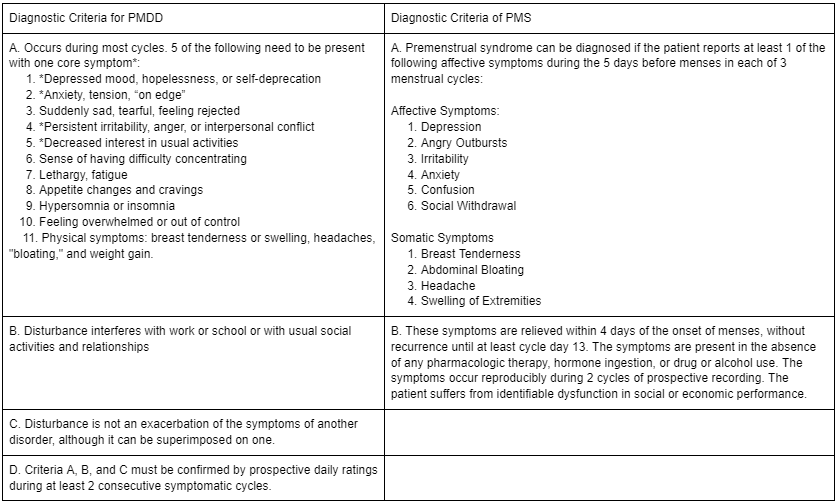
What tools are available for patients to assess their PMS/PMDD symptoms?
Hint: Think about the various questionnaires or diaries that can be used to track symptoms and their timing.
What are the treatment options for this patient?
Hint: Consider both non-pharmacological and pharmacological interventions, including lifestyle changes, dietary adjustments, and medications.
Share:
To share your work, click the "Add a new discussion topic" button under this post and paste your work into the "Message" box. Remember to reference others' intellectual property when necessary. All references should follow the 7th Edition APA formatting. For further instructions, see the resource on the Himmelfarb Health Sciences Library: APA citation resource (Note: references are excluded from word counts).
Interact:
To complete the activity, you must reply to at least two posts made by your peers in a respectful and professional manner. Make sure your post engages your peers' ideas by including a reflection on their comments, sharing ideas about other potential difficulties and involved parties, or asking thought-provoking questions. If a peer comments on your post, please reply. To post a reply, click "Reply" on a particular discussion, write your feedback, and then click "Post to forum."
- Complete a history that can identify the criteria for making the diagnoses of PMS and PMDD.
-
Student Learning Outcomes:
Upon completion of this module, students you will be able to:- Describe the symptoms and physical examination findings of a patient with GTN, including molar pregnancy.
- Describe the diagnostic methods, treatment options and follow-up for GTN, including molar pregnancy, with consideration of value-based care and the social and environmental factors that may influence health outcomes.
- Recognize the difference between molar pregnancy and malignant GTN, and the importance of making a correct diagnosis and initiating therapy quickly.
-
Students mustMark as done
Required Learning Resources and Activities
-
Students mustView
Watch the entire video. (6 minutes)
APGO - 2016
-
Students mustView
Watch the entire video. (10 minutes)
APGO - 2019
-
Students mustView
Read the entire content. (30 minutes)
NHI - 2019
-
Students mustView
Read the entire content. (28 minutes)
NHI - 2018
-
Students mustViewStart discussions: 1
Introduction:
The management of unusual pregnancies, such as molar pregnancies, is an important aspect of gynecological practice. This case study aims to enhance the student's understanding of the diagnosis, management, and complications of molar pregnancies. This case emphasizes the diagnostic process for unusual pregnancies, such as molar pregnancies, and the importance of proper management, including post-treatment monitoring and patient counseling. It also highlights potential complications and their management.
Case Profile:
A 16-year-old primigravida arrives for routine prenatal care. She's 15 weeks pregnant, according to her last menstrual period. She's been experiencing mild nausea but otherwise feels healthy. Her pregnancy has been unremarkable so far. She receives support from her parents and the baby's father.
A physical examination shows an enlarged uterus, measuring about 22 cm from the pubic symphysis. Fetal heart tones are not detectable by Doppler. She denies any vaginal bleeding or passage of tissue. The vaginal examination is unremarkable.
Routine prenatal labs are unremarkable except for slightly elevated beta hCG levels at 120,000 mIU/ml and slightly low TSH, indicating mild hyperthyroidism. An ultrasound shows an enlarged uterus with multiple internal echoes and a "snowstorm" appearance. No fetus is visible. The ultrasound also reveals enlarged cystic ovaries bilaterally.
Activity Questions:
What is the differential diagnosis prior to receiving the ultrasound result?
Hint: Consider the possible causes of an enlarged uterus and high hCG levels.
What aspects of the ultrasound guide the diagnosis?
Hint: Focus on the specific ultrasound findings typical of molar pregnancy and the significance of the ovarian cysts.
What further evaluations are necessary for a definitive diagnosis?
Hint: Consider the tests needed to confirm the diagnosis and determine the presence of metastatic disease.
What is the epidemiology and clinical course of this condition?
Hint: Discuss the prevalence, risk factors, and potential complications of molar pregnancy.
What is your management plan?
Hint: Discuss the steps for managing a molar pregnancy, from initial treatment to follow-up.
Share:
To share your work, click the "Add a new discussion topic" button under this post and paste your work into the "Message" box. Remember to reference others' intellectual property when necessary. All references should follow the 7th Edition APA formatting. For further instructions, see the resource on the Himmelfarb Health Sciences Library: APA citation resource (Note: references are excluded from word counts).
Interact:
To complete the activity, you must reply to at least two posts made by your peers in a respectful and professional manner. Make sure your post engages your peers' ideas by including a reflection on their comments, sharing ideas about other potential difficulties and involved parties, or asking thought-provoking questions. If a peer comments on your post, please reply. To post a reply, click "Reply" on a particular discussion, write your feedback, and then click "Post to forum."
- Describe the symptoms and physical examination findings of a patient with GTN, including molar pregnancy.
-
 Competency covered in this module:
- Welcome to Module 5 of the OB/GYN content for medical students! In this module, we will focus on gynecologic neoplasms. You will learn about vulvar neoplasms, uterine leiomyoma, endometrial hyperplasia and carcinoma, as well as ovarian neoplasms. Throughout these lessons, we will cover topics such as risk factors, symptoms, physical examination findings, diagnostic methods, management options, and the impact of social and environmental factors on health outcomes. By the end of this module, you will have a comprehensive understanding of these gynecologic neoplasms, their management, and the importance of value-based care and population health.
- Welcome to Module 5 of the OB/GYN content for medical students! In this module, we will focus on gynecologic neoplasms. You will learn about vulvar neoplasms, uterine leiomyoma, endometrial hyperplasia and carcinoma, as well as ovarian neoplasms. Throughout these lessons, we will cover topics such as risk factors, symptoms, physical examination findings, diagnostic methods, management options, and the impact of social and environmental factors on health outcomes. By the end of this module, you will have a comprehensive understanding of these gynecologic neoplasms, their management, and the importance of value-based care and population health.
-
Student Learning Outcomes:
Upon completion of this module, students you will be able to:- Understand the psychological and emotional implications of a neoplasia diagnosis on the patient.
- Demonstrate effective communication skills to counsel patients diagnosed with neoplasms, ensuring they understand their condition, treatment options, and prognosis.
- Recognize the importance of a multidisciplinary approach in managing patients with neoplasms, including involving psychologists, nutritionists, and social workers.
-
Students mustMark as done
Required Learning Resources and Activities
-
Students mustView
Read the entire article. (19 minutes)
GLOWM - 2021
-
Students mustView
Read entire content and under headlines on right (12 minutes)
-Overview.
-Health Tools.
-Basic Types of Advance Directives.
-Preparing an Advance Directive.
-What to Include in an Advance Directive.Women's Health - 2022
-
Student Learning Outcomes:
Upon completion of this module, students you will be able to:- List risk factors for vulvar neoplasms.
- Describe the symptoms and physical examination findings of a patient with vulvar neoplasm.
- List the indications for vulvar biopsy.
- List common vulvar neoplasms.
-
Students mustMark as done
Required Learning Resources and Activities
-
Students mustView
Read the entire article. (8 minutes)
American Cancer Society medical - 2018
-
-
Students mustView
Read the entire article. (16 minutes)
SURGICAL technique - 2020
-
-
Students mustViewStart discussions: 1
Introduction:
Approaching a patient with vulvar complaints demands careful examination, patient history, and knowledge of potential vulvar neoplasms. This case guides us toward understanding the components of patient observation, evaluation, and treatment of related conditions. This case emphasizes the need for a detailed and comprehensive evaluation of patients presenting with vulvar complaints. Careful consideration should be given to each patient's unique circumstances, including risk factors for vulvar neoplasms. It also highlights the importance of a definitive diagnosis through biopsy and the subsequent management strategies.
Case Profile:
A 70-year-old woman presents with a pruritic area on the left side of her vulva that she's noticed for about two months. Various over-the-counter creams, including antifungal and corticosteroid preparations, have been ineffective. She underwent menopause at age 54 and used hormone replacement therapy for four years, but it was discontinued due to irregular bleeding, which ceased after stopping the hormones.
She has a history of abnormal Pap smears, including cervical conization when she was 40. Her last Pap was about six years ago. The patient has a long-standing history of type 2 diabetes and takes metformin. She smokes half a pack of cigarettes per day and has done so for 35 years. Her general physical examination is essentially unremarkable. Examination of her groin lymph nodes shows no palpable lymphadenopathy.
Examination of the external genitalia reveals a 1.5 cm raised, firm, irregular lesion on the left labia majora. Excoriations are also noted adjacent to this lesion. The rest of the vulva shows atrophic changes. The vagina is also atrophic, and the cervix appears normal. The uterus is small, and the ovaries are nonpalpable.
Activity Questions:
What risk factors does this patient have for a vulvar neoplasm?
Hint: Consider the patient's age, smoking habit, Pap smear history, and current symptoms.
What are the essential steps in evaluating a patient with vulvar complaints?
Hint: Think about the components of a thorough pelvic examination and the role of colposcopy.
What is the next step in the management of this patient? When should a vulvar biopsy be performed?
Hint: Discuss when it's necessary to confirm a diagnosis through a vulvar biopsy and the potential treatment options based on the biopsy result.
Share: To share your work, click the "Add a new discussion topic" button under this post and paste your work into the "Message" box. Remember to reference others' intellectual property when necessary. All references should follow the 7th Edition APA formatting. For further instructions, see the resource on the Himmelfarb Health Sciences Library: APA citation resource (Note: references are excluded from word counts).
Interact: To complete the activity, you must reply to at least two posts made by your peers in a respectful and professional manner. Make sure your post engages your peers' ideas by including a reflection on their comments, sharing ideas about other potential difficulties and involved parties, or asking thought-provoking questions. If a peer comments on your post, please reply. To post a reply, click "Reply" on a particular discussion, write your feedback, and then click "Post to forum."
- List risk factors for vulvar neoplasms.
-
Student Learning Outcomes:
Upon completion of this module, students you will be able to:- Recognize the risk factors associated with vaginal neoplasia.
- Describe the clinical presentation and physical examination findings in a patient with vaginal neoplasia.
- Outline diagnostic modalities for vaginal neoplasia and their interpretation.
- Develop initial management plans for patients with vaginal neoplasia, understanding when conservative management is appropriate and when intervention is required.
-
Students mustMark as done
Required Learning Resources and Activities
-
Students mustView
Read the entire article. (40 minutes)
GLOWM - 2008
-
-
Student Learning Outcomes:
Upon completion of this module, students you will be able to:- Describe the pathogenesis of cervical cancer.
- Complete a history to identify risk factors for cervical neoplasia and cancer, with an understanding of social and environmental factors.
- List the guidelines for cervical cancer screening.
- Describe the initial management of a patient with abnormal cervical cancer screening with consideration of value-based care.
- Describe the symptoms and physical findings of a patient with cervical cancer.
- List current indications for HPV vaccination and its role in the prevention of cervical cancer.
-
Students mustMark as done
Required Learning Resources and Activities
-
-
Students mustView
Watch the entire video. (11 minutes)
APGO - 2019
-
Students mustView
Read the entire article. (12 minutes)
NIH - 2020
-
Students mustView
Read the entire article. (69 minutes)
WHO - 2013
-
Students mustView
Read the entire article. (9 minutes)
American Cancer Society - 2023
-
Students mustViewStart discussions: 1
Introduction:
This case study focuses on a young woman presenting with an abnormal Pap test. The case provides a platform for understanding clinical guidelines, risk factors, and management strategies related to cervical dysplasia, potentially progressing to cervical cancer.
Case Profile:
A generally healthy 27-year-old G1P0 woman with a last menstrual period roughly 17 weeks ago is referred for the management of an abnormal Pap test showing High Grade Squamous Intraepithelial Lesion (HGSIL).
This Pap test was taken 11 weeks ago when she underwent an elective termination of an unplanned pregnancy at approximately seven weeks of gestation. She has never had any prior Pap tests. She has never been tested for sexually transmitted infections (STIs). However, the unplanned pregnancy and the abnormal Pap test have encouraged her to request comprehensive testing. She received Depo-Provera at the time of the termination and has not had a period since.
She has a history of normal and regular menses but has used oral contraceptives inconsistently. She started being sexually active at the age of 18 and has had five lifetime partners. She is on no other medications and has no known drug allergies. Her family history includes a mother with cervical cancer. She smokes a pack of cigarettes per day, works as a receptionist, and is planning her wedding in 7 months.
Activity Questions:
According to recent guidelines, how many Pap tests should this patient have had, considering her age and clinical history?
Hint: Reflect on the current guidelines for cervical screening.
What historical risk factors does this patient have for having cervical dysplasia or for having cervical dysplasia progress to cervical cancer?
Hint: Consider factors such as her sexual history, smoking habit, and compliance with screening.
What are other potential risk factors for the development of cervical dysplasia?
Hint: Think about factors like autoimmune diseases, medication history, and exposure history.
What is meant by the term "high-grade squamous intraepithelial lesion?"
Hint: Define HGSIL and describe what it suggests about cervical cellular changes.
What would you recommend as the next step in the evaluation of this patient's abnormal Pap test?
Hint: Discuss the necessary follow-up for an abnormal Pap result.
Would typing for the human papillomavirus (HPV) aid in the management of this patient?
Hint: Discuss the role of HPV testing in the management of patients with abnormal Pap results.
Share: To share your work, click the "Add a new discussion topic" button under this post and paste your work into the "Message" box. Remember to reference others' intellectual property when necessary. All references should follow the 7th Edition APA formatting. For further instructions, see the resource on the Himmelfarb Health Sciences Library: APA citation resource (Note: references are excluded from word counts).
Interact: To complete the activity, you must reply to at least two posts made by your peers in a respectful and professional manner. Make sure your post engages your peers' ideas by including a reflection on their comments, sharing ideas about other potential difficulties and involved parties, or asking thought-provoking questions. If a peer comments on your post, please reply. To post a reply, click "Reply" on a particular discussion, write your feedback, and then click "Post to forum."
- Describe the pathogenesis of cervical cancer.
-
Student Learning Outcomes:
Upon completion of this module, students you will be able to:- Cite the prevalence of uterine leiomyoma, with consideration of population health.
- Identify symptoms and physical findings in patients with uterine leiomyoma.
- Describe diagnostic methods to confirm uterine leiomyomas, with consideration of value-based care.
- Describe the management options for treatment of uterine leiomyomas, with consideration of value-based care and the effect of social and environmental factors on health outcomes.
-
Students mustMark as done
Required Learning Resources and Activities
-
-
-
Students mustView
Read under headline ¨Treatment¨ (11 minutes)
Mayo Foundation for Medical Education and Research - 2023
-
Students mustView
Read the entire article. (2 minutes)
Agency for Healthcare Research and Quality - 2017
-
Students mustViewStart discussions: 1
Introduction:
This case analyzes a middle-aged woman presenting with abnormal bleeding and pelvic pain. This case study will help you understand the consequences of intramural fibroids and the options available for their management. This case emphasizes the importance of understanding the clinical manifestations, diagnostic techniques, and treatment options for uterine leiomyomas. It also highlights the need to counsel the patient about the benefits and drawbacks of different therapeutic choices, keeping in mind the patient's symptom severity, quality of life, and fertility wishes.
Case Profile:
A 44-year-old G3P3 woman presents with a history of abnormal bleeding and pelvic pain. Her health was good until she turned 37 when she began experiencing dysmenorrhea and increasing menorrhagia, unrelieved by NSAIDs. Over a few years, her dysmenorrhea and menorrhagia worsened. She then began experiencing intermenstrual bleeding and pelvic pain, described as persistent pressure. She also complains of frequent urination.
Her past gynecological history is non-contributory, with three children delivered via Caesarean delivery, the last one with a tubal ligation at age 32. Her past medical history is unremarkable. A physical examination shows a well-developed woman in no distress. Abdominal examination reveals an irregularly-sized mass extending halfway between the pubic symphysis and umbilicus and to the left of the midline. A pelvic exam reveals a normal vagina and cervix. The uterus is significantly enlarged and irregular, mainly on the left side, reaching the pelvic sidewalls. The adnexae are not palpable due to the mass size.
Beta HCG is negative. CBC reveals a hemoglobin of 10.1 and a hematocrit of 30.7%. Indices are hypochromic and microcytic. Serum ferritin confirms mild iron deficiency anemia. Pap test is reported as negative for malignancy and adequate for evaluation. Ultrasound shows multiple large intramural fibroids filling the pelvis and extending into the lower abdomen. The mass extends into the left side of the pelvis. There is mild hydronephrosis on that side. The ovaries are not visualized. An endometrial biopsy reveals proliferative endometrium.
Activity Questions:
What are the likely causes of the mass prior to imaging?
Hint: Reflect on the differential diagnosis for a pelvic mass.
What is the prevalence of leiomyoma in different populations of women?
Hint: Discuss the frequency of uterine leiomyomas and any variations among different racial or ethnic groups.
Describe the pathological changes of leiomyomata.
Hint: Discuss the typical characteristics and histological features of leiomyomata.
Discuss the appropriate management of women with fibroids.
Hint: Explain various management options, including expectant management, medical therapies, and surgical interventions.
What are the indications for hysterectomy in women with fibroids?
Hint: Discuss the factors that might lead to considering a hysterectomy in the management of fibroids.
Share: To share your work, click the "Add a new discussion topic" button under this post and paste your work into the "Message" box. Remember to reference others' intellectual property when necessary. All references should follow the 7th Edition APA formatting. For further instructions, see the resource on the Himmelfarb Health Sciences Library: APA citation resource (Note: references are excluded from word counts).
Interact: To complete the activity, you must reply to at least two posts made by your peers in a respectful and professional manner. Make sure your post engages your peers' ideas by including a reflection on their comments, sharing ideas about other potential difficulties and involved parties, or asking thought-provoking questions. If a peer comments on your post, please reply. To post a reply, click "Reply" on a particular discussion, write your feedback, and then click "Post to forum."
- Cite the prevalence of uterine leiomyoma, with consideration of population health.
-
Student Learning Outcomes:
Upon completion of this module, students you will be able to:- List the risk factors for endometrial hyperplasia/cancer, with consideration of public health impact and social and environmental factors.
- Describe the symptoms and physical findings with endometrial hyperplasia/cancer.
- Outline the causes, diagnosis and management of postmenopausal bleeding, with consideration of value-based care and the impact of social and environmental factors on health outcomes.
-
Students mustMark as done
Required Learning Resources and Activities
-
Students mustView
Watch the entire video. (8 minutes)
APGO - 2016
-
Students mustView
Read the entire article. (3 minutes)
Mayo Foundation for Medical Education and Research - 2023
-
- List the risk factors for endometrial hyperplasia/cancer, with consideration of public health impact and social and environmental factors.
-
Student Learning Outcomes:
Upon completion of this module, students you will be able to:- Describe the initial management of a patient with an adnexal mass, with consideration of value-based care.
- Compare the characteristics of functional cysts, benign ovarian neoplasms, and ovarian cancers.
- List the risk factors and protective factors for ovarian cancer, with consideration of population health implications and the impact of social and environmental factors.
- Describe the symptoms and physical findings associated with ovarian cancer.
- Describe the three histological categories of ovarian neoplasms.
-
Students mustMark as done
Required Learning Resources and Activities
-
Students mustView
Watch the entire video. (7 minutes)
APGO - 2016
-
Students mustView
Read the entire article. (8 minutes)
ACOG - 2016
-
Students mustView
Read the entire article. (12 minutes)
ACOG - 2017
-
Students mustView
Watch the entire video. (16 minutes)
Society of Gynecologic Oncology - 2016
-
-
Students mustView
Watch the entire video. (120 minutes)
NHI - 2017
-
Students mustViewStart discussions: 1
Introduction:
This case study revolves around a middle-aged woman visiting for a routine health examination who ends up with a significant finding on her physical examination. The case allows you to explore the evaluation and management of an unexpected adnexal mass.
Case Profile: A 46-year-old G3P3 woman presents for her routine health examination. She is in good health with no specific concerns. She had three normal vaginal deliveries and underwent a tubal ligation after the birth of her third child 13 years ago. She has no history of abnormal Pap smears or sexually transmitted infections. Her cycles are regular, and her last menstrual period was 20 days ago. She is not taking any medications. Her family history is significant for a maternal cousin who was diagnosed with ovarian cancer at age 58.
On examination, she has normal vital signs. Her heart, lung, and abdominal exams are normal. On pelvic examination, she has normal external genitalia, vagina, and cervix. On the bimanual exam, however, she has a slightly enlarged uterus and a palpable 7 cm mobile, non-tender left adnexal mass, which is confirmed on the rectovaginal exam.
Activity Questions:
What is the next step in the management of this patient?
Hint: Consider the role of imaging and laboratory investigations in diagnosing an adnexal mass.
How would your approach be different if the patient was postmenopausal at 64 years of age?
Hint: Discuss how menopausal status can affect the management of an adnexal mass.
The ultrasound shows a 7 cm left complex ovarian cyst. What is your differential diagnosis?
Hint: Consider both benign and malignant possibilities based on the ultrasound findings.
What risk factors does this patient have for ovarian cancer?
Hint: Discuss the patient-specific risk factors and also the generic risk factors for ovarian cancer.
List elements of the history and physical examination that would help support the diagnosis of ovarian cancer.
Hint: Discuss symptoms and physical findings often associated with ovarian cancer.
Share: To share your work, click the "Add a new discussion topic" button under this post and paste your work into the "Message" box. Remember to reference others' intellectual property when necessary. All references should follow the 7th Edition APA formatting. For further instructions, see the resource on the Himmelfarb Health Sciences Library: APA citation resource (Note: references are excluded from word counts).
Interact: To complete the activity, you must reply to at least two posts made by your peers in a respectful and professional manner. Make sure your post engages your peers' ideas by including a reflection on their comments, sharing ideas about other potential difficulties and involved parties, or asking thought-provoking questions. If a peer comments on your post, please reply. To post a reply, click "Reply" on a particular discussion, write your feedback, and then click "Post to forum."
- Describe the initial management of a patient with an adnexal mass, with consideration of value-based care.
-
 Competency covered in this module:
- Welcome to Module 6 of the OB/GYN content for medical students, where we will explore the multifaceted field of female sexual health. This module will equip you with a comprehensive understanding of female sexual dissatisfaction, its impact on physical, psychological, and social well-being, and the factors that contribute to sexual satisfaction. Through this module, you will learn to obtain a thorough sexual history, understand the physiology of the female sexual response, and identify common reasons for sexual dissatisfaction while considering the influence of social and environmental factors. We will delve into the physical, psychological, and social consequences of sexual dissatisfaction, distinguish between sexual identification and behavior, and discuss the adverse health outcomes among sexual minority individuals. Additionally, we will emphasize the role of an interprofessional team in addressing the holistic impact of sexual dissatisfaction. By the end of this module, you will be equipped to approach and manage female sexual health concerns with a patient-centered and comprehensive approach, promoting overall well-being and quality of life.
- Welcome to Module 6 of the OB/GYN content for medical students, where we will explore the multifaceted field of female sexual health. This module will equip you with a comprehensive understanding of female sexual dissatisfaction, its impact on physical, psychological, and social well-being, and the factors that contribute to sexual satisfaction. Through this module, you will learn to obtain a thorough sexual history, understand the physiology of the female sexual response, and identify common reasons for sexual dissatisfaction while considering the influence of social and environmental factors. We will delve into the physical, psychological, and social consequences of sexual dissatisfaction, distinguish between sexual identification and behavior, and discuss the adverse health outcomes among sexual minority individuals. Additionally, we will emphasize the role of an interprofessional team in addressing the holistic impact of sexual dissatisfaction. By the end of this module, you will be equipped to approach and manage female sexual health concerns with a patient-centered and comprehensive approach, promoting overall well-being and quality of life.
-
Student Learning Outcomes:
Upon completion of this module, students you will be able to:- Obtain a sexual history, including gender identity, sexual identity, orientation and behavior, and sexual satisfaction.
- Describe the physiology of the female sexual response.
- Describe common reasons for female sexual dissatisfaction and the contribution of social and environmental factors to sexual satisfaction.
- Describe the physical, psychological, and social impact of female sexual dissatisfaction.
- Describe the difference between sexual identification and sexual behavior, and the association of adverse health outcomes among sexual minority individuals.
- Describe the role of an interprofessional team in addressing the physical, psychological, and social impact of female sexual dissatisfaction.
-
Students mustMark as done
Required Learning Resources and Activities
-
Students mustView
Read the entire video. (8 minutes)
UC San Diego - 2019
-
Students mustView
Watch the entire video. (12 minutes)
APGO - 2020
-
Students mustView
Watch the entire video. (13 minutes)
APGO - 2020
-
Students mustView
Read the entire article. (9 minutes)
NHIH - 2014
-
Students mustView
Read the entire article. (3 minutes)
Department of Epidemiology, Keele University,StaVordshire - 1998
-
Students mustView
Read the entire article. (7 minutes)
Centers for Disease Control and Prevention - 2018
-
Students mustView
Read the entire article. (14 minutes)
University of St Augustine for Health Sciences - 2021
-
Students mustViewStart discussions: 1
Introduction:
This case study presents a young postpartum woman struggling with diminished sexual desire and painful intercourse. It provides you with an opportunity to examine potential factors contributing to sexual dysfunction and to explore available treatment options. This teaching case emphasizes the complexity of female sexual dysfunction and the role of multiple factors in its development. It highlights the importance of a thorough and sensitive sexual history and a multifaceted approach in managing such cases. Understanding these aspects is critical to providing effective care for women experiencing sexual dysfunction.
Case Profile:
A 30-year-old G1P1 woman visits your practice complaining of diminished libido and painful intercourse. She reports that her sexual relationship with her partner has not returned to its pre-pregnancy state since the birth of her child about a year ago. In addition to these issues, she is experiencing significant stress due to starting a new job approximately half a year ago and trying to balance her work responsibilities with motherhood. She consistently feels tired. She is currently using oral contraceptive pills for birth control.
Activity Questions:
What are the key components of a sexual history?
Hint: Reflect on the value of open-ended questions and sensitivity towards the patient's sexual orientation and gender identity.
Describe the physiology of the female sexual response.
Hint: Discuss different models of the sexual response cycle, including Masters and Johnson's and Basson's models.
What is the definition of sexual dysfunction?
Hint: Define female sexual dysfunction and mention its different categories.
What are the potential etiologies of this woman’s sexual dysfunction?
Hint: Consider underlying medical conditions, medication effects, emotional issues, and physical changes post-childbirth.
How do you treat this patient’s sexual dysfunction?
Hint: Discuss potential interventions based on the cause of the dysfunction and consider the role of counseling and therapy.
Share: To share your work, click the "Add a new discussion topic" button under this post and paste your work into the "Message" box. Remember to reference others' intellectual property when necessary. All references should follow the 7th Edition APA formatting. For further instructions, see the resource on the Himmelfarb Health Sciences Library: APA citation resource (Note: references are excluded from word counts).
Interact: To complete the activity, you must reply to at least two posts made by your peers in a respectful and professional manner. Make sure your post engages your peers' ideas by including a reflection on their comments, sharing ideas about other potential difficulties and involved parties, or asking thought-provoking questions. If a peer comments on your post, please reply. To post a reply, click "Reply" on a particular discussion, write your feedback, and then click "Post to forum."
- Obtain a sexual history, including gender identity, sexual identity, orientation and behavior, and sexual satisfaction.
-
 Competency covered in this module:
- Welcome to Module 7 of the OB/GYN content for medical students, where we will delve into the critical topics of intimate partner violence and sexual assault. This module aims to equip you with the knowledge and skills necessary to identify and support survivors of these traumatic experiences while providing trauma-informed care. Throughout this module, you will learn about the prevalence and incidence of violence against women, elder abuse, and child abuse. You will gain the ability to screen patients for intimate partner violence and identify those at increased risk. Additionally, you will learn how to provide medical and psychological management to survivors of sexual assault while offering counseling and resources using trauma-informed care principles. By the end of this module, you will be prepared to approach and address the complex issues surrounding intimate partner violence and sexual assault while prioritizing the well-being and safety of survivors.
- Welcome to Module 7 of the OB/GYN content for medical students, where we will delve into the critical topics of intimate partner violence and sexual assault. This module aims to equip you with the knowledge and skills necessary to identify and support survivors of these traumatic experiences while providing trauma-informed care. Throughout this module, you will learn about the prevalence and incidence of violence against women, elder abuse, and child abuse. You will gain the ability to screen patients for intimate partner violence and identify those at increased risk. Additionally, you will learn how to provide medical and psychological management to survivors of sexual assault while offering counseling and resources using trauma-informed care principles. By the end of this module, you will be prepared to approach and address the complex issues surrounding intimate partner violence and sexual assault while prioritizing the well-being and safety of survivors.
-
Student Learning Outcomes:
Upon completion of this module, students you will be able to:- Identify survivors of sexual assault, with an understanding of the principles of trauma-informed care.
- Describe the medical and psychological management of a survivor of sexual assault using principles of trauma-informed care, as part of an interprofessional team.
- Counsel survivors of sexual assault on resources available using principles of trauma-informed care.
-
Students mustMark as done
Required Learning Resources and Activities
-
Students mustView
Read the entire article. (14 minutes)
Elsevier BV - 2020
-
Students mustView
Read the entire article. (6 minutes)
Physiopedia - 2023
-
Students mustView
Read the entire article. (2 minutes)
Administration for Children & Families
-
Students mustViewStart discussions: 1
Introduction:
This case study discusses a young woman who presents to the emergency department after experiencing a sexual assault. This case invites learners to consider the appropriate clinical management for sexual assault victims, from initial care and evaluation to long-term follow-up.
Case Profile:
A 26-year-old woman arrives at the emergency department at 1:00 a.m. She explained that she was working on a project with a colleague who invited her to his house for further discussion. As they were talking, he initiated a kiss, which escalated despite her protests. She reports that she was restrained, undressed, and forced into intercourse. She is visibly distressed, tearful and anxious and reports she had a glass of wine over the course of the evening.
Her past medical history is unremarkable, with no previous hospitalizations, no allergies, and no medications. Her social history reveals that she is a graduate student in Social Sciences, and she does not regularly use drugs or alcohol.
Activity Questions:
What are the key components of care in this scenario?
Hint: Consider the importance of patient care, evidence collection, physical examination, and documentation.
What is the epidemiology of sexual assault?
Hint: Discuss the prevalence and patterns of sexual assault and identify populations at higher risk.
What are the risk factors for becoming a perpetrator of sexual assault?
Hint: Identify individual and community-level risk factors related to sexual assault perpetration.
What laboratory tests are indicated for this patient?
Hint: Consider the role of laboratory tests in evaluating pregnancy, sexually transmitted infections, and baseline tests for diseases with delayed seroconversion.
Which medications should this patient be offered acutely?
Hint: Discuss the appropriate prophylactic medications for sexually transmitted infections, emergency contraception, and other potential prophylactic treatments.
Share: To share your work, click the "Add a new discussion topic" button under this post and paste your work into the "Message" box. Remember to reference others' intellectual property when necessary. All references should follow the 7th Edition APA formatting. For further instructions, see the resource on the Himmelfarb Health Sciences Library: APA citation resource (Note: references are excluded from word counts).
Interact: To complete the activity, you must reply to at least two posts made by your peers in a respectful and professional manner. Make sure your post engages your peers' ideas by including a reflection on their comments, sharing ideas about other potential difficulties and involved parties, or asking thought-provoking questions. If a peer comments on your post, please reply. To post a reply, click "Reply" on a particular discussion, write your feedback, and then click "Post to forum."
- Identify survivors of sexual assault, with an understanding of the principles of trauma-informed care.
-
Student Learning Outcomes:
Upon completion of this module, students you will be able to:- Cite prevalence and incidence of violence against women, elder abuse, and child abuse.
- Screen a patient for intimate partner violence.
- Counsel survivors of intimate partner violence on short term safety and resources available for care using principles of traumainformed care.
- Identify patients at increased risk for intimate partner violence.
-
Students mustMark as done
Required Learning Resources and Activities
-
-
-
Students mustView
Read the entire article. (17 minutes)
UN Women - 2022
-
Students mustView
Read the entire article.
Wolters Kluwer Health - 2018
-
Students mustView
Reading under headlines; Responding to Trauma Survivors. (17 minutes)
-General Principles when Working With Trauma Survivors
- Assisting Survivors with Coping
- Do’s and Don’ts of Trauma Recovery
-Become a Trauma Champion
- Supporting Battered Women as Trauma Survivors
-Survivor Reactions and Advocate Interventions
-Tools for Coping with Traumatic StressThe Ohio Department of Mental Health
-
Students mustView
Read under headlines: (51 minutes)
1. Introduction
3. Results
4. Discussion
5. ConclusionsNIH - 2021
- Cite prevalence and incidence of violence against women, elder abuse, and child abuse.
-
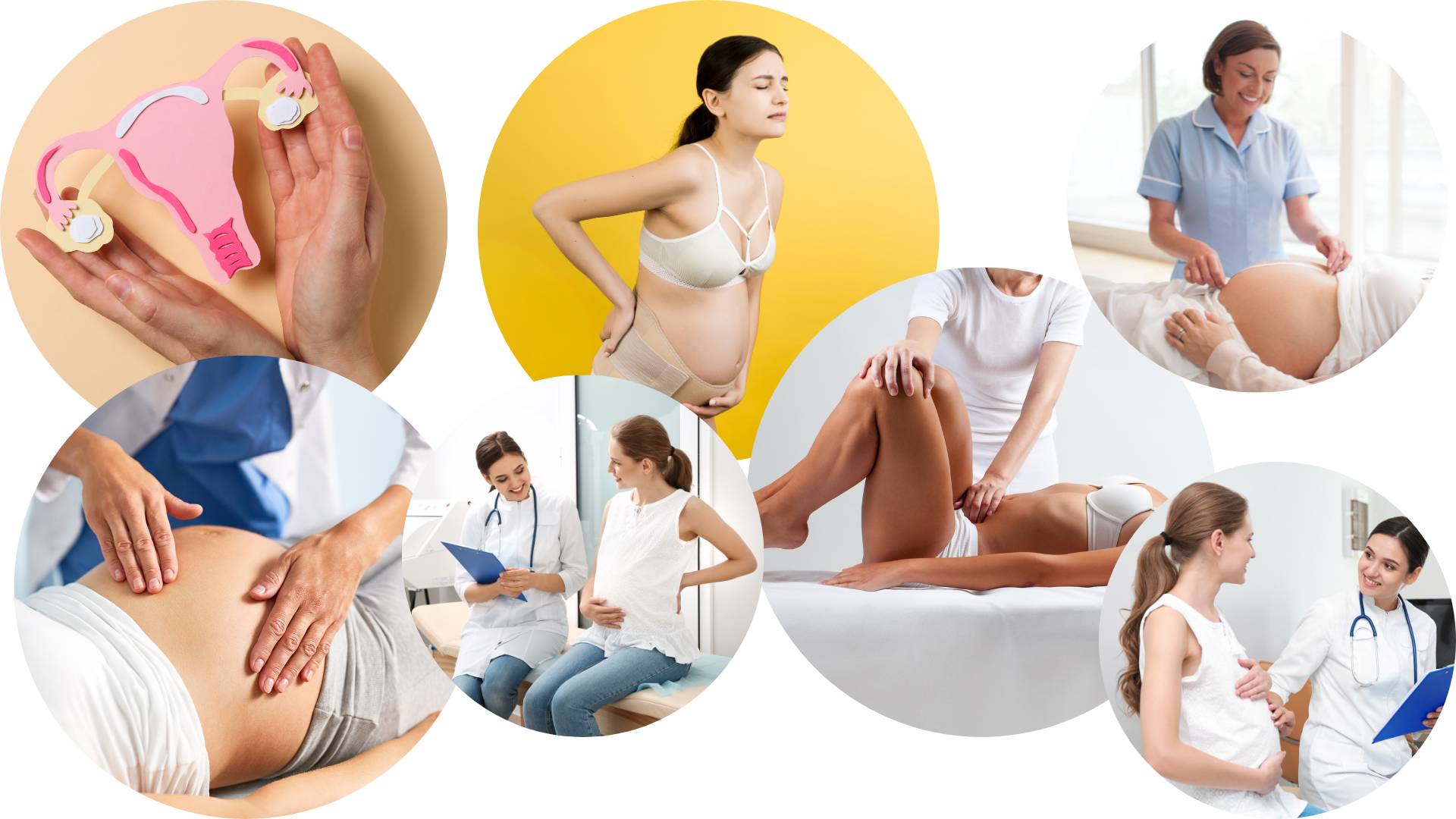 Competency covered in this module:
- Welcome to Module 8 of the OB/GYN content for medical students, where we will explore the integration of osteopathic medicine in women's health care. This module aims to equip you with the knowledge and skills necessary to apply osteopathic principles and techniques in your practice. By the end of this module, you will have a comprehensive understanding of the basic tenets of osteopathic medicine and be able to perform a structural exam of the female patient. You will become familiar with various types of osteopathic manipulative treatments commonly used in women's health care and understand the evidence supporting their use. Additionally, you will learn how to obtain a comprehensive women's musculoskeletal history, assess lifestyle risk factors, and consider the impact of social and environmental factors on support. This module will enable you to enhance your patient care skills and promote holistic well-being in women's health.
- Welcome to Module 8 of the OB/GYN content for medical students, where we will explore the integration of osteopathic medicine in women's health care. This module aims to equip you with the knowledge and skills necessary to apply osteopathic principles and techniques in your practice. By the end of this module, you will have a comprehensive understanding of the basic tenets of osteopathic medicine and be able to perform a structural exam of the female patient. You will become familiar with various types of osteopathic manipulative treatments commonly used in women's health care and understand the evidence supporting their use. Additionally, you will learn how to obtain a comprehensive women's musculoskeletal history, assess lifestyle risk factors, and consider the impact of social and environmental factors on support. This module will enable you to enhance your patient care skills and promote holistic well-being in women's health.
-
Student Learning Outcomes:
Upon completion of this module, students you will be able to:- List the basic tenets of osteopathic medicine.
- Perform a structural exam of the female.
- Perform the different types of osteopathic manipulative treatments (OMT) commonly used in women’s health care, including:
1. High velocity/low amplitude
2. Muscle energy
3. Myofacial release
4. Osteopathy in the cranial field
5. Strain/ counterstrain
6. Soft tissue/ articulatory techniques
7. Lymphatic treatment
8. Balanced ligamentous tension
9. Facilitated positional release
10. Progressive inhibition of neuromuscular structures
11. Functional technique
12. Visceral manipulation
13. Still technique
- Identify evidence supporting the use of OMT in ob-gyn.
-
Students mustMark as done
Required Learning Resources and Activities
-
Students mustView
Watch the entire video. (4 minutes)
APGO - 2016
-
Students mustView
Watch the entire video. (14 minutes)
APGO - 2015
-
Students mustView
Read the entire article. (3 minutes)
Elsevier Inc - 2016
- List the basic tenets of osteopathic medicine.
-
Student Learning Outcomes:
Upon completion of this module, students you will be able to:- Obtain a comprehensive women’s musculoskeletal history (e.g., scoliosis, musculoskeletal traumas, and biomechanical factors that may have influence on pregnancy and the outcome of pregnancy).
- Assess the patient for any lifestyle risk factors that may contribute to chronic somatic dysfunction.
- Obtain a thorough social history, including assessment of psychosocial support and understanding the impact of social and environmental factors on support.
-
Students mustMark as done
Required Learning Resources and Activities
-
Students mustView
Read the entire article and wacht videos. (3 minutes)
Physiopedia is a registered charity in the UK - 2023
-
-
Students mustView
Read the entire article. (2 minutes)
except COMPETENCY-BASED DISCUSSION & KEY TEACHING POINTSAPGO - 2021
- Obtain a comprehensive women’s musculoskeletal history (e.g., scoliosis, musculoskeletal traumas, and biomechanical factors that may have influence on pregnancy and the outcome of pregnancy).
-
Student Learning Outcomes:
Upon completion of this module, students you will be able to:- Perform an accurate osteopathic structural exam of the female patient.
- Identify areas of somatic dysfunction.
- Document all findings accurately in the patient chart, including:
1. Tenderness, asymmetry, restriction of motion, and/or tissue texture changes (TART) findings
2. Specific somatic dysfunctions
3. Spinal curves or postural influences
-
Students mustMark as done
Required Learning Resources and Activities
-
Students mustView
Read the entire article. (3 minutes)
American Osteopathic Association - 2016
-
Students mustView
Read the entire article. (16 minutes)
American Academy of Manual Medicine - 2023
-
- Perform an accurate osteopathic structural exam of the female patient.
-
Student Learning Outcomes:
Upon completion of this module, students you will be able to:- Include somatic dysfunction as a part of the differential diagnosis when appropriate.
- Incorporate osteopathic manipulative treatment (OMT) approaches as indicated, with consideration of value-based care.
- Explain the indications and contraindications to osteopathic manipulative medicine (OMM) in pregnancy and women’s care, with an understanding of patient safety.
-
Students mustMark as done
Required Learning Resources and Activities
-
Students mustView
Read the entire article. (7 minutes)
APGO - 2016
-
Students mustView
Read the entire article. (42 minutes)
NIH - 2022
-
Students mustView
Read the entire content. (9 minutes)
NIH - 2012
- Include somatic dysfunction as a part of the differential diagnosis when appropriate.
-
Student Learning Outcomes:
Upon completion of this module, students you will be able to:- Describe how musculoskeletal, postural and biomechanical factors affect fertility.
- Identify patients that may benefit from treatment of somatic dysfunction before pregnancy, including patients with:
1. Short leg syndrome
2. Chronic pelvic pain
3. Chronic low back pain
- Discuss maternal musculoskeletal/ structural changes associated with pregnancy.
- Describe how osteopathic manipulation may affect the physiology of pregnancy.
- Perform musculoskeletal, postural and biomechanical screening exams throughout prenatal care, with consideration of value-based care.
- Perform the treatments for common somatic dysfunctions in pregnancy, including:
1. Round ligament syndrome
2. Pubic shear
3. Carpal tunnel syndrome
4. Low back pain
- Prepare the female pelvis for delivery via osteopathic manipulative medicine (OMM) in the third trimester.
- Discuss the normal and abnormal structural, musculoskeletal and biomechanical changes of the postpartum period, including:
1. Involution of the uterus and how it affects pelvic structures
2. Persistent low back pain after pregnancy
- Describe the common somatic dysfunctions of the postpartum period and describe their corresponding osteopathic manipulative treatments (OMT)
1. Symphysis diaphysis
2. Sacroilial dysfunction
3. Pubic shear
4. Low back pain
5. Breast engorgement and mastitis
6. Postpartum depression
-
Students mustMark as done
Required Learning Resources and Activities
-
Students mustView
Read the entire content and watch videos. (15 minutes)
Physiopedia - 2023
-
Students mustView
Read the entire content. (15 minutes)
APGO - 2013
-
Students mustView
Read the entire content. (52 minutes)
NIH - 2022
-
Students mustView
Read the entire content. (12 minutes)
NIH - 2018
-
Students mustView
Read the entire content. (14 minutes)
Physiopedia - 2023
-
Students mustView
Read the entire content. (17 minutes)
Journal of Osteopathic Medicine - 2012
-
Students mustView
Watching complete slides. (12 minutes)
Larkin Community Hospital - 2015
-
Students mustView
Watching entire video. (6 minutes)
Lecturio Medical - 2020
-
Students mustView
Read the entire content. (19 minutes)
NIH - 2022
-
Students mustView
Read the entire content. (5 minutes)
Doctors of osteopathic medicine - 2020
-
Students mustView
Read the entire content. (12 minutes)
MedCrave - 2017
-
Students mustView
Read the entire content. (17 minutes)
NIH - 2022
-
Students mustView
Read the entire content. (5 minutes)
Cochrane - 2020
-
Students mustView
Read the entire content and the poster. (10 minutes)
School of Osteopathic Medicine - 2019
- Describe how musculoskeletal, postural and biomechanical factors affect fertility.
-
Student Learning Outcomes:
Upon completion of this module, students you will be able to:- Diagnose somatic dysfunction as a possible etiology for acute pelvic pain, including:
1. Iliosoas dysfunction
2. Pubic shear
a. Vertical
b. Anteriorposterior
3. Sacroiliac dysfunction
4. Sacral torsion
5. Myofascial strains
6. Restrictions of the pelvic diaphragm - Describe the musculoskeletal, structural and biomechanical factors that may be associated with chronic pelvic pain.
- List appropriate uses of osteopathic manipulative treatments (OMT) to manage both acute and chronic pelvic pain with consideration of value-based care.
- Identify possible tissue changes that are not visible by imaging for patients with a history of sexual abuse.
- Describe ways OMT can help prepare a patient for surgical gynecologic procedures.
- Discuss ways OMT can be used to decrease need for analgesics in the postoperative period, with consideration of value-based care.
- Perform OMT for the postoperative conditions, with consideration of value-based care.
-
Students mustMark as done
Required Learning Resources and Activities
-
Students mustView
Read under headline "3.2. Pelvic pain" (31 minutes)
Guidelines - 2019
-
-
Students mustView
Read the entire content. (70 minutes)
NIH - 2022
-
Students mustView
Read the entire content. (5 minutes)
Applied Radiology - 2017
-
Students mustView
Read the entire content. (31 minutes)
RSNA - 2019
-
Students mustView
Read the entire content. (12 minutes)
Massachusetts General Hospital - 2020
-
Students mustView
Read the entire content. (57 minutes)
European Society of Regional Anaesthesia and Pain Therapy - 2005
-
Students mustView
Read the entire content. (26 minutes)
Journal of Evidence-Based Integrative Medicine - 2017
- Diagnose somatic dysfunction as a possible etiology for acute pelvic pain, including:
-
Not available unless: The activity Teaching Case N1: Pap Test and DNA Probes/Cultures is marked complete ...Not available unless:
- The activity Teaching Case N1: Pap Test and DNA Probes/Cultures is marked complete
- The activity Teaching Case N2: Legal and Ethical Issues in Obstetrics and Gynecology (80 minutes) is marked complete
- The activity Teaching Case N3: Immediate Care of the Newborn is marked complete
- The activity Teaching Case N4: Postpartum Care is marked complete
- The activity Teaching Case N5: Ectopic Pregnancy is marked complete
- The activity Teaching Case N6: Hypertensive Disorders in Pregnancy is marked complete
- The activity Teaching Case N7: Abnormal Labor is marked complete
- The activity Teaching Case N8: Third Trimester Bleeding is marked complete
- The activity Teaching Case N9: Postpartum Hemorrhage is marked complete
- The activity Teaching Case N10: Postpartum Infection is marked complete
- The activity Teaching Case N11: Anxiety and Depression in Pregnancy and the Postpartum Period is marked complete
- The activity Teaching Case N12: Fetal Growth Abnormalities is marked complete
- The activity Teaching Case N13: Obstetric Procedures is marked complete
- The activity Teaching Case N15 : Vulvar and Vaginal Disease is marked complete
- The activity Teaching Case N16: Sexually Transmitted Infections (STI) and Urinary Tract Infections (UTI) is marked complete
- The activity Teaching Case N17: Gynecologic Procedures is marked complete
- The activity Teaching Case N18: Normal and Abnormal Uterine Bleeding is marked complete
- The activity Teaching Case N19: Menopause is marked complete
- The activity Teaching Case N20: Infertility is marked complete
- The activity Teaching Case N21: Premenstrual Syndrome (PMS), Premenstrual Dysphoric Disorder (PMDD) and other menstrual Disorders is marked complete
- The activity Teaching Case N22: Gestational Trophoblastic Neoplasia (GTN) is marked complete
- The activity Teaching Case N23: Vulvar Neoplasms is marked complete
- The activity Teaching Case N24: Cervical Disease and Neoplasia is marked complete
- The activity Teaching Case N25: Uterine Leiomyoma is marked complete
- The activity Teaching Case N26: Ovarian Neoplasms is marked complete
- The activity Teaching Case N27: Sexuality and Modes of Sexual Expression is marked complete
- The activity Teaching Case N28: Sexual Assault is marked complete
-

In this section, you can provide feedback about this course to help us make NextGenU.org better. Once evaluations are completed, you will be able to download your certificate of completion.
Click here give your feedback
-
Course Evaluation QuestionnaireNot available unless: The activity Final Exam is complete and passed
-
Self Evaluation QuestionnaireNot available unless: The activity Final Exam is complete and passed
-
-
-
Students mustMark as done
-
-
-
Students mustMark as done
-
-