

Peer Mentor Training for the NIED 1:1 Peer Support Program.
-
NIED CoursesPeer Mentor Training for the NIED 1:1 Peer Support Program.Resume0% complete0% complete
-
Students mustStudent must submit this questionnaire to complete it
Show More-


Welcome to the NIED Peer Mentor Training Course
The NIED Peer Mentor Training Course is designed to equip community members with the skills, knowledge, and confidence to serve as peer mentors for caregivers of loved ones with eating disorders. Rooted in community connection and mutual support, this program provides practical training on how to engage meaningfully with peers, foster empowerment, and promote sustainable well-being.
Participants will learn about:
-
The principles of peer support and mentorship.
-
Effective communication, active listening, and boundary-setting.
-
Understanding trauma, resilience, and recovery in context.
-
Navigating community resources and referral systems.
-
Promoting hope, empowerment, and self-determination.
This program is meant to provide foundational training for community members new to peer mentorship, and prepares participants to provide peer-led guidance while respecting human dignity, rights, and lived experiences.
The program can be used as Foundational training for community members new to peer mentorship.
This course was developed in partnership with, and is sponsored by, the National Initiative for Eating Disorders (NIED). The training was created using the NIED Peer Mentor Training Manual 1:1 Peer Support Program as its foundation and is specifically designed to complement and extend the manual into an interactive, competency-based learning experience. Participants must successfully complete this course in order to volunteer with NIED as a peer mentor.
Like all courses on the NextGenU.org platform, the NIED Peer Mentor Training Course is competency-based, evidence-informed, and aligned with international best practices. It integrates learning resources from accredited organizations and peer-reviewed literature to ensure learners receive high-quality, practical training.
There are ten (10) modules to complete, which include:
-
Introduction to Eating Disorders
-
The Peer Mentor Role
-
Mentoring Skills
-
Communication Skills
-
Caregiver Wellbeing
Providing Information
-
Coping Strategies
Setting Goals
Boundaries
Website Navigation and Documentation
Engaging with this Course:
You may browse this course for free to learn for your personal enrichment; there are no requirements.
To obtain a certificate, a learner must first register for the course and then successfully complete:
- All the reading requirements,
- All quizzes and pass with a 70% with unlimited attempts,
- All activities,
- The final exam with a minimum of 80% with unlimited attempts, and
- The self and course evaluation forms.
Here are the next steps to take the course and earn a certificate.
- Complete the registration form.
- Begin the course with Module 1: Introduction to Eating Disorders. In each module, read the description, complete all required readings and any required activity, and take the corresponding quizzes.
-
-
There are different types of resources prepared for you in this module. Below is a description of all the resources. The list is presented in the recommended order for your exploration before taking the lesson quiz:
- The Peer Mentor Training Manual - the manual is a key component of this course, we encourage you to read the respective module in the manual before beginning the module in the course.
- Micro-Learning - each module contains one micro-learning. Micro-learning provides an interactive experience with active learning strategies as we try to facilitate varying learning styles.
- Study Guides- these documents are more concise than the Manual. You can use them to quickly browse topics, or, to refresh your mind about the content covered. They also contain practice questions, more explanations, and example situations.
- Flashcards - each module contains one set of flashcard. Flashcards allow for active recall during studying, and help you to know if you understand the module at a glance.
- Peer Mentor Training Companion Bot - the chat bot is trained using materials and resources specific to this course. You can chat with the bot if you need help in understanding material or if you want more practice. The tutor bot can explain topics, prepare quizzes, activities and much more to enhance your learning experience! The tutor bot is not intended to replace professional advice or help, it is intended to supplement the material in the course to reinforce your understanding.
- Branching Logic Scenarios - these are interactive activities where the flow of a presented situation depends on your choices. Each decision you make leads to different outcomes, allowing you to explore various consequences and paths within the scenario. We encourage you to repeat these activities, selecting different options each time to allow yourself to benefit from all of the materials.
-
-
Students mustMark as done
Click on the link above to access the Peer Mentor Training Companion Bot.
This Bot was trained on the Peer Mentor Training Manual and is not meant to be used as a substitute for expert advice.
-
-
Maya is a mother whose daughter recovered from anorexia nervosa. Through years of navigating treatment, setbacks, and eventual
 recovery, she has developed resilience, empathy, and perspective. Now, Maya is ready to give back by becoming a peer mentor, using her lived experience to bring hope and support to other caregivers.
Eli is a father whose teenage son was recently diagnosed with bulimia. Unlike Maya, Eli is at the beginning of the caregiving journey. He feels overwhelmed by guilt, confusion, and fear, and struggles to find someone who truly understands his experience.
Throughout this course, you will follow Maya and Eli through a complete mentoring cycle, demonstrating the application of each module’s concepts in a realistic, evolving relationship.
-
Upon completion of this lesson, you will be able to: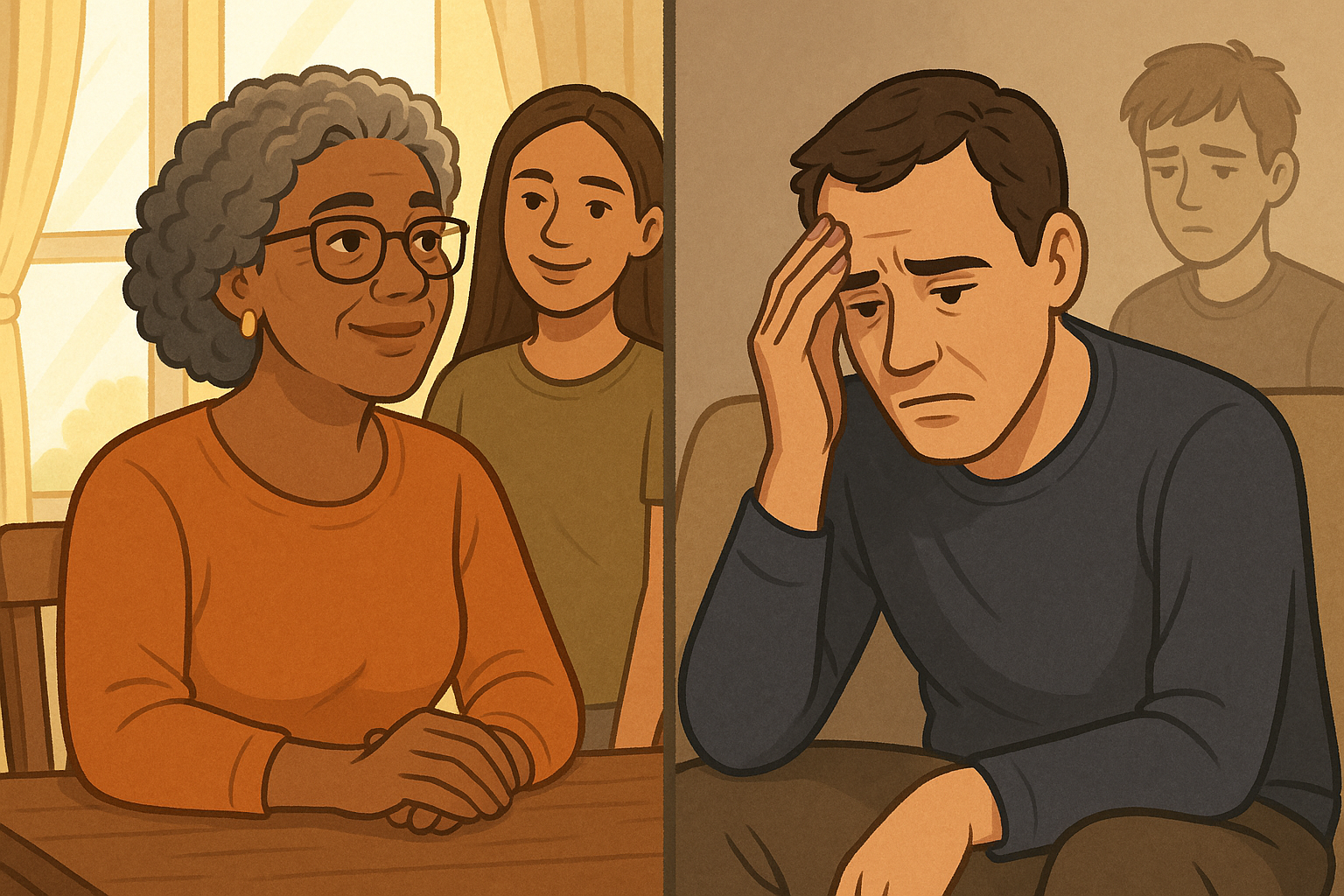 Maya reflects on her past as a mother whose daughter struggled with anorexia nervosa, remembering the fear and uncertainty but also the hope that carried them through to recovery. Meanwhile, Eli, a father whose teenage son was recently diagnosed with bulimia, feels overwhelmed, guilty, and unsure of where to turn for support.
This module introduces learners to the varied perspectives of eating disorders across genders and family roles. By following Maya’s resilience and Eli’s early crisis, you will explore the initial emotions caregivers experience: guilt, confusion, and fear, while also recognizing the vital role of hope in the recovery journey.
Learning Objectives:
1. Identify the major types of eating disorders and their symptoms
2. Recognize the unique challenges faced by caregivers of individuals with eating disorders
3. Understand the impact of eating disorders on family dynamics
4. Explain the importance of hope and recovery-oriented approaches
Approximate time required for the readings for this lesson (at 144 words/minute): 30 minutes
-
Required Learning Resources
-
Students mustMark as done
Please read the Introduction in the Peer Mentor Program Manual (pages 4 to 13).
-
Students mustMark as done
Click on the link above to open the NIED Peer Mentor Training Manual
1.0 MB -
Optional Learning Resources
-
Students mustMark as done
This document contains more concise notes to help you study or quickly refresh your mind about the content, as well as extra practice questions and explanations. Click on the link above to access the document.
585.9 KB -
Students mustMark as done
These flashcards are a quick and effective way to review key facts, terms, and concepts from the module. Use them to test your knowledge, reinforce learning, or prepare for the quiz—anytime, anywhere.
-
Optional Activities
-
Students mustMark as done
Click on the link above to enter the microlesson for this module. This microlesson is designed to promote active learning in short, focused segments, helping you engage with key ideas efficiently.
You will find questions throughout to reinforce your understanding, they are not for graded. -
Students mustMark as done
Click on the link above to enter the branching logic activity. This branching logic activity will help you practice and apply what you've learned to real life scenarios.
-
Required Activities
-
Students mustViewReceive a gradeReceive a passing grade
Click on the link above to enter the Quiz. To pass the quiz, you must achieve 70% or higher.
-
-
 Maya completes her self-assessment and application to become a peer mentor, reflecting on whether her caregiving experience can truly benefit others. At the same time, Eli feels isolated, searching for someone who understands what he is going through as a father of a child with an eating disorder.
This module highlights how personal strengths developed in caregiving—such as patience, empathy, and resourcefulness—can translate into effective mentoring. You will also learn about the unique role peer mentors play, the stages of the mentoring relationship, and why caregivers like Eli seek this form of support.
Learning Objectives:
Upon completion of this lesson, you will be able to:
- Explain the peer mentor role
- Understand the stages of the peer mentor relationship
- Identify personal strengths relevant to mentoring
- Recognize why caregivers seek peer support
-
Required Learning Resources
-
Please read Module 1: The Peer Mentor Role in the Peer Mentor Training Manual (pages 14 to 21).
-
Students mustMark as done
Click on the link above to open the NIED Peer Mentor Training Manual
1.0 MB -
Optional Learning Resources
-
Students mustMark as done
This document contains more concise notes to help you study or quickly refresh your mind about the content, as well as extra practice questions and explanations. Click on the link above to access the document.
652.3 KB -
Students mustMark as done
These flashcards are a quick and effective way to review key facts, terms, and concepts from the module. Use them to test your knowledge, reinforce learning, or prepare for the quiz—anytime, anywhere.
-
Optional Activities
-
Students mustMark as done
Click on the link above to enter the microlesson for this module. This microlesson is designed to promote active learning in short, focused segments, helping you engage with key ideas efficiently.
You will find questions throughout to reinforce your understanding, they are not graded. -
Students mustMark as done
Click on the link above to enter the branching logic activity. This branching logic activity will help you practice and apply what you've learned to real life scenarios.
-
Required Activities
-
Students mustViewReceive a gradeReceive a passing grade
Click on the link above to enter the Quiz. To pass the quiz, you must achieve 70% or higher.
-
Students mustMark as done
In this activity, you will reflect on what it means to support others through shared experience.
Step 1: Think about a time when sharing your own experience helped someone else, or when another person’s story helped you.
Step 2: Reflect on what made that exchange meaningful—what attitudes, boundaries, or communication skills helped build trust.
Step 3: Write a 300–500 word reflection summarizing how peer mentoring differs from friendship or counselling, and why shared experience is powerful in building connection.
Step 4: To share your work, click on the “Reply” button under this post and paste your work in the “message” box. Make sure to reference others’ intellectual property when necessary. Any/all references should follow 7th Edition APA formatting.
Step 5 (Optional): You can reply to your peers in a respectful and professional manner. Be sure that your post engages your peers' ideas by including a reflection on their comments, sharing ideas of other potential difficulties and parties involved, or asking thought-provoking questions. If a peer comments on your posting, please reply. To post a reply, click “Reply” on a particular discussion, write your feedback and then click on “post to forum.”
-
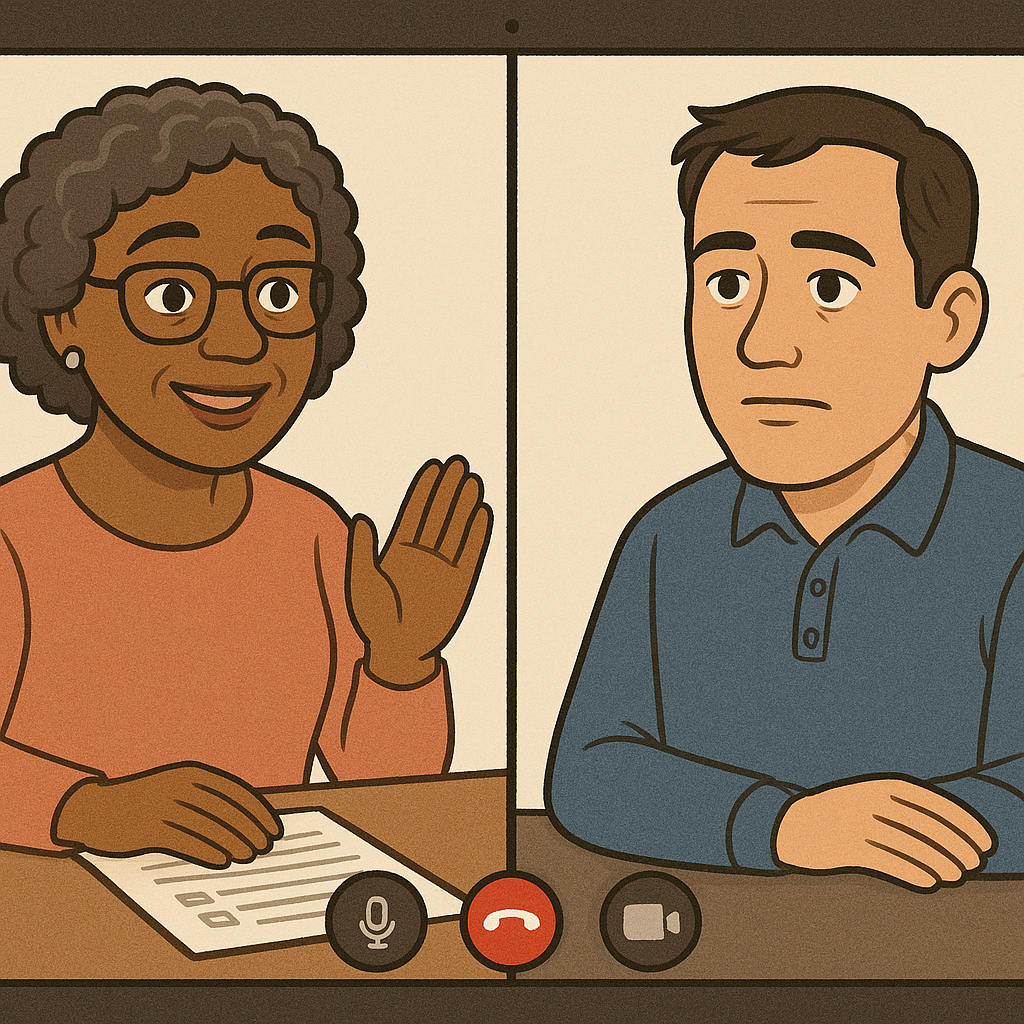 Maya is matched with Eli and prepares for their first conversation. She reviews the five mentoring skills framework, considering how to apply it, while Eli approaches the meeting with hesitation and skepticism about whether peer mentoring will truly help.
 In this module, you will explore the Support, Learn, Share, Inform, Dream (SLSID) framework and how it guides mentoring interactions. You will learn how mentors build trust in the early stages of the relationship and how to recognize and respect the boundaries of the mentor role.
Learning Objectives:
Upon completion of this lesson, you will be able to:- Identify the five skills for effective peer mentoring (Support, Learn, Share, Inform, Dream)
- Distinguish between appropriate mentor activities and those outside the role
- Demonstrate qualities of effective mentors
- Recognize the benefits of peer mentoring
-
Required Learning Resources
-
Please read Module 2: Mentoring Skills in the Peer Mentor Training Manual (pages 22 to 29).
-
Students mustMark as done
Click on the link above to open the NIED Peer Mentor Training Manual
1.0 MB -
Optional Learning Resources
-
Students mustMark as done
This document contains more concise notes to help you study or quickly refresh your mind about the content, as well as extra practice questions and explanations. Click on the link above to access the document.
594.1 KB -
Students mustMark as done
These flashcards are a quick and effective way to review key facts, terms, and concepts from the module. Use them to test your knowledge, reinforce learning, or prepare for the quiz—anytime, anywhere.
-
Optional Activities
-
Students mustMark as done
Click on the link above to enter the microlesson for this module. This microlesson is designed to promote active learning in short, focused segments, helping you engage with key ideas efficiently.
You will find questions throughout to reinforce your understanding, they are not for graded. -
Students mustMark as done
Click on the link above to enter the branching logic activity. This branching logic activity will help you practice and apply what you've learned to real life scenarios.
-
Required Activities
-
Students mustViewReceive a gradeReceive a passing grade
Click on the link above to enter the Quiz. To pass the quiz, you must achieve 70% or higher.
-
Students mustMark as done
In this activity, you will reflect on the role and responsibilities of a Peer Mentor.
Step 1: Identify one task or skill from the Peer Mentor role that you feel confident about, and one that may challenge you.
Step 2: Reflect on how your own caregiving experience can help you perform your role while maintaining boundaries.
Step 3: Write a 400–500 word reflection explaining how you can use your strengths to build trust while keeping the mentoring relationship professional.
Step 4: To share your work, click on the “Reply” button under this post and paste your work in the “message” box. Make sure to reference others’ intellectual property when necessary. Any/all references should follow 7th Edition APA formatting.
Step 5 (Optional): You can reply to your peers in a respectful and professional manner. Be sure that your post engages your peers' ideas by including a reflection on their comments, sharing ideas of other potential difficulties and parties involved, or asking thought-provoking questions. If a peer comments on your posting, please reply. To post a reply, click “Reply” on a particular discussion, write your feedback and then click on “post to forum.”
-
 Maya and Eli have their first real conversation. As Eli describes his son’s secretive behaviours and his own feelings of helplessness, Maya practices active listening and holds back from giving immediate advice. Eli begins to open up when he feels genuinely heard.
 This module focuses on effective communication strategies, including open-ended questioning, reflective listening, and managing difficult emotions. You will learn how these skills foster trust and connection, allowing mentees like Eli to feel safe sharing their experiences.
Learning Objectives:
Upon completion of this lesson, you will be able to:
- Apply active listening techniques
- Use open-ended questions effectively
- Provide affirming statements
- Demonstrate reflective listening
- Summarize conversations appropriately
- Navigate telephone communication effectively
-
Required Learning Resources
-
Please read Module 3: Communication Skills in the Peer Mentor Training Manual (pages 30 to 37).
-
Students mustMark as done
Click on the link above to open the NIED Peer Mentor Training Manual
1.0 MB -
Optional Learning Resources
-
Students mustMark as done
This document contains more concise notes to help you study or quickly refresh your mind about the content, as well as extra practice questions and explanations. Click on the link above to access the document.
567.9 KB -
Students mustMark as done
These flashcards are a quick and effective way to review key facts, terms, and concepts from the module. Use them to test your knowledge, reinforce learning, or prepare for the quiz—anytime, anywhere.
-
Optional Activities
-
Students mustMark as done
Click on the link above to enter the microlesson for this module. This microlesson is designed to promote active learning in short, focused segments, helping you engage with key ideas efficiently.
You will find questions throughout to reinforce your understanding, they are not for graded. -
Students mustMark as done
Click on the link above to enter the branching logic activity. This branching logic activity will help you practice and apply what you've learned to real life scenarios.
-
Required Activities
-
Students mustViewReceive a gradeReceive a passing grade
Click on the link above to enter the Quiz. To pass the quiz, you must achieve 70% or higher.
-
Students mustMark as done
In this activity, you will reflect on the importance of communication skills in mentoring.
Step 1: Recall a conversation where active listening or open-ended questioning made a difference in understanding someone’s needs.
Step 2: Reflect on how these communication skills can be adapted for phone-based mentoring.
Step 3: Write a 400–500 word reflection describing how effective communication can create a sense of safety and empowerment in a mentoring relationship.
Step 4: To share your work, click on the “Reply” button under this post and paste your work in the “message” box. Make sure to reference others’ intellectual property when necessary. Any/all references should follow 7th Edition APA formatting.
Step 5 (Optional): You can reply to your peers in a respectful and professional manner. Be sure that your post engages your peers' ideas by including a reflection on their comments, sharing ideas of other potential difficulties and parties involved, or asking thought-provoking questions. If a peer comments on your posting, please reply. To post a reply, click “Reply” on a particular discussion, write your feedback and then click on “post to forum.”
-
 Eli admits that he has been skipping meals, losing sleep, and withdrawing from friends while caring for his son. Maya recognizes these warning signs and gently shares how she once made similar mistakes, normalizing the challenges of self-care in caregiving.
This module emphasizes the importance of caregiver wellbeing. You will learn how to identify gaps across different dimensions of wellbeing, use affirming language to normalize self-care struggles, and encourage small, realistic steps toward healthier routines.
Learning Objectives:
Upon completion of this lesson, you will be able to:
- Identify different areas of wellbeing affected by caregiving
- Recognize signs of caregiver stress and burnout
- Provide appropriate wellbeing resources and strategies
- Share lived experience related to wellbeing challenges
-
Required Learning Resources
-
Please read Module 4: Caregiver Wellbeing in the Peer Mentor Training Manual (pages 38 to 49).
-
Students mustMark as done
Click on the link above to open the NIED Peer Mentor Training Manual
1.0 MB -
Optional Learning Resources
-
Students mustMark as done
This document contains more concise notes to help you study or quickly refresh your mind about the content, as well as extra practice questions and explanations. Click on the link above to access the document.
598.8 KB -
Students mustMark as done
These flashcards are a quick and effective way to review key facts, terms, and concepts from the module. Use them to test your knowledge, reinforce learning, or prepare for the quiz—anytime, anywhere.
-
Optional Activities
-
Students mustMark as done
Click on the link above to enter the microlesson for this module. This microlesson is designed to promote active learning in short, focused segments, helping you engage with key ideas efficiently.
You will find questions throughout to reinforce your understanding, they are not for graded. -
Students mustMark as done
Click on the link above to enter the branching logic activity. This branching logic activity will help you practice and apply what you've learned to real life scenarios.
-
Required Activities
-
Students mustViewReceive a gradeReceive a passing grade
Click on the link above to enter the Quiz. To pass the quiz, you must achieve 70% or higher.
-
Students mustMark as done
In this activity, you will reflect on how well-being shapes both caregiving and mentoring.
Step 1: Identify one area of well-being (physical, emotional, social, or financial) that caregiving may affect most strongly.
Step 2: Reflect on how you could model or encourage positive self-care in that area for another caregiver.
Step 3: Write a 400–500 word reflection connecting your own self-care practices with how you might guide a caregiver to maintain balance.
Step 4: To share your work, click on the “Reply” button under this post and paste your work in the “message” box. Make sure to reference others’ intellectual property when necessary. Any/all references should follow 7th Edition APA formatting.
Step 5 (Optional): You can reply to your peers in a respectful and professional manner. Be sure that your post engages your peers' ideas by including a reflection on their comments, sharing ideas of other potential difficulties and parties involved, or asking thought-provoking questions. If a peer comments on your posting, please reply. To post a reply, click “Reply” on a particular discussion, write your feedback and then click on “post to forum.”
-
 Eli describes a crisis when his son refused to attend a family dinner, leading him to lose his temper. Maya helps him process the situation, guiding him toward healthier coping techniques and suggesting strategies he can personalize for future stressful moments.
 This module helps you distinguish between reactive and proactive coping strategies, explore personalized stress management tools, and recognize when additional professional or community support may be needed.
Learning Objectives:
Upon completion of this lesson, you will be able to:
- Distinguish between healthy and unhealthy coping strategies
- Recognize signs of effective and poor coping
- Support caregivers in developing personalized coping strategies
- Identify when additional professional support is needed
-
Students mustMark as done
Required Learning Resources
-
Students mustMark as done
Please read Module 5: Coping Strategies in the Peer Mentor Training Manual (pages 48 to 53).
-
Students mustMark as done
Click on the link above to open the NIED Peer Mentor Training Manual
1.0 MB -
Students mustMark as done
Optional Learning Resources
-
Students mustMark as done
This document contains more concise notes to help you study or quickly refresh your mind about the content, as well as extra practice questions and explanations. Click on the link above to access the document.
616.9 KB -
Students mustMark as done
These flashcards are a quick and effective way to review key facts, terms, and concepts from the module. Use them to test your knowledge, reinforce learning, or prepare for the quiz—anytime, anywhere.
-
Students mustMark as done
Optional Activities
-
Students mustMark as done
Click on the link above to enter the microlesson for this module. This microlesson is designed to promote active learning in short, focused segments, helping you engage with key ideas efficiently.
You will find questions throughout to reinforce your understanding, they are not for graded. -
Students mustMark as done
Click on the link above to enter the branching logic activity. This branching logic activity will help you practice and apply what you've learned to real life scenarios.
-
Students mustMark as done
Required Activities
-
Students mustViewReceive a gradeReceive a passing grade
Click on the link above to enter the Quiz. To pass the quiz, you must achieve 70% or higher.
-
Students mustMark as done
In this activity, you will reflect on how caregivers cope with challenges and develop resilience.
Step 1: Think of one healthy and one unhealthy coping strategy you’ve seen or experienced in caregiving.
Step 2: Reflect on how a Peer Mentor can gently guide caregivers toward more adaptive strategies.
Step 3: Write a 400–500 word reflection exploring how resilience can grow through small changes in mindset and daily habits.
Step 4: To share your work, click on the “Reply” button under this post and paste your work in the “message” box. Make sure to reference others’ intellectual property when necessary. Any/all references should follow 7th Edition APA formatting.
Step 5 (Optional): You can reply to your peers in a respectful and professional manner. Be sure that your post engages your peers' ideas by including a reflection on their comments, sharing ideas of other potential difficulties and parties involved, or asking thought-provoking questions. If a peer comments on your posting, please reply. To post a reply, click “Reply” on a particular discussion, write your feedback and then click on “post to forum.”
-
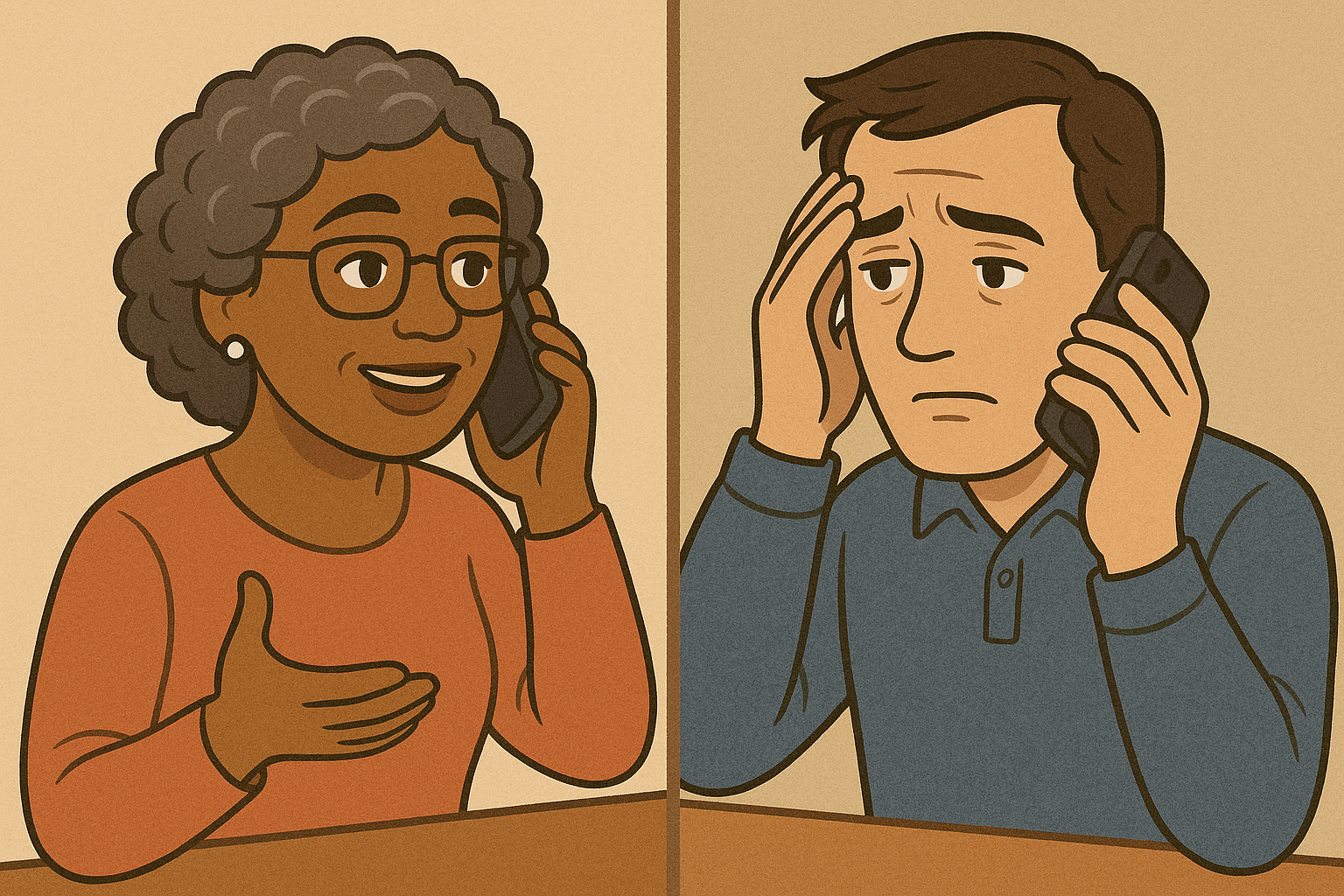 Frustrated with the conflicting information he has found online, Eli turns to Maya for clarity. Maya carefully shares resources that were helpful to her family, balancing her personal story with reliable evidence-based information, while reminding Eli that every journey is unique.
In this module, you will practice providing information at the right time and pace, ensuring that it empowers rather than overwhelms. You will also explore how to share personal experiences responsibly while maintaining hope and realism.Learning Objectives:
Upon completion of this lesson, you will be able to:
- Understand the benefits of providing appropriate information
- Apply best practices for information sharing
- Navigate common information resources
- Recognize when to refer to other information sources
-
Required Learning Resources
-
Please read Module 6: Providing Information in the Peer Mentor Training Manual (pages 54 to 57).
-
Students mustMark as done
Click on the link above to open the NIED Peer Mentor Training Manual
1.0 MB -
Optional Learning Resources
-
Students mustMark as done
This document contains more concise notes to help you study or quickly refresh your mind about the content, as well as extra practice questions and explanations. Click on the link above to access the document.
563.8 KB -
Students mustMark as done
These flashcards are a quick and effective way to review key facts, terms, and concepts from the module. Use them to test your knowledge, reinforce learning, or prepare for the quiz—anytime, anywhere.
-
Optional Activities
-
Students mustMark as done
Click on the link above to enter the microlesson for this module. This microlesson is designed to promote active learning in short, focused segments, helping you engage with key ideas efficiently.
You will find questions throughout to reinforce your understanding, they are not for graded. -
Students mustMark as done
Click on the link above to enter the branching logic activity. This branching logic activity will help you practice and apply what you've learned to real life scenarios.
-
Required Activities
-
Students mustViewReceive a gradeReceive a passing grade
Click on the link above to enter the Quiz. To pass the quiz, you must achieve 70% or higher.
-
Students mustMark as done
In this activity, you will reflect on how to share information that empowers (not advises) caregivers, and when to signpost to professionals.
Step 1: Select one topic where a caregiver might ask for “advice” (e.g., legal, counselling, advocacy).
Step 2: Reflect on how you would share lived experience and neutral information without giving personal advice, and when you would direct to a professional/service.
Step 3: Prepare a 400–500 word summary outlining the language and approach you would use (“I’m not an expert, but…”) and where you would refer (e.g., counselling or advocacy services).
Step 4: To share your work, click on the “Reply” button under this post and paste your work in the “message” box. Make sure to reference others’ intellectual property when necessary. Any/all references should follow 7th Edition APA formatting.
Step 5 (Optional): You can reply to your peers in a respectful and professional manner. Be sure that your post engages your peers' ideas by including a reflection on their comments, sharing ideas of other potential difficulties and parties involved, or asking thought-provoking questions. If a peer comments on your posting, please reply. To post a reply, click “Reply” on a particular discussion, write your feedback and then click on “post to forum.”
-
 After several conversations, Maya helps Eli identify a meaningful goal: attending a local parent support group. Together, they work through his practical and emotional barriers, such as limited time and discomfort with groups, breaking the process into manageable steps.
This module covers strength-based approaches to goal setting, how to create SMART goals, and strategies for addressing both practical and emotional barriers that may stand in the way of progress.Learning Objectives:
Upon completion of this lesson, you will be able to:
- Apply strength-based approaches to goal setting
- Help caregivers develop S.M.A.R.T. goals
- Support caregivers through the goal achievement process
- Address barriers to goal completion
-
Students mustMark as done
Required Learning Resources
-
Students mustMark as done
Please read Module 7: Setting Goals in the Peer Mentor Training Manual (pages 58 to 63).
-
Students mustMark as done
Click on the link above to open the NIED Peer Mentor Training Manual
1.0 MB -
Students mustMark as done
Optional Learning Resources
-
Students mustMark as done
This document contains more concise notes to help you study or quickly refresh your mind about the content, as well as extra practice questions and explanations. Click on the link above to access the document.
575.7 KB -
Students mustMark as done
These flashcards are a quick and effective way to review key facts, terms, and concepts from the module. Use them to test your knowledge, reinforce learning, or prepare for the quiz—anytime, anywhere.
-
Optional Activities
-
Students mustMark as done
Click on the link above to enter the microlesson for this module. This microlesson is designed to promote active learning in short, focused segments, helping you engage with key ideas efficiently.
You will find questions throughout to reinforce your understanding, they are not for graded. -
Students mustMark as done
Click on the link above to enter the branching logic activity. This branching logic activity will help you practice and apply what you've learned to real life scenarios.
-
Required Activities
-
Students mustViewReceive a gradeReceive a passing grade
Click on the link above to enter the Quiz. To pass the quiz, you must achieve 70% or higher.
-
Students mustMark as done
In this activity, you will reflect on using a strengths-based, S.M.A.R.T. approach to support caregiver goals.
Step 1: Identify one realistic goal a caregiver might set (e.g., scheduling respite, joining a peer group).
Step 2: Break it into S.M.A.R.T. steps and note how you would celebrate progress and adjust when obstacles arise.
Step 3: Prepare a 500 word reflection describing the steps, how you would ensure that they follow S.M.A.R.T., and how you would acknowledge achievements to build momentum.
Step 4: To share your work, click on the “Reply” button under this post and paste your work in the “message” box. Make sure to reference others’ intellectual property when necessary. Any/all references should follow 7th Edition APA formatting.
Step 5 (Optional): You can reply to your peers in a respectful and professional manner. Be sure that your post engages your peers' ideas by including a reflection on their comments, sharing ideas of other potential difficulties and parties involved, or asking thought-provoking questions. If a peer comments on your posting, please reply. To post a reply, click “Reply” on a particular discussion, write your feedback and then click on “post to forum.”
-
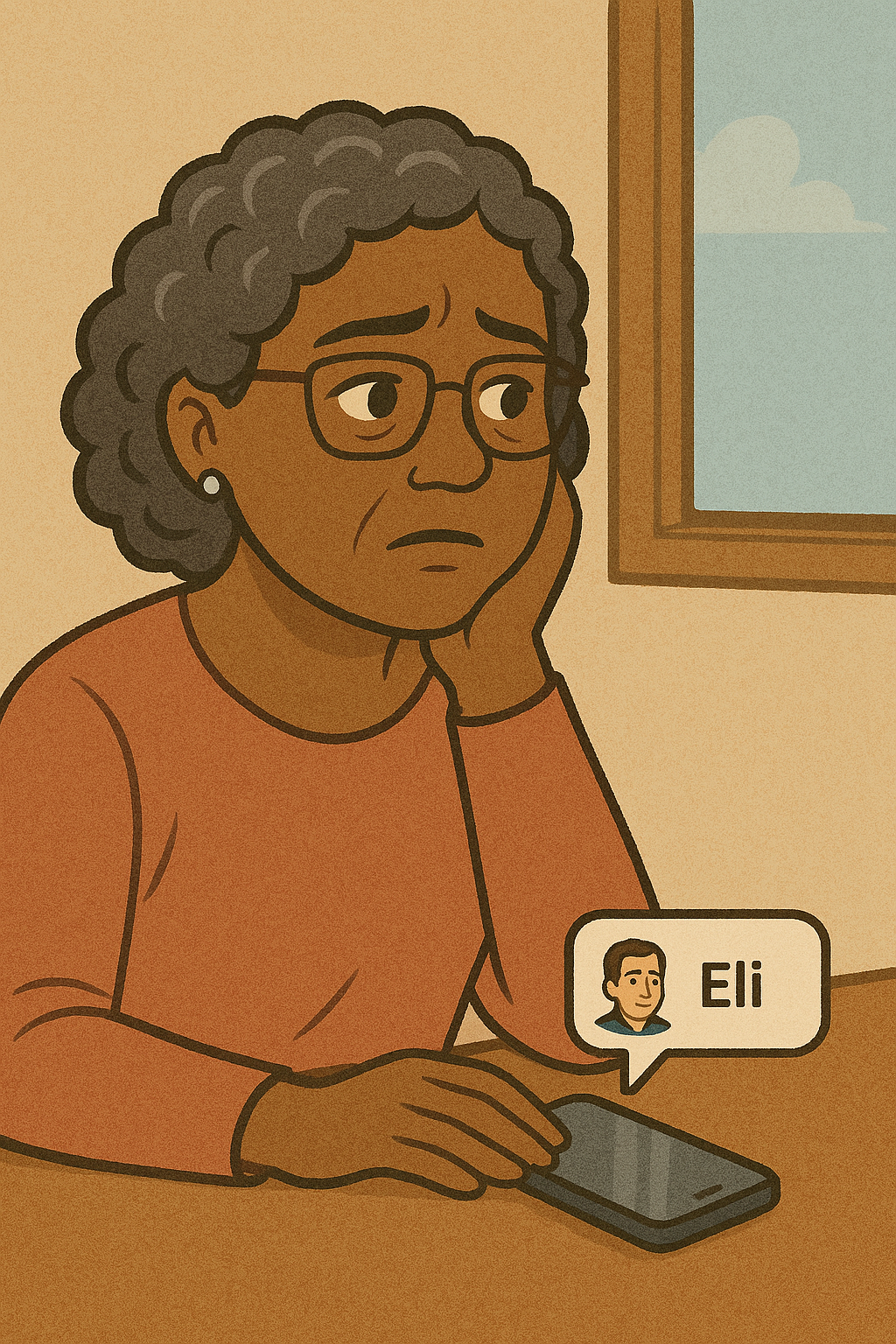 Maya notices she is checking her phone too often for messages from Eli, while Eli begins calling outside their scheduled times. Maya reflects on the importance of balance and respectfully resets their communication boundaries.
In this module, you will learn how to set and maintain healthy boundaries, how to address boundary crossings with respect and clarity, and how to protect your own wellbeing while supporting others.Learning Objectives:
Upon completion of this lesson, you will be able to:
- Establish and maintain healthy personal and professional boundaries
- Apply confidentiality principles appropriately
- Implement self-care strategies as a volunteer
- Set clear ground rules with caregiver participants
-
Students mustMark as done
Required Learning Resources
-
Students mustMark as done
Please read Module 8: Boundaries in the Peer Mentor Training Manual (pages 64 to 71).
-
Students mustMark as done
Click on the link above to open the NIED Peer Mentor Training Manual
1.0 MB -
Students mustMark as done
Optional Learning Resources
-
Students mustMark as done
This document contains more concise notes to help you study or quickly refresh your mind about the content, as well as extra practice questions and explanations. Click on the link above to access the document.
579.8 KB -
Students mustMark as done
These flashcards are a quick and effective way to review key facts, terms, and concepts from the module. Use them to test your knowledge, reinforce learning, or prepare for the quiz—anytime, anywhere.
-
Students mustMark as done
Optional Activities
-
Students mustMark as done
Click on the link above to enter the microlesson for this module. This microlesson is designed to promote active learning in short, focused segments, helping you engage with key ideas efficiently.
You will find questions throughout to reinforce your understanding, they are not for graded. -
Students mustMark as done
Click on the link above to enter the branching logic activity. This branching logic activity will help you practice and apply what you've learned to real life scenarios.
-
Students mustMark as done
Required Activities
-
Students mustViewReceive a gradeReceive a passing grade
Click on the link above to enter the Quiz. To pass the quiz, you must achieve 70% or higher.
-
Students mustMark as done
In this activity, you will reflect on setting healthy personal/professional boundaries, confidentiality, and self-care.
Step 1: Choose one boundary scenario (e.g., requests for personal contact info, gifts, or counselling).
Step 2: Explain how you would respond to maintain safety and professionalism, and when you would involve the Program Lead (e.g., risk, harassment, suicidal disclosure).
Step 3: Prepare a 400–500 word reflection on ground rules you’d set, how confidentiality applies, and one self-care strategy you’ll use to prevent burnout.
Step 4: To share your work, click on the “Reply” button under this post and paste your work in the “message” box. Make sure to reference others’ intellectual property when necessary. Any/all references should follow 7th Edition APA formatting.
Step 5 (Optional): You can reply to your peers in a respectful and professional manner. Be sure that your post engages your peers' ideas by including a reflection on their comments, sharing ideas of other potential difficulties and parties involved, or asking thought-provoking questions. If a peer comments on your posting, please reply. To post a reply, click “Reply” on a particular discussion, write your feedback and then click on “post to forum.”
-
 Maya documents her conversations with Eli, carefully recording his progress while considering how to capture important details without breaching confidentiality. She reflects on how proper documentation helps track growth and guide future interactions.
This module introduces strategies for objective, privacy-conscious documentation. You will learn how to balance thoroughness with confidentiality and how to use digital tools to manage the mentoring relationship effectively.Learning Objectives:
Upon completion of this lesson, you will be able to:
- Navigate the peer support website
- Complete communication notes accurately
- Maintain appropriate documentation and confidentiality
- Manage the match process from beginning to end
Approximate time required for the readings for this lesson (at 144 words/minute): 25 minutes
-
Students mustMark as done
Required Learning Resources
-
Students mustMark as done
Please read Module 9: Website Navigation and Communication Notes in the Peer Mentor Training Manual (pages 72 to 86).
-
Students mustMark as done
Click on the link above to open the NIED Peer Mentor Training Manual
1.0 MB -
Students mustMark as done
Optional Learning Resources
-
Students mustMark as done
This document contains more concise notes to help you study or quickly refresh your mind about the content, as well as extra practice questions and explanations. Click on the link above to access the document.
598.1 KB -
Students mustMark as done
These flashcards are a quick and effective way to review key facts, terms, and concepts from the module. Use them to test your knowledge, reinforce learning, or prepare for the quiz—anytime, anywhere.
-
Students mustMark as done
Optional Activities
-
Students mustMark as done
Click on the link above to enter the microlesson for this module. This microlesson is designed to promote active learning in short, focused segments, helping you engage with key ideas efficiently.
You will find questions throughout to reinforce your understanding, they are not for graded. -
Students mustMark as done
Click on the link above to enter the branching logic activity. This branching logic activity will help you practice and apply what you've learned to real life scenarios.
-
Students mustMark as done
Required Activities
-
Students mustViewReceive a gradeReceive a passing grade
Click on the link above to enter the Quiz. To pass the quiz, you must achieve 70% or higher.
-
 Six months into their mentoring relationship, Maya and Eli reflect on how far they have come. Eli has grown more confident in his caregiving role and self-care practices, while Maya has strengthened her skills as a mentor. Together, they prepare for Eli’s transition toward independence.
In this Final Exam, you will demonstrate comprehensive understanding of all modules. To pass this exam, you must obtain at least 80%.-
Final Exam Quiz
To take the final exam, you must complete all quizzes and complete all the required activities. The final exam consists of 39 questions, and you will have 80 minutes to complete it. When the time is over, you will have two minutes to submit your attempt before it expires, and your progress is discarded. You will not be able to answer additional questions in the grace period.
To access the exam, click on the name of the exam provided above. On the following screen, click the attempt quiz button to respond to the questions. You must obtain 80% or more to pass the final exam. You have unlimited attempts.Not available unless: The activity Quiz to Introductory Module is complete and passed ...Not available unless:- The activity Quiz to Introductory Module is complete and passed
- The activity Quiz Module 1 is complete and passed
- The activity Quiz Module 2 is complete and passed
- The activity Quiz Module 3 is complete and passed
- The activity Quiz Module 4 is complete and passed
- The activity Quiz Module 5 is complete and passed
- The activity Quiz Module 6 is complete and passed
- The activity Quiz Module 7 is complete and passed
- The activity Quiz Module 8 is complete and passed
-
-

In this section, you can provide feedback about this course to help us make NextGenU.org better. Once evaluations are completed, you will be able to download your certificate of completion.
-
Course Evaluation QuestionnaireNot available unless: The activity Final Exam is marked complete
-
Self Evaluation QuestionnaireNot available unless: The activity Final Exam is marked complete
-
-