

Section: Module 5: Lesson 3: Logistic Regression Analysis | Biostatistics | NextGenU.org
-
Learning Objectives
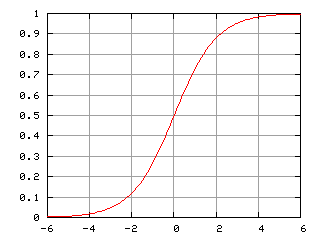
- Understand simple logistic regression analysis.
- Understand multiple logistic regression analysis and distinguish between adjusted and unadjusted regression coefficients.
- Be able (1) to distinguish between risks, e.g., absolute and relative risks, as well as odds and odds ratios, and (2) to differentiate relative risks from odds ratios and know how to conduct both methods.
-
-
-
Students mustView
- Read the web page (section 15.1) as well as sections 15.2 to 15.3. Access sections 15.2 (Polytomous Regression) and 15.3 (Further Logistic Regression Examples) by clicking on the titled links found on the left side of the web page.
- Understand multiple logistic regression analysis and distinguish between adjusted and unadjusted regression coefficients
-
Students mustView
- Read the entire article.
- Be able (1) to distinguish between risks, absolute and relative risks, as well as odds and odds ratios, and (2) to differentiate relative risks from odds ratios and know how to conduct both methods
-
Students mustView
- Read the entire article.
- Be able (1) to distinguish between risks, absolute and relative risks, as well as odds and odds ratios, and (2) to differentiate relative risks from odds ratios and know how to conduct both methods
-
Students mustView
- Read the entire web page.
- Be able (1) to distinguish between risks, absolute and relative risks, as well as odds and odds ratios, and (2) to differentiate relative risks from odds ratios and know how to conduct both methods
-
Students mustViewReceive a grade
To access the quiz, click on the name of the quiz provided above. On the following screen, click the "Preview quiz now" button to view the case studies and respond to the questions.
-
Students mustView
- Read the entire article.
-
- Read the web page (section 15.4) as well as sections 15.5 to 15.8. Access sections 15.5 (Generalized Linear Models), 15.5 (Nonlinear Regression), 15.7 (Exponential Regression Example), and 15.8 (Population Growth Example) by clicking on the titled links found on the left side of the web page.