

Section: Module 6: Lesson 2: Confounders and their Impact on Study Conclusions | Biostatistics | NextGenU.org
-
Learning Objectives
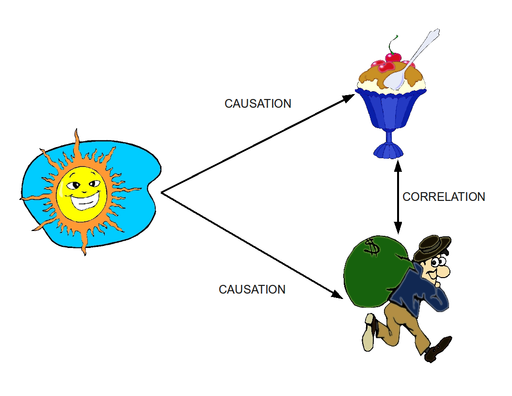
- Be able to comment on the validity of study conclusions with respect to confounding and alternative explanations and appreciate that association neither means causation nor indicates the directionality of potential cause and effect.
- Identify potential confounders in a relationship from a theoretical perspective and understand the consequences of using faulty reasoning and improper methods in studies.
- Apply analytical statistics in the context of a research project and be able to think critically about practical application of statistical concepts.
-
Students mustView
- Read the entire article.
- Be able to comment on the validity of study conclusions with respect to confounding and alternative explanations and appreciate that association neither means causation nor indicates the directionality of potential cause and effect
-
Students mustView
- Read the entire article.
- Identify potential confounders in a relationship from a theoretical perspective and understand the consequences of using faulty reasoning and improper methods in studies
-
Students mustViewMake a submission
- Find a local public health professional; someone who is involved with a health-related research project using quantitative methodologies (i.e. not purely qualitative studies) and learn about their project. Focus on the questions below, but also ask other relevant questions that can help you better understand the project and statistical methods used.
- Research question
- What is your research question?
- What are the null and alternative hypotheses?
- What is/are your outcome variable(s) and your explanatory variable(s), and how are they measured?
- How do you account for bias and confounding?
- Analysis steps
- What descriptive statistical methods do you use?
- What analytical methods do you use?
- How did you choose these methods?
- Are there alternative methods you could use? What are their advantages and limitations?
- Apply analytical statistics in the context of a research project and be able to think critically about practical application of statistical concepts
-
Students mustViewReceive a grade
To access the quiz, click on the name of the quiz provided above. On the following screen, click the "Preview quiz now" button to view the case studies and respond to the questions.