

Section: Module 4: Lesson 8: Premenstrual Syndrome (PMS), Premenstrual Dysphoric Disorder (PMDD) and other menstrual Disorders | Obstetrics and Gynecologic Clerkship for Medical Students | NextGenU.org
-
Student Learning Outcomes:
Upon completion of this module, students you will be able to:- Complete a history that can identify the criteria for making the diagnoses of PMS and PMDD.
- Describe treatment options for PMS and PMDD, including an interprofessional team approach, with consideration of value-based care and how they relate to patient safety and population health.
-
Students mustMark as done
Required Learning Resources and Activities
-
Students mustView
Watch the entire video. (4 minutes)
APGO - 2016
-
Students mustViewStart discussions: 1
Introduction:
Premenstrual Syndrome (PMS) and Premenstrual Dysphoric Disorder (PMDD) are common conditions that affect women of reproductive age, impacting their daily lives and mental well-being. This case aims to enhance the understanding of these conditions, from diagnosis to treatment strategies. This case aims to help you differentiate between PMS and PMDD using specific diagnostic criteria and understand the importance of using a multidisciplinary approach to manage these conditions, from simple lifestyle adjustments to pharmacological treatments. The importance of accurate diagnosis through prospective symptom rating is emphasized.
Case Profile:
A 36-year-old G3P3 married woman schedules a check-up after relocating to a new area. She's had regular periods, though they have recently become longer. She complains of abdominal bloating, breast tenderness, and frequent headaches. These symptoms seem to worsen about a week before her cycle and resolve a week after her cycle ends. She speculates that her symptoms may be cyclic but has never tracked them systematically.
She's currently not sexually active and takes no medications or supplements. All her pregnancies resulted in vaginal deliveries, and she experienced postpartum depression after her last two births. She describes her teenage years as "turbulent" and "emotional." She has had no past treatment for depression. She underwent a tonsillectomy as a child and has no other medical conditions or drug allergies.
Her family history includes depression in her mother. Her 41-year-old sister was recently diagnosed with ovarian cancer. In a systematic review, she describes occasional insomnia and excessive fatigue. She also reveals difficulty falling asleep due to overthinking. She recently moved with her children to a new city for work, while her husband stayed behind due to his job. This separation has been ongoing for about 5 months.
Activity Questions:
What diagnosis would you give this patient, and why?
Hint: Consider the cluster of symptoms and their timing in relation to her menstrual cycle.
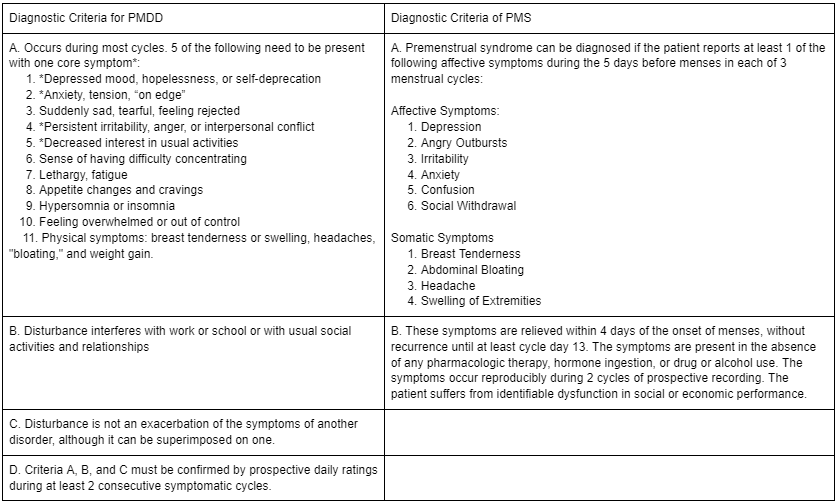
What tools are available for patients to assess their PMS/PMDD symptoms?
Hint: Think about the various questionnaires or diaries that can be used to track symptoms and their timing.
What are the treatment options for this patient?
Hint: Consider both non-pharmacological and pharmacological interventions, including lifestyle changes, dietary adjustments, and medications.
Share:
To share your work, click the "Add a new discussion topic" button under this post and paste your work into the "Message" box. Remember to reference others' intellectual property when necessary. All references should follow the 7th Edition APA formatting. For further instructions, see the resource on the Himmelfarb Health Sciences Library: APA citation resource (Note: references are excluded from word counts).
Interact:
To complete the activity, you must reply to at least two posts made by your peers in a respectful and professional manner. Make sure your post engages your peers' ideas by including a reflection on their comments, sharing ideas about other potential difficulties and involved parties, or asking thought-provoking questions. If a peer comments on your post, please reply. To post a reply, click "Reply" on a particular discussion, write your feedback, and then click "Post to forum."
- Complete a history that can identify the criteria for making the diagnoses of PMS and PMDD.