

Section: Introductory Module: Introduction to Eating Disorders | Peer Mentor Training for the NIED 1:1 Peer Support Program. | NextGenU.org
-
Upon completion of this lesson, you will be able to: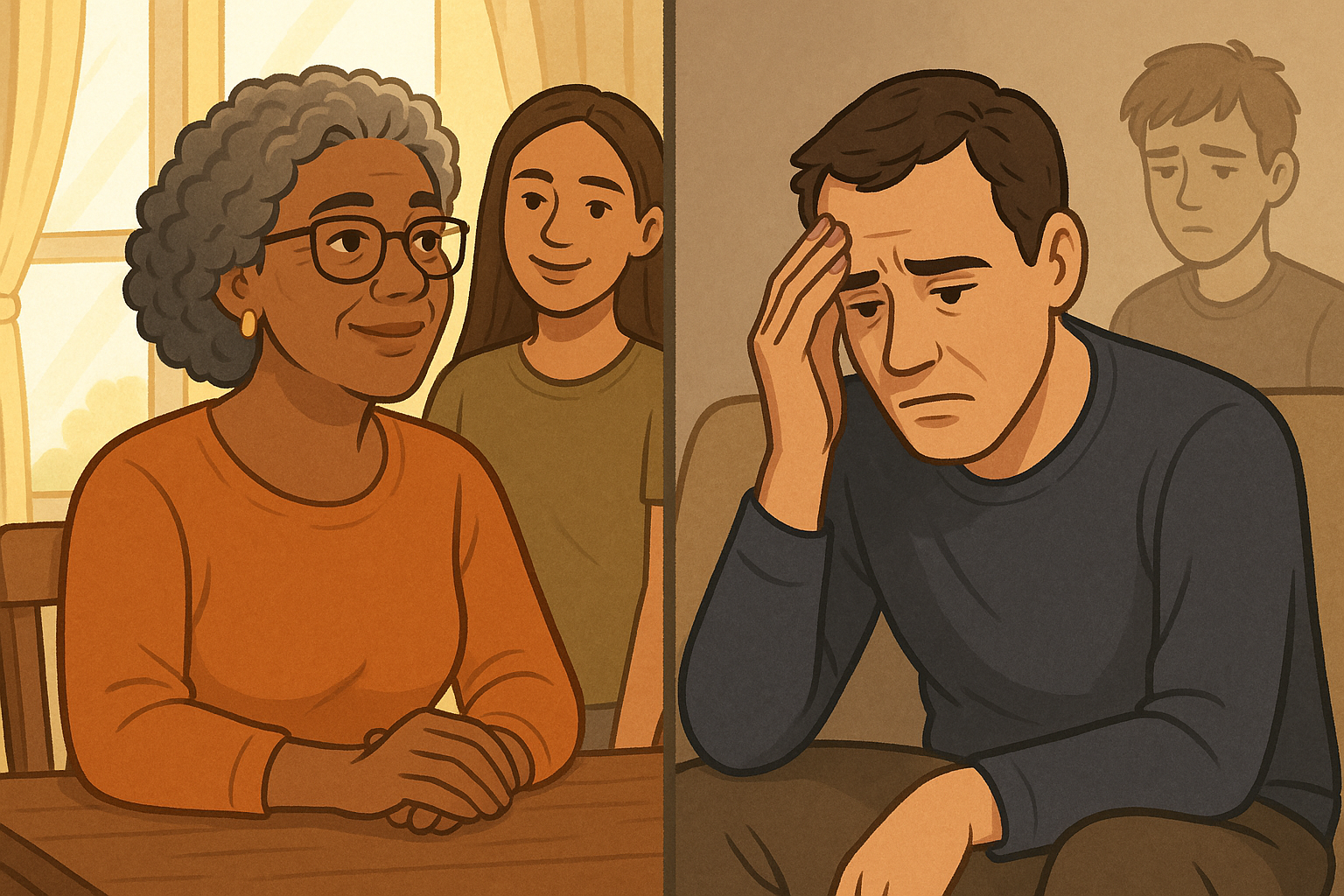 Maya reflects on her past as a mother whose daughter struggled with anorexia nervosa, remembering the fear and uncertainty but also the hope that carried them through to recovery. Meanwhile, Eli, a father whose teenage son was recently diagnosed with bulimia, feels overwhelmed, guilty, and unsure of where to turn for support.
This module introduces learners to the varied perspectives of eating disorders across genders and family roles. By following Maya’s resilience and Eli’s early crisis, you will explore the initial emotions caregivers experience: guilt, confusion, and fear, while also recognizing the vital role of hope in the recovery journey.
Learning Objectives:
1. Identify the major types of eating disorders and their symptoms
2. Recognize the unique challenges faced by caregivers of individuals with eating disorders
3. Understand the impact of eating disorders on family dynamics
4. Explain the importance of hope and recovery-oriented approaches
Approximate time required for the readings for this lesson (at 144 words/minute): 30 minutes
-
Students mustMark as done
Please read the Introduction in the Peer Mentor Program Manual (pages 4 to 13).
-
Students mustMark as done
Click on the link above to open the NIED Peer Mentor Training Manual
1.0 MB -
Students mustMark as done
This document contains more concise notes to help you study or quickly refresh your mind about the content, as well as extra practice questions and explanations. Click on the link above to access the document.
585.9 KB -
Students mustMark as done
These flashcards are a quick and effective way to review key facts, terms, and concepts from the module. Use them to test your knowledge, reinforce learning, or prepare for the quiz—anytime, anywhere.
-
Students mustMark as done
Click on the link above to enter the microlesson for this module. This microlesson is designed to promote active learning in short, focused segments, helping you engage with key ideas efficiently.
You will find questions throughout to reinforce your understanding, they are not for graded. -
Students mustMark as done
Click on the link above to enter the branching logic activity. This branching logic activity will help you practice and apply what you've learned to real life scenarios.
-
Students mustViewReceive a gradeReceive a passing grade
Click on the link above to enter the Quiz. To pass the quiz, you must achieve 70% or higher.