Speech Language Pathology
-
Health SciencesSpeech Language PathologyResume0% complete0% complete
-
Students mustStudent must submit this questionnaire to complete it
-
Students mustViewReceive a grade
Show More-


Welcome to the Speech-Language Pathology course. This course provides an opportunity to develop knowledge related to the rehabilitation and treatment of various pathologies and disorders of language, speech, and hearing.
Like all NextGenU.org courses, this course is competency-based. Competencies were adapted from the 2020 Certification Standards in Speech-Language Pathology, Assessing and Certifying Clinical Competency, Foundations of Clinical Practice for Audiology and Speech-Language Pathology, and PRAXIS Study Companion Speech-Language Pathology. It uses learning resources from accredited, world-class organizations such as the American Speech-Language-Hearing Association (ASHA), Life-Changing Speech Therapy, the Speech Pathology Graduate Programs, the Mayo Clinic Foundation for Medical Education and Research, the American Speech and Hearing Association, and the Center for Disease Control and Prevention.
This course was developed by Abbie Olszewski, Ph.D., CCC-SLP, a professor in Speech-Language Pathology; and Elsie Batcheller B.S; Morgan Lindsey, B.S.; Sierra Morrow, B.S.; Madison Cox, MSN, RN; Hugo Rojas, MD, MSc; Carolina Bustillos, MD, DiplEd; and Jamila Conliffe, MPH.
For publications on NextGenU.org’s courses’ efficacy, see “A Novel Integration of Online and Flipped Classroom Instructional Models in Public Health Higher Education” (2014), BMC Medical Education, “Building Public Health Capacity through Online Global Learning” (2018), Open Praxis, or the NextGenU.org’s publication page. Subscribe to our newsletter to be notified of future updates, new courses, and to be part of our community.
There are 8 modules to complete, which provide an introduction to:
- Module 1: Introduction to Speech Pathology and Audiology
- Module 2: Articulation & Phonological Disorders
- Module 3: Language Acquisition & Disorders in Children
- Module 4: Special Topics in Speech-Language Pathology
- Module 5: Types of Speech Disorders
- Module 6: Audiology: Hearing and its Disorders
- Module 7: Audiological Rehabilitation and Education
- Module 8: Addictive Habits Related to Speech Pathologies
The completion time for this course is estimated at 77 hours, comprising 18 hours for learning resources, 36 hours for time to study content and assimilation, and 23 hours for participating in quizzes and learning activities, to assist the learners in the synthesis of learning materials. This course is equivalent to 2 credit hours.
This course requires the completion of discussion forums which are needed to complete the course. At the end of each module, there is a practice quiz of ten to twenty (10 to 20) multiple-choice questions. After you’ve completed all of the modules, quizzes, and learning activities, you’ll have access to a final exam consisting of fifty (50) multiple-choice questions and a chance to evaluate this course. The final exam will be designed so that participants can have multiple opportunities to answer correctly until the required score of 70% or higher is obtained. Once you’ve passed the last test, you will be able to download a certificate of completion from NextGenU.org and our course’s co-sponsoring organizations. We keep all of your personal information confidential, never sell any of your information, and only use anonymized data for research purposes. Also, we are happy to report your testing information and share your work with anyone (your school, employer, etc.) at your request.
Engaging with this course:
You may browse this course for free to learn for your personal enrichment; there are no requirements. Register for this course to track your progress and record your grades.
To PASS and Obtain a Certificate
- All reading requirements,
- Complete all quizzes and pass with a 80% with unlimited attempts.
- All discussion forums,
- The final exam with a minimum of 80% and a maximum of 3 attempts.
- The self and course evaluation forms.
To obtain credit:
- Complete all requirements listed above for the certificate, and
- Your learning institution or workplace should approve the partner-university-sponsored NextGenU.org course for educational credit, as they would for their learner taking a course anywhere.
NextGenU.org is happy to provide your institution with:
- A link to and description of the course training, so they can see all its components, including the co-sponsoring universities and other professional organization co-sponsors;
- Your grade on the final exam;
- Your work products (e.g., case study activities) and any other required or optional shared materials that you produce and authorize to share with them;
- Your evaluations -- course, and self-assessments;
- A copy of your certificate of completion, with the co-sponsoring universities and other organizations listed.
To obtain a degree, NextGenU.org co-sponsors degree programs with institutional partners. To obtain a full degree co-sponsored with NextGenU.org, registrants must be enrolled in a degree program as a student of a NextGenU.org institutional partner. If you think that your institution might be interested in offering a degree with NextGenU.org, contact us.
We hope that you will find this a rewarding learning experience, and we count on your assessment and feedback to help us improve this training for future students.
Here are the next steps to take the course and earn a certificate:
- Complete the registration form,
- Take the pre-test,
- Begin the course with Module 1: Introduction to Speech Pathology and Audiology. In each lesson, read the description, complete all required readings and any required activity, as well as take the corresponding quizzes.
-
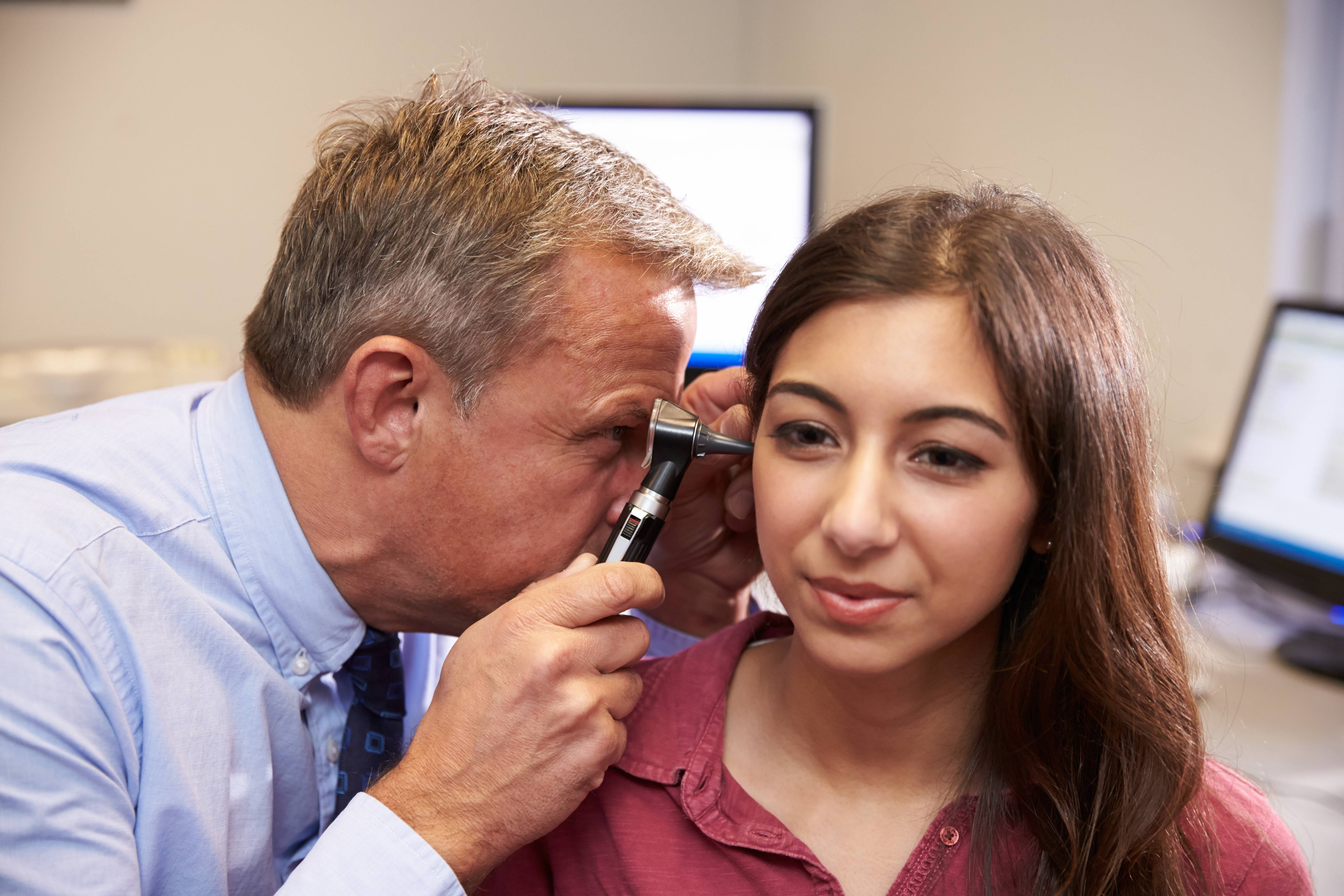
Instructional Goals covered in this module:
- Understand the educational and professional requirements to specialize and operate within the bounds of speech language pathology and audiology based on regulatory and legislative standards within one's jurisdiction.
- Explain the anatomical and physiological aspects necessary for the structures and functions of communication.
- Understand the basic concepts of the communication discipline and key communication disorders across the lifespan.
- Understand the educational and professional requirements to specialize and operate within the bounds of speech language pathology and audiology based on regulatory and legislative standards within one's jurisdiction.
-
Student Learning Outcomes:
Upon completion of this lesson, you will be able to:
- Describe the required educational backgrounds and professional practice of speech, language, and hearing scientists, audiologists, and speech-language pathologists.
- Identify the regulatory practice requirements for professions in audiology and speech-language pathology by local agencies and professional organizations.
Approximate time required to complete the readings (at 144 words/minute) and assignments for this lesson: 3 hours and 20 minutes.-
Students mustMark as done
Required Learning Resources and Activities
-
Students mustViewRead the section title "Speech-Language Pahtologists" that starts on page 15 and pages 18 to 23.(40 minutes)
Jones & Bartlett Learning - 2021 -
Students mustMark as done
Activity
-
Students mustViewStart discussions: 1
In this activity, you will research and share your findings on the educational background, professional activities, certification, and licensure of a speech-language pathologist and an audiologist in your region.
Step 1: Research one university in your state/country that offers both an undergraduate and graduate degree in speech-language pathology and audiology. Then, prepare a 250-400 word discussion post that:
- Discusses the available options in the speech-language pathology and audiology degrees and the length of time that the programs take to complete. If such offers do not exist, describe a related field.
- Discusses the requirements to become a speech-language pathologist and audiologist in your state/country. Include the minimum degree requirements, the licensure needed to practice, and how to maintain the licensure. If the profession does not exist, discuss the findings from a related profession.
Step 2: Write a 250-400 word discussion post to share your findings on undergraduate and graduate degrees in speech-language pathology and audiology. All references should follow 7th Edition APA formatting. See the resource on the Himmelfarb Health Sciences Library for instructions: APA citation resource (N.B. references are excluded from word counts).
Step 3: To share your work, click on the button at the bottom of the screen labeled “Add a new discussion topic” and include the title "Discussion Post: Research one university in your state/country that offers both an undergraduate and graduate degree in speech-language pathology and audiology," in the subject line.
Step 4: To complete the activity, you will need to comment on at least one post made by your peers respectfully and professionally. Be sure that your post engages your peers' ideas by including a reflection on their comments, sharing insights into the educational background and professional activities of a speech-language pathologist and an audiologist, or asking thought-provoking questions. If a peer comments on your post, please respond. To post a response, click on the particular discussion, then click on “Reply.”
OPTIONAL Step 5: Interact (10 minutes)If you would like to, you can reply to your peers' posts in a respectful and professional manner. Ensure that your post engages your peers' ideas by including a reflection on their comments, sharing ideas of other potential difficulties and parties involved, or asking thought-provoking questions. If a peer comments on your posting, please reply. To post a reply, click “Reply” on a particular discussion, write your feedback and then click on “Post to forum.”
-
Student Learning Outcomes:
Upon completion of this lesson, you will be able to:- Recognize the meanings of the terms Audiology, Speach, and Language.
- Identify the structures and functions of the central and peripheral nervous systems.
- Recognize each lobe of the brain and its corresponding functions in the cerebrum and cerebellum related to speech or language.
- Explain the process of respiration, phonation, resonation, and articulation for speech language production.
-
Students mustMark as done
Required Learning Resources and Activities
-
Students mustView
Read the content under the headlines: audiology, "Hearing sensitivity", "Pure-tone audiometry", "Air-conduction and bone-conduction testing" and "Vestibular assessment." (15 minutes)
-
-
Students mustView
Read the entire article. (12 minutes)
kidshealth.org - 2019
-
Students mustView
Read article sections: "Anatomy of Language," "Broca's (expressive or motor) Aphasia," and "Wernicke's Aphasia." (5 minutes)
University of California, San Francisco - 2020
-
-
Students mustView
Read the entire article. (4 minutes)
voicefoundation.org - 2020
-
Students mustMark as done
Activity
-
Students mustViewStart discussions: 1
In this activity, you will label the different structures of the brain that have been left blank.
Step 1: Write a 100-300 word discussion post describing the relationship between the four lobes of the brain and the corresponding types of aphasia. All references should follow 7th Edition APA formatting. See the resource on the Himmelfarb Health Sciences Library for instructions: APA citation resource (N.B. references are excluded from word counts).
Step 2: Obtain the labeling sheet and identify each structure of the brain from the picture provided, including the: brain stem, cerebellum, cerebrum, corpus callosum, hypothalamus, medulla, midbrain, pituitary gland, pons, thalamus, and ventricles.
Step 3: To complete the activity, you will need to look at the key document to check your work and identify any structures that were inaccurate.
Step 4: To share your work, click on the button at the bottom of the screen labeled “Add a new discussion topic” and include the title "Discussion Post: The lobes of the brain" in the subject line and attach the labeled sheet with your discussion post.
Step 5: To complete the activity, you will need to comment on at least one post made by your peers in a respectful and professional manner. Be sure that your post engages your peers' ideas by including a reflection on their comments, sharing insights into the relationship between the lobes of the brain and the different types of aphasia, or asking thought-provoking questions. If a peer comments on your post, please reply. To post a reply, click on the particular discussion, then click on “Reply.”
OPTIONAL Step 6: Interact (10 minutes)If you would like to, you can reply to your peers' posts in a respectful and professional manner. Ensure that your post engages your peers' ideas by including a reflection on their comments, sharing ideas of other potential difficulties and parties involved, or asking thought-provoking questions. If a peer comments on your posting, please reply. To post a reply, click “Reply” on a particular discussion, write your feedback and then click on “Post to forum.”
-
Student Learning Outcomes:
Upon completion of this lesson, you will be able to:- Recognize the differences between speech disorders, language disorders, and hearing disorders.
- Explain how communication is adversely affected by hearing, speech, and language disorders.
- Recognize the meanings of the terms impairment, disability, handicap, disorder, and difference, and how they affect communication.
- Recognize the difference among these speech and/or language disorders: Aphasia, apraxia of speech, auditory processing disorder, dysarthria, dysphagia, perceptive language disorder, phonological disorder, pragmatic language disorder, and stuttering.
-
Students mustMark as done
Required Learning Resources and Activities
-
Students mustView
Read the entire article. (10 minutes)
SpeechPathologyGraduatePrograms.org - 2020
-
Students mustView
Instructions Previously Provided in LO1 (30 minutes)
Jones & Bartlett Learning - 2019
-
Students mustView
Read the entire article. (5 minutes)
National Center for Learning Disabilities - 2014
-
Students mustView
Read the entire article. (10 minutes)
Emory University School of Medicine - 2018
-
Students mustView
Read the entire article. (10 minutes)
University of Wyoming Cooperative Extension Service - 2015
-
Students mustMark as done
Activity
-
Students mustViewStart discussions: 1
In this activity, you will discuss how hearing, speech, and language disorders adversely affect communication, providing specific examples for each type of disorder.
Step 1: Write a 100-300 word discussion post describing how hearing, speech, and language disorders adversely affect communication. Be sure to provide specific examples of each type of disorder.
All references should follow 7th Edition APA formatting. See the resource on the Himmelfarb Health Sciences Library for instructions: APA citation resource (N.B. references are excluded from word counts).
Step 2: To share your work, click on the button at the bottom of the screen labeled “Add a new discussion topic” and include the title "Discussion Post: How do hearing, speech, and language disorders adversely affect communication?" in the subject line.
Step 3: To complete the activity, you will need to comment on at least one post made by your peers respectfully and professionally. Be sure that your post engages your peers' ideas by including a reflection on their comments, sharing insights into how disorders of hearing, speech, and language adversely affect communication or asking thought-provoking questions. If a peer comments on your post, please reply. To post a reply, click on the particular discussion, then click on “Reply.”OPTIONAL Step 4: Interact (10 minutes)
If you would like to, you can reply to your peers' posts in a respectful and professional manner. Ensure that your post engages your peers' ideas by including a reflection on their comments, sharing ideas of other potential difficulties and parties involved, or asking thought-provoking questions. If a peer comments on your posting, please reply. To post a reply, click “Reply” on a particular discussion, write your feedback and then click on “Post to forum.”
-
Students mustMark as done
Quiz
-
Module 1: Quiz
To access the quiz, click on the name of the quiz provided above. On the following screen, click the attempt quiz button to respond to the questions.
TO PASS THIS QUIZ YOU MUST OBTAIN A SCORE OF 80%.
Not available unless: The activity Course Registration is marked complete ...Not available unless:- The activity Course Registration is marked complete
- The activity Pre-Test is marked complete
-
Instructional Goals covered in this module

- Examine the distinctions between articulation disorders and phonological disorders pertaining to human development.
-
Student Learning Outcomes:
Upon completion of this lesson, you will be able to:- Compare and contrast between articulation and phonological disorders.
- Differentiate between the causes of articulation and phonological disorders in children and adults.
- Distinguish between the major factors contributing to the severity of articulation and phonological disorders.
- Compare and contrast the language disorders that can be related to articulation and phonological disorders in children, including developmental and learning disabilities, hearing disorders, OMD's, cleft palate, dysarthria, and apraxia.
- Compare and contrast the difference between organic and functional articulation and phonological disorders in children.
- Evaluate the treatment measures for different articulation and phonological disorders.
- Assess the factors that contribute to the identification of articulation and phonological disorders, such as referral, formal and informal measures, and information from a language sample.
-
Required Learning Resources and Activities
-
Students mustView
Read the first paragraph and the first section labeled: Articulation and Phonological Disorders (Speech Sound Disorders). (2 minutes)
CHAT: Life Changing Speech Therapy - 2020
-
Students mustView
Read the section labeled: Articulation and Phonological Disorders. (2 minutes)
CHAT: Life Changing Speech Therapy - 2020
-
Students mustView
Read the section titled "Formal Assessment Measures" beginning on page 155 and ending on page 158. Read the third bullet point on the right side of page 153 starting with "Severity measures." (10 minutes)
ResearchGate - 2011
-
Students mustView
Read the section titled "Overview," "Speech Sound Disorders," and "Causes." (5 minutes)
-
Students mustView
Read the second section labeled: Severity Rating Scales/Guidelines for Speech/Language Communication Services - Articulation Severity Rating Scale. (5 minutes)
edublogs.org - 2012
-
Students mustView
Read sections titled phonological awareness and differential diagnosis. They begin on page 160 and end on page 161. (4 minutes)
ResearchGate - 2011
-
Students mustView
Read the entire handout and watch the video. (10 minutes)
Understood.org - 2020
-
Students mustView
Read the entire overview. (4 minutes)
ASHA Practice Portal - 2020
-
Students mustView
Read pages 151 - 154. Read section labeled: Specific Parameters for Assesment. (10 minutes)
ResearchGate - 2011
-
Students mustView
Read final section labeled: Assessing and Treating Articulation and Phonological Disorders. (2 minutes)
CHAT: Life Changing Speech Therapy - 2020
-
Students mustMark as done
Activity
-
Students mustViewStart discussions: 1
In this activity, you will evaluate articulation and phonological disorders, including the definition of each and how they are both treated.
Step 1: Create a PowerPoint presentation with a minimum of eight slides, including the following topics:
- definition of an articulation disorder;
- describe how an articulation disorder is identified, such as referral, formal and informal measures, etc.;
- definition of a phonological disorder;
- describe how a phonological disorder is identified, such as referral, formal and informal measures, etc.;
- describe how a language sample can inform an articulation and/or phonological disorder;
- explain how to treat an articulation disorder; and
- explain how to treat a phonological disorder.
The PowerPoint should include a title slide. All references should follow 7th Edition APA formatting. See the resource on the Himmelfarb Health Sciences Library for instructions: APA citation resource (N.B. references are excluded from word counts).
Step 2: To share your work, click on the bottom of the screen button labeled "Add a new discussion topic" and include the title "Discussion" in the subject line. Then, click on the button "Advanced" to open the Attachments section, where you will be able to attach your PowerPoint presentation.
Step 3: To complete the activity, you will need to comment on at least one post made by your peers in a respectful and professional manner. Be sure that your post engages your peers' ideas by including a reflection on their comments, or applying the link between articulation and phonological disorders to a specific situation, or asking thought-provoking questions. If a peer comments on your post, please reply. To post a reply, click on the particular discussion, then click on "Reply."OPTIONAL Step 4: Interact (10 minutes)
If you would like to, you can reply to your peers' posts in a respectful and professional manner. Ensure that your post engages your peers' ideas by including a reflection on their comments, sharing ideas of other potential difficulties and parties involved, or asking thought-provoking questions. If a peer comments on your posting, please reply. To post a reply, click “Reply” on a particular discussion, write your feedback and then click on “Post to forum.”
-
Students mustMark as done
Quiz
-
Module 2: Quiz
To access the quiz, click on the name of the quiz provided above. On the following screen, click the attempt quiz button to respond to the questions.
TO PASS THIS QUIZ YOU MUST OBTAIN A SCORE OF 80%.
Not available unless: The activity Module 1: Quiz is marked complete
-

Instructional Goals covered in this module:
- Understand the key processes and systems utilized in communication and the associated disorders.
- Evaluate the key language disorders and the areas of language in children.
- Assess the impact of socialization and acculturation on language development.
-
Student Learning Outcomes:
Upon completion of this lesson, you will be able to:- Summarize how thoughts are created, sent, and received.
- Examine the processes and systems that underlie speech and language development.
- Recognize the service delivery settings with adults including acute care, in-patient rehabilitation, long-term care, and out-patient clinic.
- Explain the different service delivery settings with adults including acute care, in-patient rehabilitation, long-term care, and out-patient clinic.
-
Required Learning Resources and Activities
-
Students mustView
Read section 1.2. (30 minutes)
Textbook: A Primer on Communication Studies - 2012
-
Students mustView
Read the entire website. (10 minutes)
speechpathologygraduateprograms - 2020
-
Students mustView
Read the entire article. (25 minutes)
asha.org - 2020
-
Students mustMark as done
Activity
-
Students mustViewStart discussions: 1
In this activity, you will discuss the major processes in communication and the interaction model of communication.
Step 1: Write a 250-500 word summary about the processes of communicating properly. How is a thought created, sent, and received? Use the following terminologies: "encoding," "decoding," "sender," and "receiver." Then, in your own words, describe the interaction model of communication. All references should follow 7th Edition APA formatting. See the resource on the Himmelfarb Health Sciences Library for instructions: APA citation resource (N.B. references are excluded from word counts).
Step 2: To share your work, click on the button at the bottom of the screen labeled “Add a new discussion topic” and include the title "Discussion Post: The Communication Process and Development" in the subject line.
Step 3: To complete the activity, you will need to comment on at least one post made by your peers in a respectful and professional manner. Be sure that your post engages your peers' ideas by including a reflection on their comments, sharing insights into the major steps in communicating, or asking thought-provoking questions. If a peer comments on your post, please reply. To post a reply, click on the particular discussion, then click on “Reply.”OPTIONAL Step 4: Interact (10 minutes)
If you would like to, you can reply to your peers' posts in a respectful and professional manner. Ensure that your post engages your peers' ideas by including a reflection on their comments, sharing ideas of other potential difficulties and parties involved, or asking thought-provoking questions. If a peer comments on your posting, please reply. To post a reply, click “Reply” on a particular discussion, write your feedback and then click on “Post to forum.”
- Summarize how thoughts are created, sent, and received.
-
Student Learning Outcomes:
Upon completion of this lesson, you will be able to:- Examine the three main language disorders: expressive language disorder, receptive language disorder, and mixed receptive-expressive language disorder.
- Differentiate among three areas of language and how they can become disordered: form, content, and use.
- Summarize the components needed to conduct an assessment for young children.
- Examine seven communication problems and how they can impact children in school: speech sounds, language and literacy, social communication, cognitive communication, feeding and swallowing, stuttering, and voice.
- Compare and contrast the differences among language disorder, learning disability, and dyslexia.
- Evaluate different aspects of language development that are especially difficult for school-age children with language disorders in the primary and secondary grades.
- Differentiate between the IDEA Part B and Part C in regards to service delivery to children with language disorders.
- Distinguish between the screenings and comprehensive assessments used to evaluate language disorders in students in the primary and secondary grades.
- Distinguish among four common intervention target areas used by speech-language pathologists who treat school-age children (5 to 10) with language disorders.
-
Required Learning Resources and Activities
-
Students mustView
Read the entire article. (5 minutes)
asha.org - 2020
-
Students mustView
Read the entire article. (5 minutes)
asha.org
-
Students mustView
Read the entire article. (10 minutes)
www.acamh.org - 2017
-
Students mustView
Read entire article. Click the learn more links if further information is helpful. (10 minutes)
ldaamerica.org - 2020
-
Students mustView
Instructions in Previous LO7 (5 minutes)
asha.org
-
Students mustView
Instuctions in previous LO5 (25 minutes)
asha.org - 2020
-
Students mustView
Read the entire article. (20 minutes)
asha.org - 2020
-
Students mustView
Read the entire "Treatment" section of article. (25 minutes)
asha.org - 2020
-
Students mustMark as done
Activity
-
Students mustViewStart discussions: 1
In this activity, you will assess the laws that directly affect the way services are delivered to school-age children with language disorders.
Step 1: Research whether there are any laws in your region that directly affect the way services are delivered to school-age children with language disorders.
Step 2: If there are, identify how the laws affect the way services are delivered to school-age children with language disorders in your region. If not, think about the laws that might be helpful for your community, state, and/or region.
Step 3: Write a 100-300 word summary describing the laws and the services that they provide to school-age children with language disorders or laws that you think might be helpful for your community, state, and/or region. Connect the existing laws or laws you think would be helpful to IDEA Part B and Part C to help support your claim. All references should follow 7th Edition APA formatting. See the resource on the Himmelfarb Health Sciences Library for instructions: APA citation resource (N.B. references are excluded from word counts).
Step 4: To share your work, click on the button at the bottom of the screen labeled “Add a new discussion topic” and include the title "Discussion Post: IDEA Laws" in the subject line.
Step 5: To complete the activity, you will need to comment on at least one post made by your peers in a respectful and professional manner. Be sure that your post engages your peers' ideas by including a reflection on their comments, sharing insights into the laws that directly affect the way services are delivered to school-age children with language disorders or asking thought-provoking questions. If a peer comments on your post, please reply. To post a reply, click on the particular discussion, then click on “Reply.”OPTIONAL Step 6: Interact (10 minutes)
If you would like to, you can reply to your peers' posts in a respectful and professional manner. Ensure that your post engages your peers' ideas by including a reflection on their comments, sharing ideas of other potential difficulties and parties involved, or asking thought-provoking questions. If a peer comments on your posting, please reply. To post a reply, click “Reply” on a particular discussion, write your feedback and then click on “Post to forum.”
-
Students mustMark as done
Recommended Additional Readings
-
Students mustView
Read the entire webpage. (5 minutes)
Understood
-
Students mustView
Read the entire article.(7 minutes)
PDF - 2021
-
Student Learning Outcomes:
Upon completion of this lesson, you will be able to:- Illustrate the relationship between using, speaking, and understanding the language of a community.
- Illustrate the intricate relationship between culture and communication.
- Differentiate between the processes of socialization and acculturation.
- Examine the implications of a mismatch between the culture of the home and the culture of the school.
- Illustrate how dialects are formed.
-
Students mustMark as done
Required Learning Resources and Activities
-
Students mustView
Read the entire article. (3 minutes)
instructionaldesign.org - 2020
-
Students mustView
Read the introductory paragraphs as well as sections "Language and Social Context" and "Language and Cultural Context." (15 minutes)
Communication in the Real World Textbook - 2016
-
-
Students mustView
Read the sections, "Introduction" and "Language Socialization as a Theory." (35 minutes)
escholarship.org - 2015
-
Students mustView
Read the entire article. (5 minutes)
Edutopia - 2016
-
Students mustView
Read the section titled "Dialects and Bilingualism" that begins on page 64 and ends on page 66. (10 minutes)
GoogleBooks - 2021
-
Students mustMark as done
Activity
-
Students mustViewStart discussions: 1
In this activity, you will assess the major processes of socialization and acculturation.
Step 1: Write a 100-300 word summary describing the processes of socialization and acculturation in relation to communicating within one's culture. Use common factors to help support your claim. All references should follow 7th Edition APA formatting. See the resource on the Himmelfarb Health Sciences Library for instructions: APA citation resource (N.B. references are excluded from word counts).
Step 2: To share your work, click on the button at the bottom of the screen labeled “Add a new discussion topic” and include the title "Discussion Post: Culture and Communication" in the subject line.
Step 3: To complete the activity, you will need to comment on at least one post made by your peers in a respectful and professional manner. Be sure that your post engages your peers' ideas by including a reflection on their comments, sharing insights into the major processes of socialization and acculturation, or asking thought-provoking questions. If a peer comments on your post, please reply. To post a reply, click on the particular discussion, then click on “Reply.”OPTIONAL Step 4: Interact (10 minutes)
If you would like to, you can reply to your peers' posts in a respectful and professional manner. Ensure that your post engages your peers' ideas by including a reflection on their comments, sharing ideas of other potential difficulties and parties involved, or asking thought-provoking questions. If a peer comments on your posting, please reply. To post a reply, click “Reply” on a particular discussion, write your feedback and then click on “Post to forum.”
-
Students mustMark as done
Quiz
-
Module 3: Quiz
To access the quiz, click on the name of the quiz provided above. On the following screen, click the attempt quiz button to respond to the questions.
TO PASS THIS QUIZ YOU MUST OBTAIN A SCORE OF 80%.
Not available unless: The activity Module 2: Quiz is marked complete
-
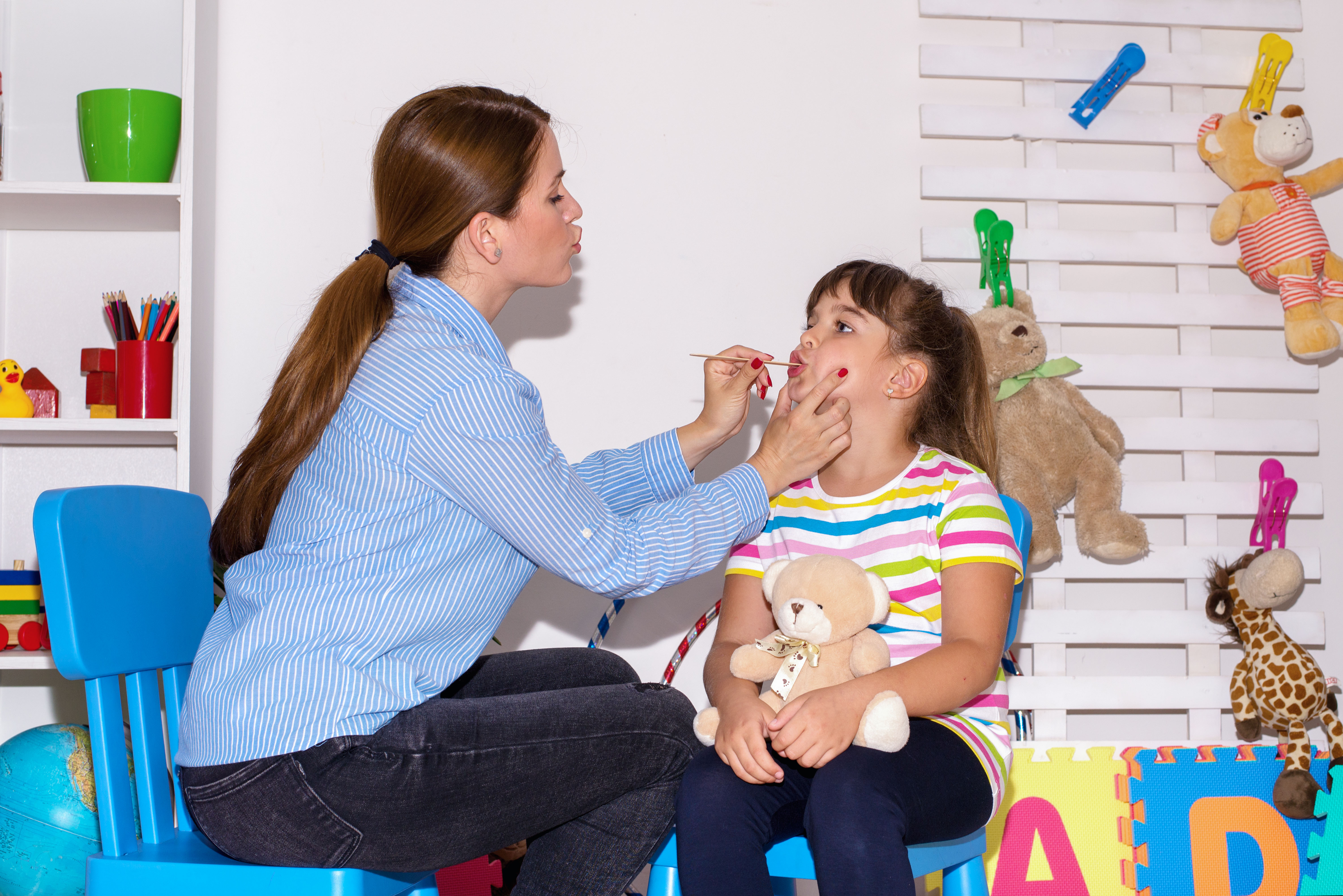
Instructional Goals covered in this module:
- Understand the process of oral functions and disorders.
- Understand the impact of neurological disorders on language development and processes.
- Understand the process of oral functions and disorders.
-
Student Learning Outcomes:
Upon completion of this lesson, you will be able to:- Summarize the normal processes involved in feeding and swallowing.
- Describe three potential causes of swallowing disorders in children and three in adults.
- Outline the clinical and instrumental procedures that correlate to evaluating dysphagia including: case history, oral mechanism exam, VFSS, FEES, laryngoscopy, and upper endoscopy.
- Outline the speech-language pathologist's role in assessing and the treatment of swallowing disorders in children and adults.
-
Required Learning Resources and Activities
-
Students mustView
Read the overview section, subsection titled "Feeding and Swallowing." (2 minutes)
asha.org - 2020
-
Students mustView
Read the entire article. (9 minutes)
asha.org
-
Students mustView
Read sections "Signs of Swallowing Disorders" and "Causes of Swallowing Disorders." (4 minutes)
asha.org
-
Students mustView
Read the entire "Assessment" section. (16 minutes)
asha.org - 2020
-
Students mustView
Under the section lableled, "Risks for Swallowing and Feeding Disorders" read the pararaph starting with "Our pediatric feeding soecialists..." and stop at the section titeld "Treatments." (3 minutes)
dukehealth.org - 2020
-
Students mustView
Read section "Job Scope, Duties, Roles, and Responsibilities of SLPs Who Specialize in Swallowing Disorders." (3 minutes)
speechpathologygraduateprograms.org - 2020
-
Students mustMark as done
Activity
-
Students mustViewStart discussions: 1
In this activity, you will understand the normal processes involved in feeding and swallowing.
Step 1: Draw the anatomy and make a note of the different phases involved in feeding and swallowing: esophageal phase, oral preparatory phase, oral transit phase, and pharyngeal phase.
Step 2: Using a 100-300 word discussion post, explain the phases the bolus takes during feeding and swallowing through the esophageal phase, oral preparatory phase, oral transit phase, and pharyngeal phase. All references should follow 7th Edition APA formatting. See the resource on the Himmelfarb Health Sciences Library for instructions: APA citation resource (N.B. references are excluded from word counts).
Step 3: To share your work, click on the button at the bottom of the screen labeled “Add a new discussion topic” and include the title "Discussion Post: Feeding and Swallowing" in the subject line.
Step 4: To complete the activity, you will need to comment on at least one post made by your peers in a respectful and professional manner. Be sure that your post engages your peers' ideas by including a reflection on their comments, sharing insights into the phases of feeding and swallowing, or asking thought-provoking questions. If a peer comments on your post, please reply. To post a reply, click on the particular discussion, then click on “Reply.”OPTIONAL Step 5: Interact (10 minutes)
If you would like to, you can reply to your peers' posts in a respectful and professional manner. Ensure that your post engages your peers' ideas by including a reflection on their comments, sharing ideas of other potential difficulties and parties involved, or asking thought-provoking questions. If a peer comments on your posting, please reply. To post a reply, click “Reply” on a particular discussion, write your feedback and then click on “Post to forum.”
-
Students mustMark as done
Recommended Additional Readings
-
Students mustView
Read sections "Testing for Feeding and Swallowing Disorders" and "Treatment for Feeding and Swallowing Disorders."(5 minutes)
asha.org
-
Students mustView
Read sections "Testing for Swallowing Disorders" and "Treatment for Swallowing Disorders." (5 minutes)
ASHA
-
Student Learning Outcomes:
Upon completion of this lesson, you will be able to:- Outline the five primary causes of brain damage that result in communication disorders in adults.
- Explain how Broca's, Wernicke's, and global brain damage influences the type of language disorder.
- Explain the communication impact of each of the following language impairments: spoken language expression, spoken language comprehension, written expression, and reading comprehension.
- Explain the characteristics of Broca's, Wernicke's, global, and mixed non-fluent aphasias.
- Explain the following treatment options for aphasia: community aphasia groups, computer-based treatment, multimodal treatment, and conversational coaching.
-
Required Learning Resources and Activities
-
Students mustView
Read sections "Causes" and "Risk Factors." (8 minutes)
Mayo Clinic - 2019
-
Students mustView
Read section "Disorders of Speech and Language," "Broca's (expressive or motor) Aphasia," "Global Aphasia," "Logopenic Primary Progressive Aphasia (lvPPA)," "Primary Progressive Aphasia (PPA)," and "Wernicke's Aphasia." (5 minutes)
University of California San Francisco - 2020
-
Students mustView
Read the entire "Signs and Symptoms" section. (3 minutes)
asha.org - 2020
-
Students mustView
Read the entire article. Click on the read more buttton or watch the linked video for further assistance on each different aphasias if needed. (10 minutes)
National Aphasia Association - 2018
-
-
Students mustMark as done
Activity
-
Students mustViewStart discussions: 1
In this activity, you will discuss the impact of these language impairments: spoken language expression, spoken language comprehension, written expression, and reading comprehension and discuss the four different types of treatment options for those with aphasia.
Step 1: Write a 100-500 word abstract that contains two parts. The first part should describe the different types of language impairments and their impacts: expression of spoken language, understanding of spoken language, written expression, and reading comprehension. For the second part of the abstract, you should describe the different types of aphasia treatment options: community aphasia groups, computer treatment, multimodal treatment, and conversational training. Compare and contrast the indications and contraindications for these aphasia treatment options. All references must follow the 7th edition APA format. See the resource at Himmelfarb Health Sciences Library for instructions: APA citation resource (N.B. references are excluded from word counts).
Step 2: To share your work, click on the button at the bottom of the screen labeled “Add a new discussion topic” and include the title "Discussion Post: Language Impairments" in the subject line.
Step 3: To complete the activity, you will need to comment on at least one post made by your peers in a respectful and professional manner. Be sure that your post engages your peers' ideas by including a reflection on their comments, sharing insights into the different language impairments, or asking thought-provoking questions. If a peer comments on your post, please reply. To post a reply, click on the particular discussion, then click on “Reply.”OPTIONAL Step 4: Interact (10 minutes)
If you would like to, you can reply to your peers' posts in a respectful and professional manner. Ensure that your post engages your peers' ideas by including a reflection on their comments, sharing ideas of other potential difficulties and parties involved, or asking thought-provoking questions. If a peer comments on your posting, please reply. To post a reply, click “Reply” on a particular discussion, write your feedback and then click on “Post to forum.”
-
Students mustMark as done
Quiz
-
Module 4: Quiz
To access the quiz, click on the name of the quiz provided above. On the following screen, click the attempt quiz button to respond to the questions.
TO PASS THIS QUIZ YOU MUST OBTAIN A SCORE OF 7/9.
Not available unless: The activity Module 3: Quiz is marked complete
-
Instructional Goals covered in this module:

- Understand the characteristics and types of fluency and the impact on speech.
- Understand the characteristics of phonation disorders and their impact on communication.
- Understand the impact of velopharyngeal dysfunction and oral-facial clefts on speech language.
-
Student Learning Outcomes:
Upon completion of this lesson, you will be able to:- Recognize the primary behaviors of stuttering; single-syllable word repetitions, syllable repetitions, sound repetitions, and inaudible sound prolongations.
- Compare the difference between primary and secondary stuttering behaviors.
- Recognize what contributes to the onset, development, and continuity of stuttering.
- Outline the characteristics of chronic stuttering.
- Recognize the following assessments: dysfluency types, frequency of dysfluencies, presence of clusters, duration of dysfluencies, assessment of variability, assessment of psychological reaction and avoidance behaviors, assessment of locus of control of behavior, and assessment of environmental demands and expectations.
- Explain the difference between stuttering-like and non-stuttering-like speech disfluencies.
- Understand the difference between the two primary types of treatment for stuttering: stuttering modification versus fluency shaping.
- Understand how the treatment of children who are beginning to stutter differs from the treatment of adolescents and adults who are chronic stutterers.
-
Students mustMark as done
Required Learning Resources and Activities
-
Students mustView
Read the first four paragraphs of the overview section. (3 minutes)
ASHA
-
Students mustView
Read the first and fourth paragraphs of the signs and symptoms section. (1 minute)
ASHA
-
Students mustView
Read the entire handout. (8 minutes)
Mayo Clinic Foundation for Medical Education and Research - 2021
-
Students mustView
Read pg. 352 starting at "Key Assessment Parameters" through page 361 up to "Assessment Aim's and Procedures." (35 minutes)
Research Gate - 2012
-
Students mustView
Read from the start of the article up until the section called "risk factors for stuttering." (3 minutes)
American Academy of Pediatrics and American Speech-Language-Hearing Association - 2015
-
Students mustView
Read the "treatment" tab up until "service delivery." (45 minutes)
ASHA
-
Students mustView
Read section labeled "Treatment for Stuttering." (2 minutes)
ASHA
-
Students mustMark as done
Activity
-
Students mustViewStart discussions: 1
In this activity, you will evaluate and discuss the primary and secondary stuttering behaviors and then evaluate and discuss three main assessment procedures for individuals who stutter.
Step 1: Write a 300-700 word discussion post explaining primary vs. secondary stuttering behaviors and the three main assessment procedures for individuals who stutter. All references should follow 7th Edition APA formatting. See the resource on the Himmelfarb Health Sciences Library for instructions: APA citation resource (N.B. references are excluded from word counts).
Step 2: To share your work, click on the button at the bottom of the screen labeled “Add a new discussion topic” and include the title "Discussion: Stuttering Behaviors and Assessment Procedures" in the subject line.
Step 3: To complete the activity, you will need to comment on at least one post made by your peers in a respectful and professional manner. Be sure that your post engages your peers' ideas by including a reflection on their comments, or asking thought-provoking questions. If a peer comments on your post, please reply. To post a reply, click on the particular discussion, then click on “Reply.”OPTIONAL Step 4: Interact (10 minutes)
If you would like to, you can reply to your peers' posts in a respectful and professional manner. Ensure that your post engages your peers' ideas by including a reflection on their comments, sharing ideas of other potential difficulties and parties involved, or asking thought-provoking questions. If a peer comments on your posting, please reply. To post a reply, click “Reply” on a particular discussion, write your feedback and then click on “Post to forum.”
-
Student Learning Outcomes:
Upon completion of this lesson, you will be able to:- Explain the causes and characteristics of phonation (voice) disorders.
- Recognize aided and unaided augmentative communication systems.
- Explain the causes of both congenital cerebral palsy and acquired cerebral palsy.
- Recognize the diseases that cause dysarthria in adults.
- Describe the 5 perceptual speech characteristics of dysarthria including: respiration, phonation, articulation, resonance, and prosody.
- Compare the differences and similarities of dysarthria in individuals with cerebral palsy and adults with dysarthria.
- Explain the difference between velopharyngeal function, velopharyngeal insufficiency, velopharyngeal incompetence, and velopharyngeal mislearning.
- Explain what a cleft lip or palate is, what can cause it, and the symptoms.
-
Students mustMark as done
Required Learning Resources and Activities
-
Students mustView
Read the "Overview" section. (4 minutes)
ASHA Practice Portal - 2020
-
Students mustView
Read the entire page. (4 minutes)
ASHA - 2020
-
Students mustView
Read the entire page. (11 minutes)
U.S. Department of Health and Human Services - 2019
-
Students mustView
Read the sections labeled "Overview" and "Causes." (2 minutes)
Mayo Clinic Foundation for Medical Eduction and Research - 2020
-
Students mustView
Read the last two paragraphs in the "Overview" section. Read the "Signs and Symptoms" section as well. (3 minutes)
ASHA Practice Portal - 2020
-
Students mustView
Read the section labeled "Overview" as well as the section labeled "Causes." (5 minutes)
ASHA - 2020
-
Students mustView
Read the section "What causes cerebral palsy" as well as the section called "What are the different forms?" (12 minutes)
National Institute of Neurological Disorders and Stroke -2020
-
Students mustView
Read about "normal velopharyngeal function," as well as "types of velopharyngeal dysfunction," and "velopharyngeal dysfunction and speech." (3 minutes)
Cincinnati Children's Hospital Medical Center - 2019
-
Students mustView
Read the entire sheet. (7 minutes)
Mayo Clinic Foundation for Medical Education and Research - 2019
-
Students mustView
Read the section labeled "Roles and Responsibilities." (4 minutes)
ASHA - 2020
-
Students mustMark as done
Activity
-
Students mustViewStart discussions: 1
In this activity, you will evaluate and discuss the differences and similarities of dysarthria in individuals with cerebral palsy and adults with dysarthria.
Step 1: Write a 300-700 word discussion post describing the differences and similarities of dysarthria in individuals with cerebral palsy and adults with dysarthria. All references should follow 7th Edition APA formatting. See the resource on the Himmelfarb Health Sciences Library for instructions: APA citation resource (N.B. references are excluded from word counts).
Step 2: To share your work, click on the button at the bottom of the screen labeled “Add a new discussion topic” and include the title "Discussion: Comparison of symptoms for adults with dysarthria symptoms and individuals with dysarthria caused by cerebral palsy" in the subject line.
Step 3: To complete the activity, you will need to comment on at least one post made by your peers in a respectful and professional manner. Be sure that your post engages your peers' ideas by including a reflection on their comments, or asking thought-provoking questions. If a peer comments on your post, please reply. To post a reply, click on the particular discussion, then click on “Reply.”OPTIONAL Step 4: Interact (10 minutes)
If you would like to, you can reply to your peers' posts in a respectful and professional manner. Ensure that your post engages your peers' ideas by including a reflection on their comments, sharing ideas of other potential difficulties and parties involved, or asking thought-provoking questions. If a peer comments on your posting, please reply. To post a reply, click “Reply” on a particular discussion, write your feedback and then click on “Post to forum.”
-
Students mustViewStart discussions: 1
In this activity, you will discuss one way in which a speech-language pathologist can assist a person with a phonation/voice disorder and one way in which a speech-language pathologist can assist a person with an oral-facial cleft.
Step 1: Write a 100-500 word essay discussing one way in which a speech-language pathologist can assist a person with a phonation/voice disorder and one way in which a speech-language pathologist can assist a person with an oral-facial cleft.
All references should follow 7th Edition APA formatting. See the resource on the Himmelfarb Health Sciences Library for instructions: APA citation resource (N.B. references are excluded from word counts).
Step 2: To share your work, click on the button at the bottom of the screen labeled “Add a new discussion topic” and include the title "Discussion: A speech-language pathologist's role in the care of an individual with an oral-facial cleft and an individual with a phonation (voice) disorder" in the subject line.
Step 3: To complete the activity, you will need to comment on at least one post made by your peers in a respectful and professional manner. Be sure that your post engages your peers' ideas by including a reflection on their comments, or asking thought-provoking questions. If a peer comments on your post, please reply. To post a reply, click on the particular discussion, then click on “Reply.”OPTIONAL Step 4: Interact (10 minutes)
If you would like to, you can reply to your peers' posts in a respectful and professional manner. Ensure that your post engages your peers' ideas by including a reflection on their comments, sharing ideas of other potential difficulties and parties involved, or asking thought-provoking questions. If a peer comments on your posting, please reply. To post a reply, click “Reply” on a particular discussion, write your feedback and then click on “Post to forum.”
-
Students mustMark as done
Quiz
-
Module 5: Quiz
To access the quiz, click on the name of the quiz provided above. On the following screen, click the attempt quiz button to respond to the questions.
TO PASS THIS QUIZ YOU MUST OBTAIN A SCORE OF 80%.
Not available unless: The activity Module 4: Quiz is marked complete -
Students mustMark as done
Recommended Additional Readings
-
Students mustView
Read the entire page. (3 minutes)
Mayo Clinic Foundation for Medical Education and Research - 2020
-
Students mustView
Start at the sections "More about speech therapy for dysarthria." Open the boxes with the "+." (2 minutes)
Cerebral Palsy Alliance Research Foundation - 2016
-
Students mustView
Read the section labeled "Treating Voice Disorders: The Role of the Speech Language Pathologist in Voice Therapy." (10 minutes)
Speech Pathology Graduate Programs - 2020
-
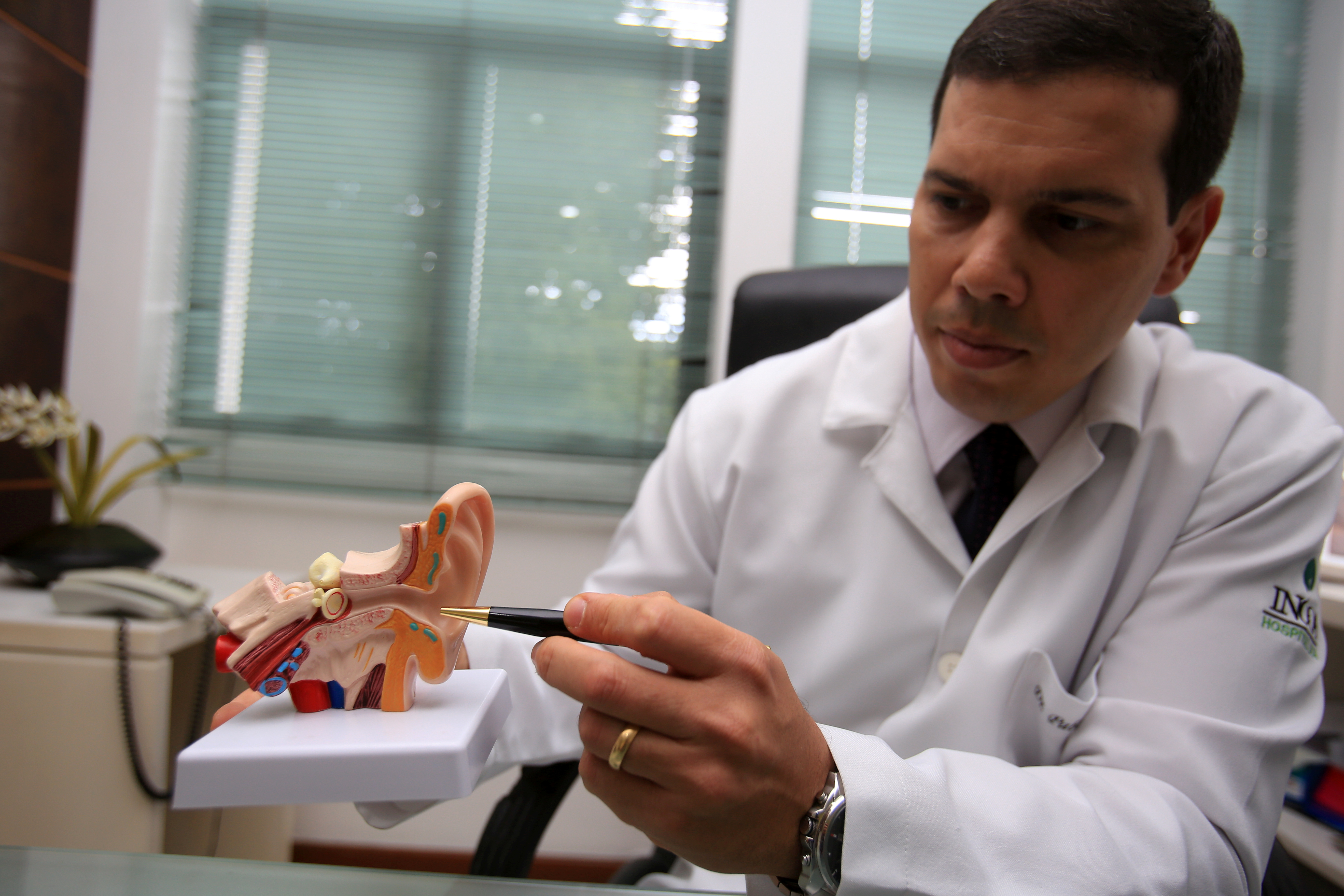
Instructional Goals covered in this module:
- Understand the basic concepts of audiology and the hearing impacts.
- Analyze the process for screening, treatment, and diagnosis in audiology.
-
Student Learning Outcomes:
Upon completion of this lesson, you will be able to:- Understand what the profession of audiology is designed to accomplish.
- Explain what constitutes a hearing loss.
- Describe the following causes of hearing loss and how they contribute to hearing loss: ear infections, injury/trauma, aging, exposure to prolonged or excessive noise, and medications that are toxic to the ear.
- Compare and contrast the following types of hearing loss: conductive, sensorineural, and mixed.
- Describe the difficulties in understanding speech for people with different kinds of hearing loss.
- Explain how to conduct pure-tone testing, speech testing, otoacoustic emissions, and tests of the middle ear.
-
Students mustMark as done
Required Learning Resources and Activities
-
Students mustView
Read the entire article. (5 minutes)
American Academy of Audiology - 2020
-
Students mustView
Read the entire article. (10 minutes)
American Speech and Hearing Association - 2015
-
Students mustView
Read section 1.2 titled "Possible Causes of Hearing Loss." It begins on page 7 and ends on page 11. (15 minutes)
World Health Organization - 2015
-
Students mustView
Instructions Previously Provided in LO2. (10 minutes)
American Speech and Hearing Association - 2015
-
Students mustView
Read from "Conductive or Sensorineural" to Causes of sensorineural hearing impairment." (5 minutes)
University of Iowa Hospitals & Clinics - 2018
-
Students mustView
Read the entire article. (5 minutes)
American Speech and Hearing Association - 2020
-
Students mustView
Read the entire article. (10 minutes)
American Speech and Hearing Association - 2020
-
Students mustView
Read the entire article. (5 minutes)
American Speech and Hearing Association - 2020
-
Students mustMark as done
Activity
-
Students mustViewStart discussions: 1
In this activity, you will create a presentation discussing the steps on how you would conduct the following tests: pure-tone testing, speech testing, otoacoustic emissions, and tests of the middle ear.
Step 1: Create one slide in regard to the steps required to conduct each of the following tests: pure-tone testing, speech testing, otoacoustic emissions, and tests of the middle ear. Each slide must include 5-7 steps that discuss how to perform and complete one of the tests. There will be 4 slides in total, not including a title slide. All references should follow 7th Edition APA formatting. See the resource on the Himmelfarb Health Sciences Library for instructions: APA citation resource (N.B. references are excluded from word counts).
Step 2 (Optional): Record a short presentation explaining your slides. You can use the free screen recording software called Loom. We would like to publish the best works on our website and social media. If you would like your work to be published, insert a sentence indicating such in this forum’s post description.
Step 3: To share your slides, click on the button at the bottom of the screen labeled “Add a new discussion topic” and include the title "Discussion Post: How would you conduct pure-tone testing, speech testing, otoacoustic emissions, and tests of the middle ear?" in the subject line. To share your presentation recording (optional), you can upload it in this forum, to google drive, or any other service of your choice. (Paste the link here if you upload it to any cloud services, and make sure that it is visible for people with the link). If the recording was made in a language other than English, state the language in the file’s name.
Step 4: To complete the activity, you will need to comment on at least one post made by your peers in a respectful and professional manner. Be sure that your reply engages your peers' ideas by including a reflection on their slides/recording, sharing insights into how to conduct pure-tone testing, speech testing, otoacoustic emissions and tests of the middle ear, or asking thought-provoking questions. If a peer comments on your post, please reply. To post a reply, click on the particular discussion, then click on “Reply.”
OPTIONAL Step 5: Interact (10 minutes)
If you would like to, you can reply to your peers' posts in a respectful and professional manner. Ensure that your post engages your peers' ideas by including a reflection on their comments, sharing ideas of other potential difficulties and parties involved, or asking thought-provoking questions. If a peer comments on your posting, please reply. To post a reply, click “Reply” on a particular discussion, write your feedback and then click on “Post to forum.”
-
Student Learning Outcomes:
Upon completion of this lesson, you will be able to:- Outline the purpose of the following instruments or tests when examining hearing: tympanogram, otoscope, otoacoustic emissions machine, and audiometer.
- Examine the purpose of a tuning fork in audiology and how it relates to audiometry when modern tests are not available.
- Examine the purpose of using brainstem auditory evoked responses and otoacoustic emissions.
- Compare and contrast the implications of the various results of the following basic hearing tests: tympanometry, acoustic reflexes, otoacoustic emissions, pure tone audiometry, and speech audiometry.
-
Students mustMark as done
Required Learning Resources and Activities
-
Students mustView
Read from "Immitance" to "Hearing Healthcare Team (in alphabetical order)." (30 minutes)
VR4 Hearing Loss - 2020
-
Students mustView
Read the entire article. (6 minutes)
University of California, San Francisco - 2019
-
Students mustView
Read 1.1 "Background and Scope" on page 4. (2 minutes)
British Society of Audiology - 2016
-
Students mustView
Click "keep reading" and read the entire article (5 minutes)
Icahn School of Medicine at Mount Sinai - 2020
-
Students mustView
Instructions Previously in LO7 (30 minutes)
VR4 Hearing Loss - 2020
-
Students mustMark as done
Activity
-
Students mustViewStart discussions: 1
In this activity, you will describe various test results from the following basic hearing tests: tympanometry, acoustic reflexes, otoacoustic emissions, pure tone audiometry, and speech audiometry.
Step 1: You will be presented with descriptive results from ten basic hearing tests. Interpret the results and what they infer about the auditory system in a 150-200 word summary. You will have ten statements in total, one for each basic hearing test result. All references should follow 7th Edition APA formatting. See the resource on the Himmelfarb Health Sciences Library for instructions: APA citation resource (N.B. references are excluded from word counts).
https://docs.google.com/document/d/12b0XXHZSi0OGAFKAJnUkX-uzA0u_quntO30JvvNiFlU/edit?usp=sharing
Step 2: To share your work, click on the button at the bottom of the screen labeled “Add a new discussion topic” and include the title "Discussion Post: How would you interpret different types of test results from the following types of hearing evaluations: tympanometry, acoustic reflexes, otoacoustic emissions, pure tone audiometry, and speech audiometry" in the subject line.
Step 3: To complete the activity, you will need to comment on at least one post made by your peers in a respectful and professional manner. Be sure that your post engages your peers' ideas by including a reflection on their comments, sharing insights into the implication of the various results of different types of basic hearing tests, or asking thought-provoking questions. If a peer comments on your post, please reply. To post a reply, click on the particular discussion, then click on “Reply.”OPTIONAL Step 4: Interact (10 minutes)
If you would like to, you can reply to your peers' posts in a respectful and professional manner. Ensure that your post engages your peers' ideas by including a reflection on their comments, sharing ideas of other potential difficulties and parties involved, or asking thought-provoking questions. If a peer comments on your posting, please reply. To post a reply, click “Reply” on a particular discussion, write your feedback and then click on “Post to forum.”
-
Students mustMark as done
Quiz
-
Module 6: Quiz
To access the quiz, click on the name of the quiz provided above. On the following screen, click the attempt quiz button to respond to the questions.
TO PASS THIS QUIZ YOU MUST OBTAIN A SCORE OF 80%.
Not available unless: The activity Module 5: Quiz is marked complete -
Students mustMark as done
Recommended Additional Readings
-
Students mustView
Read from 1.2 "Development of the Recommended Procedure" on page 4 to "References" on page 10. (12 minutes)
British Society of Audiology - 2016
-
Students mustView
Instructions Previously in LO7 (10 minutes)
University of California, San Francisco - 2019
-

Instructional Goals covered in this module:
- Understand the process for speech and language development in children and the impact on communication.
-
Student Learning Outcomes:
Upon completion of this lesson, you will be able to:- Explain how prelinguistic severe to profound deafness affects child development in vocabulary, sentence structure, speaking, academic achievement, and social functioning.
- Understand communication development in deaf children who have parents who are deaf from those with parents who have normal hearing.
- Explain the speech and language development in children with hearing impairments related to vocabulary, sentence structure, and speaking.
- Outline the two types of assessments speech-language pathologists conduct for children with hearing impairments.
- Describe the following intervention services for children with hearing impairments: early intervention, special education, technology, and learning language.
- Understand the communication options available for children with hearing impairments, including the use of speech, listening, writing, and sign communication.
- Explain the concept of "bilingual-bicultural" education for children who are deaf.
-
Students mustMark as done
Required Learning Resources and Activities
-
Students mustView
Read entire PDF (10 minutes)
American Speech-Language-Hearing Association - 2015
-
Students mustView
Read the first two paragraphs. (3 minutes)
National Research Council (US) Committee on Disability Determination for Individuals with Hearing Impairments - 2004
-
Students mustView
Read the entire article. (15 minutes)
Reading Rockets - 2005
-
Students mustView
Read the dropdown article titled "How Can A Speech and Language Therapist Help Your Child?" (10 minutes)
National Deaf Children's Society
-
Students mustView
Read the entire article. (10 minutes)
Center for Disease Control and Prevention - 2020
-
Students mustView
Read the entire article. (10 minutes)
Center for Disease Control and Prevention - 2020
-
Students mustView
Start reading from page 3 "Developing Language and Writing Skills of Deaf and Hard of Hearing Students: A Simultaneous Approach" to page 4 "Review of Literature." (10 minutes)
University of Tennessee, Knoxville - 2014
-
Students mustView
Read under headings "Bilingualism," "Education," and "The Deaf community." (4 minutes)
National Deaf children's Association - 2021
-
Students mustMark as done
Activity
-
Students mustViewStart discussions: 1
In this activity, you will evaluate the case study of a child born with prelinguistic deafness in regard to their development and communication skills.
Step 1: Read the following case study.
Case Study: You are a speech-language pathologist working in a school-based setting. A new student who is entering the first grade will be added to your caseload. The child, who is a 6 year-old female, has prelinguistic deafness (before language) with two cochlear implants. This is the child's first time attending a public school setting. The child has minimal language use and a small expressive vocabulary. She appears shy and timid and minimally expresses her feelings verbally. She uses many facial expressions and hand gestures to express her wants and needs.
Step 2: Examine the child's needs in regard to her developmental and communication needs given the following five areas of development:
• vocabulary,
• sentence structure,
• speaking,
• academic achievement, and
• social functioning.Step 3: For each of the areas listed above, write 1-3 consequences that the child may face and 1 treatment option. Each area should be covered in a 200-400 word discussion post. All references should follow 7th Edition APA formatting. See the resource on the Himmelfarb Health Sciences Library for instructions: APA citation resource (N.B. references are excluded from word counts).
Step 4: To share your work, click on the button at the bottom of the screen labeled “Add a new discussion topic” and include your work title in the subject line.
Step 5: To complete the activity, you will need to comment on at least one post made by your peers in a respectful and professional manner. Be sure that your post engages your peers' ideas by including a reflection on their comments, sharing insights into how prelinguistic severe to profound deafness affects child development or asking thought-provoking questions. If a peer comments on your post, please reply. To post a reply, click on the particular discussion, then click on “Reply.”OPTIONAL Step 6: Interact (10 minutes)
If you would like to, you can reply to your peers' posts in a respectful and professional manner. Ensure that your post engages your peers' ideas by including a reflection on their comments, sharing ideas of other potential difficulties and parties involved, or asking thought-provoking questions. If a peer comments on your posting, please reply. To post a reply, click “Reply” on a particular discussion, write your feedback and then click on “Post to forum.”
-
Students mustMark as done
Quiz
-
Module 7: Quiz
To access the quiz, click on the name of the quiz provided above. On the following screen, click the attempt quiz button to respond to the questions.
TO PASS THIS QUIZ YOU MUST OBTAIN A SCORE OF 80%.
Not available unless: The activity Module 6: Quiz is marked complete -
Students mustMark as done
Recommended Additional Readings
-
Students mustView
Read the entire article. (15 minutes)
Aussie deaf kids - 2004
-

Instructional Goals covered in this module:
- Understand the physiopathology behind organic and functional damage in essential organs for speech and communications.
-
Student Learning Outcomes:
Upon completion of this lesson, you will be able to:- Describe how problematic use of different substances causes sensory motor alterations in the speech system.
-
Students mustMark as done
Required Learning Resources and Activities
-
Students mustView
Read the entire article. (5 minutes)
Osborne Head & Neck Institute
-
Students mustView
Read the content under the headlines of "Äbstract and "Results." (24 minutes.)
2020
-
Students mustView
Read the entire article. (30 minutes.)
2019
-
-
Students mustMark as done
Recommended Additional Readings
-
Students mustView
Read the entire article. (2 minutes)
Osborne Head & Neck Institute
-
Student Learning Outcomes:
Upon completion of this lesson, you will be able to:- Assess the different auditory sensorimotor disorders caused by the problematic use of substances.
- Reflect on the relationship between audiology disorders and the use of medications.
-
Students mustMark as done
Required Learning Resources and Activities
-
Students mustView
Read the entire article (25 minutes)
Biennial NCRAR International Conference: SEMINARS IN HEARING - 2012
-
Students mustView
Read the entire article. (8 minutes)
NCBI - 2019
-
Students mustView
Read ¨Abstract,¨ ¨Introduction," "Results," "Discussion," and "Conclusions." (20 minutes)
PLOS ONE - 2019
-
Students mustMark as done
Activity
-
Students mustViewStart discussions: 1
In this activity, you will reflect on how a speech-language pathologist can help a person who is a chronic user of alcohol and opioids with hearing loss.
Step 1: Reflect
You have a patient who is a chronic user of alcohol and opioids and reports progressive hearing loss in the last 4 months. This patient has been working as a sound engineer for many years.
Step 2: Write
Prepare a 100-400 word piece of writing that discusses how you can help this patient, keeping in mind the following points:
Interventions to address hearing loss
Interventions to aid the problematic use of substances considering:
The need for communicating the problem with the patient’s network
Job security and stigma
Make sure to support your claims with appropriate references. All references should follow 7th Edition APA formatting. See the resource on the Himmelfarb Health Sciences Library for instructions: APA citation resource (N.B. references are excluded from word counts).
Step 3: Share
To share your work, click on the button at the bottom of the screen labeled “Add a new discussion topic” and include the title "Discussion: A speech-language pathologist's role in the care of individuals with audiology/phonation/voice disorders" in the subject line.
Step 4: To complete the activity, you will need to comment on at least one post made by your peers in a respectful and professional manner. Be sure that your post engages your peers' ideas by including a reflection on their comments, or asking thought-provoking questions. If a peer comments on your post, please reply. To post a reply, click on the particular discussion, then click on “Reply.”OPTIONAL Step 5: Interact (10 minutes)
If you would like to, you can reply to your peers' posts in a respectful and professional manner. Ensure that your post engages your peers' ideas by including a reflection on their comments, sharing ideas of other potential difficulties and parties involved, or asking thought-provoking questions. If a peer comments on your posting, please reply. To post a reply, click “Reply” on a particular discussion, write your feedback and then click on “Post to forum.”
-
Students mustMark as done
Quiz
-
Module 8: Quiz
To access the quiz, click on the name of the quiz provided above. On the following screen, click the attempt quiz button to respond to the questions.
TO PASS THIS QUIZ YOU MUST OBTAIN A SCORE OF 80%.
Not available unless: The activity Module 7: Quiz is marked complete -
Students mustMark as done
Recommended Additional Readings
-
Students mustView
Read the entire information. (4 minutes)
Hearing Associates of Northern Virginia - 2019
-
-
-
Final Exam Quiz
To take the final exam, you must complete all quizzes and complete all the required activities. The final exam consists of 50 questions, and you will have 50 minutes to complete it. When the time is over, you will have two minutes to submit your attempt before it expires, and your progress is discarded. You will not be able to answer additional questions in the grace period.
To access the exam, click on the name of the exam provided above. On the following screen, click the attempt quiz button to respond to the questions.
Not available unless: All of: ...Not available unless:-
All of:
- The activity Course Registration is marked complete
- The activity Pre-Test is marked complete
- The activity Module 1: Quiz is marked complete
- The activity Module 2: Quiz is marked complete
- The activity Module 3: Quiz is marked complete
- The activity Module 4: Quiz is marked complete
- The activity Module 5: Quiz is marked complete
- The activity Module 6: Quiz is marked complete
- The activity Module 7: Quiz is marked complete
- The activity Module 8: Quiz is marked complete
-
All of:
- The activity Discussion Post: Educational background, professional activities, certification, and licensure of a speech-language pathologist and an audiologist. (Completion time: 120 minutes) is marked complete
- The activity Discussion and Labeling Activity: The different structures of the brain. (Completion time: 80 minutes) is marked complete
- The activity Discussion Post: How do hearing, speech, and language disorders adversely affect communication? (Completion time: 60 minutes) is marked complete
- The activity Discussion Forum: Identification and treatment of articulation and phonological disorders. (Completion time: 120 minutes) is marked complete
- The activity Discussion Post: The Communication Process. (Completion time: 75 minutes) is marked complete
- The activity Discussion Post: IDEA Laws. (Completion time: 50 minutes) is marked complete
- The activity Discussion Post: Culture and Communication. (Completion time: 30 minutes) is marked complete
- The activity Discussion Post: Feeding and Swallowing. (Completion time: 45 minutes) is marked complete
- The activity Discussion Post: Language Impairments. (Completion time: 90 minutes) is marked complete
- The activity Discussion Post: Describe primary and secondary stuttering behaviors and the assessment procedures for individuals who stutter. (Completion time: 70 minutes) is marked complete
- The activity Discussion post: Comparison of symptoms for adults with dysarthria symptoms and individuals with dysarthria caused by cerebral palsy. (Completion time: 60 minutes) is marked complete
- The activity Discussion Post: A speech-language pathologist's role in the care of an individual with an oral-facial cleft and an individual with a phonation (voice) disorder. (Completion time: 60 minutes) is marked complete
- The activity Discussion Forum: Pure-tone testing, speech testing, otoacoustic emissions, and tests of the middle ear. (Completion time: 90 minutes) is marked complete
- The activity Discussion Post: Interpret different types of hearing tests results. (Completion time: 90 minutes) is marked complete
- The activity Discussion Post: Prelinguistic Deafness and Communication Skills. (Completion time: 60 minutes) is marked complete
- The activity Discussion post: A speech-language pathologist's role in the care of individuals with audiological problems. (Completion time: 90 minutes) is marked complete
-
All of:
-
-
 In this section, you can provide feedback about this course to help us make NextGenU.org better. Once evaluations are completed, you will be able to download your certificate of completion.
-
Course Evaluation QuestionnaireNot available unless: The activity Final Exam is marked complete
-
Self Evaluation QuestionnaireNot available unless: The activity Final Exam is marked complete
-
-